The Paradigm Shift: Dropping the "Beta" Moniker
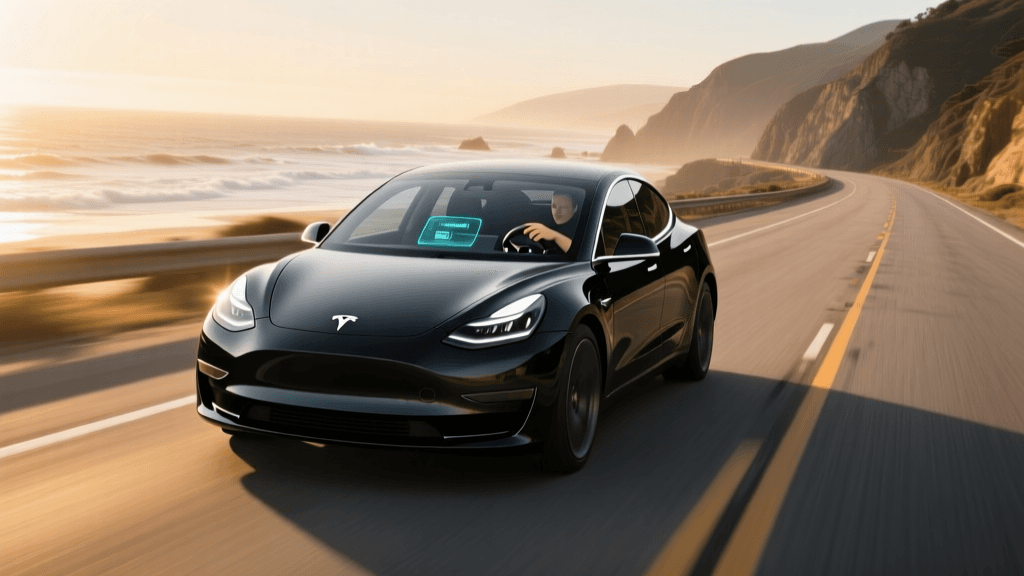
In the rapidly evolving landscape of Advanced Driver Assistance Systems (ADAS), terminology is rarely just marketing; it reflects deep technical and legal realities. In early 2024, alongside the rollout of version 12 of its Full Self-Driving software, Tesla quietly but decisively retired the "FSD Beta" moniker, replacing it with "FSD (Supervised)." For industry analysts, EV enthusiasts, and prospective buyers, this nomenclature shift represents a massive pivot in Tesla's autonomous driving strategy and its positioning within the broader regulatory framework.
The transition from "Beta" to "Supervised" is not merely a rebranding exercise. It signifies the culmination of Tesla's shift toward end-to-end neural networks and an explicit acknowledgment of the current legal boundaries of Level 2 automation. As we look toward the future of smart driving, understanding the capability differences between the legacy FSD Beta and the new FSD Supervised mode is critical for evaluating Tesla's roadmap to true unsupervised autonomy.
Core Capability Comparison: FSD Beta vs. FSD Supervised
To understand where Tesla is heading, we must first dissect the technical and experiential differences between the older Beta architecture and the current Supervised system. The leap from version 11 (the final major Beta iteration) to version 12 (the first Supervised release) fundamentally changed how the vehicle perceives and reacts to the world.
| Feature / Metric | FSD Beta (v11 and older) | FSD (Supervised) (v12+) |
|---|---|---|
| Core Architecture | Hybrid (C++ heuristics + Neural Nets) | End-to-End Neural Networks |
| Decision Making | Rule-based logic gates and IF/THEN coding | Pattern recognition via video training data |
| Intervention Frequency | Moderate to High (phantom braking, edge-case hesitations) | Significantly Lower (smoother, human-like flow) |
| Codebase Footprint | Hundreds of thousands of lines of C++ | Minimal C++; relies on compiled neural net weights |
| UI / UX Integration | Distinct Beta warnings, separate visual stack | Streamlined, single-stack integration with base Autopilot |
| Legal / Regulatory Posture | Implied experimental testing phase | Explicit Level 2 driver responsibility |
The End-to-End Neural Network Revolution
The most profound difference between FSD Beta and FSD Supervised lies under the hood. During the Beta years, Tesla's engineering team relied heavily on traditional software engineering. They wrote hundreds of thousands of lines of C++ code to dictate how the car should behave in specific scenarios—for example, "if a pedestrian is near a crosswalk and the car is moving under 20 mph, apply brakes." While effective for common scenarios, this heuristic approach struggled with the infinite "edge cases" of real-world driving.
With the advent of FSD Supervised (v12), Tesla replaced this sprawling C++ codebase with an end-to-end neural network. Instead of being told how to drive via human-coded rules, the system was trained on millions of video clips of expert human drivers. The AI ingests raw optical data from the cameras and directly outputs steering and pedal commands. This results in a driving style that is vastly more organic, assertive, and human-like, drastically reducing the erratic phantom braking and unnatural hesitations that plagued the later stages of the FSD Beta era.
Safety, Regulation, and the Industry Outlook
The inclusion of the word "Supervised" is a direct response to the tightening regulatory environment surrounding partial automation. Organizations like the Insurance Institute for Highway Safety (IIHS) have repeatedly published research highlighting the dangers of driver complacency when using Level 2 ADAS features. By explicitly branding the software as "Supervised," Tesla aligns its public-facing terminology with the legal reality: the human driver is the ultimate fallback and must remain engaged at all times.
Furthermore, the National Highway Traffic Safety Administration (NHTSA) has increased its scrutiny of automated driving systems, issuing Standing General Orders that require manufacturers to report crashes involving Level 2 and higher systems. The shift to FSD Supervised reflects an industry-wide trend where automakers are stepping back from the aggressive marketing of "autonomy" and focusing on the verifiable safety of "advanced driver supervision."
From an industry outlook perspective, Tesla's vision-only, end-to-end approach stands in stark contrast to competitors like Mercedes-Benz, which utilizes LiDAR and HD mapping for its Drive Pilot system to achieve certified Level 3 autonomy in specific, geofenced traffic jam scenarios. Tesla's bet is that a generalized, vision-based neural network will eventually scale to global unsupervised deployment without the need for expensive LiDAR hardware or pre-mapped routes. The success of FSD Supervised in handling complex, unmapped urban environments suggests this vision-only approach is becoming increasingly viable, though regulatory approval for unsupervised use remains a massive hurdle.
The Road to Unsupervised: What Comes Next?
The ultimate goal of Tesla's ADAS development is the removal of the "Supervised" tag entirely, transitioning to a Level 4 or Level 5 Robotaxi model. The data gathered from the FSD Supervised fleet is currently being used to train the next generation of neural networks, specifically targeting the reduction of "miles between interventions."
According to Tesla's official Autopilot support documentation, the system is designed to handle complex driving tasks, but the driver must remain attentive. The future trend points toward enhanced cabin monitoring. While Tesla currently relies primarily on steering wheel torque sensors to verify driver engagement, the industry is moving toward advanced infrared eye-tracking and attention-monitoring cameras. As the FSD neural network proves its statistical safety superiority over human drivers, Tesla will leverage this data to petition regulators for unsupervised deployment, likely starting in controlled commercial fleets before expanding to consumer vehicles.
Actionable Advice for Buyers and Current Owners
For consumers navigating the EV market and considering Tesla's ADAS suite, the transition from Beta to Supervised necessitates a strategic approach to purchasing and usage:
- Evaluate the Subscription Model First: FSD (Supervised) can be purchased outright for $8,000 or subscribed to for $99 per month. Given the rapid pace of neural network updates, it is highly recommended to utilize the monthly subscription for at least three months. This allows you to test the system's end-to-end capabilities on your specific daily commute and local road infrastructure before committing to a permanent capital outlay.
- Understand the Engagement Requirements: Do not let the "Supervised" branding lull you into complacency. The system requires physical steering wheel torque or active monitoring via the cabin camera (depending on your vehicle's hardware). Treat FSD Supervised as an advanced co-pilot, not a chauffeur. Keep your hands hovering near the wheel and your eyes on the road, especially in construction zones or adverse weather conditions where vision-only systems can struggle.
- Monitor Version Release Notes: Tesla frequently pushes over-the-air (OTA) updates that drastically alter the behavior of the neural network. Pay close attention to the release notes for FSD v12.x updates, as they often include specific tweaks to intersection handling, lane change assertiveness, and speed limit recognition. Adjust your usage habits based on the known quirks of the current software version.
- Resale Value Considerations: While FSD (Supervised) offers incredible technological utility, the secondary market has historically not reimbursed the full $8,000 cost of the software upon vehicle resale. If you plan to keep the vehicle for less than three years, the $99/month subscription is mathematically superior to the upfront purchase.
Conclusion
The evolution from Tesla FSD Beta to FSD (Supervised) marks the maturation of Tesla's autonomous driving ambitions. By abandoning heuristic coding in favor of end-to-end neural networks, Tesla has delivered a vastly superior, more human-like driving experience. However, the explicit "Supervised" branding serves as a vital reminder of the current regulatory and technological boundaries. As the industry looks toward a future of unsupervised mobility, Tesla's vision-only architecture will face rigorous safety validations and regulatory battles. For now, FSD Supervised stands as one of the most advanced, capable, and heavily scrutinized Level 2 ADAS suites on the market, offering a fascinating glimpse into the autonomous future while demanding strict human oversight in the present.