The Architecture of Autonomy: How ADAS Scales Across Price Segments
When evaluating Advanced Driver Assistance Systems (ADAS), consumers often focus on marketing terms like 'autopilot' or 'hands-free.' However, from an engineering perspective, the true differentiator is feature completeness—defined by sensor redundancy, compute architecture, and software stack sophistication. As the automotive industry pushes toward higher levels of autonomy, a distinct stratification has emerged across price segments. In this technology deep dive, we dissect the hardware and software realities of mainstream, premium, and flagship ADAS suites to determine what your money actually buys in terms of safety and capability.
Mainstream Segment: The Camera-First Paradigm
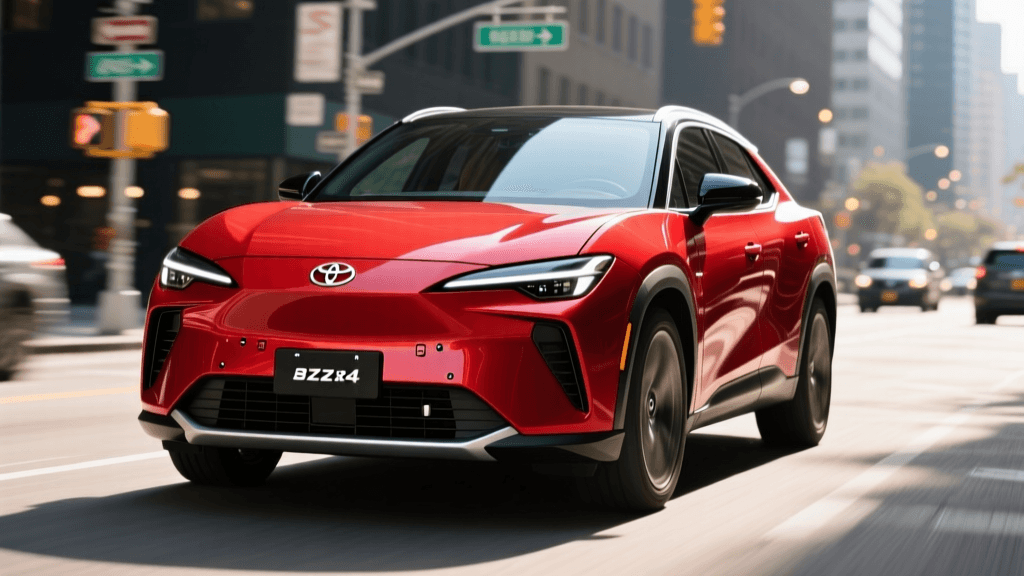
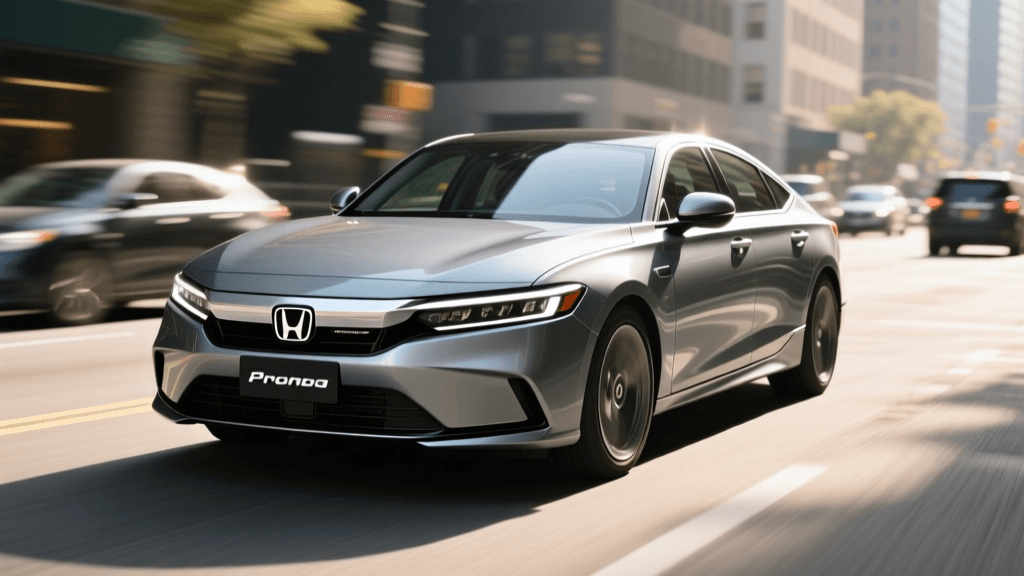
In the entry-level and mainstream segments—represented by suites like Toyota Safety Sense (TSS) 3.0, Honda Sensing, and Hyundai SmartSense—cost constraints dictate a 'camera-first' approach. These systems typically rely on a single monocular or stereo camera mounted behind the rearview mirror, supplemented by a single front-facing millimeter-wave radar.
From a technological standpoint, monocular cameras excel at object classification (distinguishing a pedestrian from a cyclist) and reading lane markings. However, they struggle with depth perception in low-contrast environments, such as heavy rain, fog, or direct sun glare. The accompanying radar provides basic distance and relative velocity data for Adaptive Cruise Control (ACC), but lacks the angular resolution to map complex static environments. Consequently, these suites are strictly limited to SAE Level 2 functionality. They require constant driver supervision and frequently disengage in construction zones or when lane lines fade. According to the Insurance Institute for Highway Safety (IIHS), while these mainstream systems significantly reduce rear-end collisions via Automatic Emergency Braking (AEB), their lane-centering capabilities remain prone to 'ping-ponging' between lane markers on curved roads, highlighting the limitations of basic sensor fusion.
Premium Mid-Tier: Sensor Fusion and HD Mapping
Stepping into the premium mid-tier, suites like Ford BlueCruise, Volvo Pilot Assist, and BMW Driving Assistant Professional introduce robust sensor fusion and geofencing. The defining technological leap here is the integration of multiple corner radars, high-resolution forward cameras, and infrared Driver Monitoring Systems (DMS).
Ford’s BlueCruise, for instance, utilizes a comprehensive array of cameras and radars combined with a proprietary map of divided highways. This geofencing allows the system to handle lateral and longitudinal control simultaneously, permitting true 'hands-off' driving under specific conditions. The inclusion of an infrared DMS is critical; it tracks eye gaze and head position to ensure the driver remains cognitively engaged, satisfying regulatory requirements for hands-off L2+ systems. Furthermore, mid-tier suites often feature higher-capacity Electronic Control Units (ECUs) capable of processing overlapping sensor data in real-time, allowing for smoother lane changes and more predictive braking when a vehicle cuts into your lane three cars ahead.
Luxury Flagship: LiDAR, Redundancy, and L3 Liability
The luxury flagship segment is where feature completeness reaches its zenith, transitioning from driver assistance to conditional automation. The prime examples are Mercedes-Benz Drive Pilot, GM Super Cruise, and Tesla Full Self-Driving (FSD). Here, the hardware cost is secondary to system redundancy and liability acceptance.
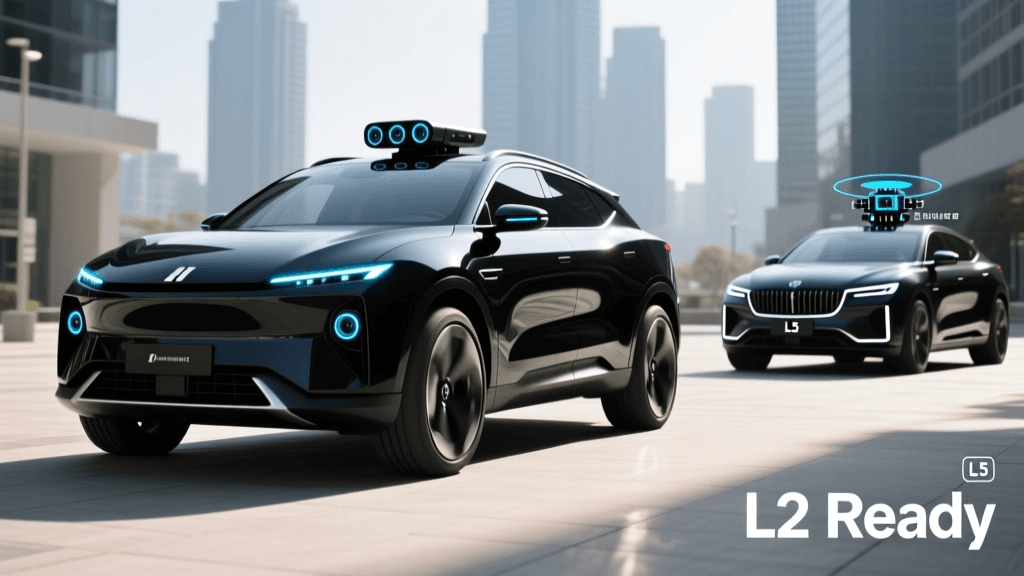
Mercedes-Benz Drive Pilot is currently the benchmark for SAE Level 3 autonomy in approved jurisdictions. Its sensor suite is vastly more complex than any L2 system, incorporating a roof-mounted LiDAR sensor, a rear-window camera for emergency vehicle detection, microphones, and even moisture sensors in the wheel wells to detect road surface conditions. LiDAR provides a high-fidelity, 3D point cloud of the environment that is entirely independent of ambient lighting, solving the depth-perception flaws of camera-only systems. More importantly, Mercedes-Benz assumes legal liability when Drive Pilot is engaged in approved traffic jam conditions (up to 40 mph). This shift in liability requires triple-redundant steering and braking actuators, a hardware reality entirely absent in mainstream vehicles.
Conversely, Tesla relies on a pure-vision approach for FSD, utilizing up to eight high-dynamic-range cameras powered by their custom Hardware 4 (HW4) compute node. Tesla eschews LiDAR and radar, betting entirely on end-to-end neural networks trained on billions of miles of real-world video data. While this approach scales infinitely without the need for HD maps, it remains an L2 system legally, requiring the driver to bear all liability and maintain supervision.
Data Table: Sensor and Compute Architecture by Segment
| Segment | Representative Suite | Primary Sensor Array | Compute / Mapping | Max SAE Level |
|---|---|---|---|---|
| Mainstream | Toyota Safety Sense 3.0 | Monocular Camera + 1 Front Radar | Mobileye EyeQ / Basic Rule-Based | Level 2 |
| Premium Mid-Tier | Ford BlueCruise | Multi-Camera + 5 Radars + IR DMS | Mobileye EyeQ5 / HD Map Geofencing | Level 2+ |
| Luxury Flagship | Mercedes Drive Pilot | LiDAR + Multi-Camera + Multi-Radar + Moisture | NVIDIA Orin / Triple-Redundant ECUs | Level 3 |
| Luxury Flagship | Tesla FSD (HW4) | 8x High-Res Vision Cameras (No LiDAR/Radar) | Custom Tesla FSD Computer / Neural Nets | Level 2 |
The Compute Bottleneck: TOPS and Software Stacks
Feature completeness is not merely about the number of sensors; it is equally dependent on the silicon processing the data. In the mainstream segment, ADAS processors typically operate in the range of 10 to 30 TOPS (Tera Operations Per Second). This is sufficient for modular software stacks, where one algorithm handles lane detection, another handles vehicle tracking, and a final rule-based module decides whether to brake or steer.
In the luxury and advanced EV segments, compute demands explode. Systems utilizing NVIDIA DRIVE Orin chips or Tesla’s HW4 operate in the hundreds of TOPS. This massive compute overhead is necessary for 'end-to-end' neural networks and transformer models, which process raw sensor pixels directly into steering and acceleration commands without human-coded rules. According to SAE International's J3016 standard, the distinction between L2 and L3 hinges on the system's ability to perform the entirety of the Dynamic Driving Task (DDT) without human fallback. Achieving this requires not just better sensors, but the compute power to predict the behavior of surrounding agents (pedestrians, other cars) milliseconds faster than a human could react.
Actionable Buyer Advice: Matching Tech to Your Commute
Understanding the technological stratification of ADAS allows buyers to align their purchases with their actual driving environments, rather than overpaying for unused capabilities or under-buying for dangerous commutes.
- Urban and Suburban Commuters: If your driving consists of stop-and-go city traffic and winding suburban roads, mainstream suites like Honda Sensing or Hyundai SmartSense offer the best return on investment. Their AEB and intersection-assist features are highly effective, and you avoid the subscription costs associated with premium hands-free systems.
- Long-Distance Highway Travelers: If you regularly drive on major interstates, the premium mid-tier is the sweet spot. Ford BlueCruise or GM Super Cruise (available on select Cadillacs and Chevrolets) will drastically reduce cognitive fatigue. The geofenced hands-off capability and robust driver monitoring make these systems vastly superior to mainstream lane-centering on monotonous stretches of highway.
- Tech Enthusiasts and Early Adopters: If you demand the absolute cutting edge and frequently sit in heavy, slow-moving traffic jams, a luxury vehicle equipped with Mercedes-Benz Drive Pilot (where legally approved) offers the ultimate luxury: the ability to legally look away from the road and work or watch a screen, backed by manufacturer liability.
Ultimately, as the National Highway Traffic Safety Administration (NHTSA) continues to refine its regulatory framework around automated driving systems, the gap between L2 assistance and L3 autonomy will dictate the next decade of automotive pricing. By looking past the marketing gloss and evaluating the underlying sensor arrays, compute power, and software architectures, consumers can make highly informed decisions in an increasingly complex automotive landscape.