The Great ADAS Divide: Software Revenue vs. Standard Safety
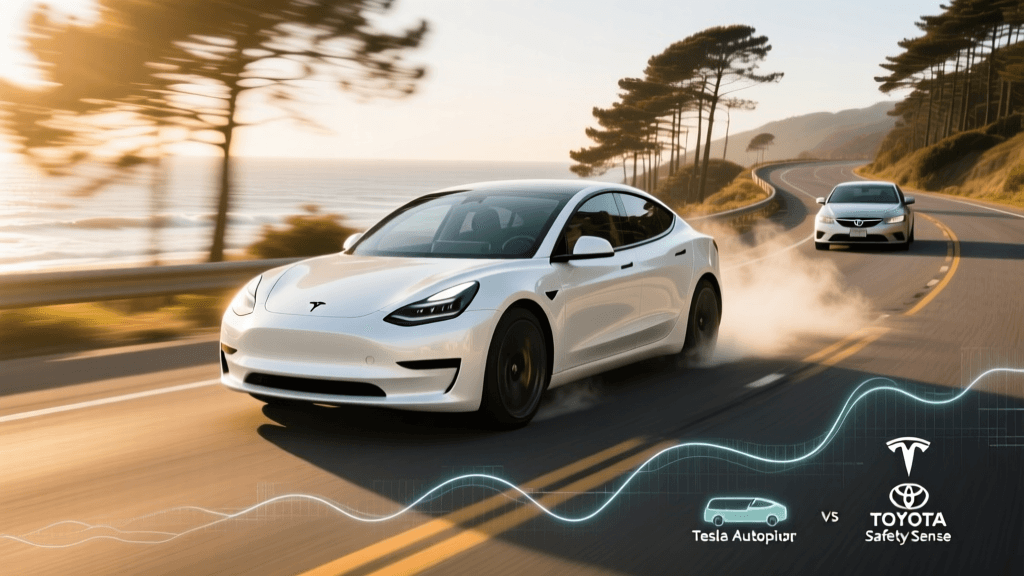
When shopping for a modern vehicle, Advanced Driver Assistance Systems (ADAS) have transitioned from luxury perks to essential safety features. However, the automotive industry is deeply divided on how to price and package these technologies. On one side, Tesla treats its ADAS suite as a premium software product, creating a tiered paywall that can add thousands to the final purchase price. On the other side, Toyota views ADAS as a fundamental safety baseline, bundling its Toyota Safety Sense (TSS) suite as standard equipment across nearly its entire lineup at no additional cost.
For consumers, this creates a complex value proposition. Is Tesla's premium software worth the steep upfront investment or monthly subscription? Or does Toyota's zero-cost, highly reliable sensor-fusion approach offer a better return on investment? In this comprehensive cost and value breakdown, we analyze the financial implications, hidden costs, and long-term value of Tesla Autopilot versus Toyota Safety Sense.
Tesla Autopilot and FSD: The Premium Paywall
Tesla's approach to ADAS is rooted in Silicon Valley software economics. The company uses a 'freemium' model, offering basic functionality for free while reserving advanced features behind substantial paywalls. Furthermore, Tesla relies exclusively on 'Tesla Vision,' a camera-only approach that eschews radar and LiDAR in favor of neural networks and machine learning.
Pricing Breakdown
- Basic Autopilot (Standard): Included in the price of every new Tesla. Features Traffic-Aware Cruise Control and Autosteer (lane centering).
- Enhanced Autopilot (EAP): Priced at $6,000. Adds Navigate on Autopilot, Auto Lane Change, Autopark, and Smart Summon.
- Full Self-Driving (FSD): Priced at $8,000 upfront or $99 per month. Includes all EAP features plus Traffic Light and Stop Sign Control, and the highly debated 'FSD Beta' city street driving capabilities.
The Value Proposition
The immediate financial hurdle of Tesla's ADAS is the sheer cost. Adding FSD to a Model 3 or Model Y can increase the vehicle's price by up to 20%. Buyers are essentially paying for the promise of future autonomy. While the Tesla Autopilot ecosystem is continuously updated via over-the-air (OTA) software patches, the hardware can become obsolete. Owners of older Tesla vehicles equipped with Hardware 3.0 have faced uncertainty regarding whether their computers can support the latest, most compute-heavy FSD neural networks, potentially requiring costly hardware upgrades to maintain the software's value.
Toyota Safety Sense (TSS): The Democratization of ADAS
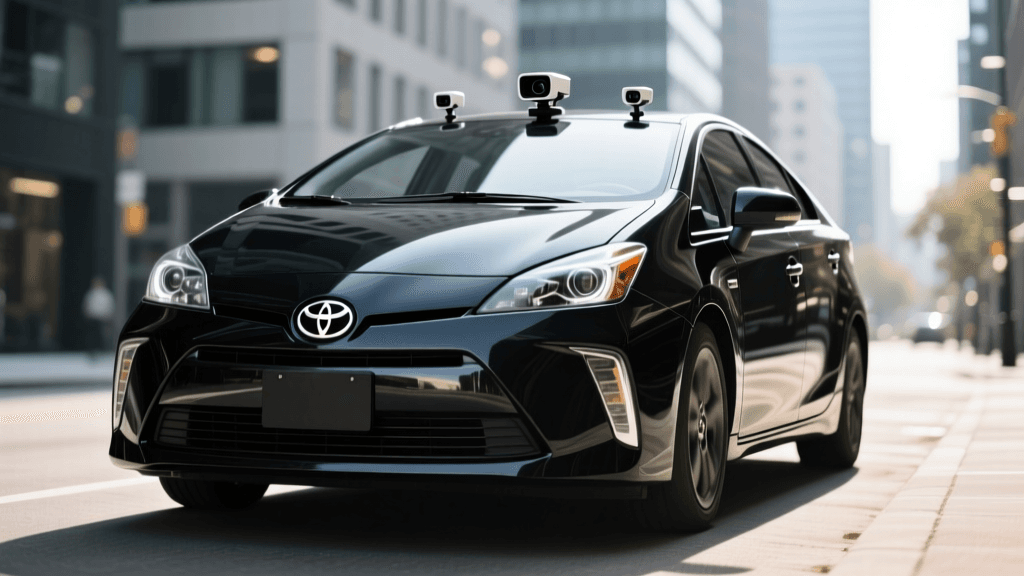
Toyota's philosophy stands in stark contrast to Tesla's. Rather than treating safety as an upsell opportunity, Toyota democratizes ADAS through its Toyota Safety Sense suite. Currently in its 3.0 iteration, TSS utilizes a sensor-fusion approach, combining high-resolution cameras with millimeter-wave radar to ensure redundancy and reliability in poor weather conditions where cameras might fail.
Pricing Breakdown
- TSS 3.0 (Standard): $0 additional cost. Included on almost every Toyota model, from the base $22,000 Corolla to the $70,000 Tundra Capstone.
- Advanced Park (Optional): Available on select higher trims or as part of a premium package, usually bundled with other luxury features rather than sold as a standalone software unlock.
The Value Proposition
As detailed on the official Toyota Safety Sense portal, the suite includes a Pre-Collision System with Pedestrian Detection, Lane Departure Alert with Steering Assist, Automatic High Beams, and Full-Speed Range Dynamic Radar Cruise Control. The value here is immediate and tangible. A buyer purchasing a base-model Toyota RAVLE gets the same core active safety hardware and software as a buyer purchasing a fully loaded Limited trim. There are no monthly subscriptions, no OTA paywalls to unlock emergency braking, and no anxiety about hardware obsolescence preventing safety updates.
Feature-by-Feature Cost Comparison Matrix
To truly understand the financial divide, we must look at what features are locked behind paywalls versus what is provided out of the box.
| Feature | Tesla Basic Autopilot | Tesla FSD ($8,000) | Toyota TSS 3.0 (Standard) |
|---|---|---|---|
| Adaptive Cruise Control | Included | Included | Included |
| Lane Centering / Steering Assist | Included | Included | Included |
| Automatic Emergency Braking | Included | Included | Included |
| Automated Lane Changes | Not Available | Included | Not Available |
| Traffic Light / Stop Sign Control | Not Available | Included | Not Available |
| Automated Parking | Not Available | Included | Available on Select Trims |
| Upfront Cost to Consumer | $0 | $8,000 or $99/mo | $0 |
Hidden Costs: Insurance, Repairs, and Depreciation
The sticker price of the software is only the beginning of the cost analysis. ADAS technology significantly impacts the total cost of ownership, particularly regarding insurance premiums and collision repair bills.
The Cost of Minor Collisions
ADAS sensors are notoriously expensive to replace. According to the Insurance Institute for Highway Safety (IIHS), minor collisions involving ADAS-equipped vehicles can result in repair bills that are significantly higher than non-equipped vehicles, sometimes adding thousands of dollars to a standard fender-bender claim.
However, the placement of these sensors dictates the financial risk. Toyota typically mounts its radar sensors behind the front emblem and its cameras behind the rearview mirror inside the cabin. In a minor front-end collision, the Toyota emblem may need replacement and recalibration, but the expensive radar unit is often protected. Tesla's camera-only approach places multiple high-definition cameras on the exterior fenders, doors, and bumpers. A minor side-swipe on a Tesla can easily destroy a fender-mounted camera, requiring not only part replacement but also specialized software recalibration, driving up repair costs and, consequently, insurance premiums.
Insurance Premiums and Depreciation
Tesla owners frequently report higher insurance premiums compared to equivalent internal combustion or hybrid vehicles, partly due to the high cost of repairing Tesla's specialized hardware and the aggressive driving profiles sometimes associated with Autopilot misuse. Conversely, Toyota's widespread use of TSS has been proven to reduce claim frequencies, which helps keep Toyota insurance rates among the lowest in the industry. Furthermore, the $8,000 FSD package suffers from brutal depreciation. The used car market generally does not value FSD anywhere near its original purchase price, meaning a Tesla buyer will absorb a massive financial loss when trading in the vehicle. Toyota's standard TSS, costing nothing upfront, suffers no such depreciation penalty.
The Philosophy Divide: Vision vs. Sensor Fusion
From a value perspective, one must also consider the 'cost' of reliability and driver fatigue. Tesla's vision-only system is incredibly capable in clear weather but can struggle with depth perception in heavy rain, fog, or direct sun glare, leading to 'phantom braking' events that can be unnerving on the highway. Toyota's sensor-fusion approach uses radar to maintain distance regardless of visibility. While Toyota's system is more conservative and lacks the flashy 'city street' navigation of Tesla's FSD, its predictability reduces driver anxiety. For the daily commuter, the reliability of Toyota's radar-based cruise control often provides better day-to-day value than Tesla's camera-based system, which requires constant vigilance to monitor for software hallucinations.
Final Verdict: Which Approach Offers Better Value?
When evaluating ADAS purely through the lens of cost and value, Toyota Safety Sense is the undisputed winner for the vast majority of consumers. By bundling life-saving features like automatic emergency braking, lane-keeping, and adaptive cruise control into the base price of the vehicle, Toyota offers immense value without the burden of subscriptions, hardware obsolescence anxiety, or massive depreciation hits. It is a mature, reliable, and financially sensible approach to automotive safety.
Tesla Autopilot and FSD, on the other hand, represent a speculative investment. The $8,000 FSD package is best viewed as a luxury tech toy for early adopters who enjoy participating in the development of cutting-edge neural networks. For the pragmatic buyer looking for a safe, stress-free commute without paying a premium 'tech tax,' Toyota's standard ADAS suite delivers 90% of the real-world utility of Tesla's basic Autopilot for 100% less money.