The Architecture of ADAS: Why Price Dictates Capability
When evaluating Advanced Driver Assistance Systems (ADAS), consumers often focus on marketing terms like 'autopilot' or 'safety sense.' However, from an engineering perspective, feature completeness is strictly dictated by the hardware suite, compute architecture, and software fusion capabilities inherent to a vehicle's price segment. A budget-friendly compact car and a six-figure luxury sedan may both claim to offer 'adaptive cruise control and lane centering,' but the technological chasm between their sensor arrays determines how they handle edge cases, construction zones, and high-speed cut-ins.
In this technology deep dive, we dissect ADAS feature completeness across three distinct price segments: mainstream (Toyota Safety Sense, Honda Sensing), mid-tier premium (Hyundai SmartSense, Ford BlueCruise), and luxury (GM Super Cruise, Mercedes-Benz Drive Pilot). By analyzing the sensor hardware, compute bottlenecks, and operational design domains (ODDs), we can determine which suites offer genuine technological leaps versus mere incremental software updates.
Hardware Deep Dive: Sensors, Lidar, and Compute
Mainstream Tier: Toyota Safety Sense 3.0 and Honda Sensing
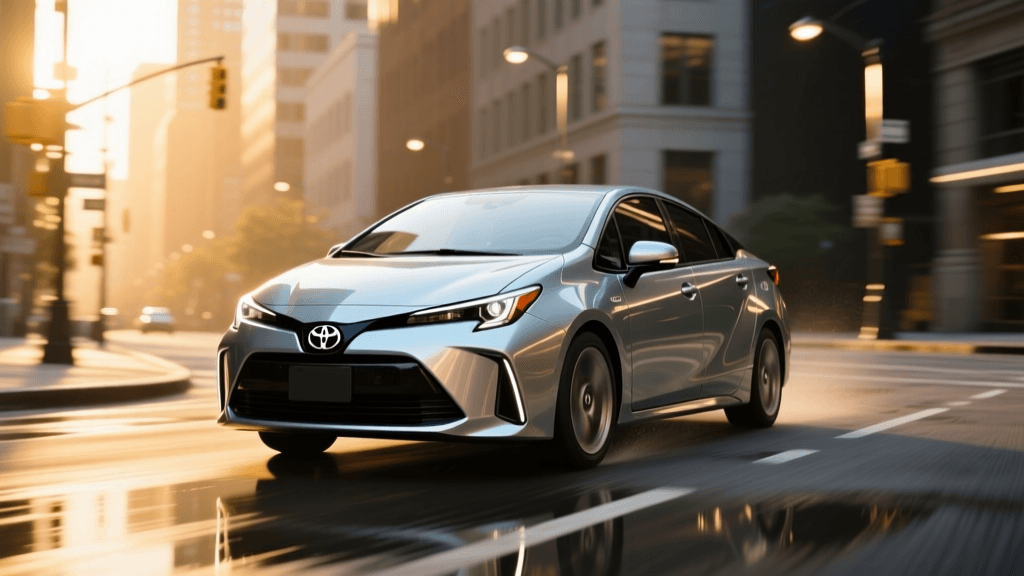
The mainstream segment prioritizes cost-efficiency, regulatory compliance, and broad deployment over cutting-edge redundancy. Toyota Safety Sense (TSS) 3.0 relies on a monocular forward-facing camera paired with a standard millimeter-wave radar. Toyota has improved the camera's field of view and recognition software to support intersection support and proactive driving assist, but the system fundamentally lacks the depth perception required for complex, unmapped urban environments.
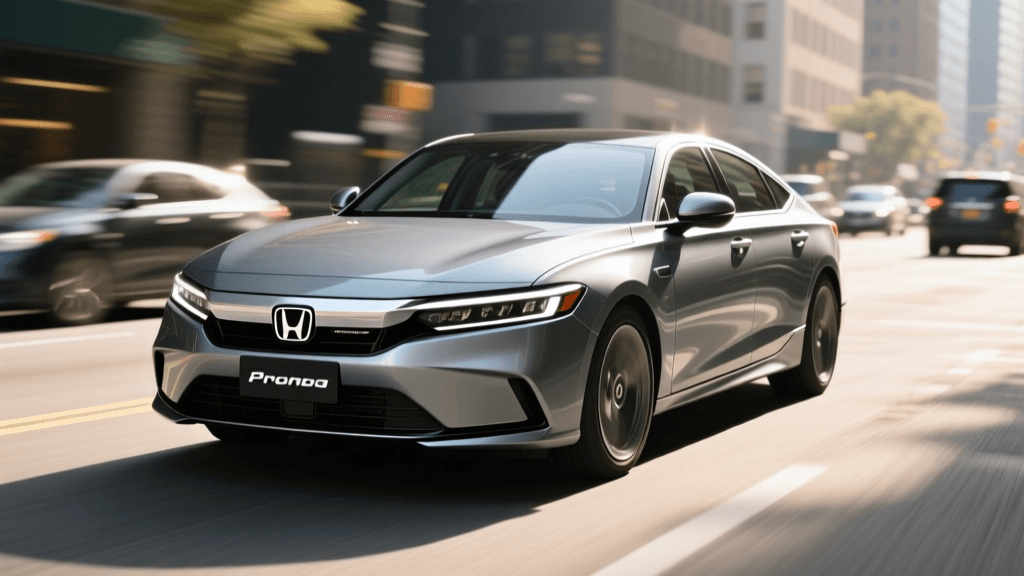
Similarly, Honda Sensing has historically utilized Mobileye system-on-chips (SoCs) paired with a single camera and radar setup. While Honda has introduced a wider 90-degree front camera in recent models to improve pedestrian and cyclist detection at low speeds, the absence of ultrasonic sensors for high-speed lateral mapping and the lack of a dedicated Driver Monitoring System (DMS) in base trims limits the suite to SAE Level 1 and basic Level 2 functionality. These systems excel at preventing rear-end collisions and lane departures but require constant driver intervention during complex highway merges or faded lane line scenarios.
Mid-Tier Contenders: Hyundai SmartSense and Ford BlueCruise
Moving into the mid-tier and mass-market premium segments, automakers introduce sensor redundancy and advanced driver monitoring to enable 'hands-off' capabilities in specific conditions. Hyundai's SmartSense suite, particularly when equipped with Highway Driving Assist 2 (HDA2), utilizes a more robust sensor fusion approach. HDA2 integrates navigation data, advanced radar, and machine learning algorithms to execute automated lane changes and navigate highway curves with significantly more fluidity than mainstream systems.
Ford's Co-Pilot360 and its premium BlueCruise iteration represent a massive leap in feature completeness for the mid-tier. BlueCruise enables hands-free driving on over 130,000 miles of pre-qualified divided highways. The critical differentiator here is the inclusion of an infrared Driver Monitoring System (DMS) mounted on the steering column. By tracking eye gaze and head position, Ford safely expands the Operational Design Domain (ODD) to allow hands-off operation, a feature strictly gated by the National Highway Traffic Safety Administration (NHTSA) safety guidelines for partial automation.
Luxury Tier: GM Super Cruise and Mercedes-Benz Drive Pilot
The luxury segment abandons cost constraints in favor of true redundancy, high-definition mapping, and conditional automation (SAE Level 3). GM's Super Cruise and the newer Ultra Cruise rely heavily on LiDAR-mapped HD road networks. By combining precise GPS, LiDAR map data, forward-facing cameras, and long-range radars, Super Cruise can anticipate road curvature and elevation changes miles before the vehicle's optical sensors detect them. This virtually eliminates the 'phantom braking' and erratic steering adjustments common in camera-only systems.
At the absolute pinnacle of current production ADAS is the Mercedes-Benz Drive Pilot, the first internationally certified SAE Level 3 system. Drive Pilot utilizes a staggering array of hardware: a roof-mounted LiDAR unit, a rear-window camera specifically trained to detect the acoustic and visual signatures of approaching emergency vehicles, ultrasonic sensors, and highly redundant steering and braking actuators. According to the SAE International J3016 standard, Level 3 automation shifts the legal liability from the driver to the manufacturer under specific conditions (e.g., traffic jams on divided highways under 40 mph). This level of feature completeness requires compute architectures capable of processing terabytes of data per hour with zero latency.
ADAS Feature Completeness Matrix
The following matrix illustrates how hardware limitations dictate the maximum automation level and operational boundaries across different price segments.
| Brand / Suite | Segment | Primary Sensor Array | Max SAE Level | Hands-Off Capability | HD Map Reliance |
|---|---|---|---|---|---|
| Toyota TSS 3.0 | Mainstream | Monocular Camera + Radar | Level 2 | No (Hands-on required) | No |
| Honda Sensing | Mainstream | Wide-Angle Camera + Radar | Level 2 | No (Hands-on required) | No |
| Hyundai SmartSense (HDA2) | Mid-Tier | Multi-Camera + Radar + Nav | Level 2 | Limited (Specific trims) | Navigation-based |
| Ford BlueCruise | Mid-Tier Premium | Camera + Radar + IR DMS | Level 2 | Yes (Pre-qualified roads) | Yes (Pre-mapped) |
| GM Super Cruise | Premium | Camera + Radar + LiDAR Map + DMS | Level 2+ | Yes (Pre-qualified roads) | Yes (LiDAR HD Maps) |
| Mercedes Drive Pilot | Luxury | LiDAR + Multi-Cam + Radar + Ultrasonic | Level 3 | Yes (Liability shifts to OEM) | Yes (Centimeter-level) |
The Software Bottleneck: Sensor Fusion and Compute
Hardware alone does not guarantee feature completeness; the compute architecture responsible for sensor fusion is equally critical. Mainstream vehicles typically utilize low-power SoCs (like older Mobileye EyeQ4 chips) capable of processing a few tera operations per second (TOPS). These chips are sufficient for lane-keeping and basic object detection but struggle with the complex vector space mapping required for automated lane changes or navigating unprotected left turns.
In contrast, premium suites utilize high-performance compute nodes. For instance, Tesla's Hardware 4 (HW4) computer and the NVIDIA Orin chips found in newer premium EVs deliver hundreds of TOPS. This immense processing power allows the software to run complex neural networks that fuse camera, radar, and LiDAR data into a unified 3D vector space in real-time. As noted by the Insurance Institute for Highway Safety (IIHS), the effectiveness of partial automation systems is heavily dependent on how well the software handles edge cases, such as stationary emergency vehicles or complex construction zone barrel alignments. High-compute systems can process these anomalies faster, applying redundant braking or steering inputs before a human driver can react.
Actionable Buyer Guide: Maximizing Your ADAS Investment
Understanding the technological divide across price segments allows buyers to align their ADAS investments with their actual driving habits.
- The Urban Commuter (Mainstream Tier): If your driving consists primarily of stop-and-go city traffic and low-speed suburban roads, the premium paid for LiDAR and HD mapping is largely wasted. Toyota Safety Sense 3.0 and Honda Sensing provide exceptional value here. Their pre-collision braking and intersection support features are highly optimized for pedestrian and cyclist detection, which are the primary hazards in urban environments.
- The Highway Cruiser (Mid-Tier Premium): For drivers who regularly tackle long, divided highway stretches, investing in Ford BlueCruise or Hyundai HDA2 is highly recommended. The inclusion of a Driver Monitoring System and automated lane centering drastically reduces cognitive fatigue on 3+ hour drives. Ensure you opt for the specific trim levels that include the DMS hardware, as it is often omitted on base models.
- The Tech-Forward Luxury Buyer (Premium/Luxury): If you frequently encounter heavy traffic jams on major interstates or demand the absolute cutting edge of automotive liability protection, GM Super Cruise and Mercedes-Benz Drive Pilot are the only logical choices. The reliance on LiDAR and HD maps ensures a buttery-smooth, confidence-inspiring experience that camera-only systems simply cannot replicate in adverse weather or low-visibility conditions.
Ultimately, ADAS feature completeness is not a one-size-fits-all metric. It is a spectrum of sensor redundancy, compute power, and software sophistication. By looking past the marketing nomenclature and evaluating the underlying hardware architecture, consumers can make informed decisions that genuinely enhance their safety and driving comfort.