The Evolution of Hands-Free ADAS: Setting the Baseline
The automotive industry has rapidly transitioned from basic adaptive cruise control to sophisticated, hands-free Active Driving Assistance (ADA) systems. At the forefront of this North American market battle are Ford's BlueCruise and General Motors' Super Cruise. While both systems promise the allure of hands-free highway driving, their underlying engineering philosophies, operational domains, and economic models differ significantly. As a data-driven automotive publication, we look past the marketing gloss to analyze the hard telemetry, sensor architectures, and independent safety evaluations that separate these two ADAS titans.
Sensor Architecture and Hardware Telemetry
To understand how these systems perform, we must first examine the hardware processing the environmental data. Both systems operate at SAE Level 2, meaning the human driver must remain engaged and ready to take over at a moment's notice. However, the way they perceive the world is distinctly different.
GM Super Cruise: The LiDAR-Mapped Approach
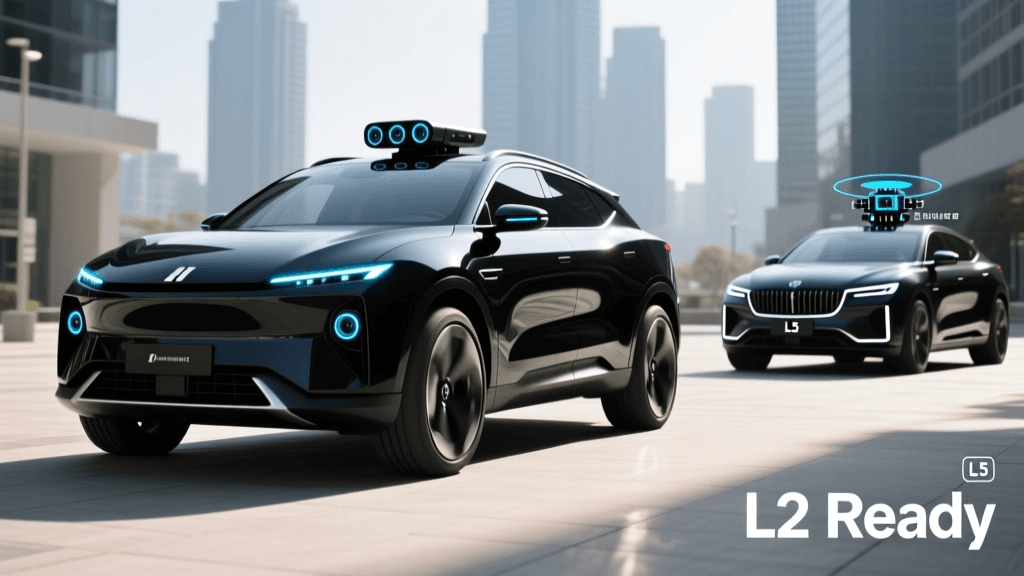
Super Cruise relies on a highly redundant sensor fusion model paired with high-definition LiDAR-mapped data. The vehicle utilizes a suite of long-range and short-range radars, alongside high-resolution optical cameras. Crucially, the system does not use LiDAR sensors on the vehicle itself for real-time scanning; instead, it relies on pre-scanned LiDAR maps of the road infrastructure. This centimeter-accurate mapping allows the vehicle to anticipate curves, inclines, and lane merges far beyond the line of sight of the onboard optical cameras. The driver monitoring system (DMS) utilizes an infrared camera mounted on the steering column to track both head pose and eye gaze, ensuring the driver is looking at the road.
Ford BlueCruise: Vision and Radar Fusion
Ford's BlueCruise takes a more dynamic, real-time processing approach. The latest iterations (version 1.3 and the upcoming 1.4) utilize a robust suite of up to eight high-resolution cameras and five radar sensors (including front-facing long-range and corner radars). BlueCruise does not rely on pre-scanned LiDAR maps for its core lane-centering logic. Instead, it uses advanced machine vision algorithms to read lane lines, road signs, and the behavior of surrounding traffic in real time. Like GM, Ford employs an infrared driver-facing camera to monitor eye tracking, though early versions of BlueCruise were criticized for being overly sensitive to head movements, a metric that Ford has since optimized via over-the-air (OTA) software updates.
Operational Design Domain (ODD): Mapped Miles vs. Real-Time Vision
The Operational Design Domain (ODD) defines the specific conditions under which an automated system is designed to function. This is where the data reveals a massive divergence in strategy between Ford and GM.
- GM Super Cruise: As of late 2023, GM claims over 400,000 miles of compatible roads in the United States and Canada. Because the system relies on pre-mapped LiDAR data, it is restricted strictly to these divided, limited-access highways. If you exit the mapped zone, the system gracefully degrades to standard adaptive cruise and lane-keep assist, requiring hands on the wheel.
- Ford BlueCruise: Ford currently lists approximately 130,000 miles of compatible hands-free highways. However, because BlueCruise relies more heavily on real-time camera vision rather than strict LiDAR geofencing, users frequently report the system engaging on unmapped divided highways, provided the lane markings are clear and the GPS signal is stable. Nevertheless, Ford's official guaranteed ODD remains significantly smaller than GM's mapped network.
The Economics of Automation: Pricing and Subscriptions
Automakers are increasingly treating ADAS features as Software-as-a-Service (SaaS) to generate recurring revenue. A data-driven purchase requires analyzing both the upfront hardware costs and the long-term subscription economics.
Ford BlueCruise Pricing Matrix
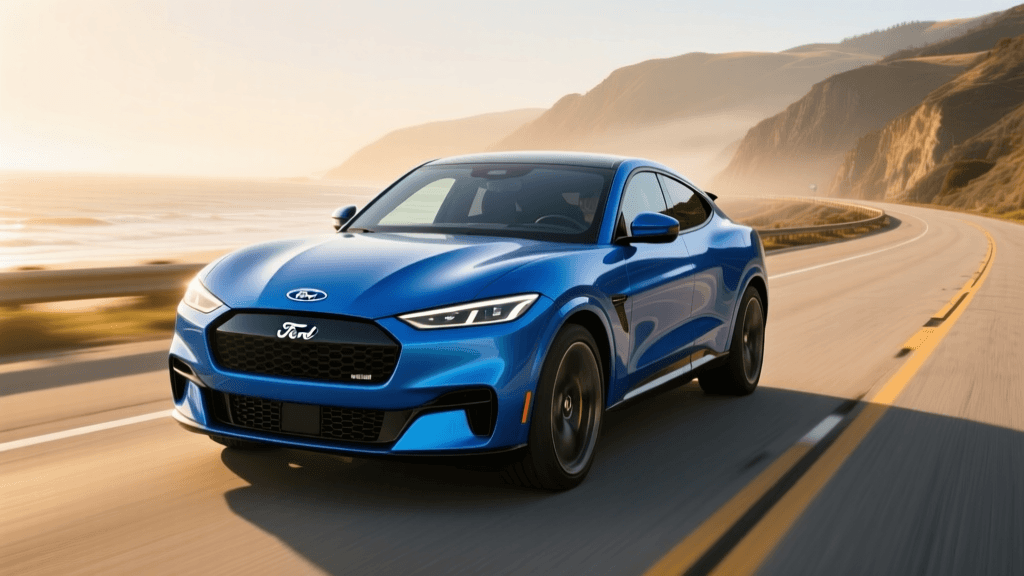
Ford requires buyers to purchase a specific hardware package (often bundled in premium technology packages) which can cost upwards of $2,100 depending on the vehicle trim (e.g., F-150 Lariat or Mustang Mach-E). Following a 90-day free trial, the subscription model is relatively steep:
- Monthly Plan: $75 per month
- Annual Plan: $800 per year
GM Super Cruise Pricing Matrix
GM's pricing strategy varies heavily by brand (Cadillac vs. Chevrolet vs. GMC). On premium vehicles like the Cadillac Escalade or CT5, Super Cruise hardware is often bundled into the trim price, and the subscription is included for the first three years. On mainstream models like the Chevy Silverado, it requires a specific technology package. After the trial period expires, GM's renewal pricing is generally more aggressive:
- Monthly Plan: $25 per month
- Annual Plan: $250 per year (pricing can vary slightly by model year and promotional offers)
Data Takeaway: Over a five-year ownership period, a Ford BlueCruise user will pay significantly more in SaaS fees than a GM Super Cruise user, making GM the more economically rational choice for long-term hands-free commuters.
Independent Safety Data and Disengagement Metrics
Marketing claims must be verified by independent testing. Organizations like the Insurance Institute for Highway Safety (IIHS) and Consumer Reports continuously evaluate these systems based on safety assurances, driver monitoring robustness, and ease of use.
The IIHS has repeatedly emphasized that partial automation systems do not reliably keep drivers engaged without strict monitoring. Both Ford and GM have adapted to this research by implementing robust infrared DMS. However, National Highway Traffic Safety Administration (NHTSA) standing general orders on ADAS-related crashes indicate that system over-reliance remains a primary factor in incidents.
In comprehensive track and real-world testing by Consumer Reports, GM's Super Cruise has historically scored higher in the 'Driver Monitoring' and 'System Safety' categories. The system's requirement for the driver to look at the road before executing an automated lane change (in newer iterations) and its highly intuitive steering wheel light-bar communication score high marks for human-machine interface (HMI). Ford's BlueCruise 1.0 struggled with aggressive lane-centering oscillation and overly sensitive driver alerts, but the rollout of BlueCruise 1.3 introduced predictive speed assist and smoother lane-change algorithms, significantly narrowing the gap in CR's evaluations.
Side-by-Side Data Comparison Matrix
| Metric | Ford BlueCruise (v1.3/1.4) | GM Super Cruise |
|---|---|---|
| Primary Sensor Fusion | Cameras + Radars (Real-time Vision) | Cameras + Radars + LiDAR Maps |
| Mapped ODD (North America) | ~130,000 Miles | ~400,000+ Miles |
| Automated Lane Change | Yes (v1.3+) | Yes (Requires blinker or auto-overtake) |
| Driver Monitoring Tech | Infrared Eye Tracking | Infrared Eye + Head Pose Tracking |
| Post-Trial Subscription Cost | $800 / year | ~$250 / year |
| HMI Feedback | Digital Cluster + Chimes | Steering Wheel Light Bar + Chimes + Haptics |
Practical Buyer Advice: Use Cases and Scenarios
Choosing between BlueCruise and Super Cruise should not be based solely on brand loyalty, but rather on your specific commuting data and vehicle requirements.
Scenario A: The Long-Distance Interstate Commuter
If your weekly mileage consists primarily of major interstates (e.g., I-95, I-80, I-5) and you drive a sedan or SUV, GM Super Cruise is the mathematically superior choice. The 400,000-mile ODD ensures you will rarely encounter a geofenced drop-off zone. Furthermore, the steering wheel light bar provides superior peripheral feedback, reducing cognitive load during multi-hour drives. The lower annual subscription fee also yields a better long-term ROI.
Scenario B: The Truck Owner and Rural Highway Driver
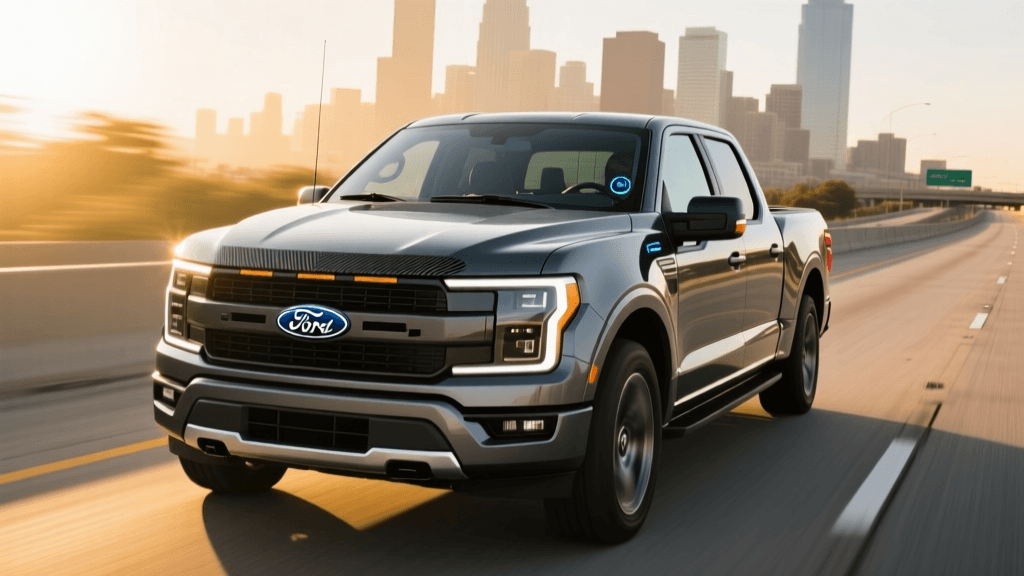
If you require a full-size pickup truck, Ford BlueCruise holds a distinct advantage in the mass market. While GM offers Super Cruise on the Silverado, Ford's integration of BlueCruise into the F-150 (the best-selling vehicle in America) makes it highly accessible. Additionally, because BlueCruise relies less on strict LiDAR geofencing, rural drivers often find that BlueCruise will maintain hands-free operation on well-marked state highways that GM's system will reject due to a lack of mapped data.
Conclusion
The data reveals that GM's Super Cruise remains the benchmark for mapped, predictable, and economically viable hands-free driving on major corridors. Its reliance on LiDAR-mapped infrastructure provides a smoother, more confident steering algorithm. However, Ford's BlueCruise is rapidly iterating via OTA updates, leveraging real-time machine vision to close the gap while offering unparalleled flexibility for truck buyers and rural commuters. When evaluating your next vehicle purchase, align the system's ODD and subscription economics with your actual driving telemetry to ensure you are paying for automation you will actually use.