The Beginner's Guide to Automatic Emergency Braking (AEB)
When you are shopping for a new electric vehicle, hybrid, or traditional gas-powered car, safety technology is likely at the top of your priority list. Among the alphabet soup of acronyms—ADAS, ACC, LKA—one feature stands out as the ultimate lifesaver: Automatic Emergency Braking, or AEB. But with nearly every modern automaker offering their own proprietary version of this technology, a critical question arises for new buyers: Which brand actually has the most effective automatic emergency braking system?
In this comprehensive beginner's guide, we will demystify AEB technology, compare the top-performing brand suites—including Subaru EyeSight, Toyota Safety Sense, Volvo City Safety, and Tesla Autopilot—and help you understand which system offers the best real-world protection for you and your family.
How AEB Technology Actually Works
Before diving into brand comparisons, it is essential to understand what AEB actually does. Unlike Adaptive Cruise Control (which maintains distance) or Lane Keeping Assist (which keeps you centered), AEB is an active intervention system. It continuously monitors the road ahead for vehicles, pedestrians, cyclists, and sometimes even large animals. If the system detects an imminent collision and determines that the driver has not reacted in time, it automatically applies the brakes to either prevent the crash entirely or significantly reduce the impact speed.
Automakers achieve this using different sensor configurations:
- Cameras: Optical sensors mounted near the rearview mirror that use image recognition to identify shapes, brake lights, and pedestrians.
- Radar: Millimeter-wave sensors (usually behind the front grille) that bounce radio waves off objects to determine exact distance and closing speed, regardless of lighting conditions.
- Lidar: Laser-based sensors that create precise 3D maps of the environment (mostly found on premium or autonomous-focused vehicles).
- Sensor Fusion: The gold standard, where a vehicle combines camera and radar data to cross-verify obstacles, reducing false alarms and improving accuracy.
The Contenders: Top Brands for AEB Effectiveness
To determine which brand offers the most effective AEB, we must look at how their proprietary systems perform in both standardized testing and real-world scenarios.
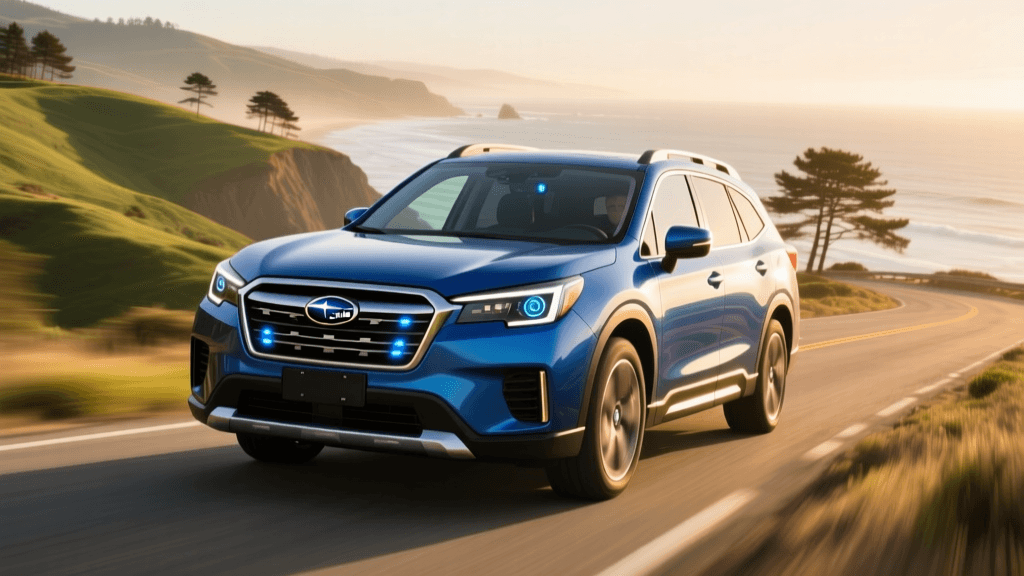
Subaru EyeSight: The Stereoscopic Visionary
Subaru's EyeSight system is unique in the mainstream market because it relies primarily on stereoscopic cameras rather than radar. Mounted near the top of the windshield, these dual cameras mimic human binocular vision, allowing the car to perceive depth and distance with incredible accuracy. EyeSight is exceptionally good at recognizing the shape and speed of vehicles ahead, as well as detecting pedestrians stepping into the roadway. Because it uses color cameras, it can even recognize when a lead vehicle's brake lights illuminate, giving it a split-second advantage in reaction time. Subaru's consistent top-tier ratings in independent crash avoidance tests make it a favorite among safety-conscious buyers.
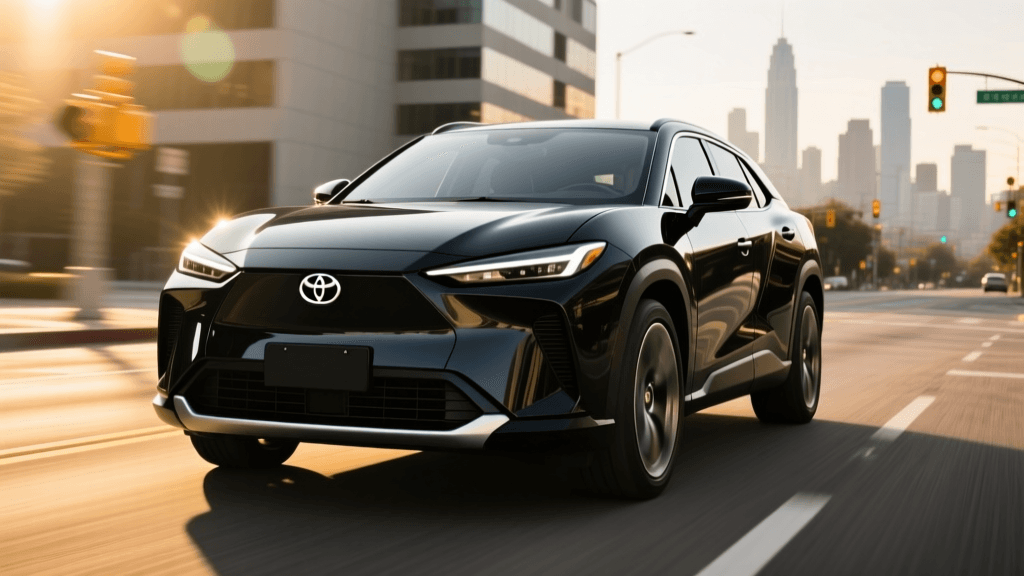
Toyota Safety Sense (TSS 3.0): The Radar-Camera Powerhouse
Toyota has standardized its Toyota Safety Sense (TSS) suite across almost its entire lineup, from the budget-friendly Corolla to the hybrid RAV4 and the electric bZ4X. The latest iteration, TSS 3.0, utilizes a robust sensor fusion approach, combining a high-resolution monocular camera with a wide-angle millimeter-wave radar. This setup excels in low-light conditions and poor weather where cameras alone might struggle. TSS 3.0 also features enhanced intersection support, capable of detecting oncoming vehicles and pedestrians when you are making a left or right turn. Its widespread availability and consistent 'Superior' ratings from safety institutes make it the benchmark for mass-market AEB.
Volvo City Safety: The Pedestrian and Cyclist Protector
Volvo practically invented the modern AEB category with its City Safety system, and they remain at the absolute forefront of collision avoidance. Volvo's system uses advanced radar and camera fusion paired with highly sophisticated AI algorithms. Where Volvo truly shines is in vulnerable road user protection. City Safety is remarkably adept at identifying cyclists swerving into your path, pedestrians in dark clothing, and even large animals like deer or moose. Furthermore, Volvo includes 'Run-off Road' mitigation and intersection braking, making it arguably the most comprehensive and effective AEB suite on the market for complex urban environments.
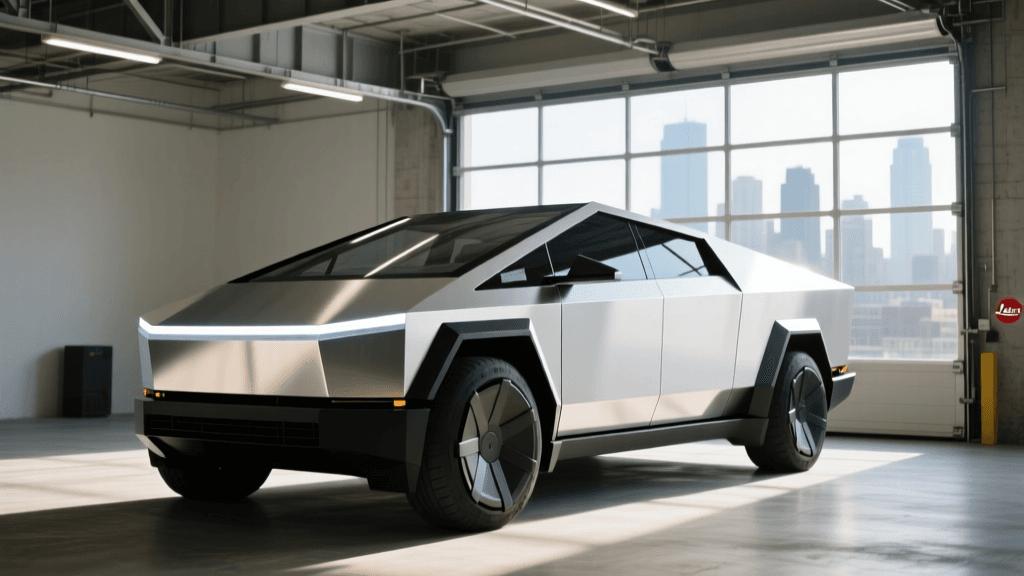
Tesla Autopilot: The Pure-Vision Controversy
Tesla takes a radically different approach. In recent years, Tesla removed radar and ultrasonic sensors from its vehicles, relying entirely on a 'Tesla Vision' camera-based neural network. While Tesla's AEB is highly capable at high speeds and on divided highways, the pure-vision approach has drawn criticism for 'phantom braking'—where the car aggressively slams on the brakes for shadows or overpasses. While over-the-air updates continuously improve the system, its inconsistency in complex, low-contrast urban environments places it slightly behind the sensor-fusion leaders in overall predictable effectiveness.
Head-to-Head AEB Feature Comparison
| Brand / System | Sensor Configuration | Pedestrian Detection | Nighttime Efficacy | Best Use Case |
|---|---|---|---|---|
| Subaru EyeSight | Stereoscopic Cameras | Excellent | Good | Highway & Suburban Commuting |
| Toyota Safety Sense 3.0 | Radar + Monocular Camera | Very Good | Excellent | All-around Daily Driving |
| Volvo City Safety | Radar + Camera Fusion | Superior | Superior | Complex Urban & Intersections |
| Tesla Autopilot | Pure Vision (Cameras Only) | Good (Variable) | Moderate | Divided Highways |
Understanding the New Federal AEB Mandate
If you are buying a car today, you should be aware of upcoming regulatory shifts. In April 2024, the National Highway Traffic Safety Administration (NHTSA) finalized a groundbreaking rule requiring all new passenger vehicles to be equipped with AEB that meets stringent performance standards by 2029. Crucially, the new mandate requires AEB systems to successfully detect and stop for pedestrians in the dark, and to prevent vehicle-to-vehicle collisions at much higher speeds (up to 62 mph). Brands like Volvo and Toyota, which already utilize advanced radar fusion for nighttime pedestrian detection, are well ahead of this curve, while camera-only systems will face significant engineering hurdles to meet the new nighttime requirements.
Real-World Limitations: What Beginners Must Know
While AEB is a miraculous safety net, it is not infallible. Independent testing continually highlights the physical limitations of the sensors involved. According to extensive research by AAA Automotive Research, AEB systems with pedestrian detection struggle significantly at night, during heavy rain, and when the sun is setting directly into the camera lens. Furthermore, the Insurance Institute for Highway Safety (IIHS) regularly updates its testing protocols to include oblique angles and challenging lighting, revealing that not all 'Superior' rated systems perform equally in edge-case scenarios. As a beginner, you must understand that AEB is a backup system, not a replacement for an attentive human driver.
Beginner Tips for Maximizing Your AEB System's Potential
To ensure your vehicle's AEB system functions exactly as the engineers intended, follow these practical maintenance and usage tips:
- Keep Sensors Clean: A thick layer of road grime, snow, or ice on your front grille (radar) or windshield (camera) will blind the system. Always wipe these areas clean during winter or after muddy road trips.
- Understand Your Settings: Most modern infotainment systems allow you to adjust the AEB sensitivity or 'following distance' warning timing. Set it to the most sensitive or 'early' warning setting while you get used to the car's behavior.
- Beware of Windshield Replacements: If your windshield cracks and needs replacing, the camera module must be professionally recalibrated. An uncalibrated camera will misjudge distances, leading to late braking or false alarms.
- Do Not 'Test' the System: Never intentionally drive toward a wall or another car to test if the AEB will engage. Testing facilities use specialized, radar-reflective foam targets; real-world obstacles may not trigger the system in time at low speeds.
Final Verdict: Who Wins the AEB Crown?
So, which brand has the most effective automatic emergency braking? If your priority is absolute cutting-edge pedestrian, cyclist, and intersection protection, Volvo's City Safety takes the crown. Its sensor fusion and AI logic are unmatched in chaotic urban environments. However, for the average buyer looking for the best balance of reliability, all-weather performance, and widespread availability across affordable models, Toyota Safety Sense 3.0 and Subaru EyeSight are the undisputed champions of the mainstream market. Both brands have proven that you do not need to buy a luxury vehicle to benefit from world-class, life-saving collision avoidance technology.