The Beginner's Complete Guide to Automatic Emergency Braking (AEB)
When you are shopping for a new or used vehicle, the acronym soup on the window sticker can be overwhelming. Among all the advanced driver assistance systems (ADAS) available today, Automatic Emergency Braking (AEB) is arguably the most critical for your safety. But not all AEB systems are created equal. Some can stop your car from rear-ending a semi-truck on the highway, while others can detect a pedestrian stepping off a curb at night.
In this beginner's guide, we will break down exactly how AEB works, compare the top-tier systems from Volvo, Toyota, Subaru, and others, and help you determine which brand currently offers the most effective automatic emergency braking on the market.
What is AEB and How Does It Work?
Automatic Emergency Braking is a safety system that monitors the road ahead for potential collisions. If the system detects an imminent crash and the driver does not react in time, it automatically applies the brakes to either prevent the collision entirely or reduce the severity of the impact.
To do this, modern vehicles rely on a combination of sensors:
- Cameras: Excellent at recognizing shapes, reading road signs, and identifying pedestrians or cyclists.
- Radar: Bounces radio waves off objects to determine their exact distance and relative speed, working well in poor weather where cameras might struggle.
- Lidar: Uses laser pulses to create a high-resolution 3D map of the surroundings (found mostly on advanced EVs and luxury models).
Beginner Tip: Do not confuse Forward Collision Warning (FCW) with AEB. FCW will only beep or flash a warning on your dashboard; it will not press the brakes for you. AEB takes physical action.
How the Experts Test AEB Effectiveness
To understand which brand has the best system, we must look at independent testing. The Insurance Institute for Highway Safety (IIHS) is the gold standard for ADAS evaluation. They test systems in controlled environments at various speeds (typically 12 mph, 25 mph, and 37 mph) to see if the vehicle can achieve a complete stop before hitting a target.
Furthermore, the IIHS evaluates pedestrian detection, including nighttime scenarios where headlights are the only illumination. Systems are graded on a scale from 'Basic' to 'Superior.' When comparing brands, you should always look for an IIHS 'Superior' rating in both vehicle-to-vehicle and pedestrian-to-vehicle categories.
Brand Comparison: The Heavyweights of AEB
Let's dive into the specific ADAS suites of the leading automakers to see how their AEB systems stack up in the real world.
Volvo: City Safety (The Pioneer)
Volvo introduced the world's first standard City Safety system back in 2008, and they have remained at the forefront of collision avoidance ever since. Volvo's current City Safety uses a highly refined camera and radar sensor-fusion approach.
Where it shines: Volvo is widely considered the industry leader in detecting large animals, cyclists, and pedestrians. Its 'Run-off Road' and 'Intersection Support' features mean the car will actually brake if you turn left across oncoming traffic, a scenario where many other brands fail to intervene.
Toyota: Toyota Safety Sense 3.0 (TSS 3.0)
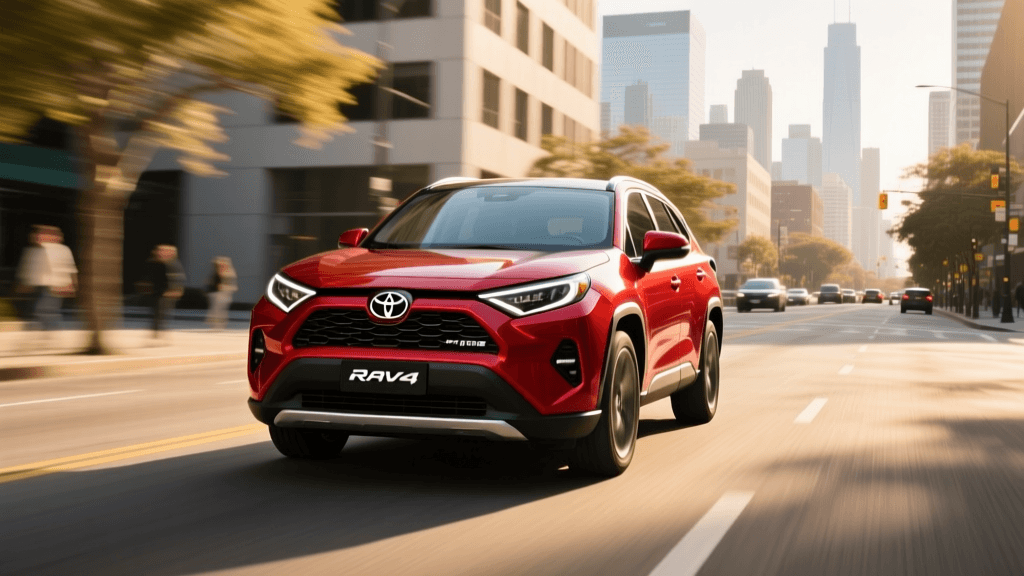
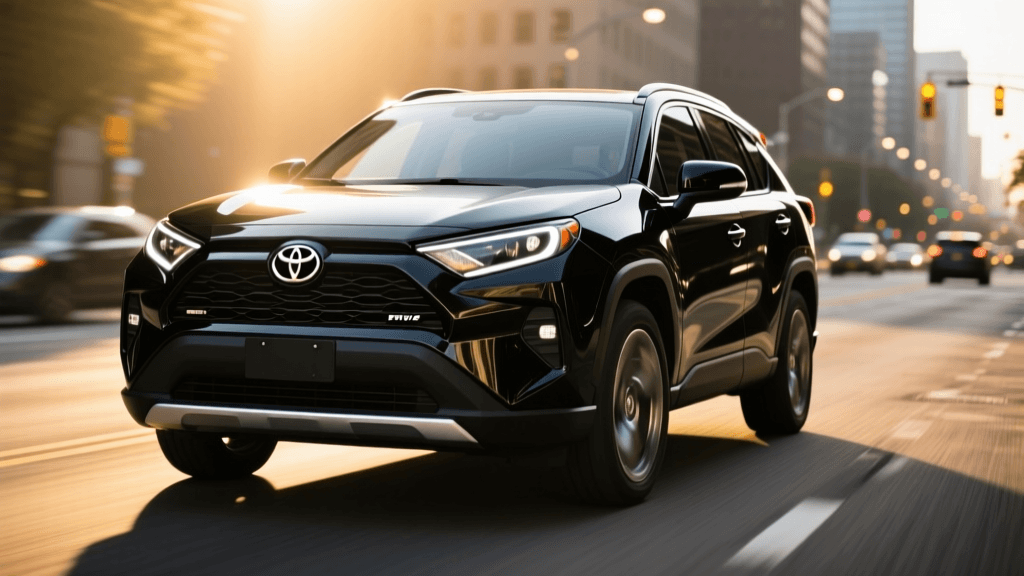
Toyota deserves massive credit for democratizing safety. While other brands charge thousands for ADAS packages, Toyota includes TSS standard on almost every vehicle, from the budget Corolla to the premium Sequoia.
Where it shines: The latest TSS 3.0 introduces Pre-Collision System (PCS) with Intersection Support and enhanced pedestrian detection. Toyota's system is incredibly consistent and less prone to the 'phantom braking' (braking for no reason) that plagues some competitors. Its radar and camera integration provides excellent highway following and emergency stopping power.
Subaru: EyeSight Driver Assist Technology
Subaru takes a radically different hardware approach. Instead of relying heavily on radar, EyeSight uses twin stereo cameras mounted near the rearview mirror to mimic human binocular vision, providing excellent depth perception.
Where it shines: EyeSight is phenomenal at judging distances at mid-range speeds (25 to 50 mph), making it incredibly effective for suburban commuting. However, because it relies heavily on optical cameras, older EyeSight systems historically struggled in heavy rain, fog, or direct sun glare, though the latest generation has added radar assist to mitigate this.
Tesla: Autopilot and FSD
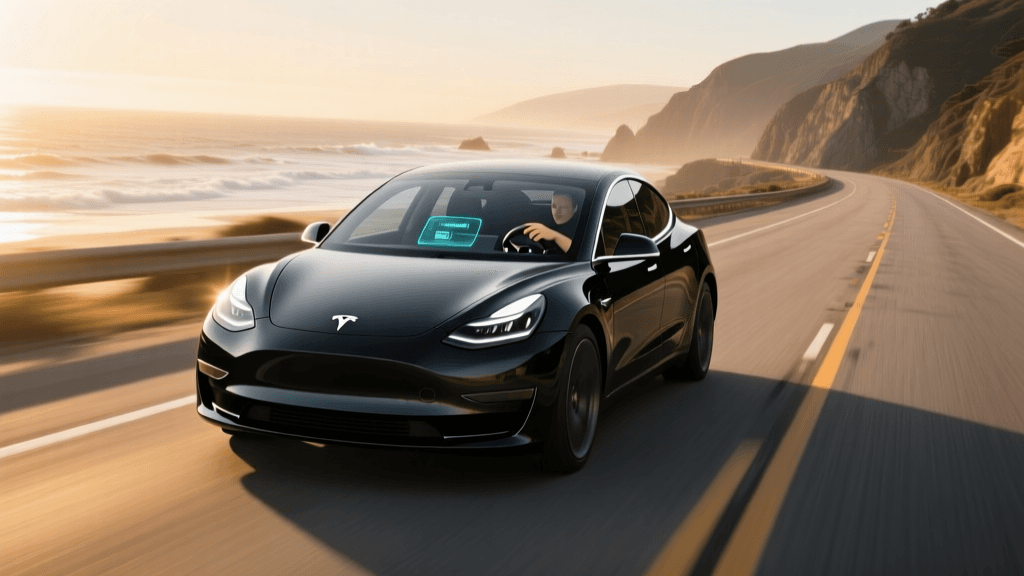
Tesla relies entirely on a 'Tesla Vision' camera-only approach, having removed radar and ultrasonic sensors from its newer vehicles. While Tesla's neural network is incredibly advanced, independent tests have shown that its AEB can sometimes be inconsistent compared to the sensor-fusion systems used by legacy automakers, occasionally failing to stop for stationary objects at high speeds.
Data Table: AEB Feature & Performance Comparison
| Brand / System Name | Primary Sensor Tech | Pedestrian Detection (Night) | Junction / Intersection Support | Standard on All Trims? |
|---|---|---|---|---|
| Volvo (City Safety) | Camera + Radar | Excellent | Yes | Yes |
| Toyota (TSS 3.0) | Camera + Radar | Very Good | Yes (TSS 3.0) | Yes |
| Subaru (EyeSight) | Stereo Cameras + Radar | Good | Limited | Mostly Yes |
| Honda (Honda Sensing) | Camera + Radar | Good | Yes (Latest Gen) | Yes |
| Tesla (Autopilot) | Camera Only (Vision) | Average | Limited | Yes |
The Game Changer: The 2029 Federal AEB Mandate
If you are buying a car today, you are buying into a rapidly shifting regulatory landscape. In May 2024, the National Highway Traffic Safety Administration (NHTSA) finalized a groundbreaking rule requiring all new passenger cars and light trucks to be equipped with advanced AEB systems by 2029.
According to a report by Reuters on the NHTSA mandate, the new standards are incredibly strict. Vehicles will be required to stop and avoid crashes with other vehicles at speeds up to 62 mph (100 km/h). Furthermore, the mandate requires automatic braking for pedestrian detection in both daylight and complete darkness. This means that brands currently relying on camera-only systems without infrared or advanced low-light radar will be forced to upgrade their hardware significantly over the next few years.
Real-World Scenarios: Which System Should You Choose?
Your ideal AEB system depends heavily on your daily driving environment.
- The Urban Commuter (City Driving): If you drive in a dense city with heavy foot traffic, Volvo's City Safety is the undisputed king. Its ability to detect cyclists and pedestrians stepping out from between parked cars is unmatched, and its low-speed braking prevents fender-benders at intersections.
- The Suburban Parent (School Runs & Errands): Toyota Safety Sense 3.0 offers the best balance of reliability, intersection support, and lack of false alarms. You won't have to worry about the car slamming on the brakes because a shadow looked like a pedestrian.
- The Highway Cruiser (Long Distances): Subaru EyeSight and Toyota TSS both excel here. Their radar integration ensures that if a car cuts you off at 70 mph and suddenly slams on its brakes, your vehicle will react in milliseconds to mitigate the impact.
Beginner's Buying Advice: What to Look For on the Sticker
When shopping, do not just ask the dealer, 'Does this car have automatic braking?' You need to ask the right questions to ensure you are getting a modern, effective system:
- Ask about Pedestrian Detection: Basic AEB only looks at the metal bumper of the car ahead. Ensure the system specifically lists 'Pedestrian and Cyclist Detection.'
- Check for Junction/Turning Assist: As noted by the National Highway Traffic Safety Administration (NHTSA), intersection crashes are among the most deadly. Systems that brake when you turn left into oncoming traffic are vital.
- Look up the IIHS Rating: Before signing the paperwork, visit the IIHS website, search for the specific make and model, and click on the 'Crash Avoidance' tab. Only accept a vehicle with a 'Superior' rating for vehicle-to-vehicle and pedestrian front crash prevention.
- Beware of Phantom Braking: Read owner forums for the specific model year you are buying. Some brands have suffered from software glitches causing the car to brake for overpasses or shadows. Toyota and Volvo generally have the best track records for minimizing these false positives.
Conclusion: The Verdict on the Most Effective AEB
So, which brand has the most effective automatic emergency braking? If we are judging purely on the breadth of scenarios covered—including pedestrians, cyclists, large animals, and complex intersections—Volvo's City Safety remains the benchmark for the industry. However, for the average buyer looking for the most reliable, accessible, and consistently performing system without paying a luxury premium, Toyota Safety Sense 3.0 is the most effective and practical choice on the market today.
Remember, AEB is a backup system, not a replacement for an attentive driver. Keep your eyes on the road, your hands on the wheel, and let the car's technology serve as your ultimate safety net.