The Evolution of ADAS: From Optional Add-On to Standard Baseline
Advanced Driver Assistance Systems (ADAS) have transitioned from premium luxury options to baseline expectations for modern vehicle safety. However, while a sub-$25,000 compact car and a $100,000 luxury flagship may both advertise 'automatic emergency braking' and 'lane keeping,' the underlying technology, sensor fusion capabilities, and overall feature completeness vary wildly. According to the Insurance Institute for Highway Safety (IIHS), the proliferation of standard ADAS has significantly reduced rear-end collisions, yet the gap in feature completeness across price segments dictates whether a system merely reacts to an imminent crash or actively manages complex highway driving scenarios.
In this technology deep dive, we dissect ADAS suite feature completeness across three distinct price segments: Entry-Level/Mid-Market, Premium/Tech-Forward, and Ultra-Luxury. We will examine the sensor arrays, compute architectures, and software gating that define the true capabilities of suites like Toyota Safety Sense, GM Super Cruise, and Mercedes-Benz Drive Pilot.
Entry-Level and Mid-Market: The Camera-Radar Paradigm
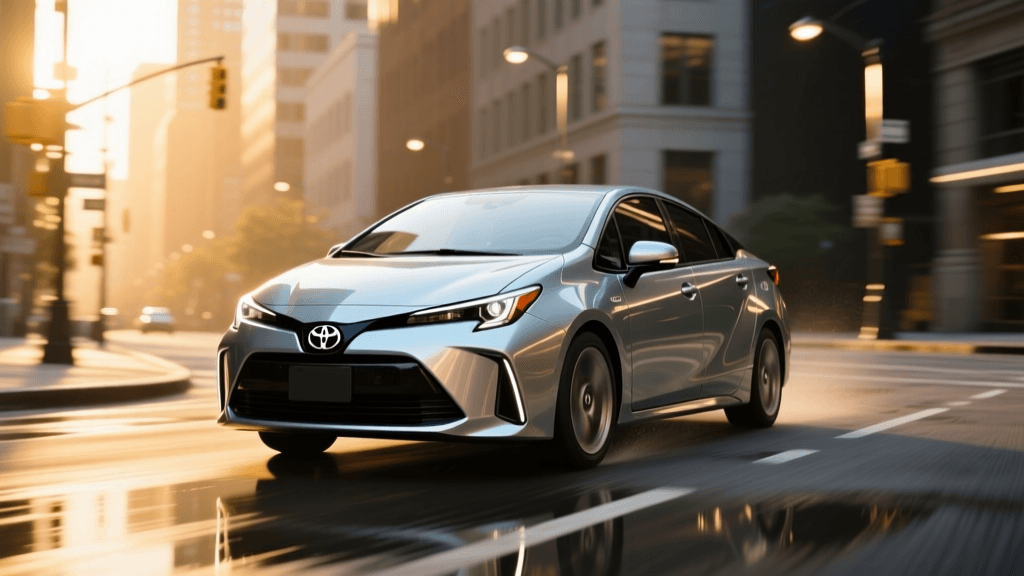
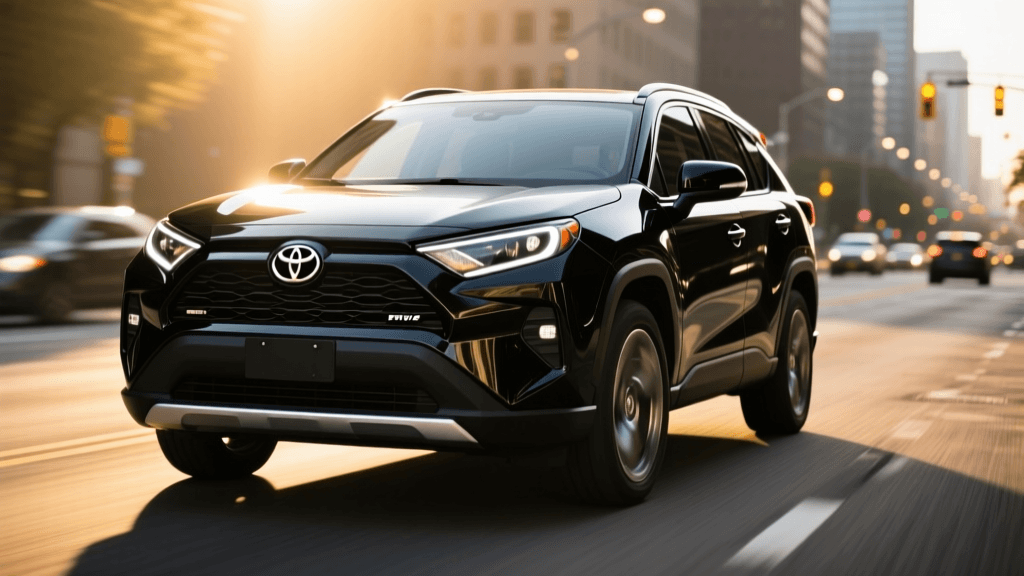
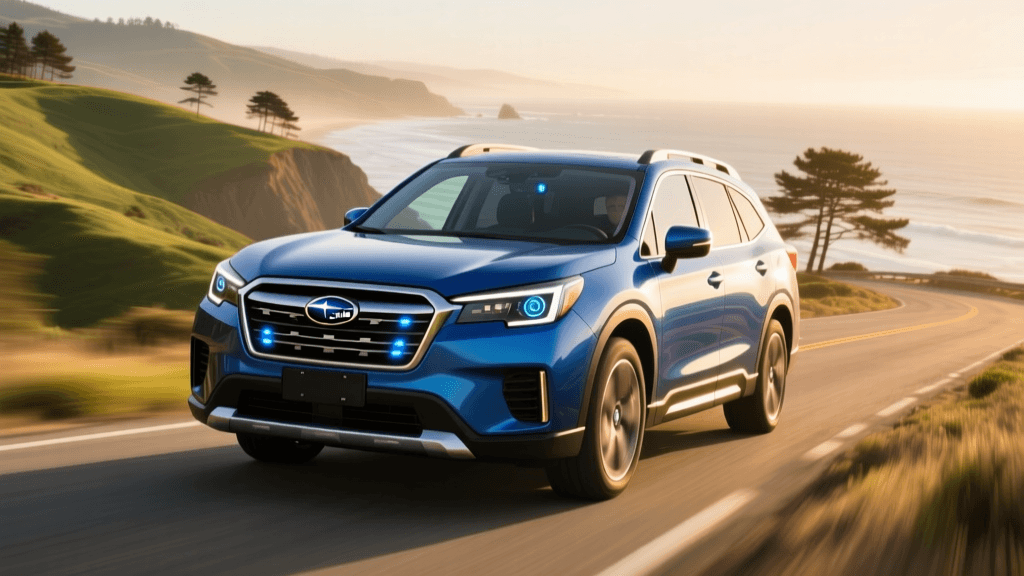
In the $20,000 to $45,000 price bracket, ADAS feature completeness is defined by cost-effective sensor fusion. The dominant architecture relies on a forward-facing monocular camera paired with a single millimeter-wave radar. Suites such as Toyota Safety Sense 3.0, Honda Sensing, and Subaru EyeSight (which uniquely utilizes stereoscopic cameras mounted near the rearview mirror) excel at fundamental SAE Level 1 and Level 2 tasks.
Hardware and Compute Limitations
Vehicles in this segment typically utilize older generations of Mobileye EyeQ chips or proprietary entry-level SoCs (System on Chips). These processors are highly optimized for specific, narrow tasks: identifying the taillights of a lead vehicle, recognizing lane markings, and classifying pedestrians. However, they lack the TOPS (Tera Operations Per Second) required for complex 3D environment mapping.
- Feature Completeness: High for basic AEB, Adaptive Cruise Control (ACC), and Lane Tracing Assist.
- Missing Features: Automated lane changes, hands-free driving, predictive curve speed adjustment, and cross-traffic rear automatic braking.
- The Deep Dive: Toyota Safety Sense 3.0 has improved its radar range and camera field of view, allowing for intersection support (detecting crossing pedestrians and vehicles). Yet, because it lacks high-definition mapping and driver monitoring cameras, the system requires constant steering wheel torque input, making it a 'hands-on' assistance suite rather than an automated driving system.
Premium and Tech-Forward Mid-Tier: Sensor Fusion and Mapping
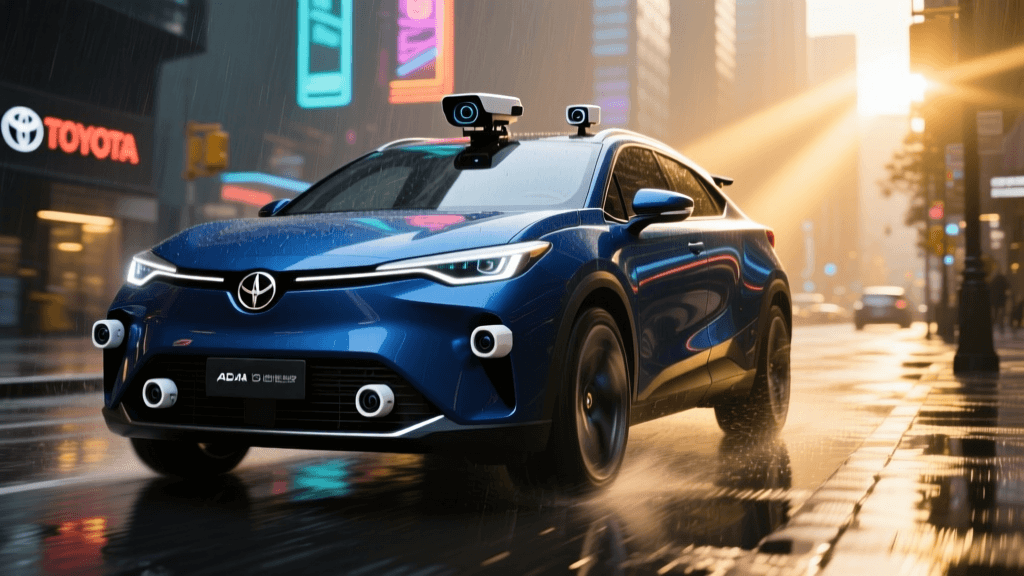
Stepping into the $50,000 to $85,000 segment, feature completeness expands dramatically through the integration of LiDAR, high-definition (HD) maps, and advanced driver monitoring systems. This is the realm of GM Super Cruise, Ford BlueCruise, and Tesla Autopilot/FSD.
The Role of HD Maps and LiDAR
GM's Super Cruise and Ford's BlueCruise rely heavily on LiDAR-scanned HD maps. Super Cruise currently maps over 400,000 miles of divided highways in North America. By combining GPS data, HD map topology, and real-time sensor inputs, these systems achieve a level of predictive completeness that camera-only systems cannot match. The vehicle knows a sharp curve or an exit ramp is approaching miles before the camera can visually confirm it.
Furthermore, this segment introduces infrared driver-monitoring cameras mounted on the steering column or instrument cluster. This hardware addition is what legally and technically permits 'hands-free' operation in designated zones, pushing the feature completeness toward robust SAE Level 2+ automation.
Tesla's Vision-Only Divergence
Tesla approaches feature completeness from a radically different technical angle. By removing ultrasonic sensors (USS) and radar, Tesla relies entirely on its HW3.0 and HW4.0 compute platforms and a neural network trained on billions of miles of vision data. While Tesla's Full Self-Driving (FSD) Supervised software offers the most ubiquitous geographic coverage (it works on almost any road, unlike the geo-fenced Super Cruise), its feature completeness in adverse weather (heavy rain, fog) remains fundamentally limited by the physics of optical cameras compared to LiDAR or radar.
Ultra-Luxury Tier: Redundancy, LiDAR, and Level 3 Autonomy
Above $100,000, ADAS feature completeness is no longer just about adding features; it is about hardware redundancy and legal liability. The SAE International J3016 standard clearly delineates the jump from Level 2 (driver supervision required) to Level 3 (system handles all dynamic driving tasks under specific conditions, and the manufacturer assumes liability).
Mercedes-Benz Drive Pilot and BMW Driving Assistant Pro
Mercedes-Benz Drive Pilot represents the current zenith of production ADAS completeness. To achieve SAE Level 3 certification in specific jurisdictions, the S-Class and EQS utilize a massively redundant sensor suite:
- A high-resolution LiDAR unit integrated into the front grille.
- A rear-window camera to monitor emergency vehicle approach.
- Microphones in the wheel wells to detect road surface moisture and conditions.
- Redundant steering actuators and braking systems.
- Nvidia DRIVE Orin-level compute architectures capable of processing massive sensor payloads in real-time.
When engaged in heavy traffic on pre-mapped highways at speeds up to 40 mph (with recent approvals pushing this to 59 mph in certain regions), Drive Pilot assumes full legal responsibility. The driver can legally watch a movie or browse the web. This level of feature completeness—where the system handles edge cases, system failures, and legal liability—is entirely absent in lower price segments due to the immense cost of redundant hardware and validation.
Deep Dive Data Table: ADAS Hardware and Feature Completeness by Segment
| Price Segment | Representative Suite | Primary Sensor Array | Compute Architecture | Max Autonomy Level | Feature Completeness Profile |
|---|---|---|---|---|---|
| Entry / Mid ($20k-$45k) | Toyota Safety Sense 3.0 | Monocular Camera + Radar | Mobileye EyeQ4 / Custom | Level 2 | Excellent reactive AEB/ACC; lacks hands-free or automated lane changes. |
| Premium ($50k-$85k) | GM Super Cruise | Camera + Radar + LiDAR Maps + IR DMS | High-End Custom SoC | Level 2+ | True hands-free on mapped highways; automated lane changes; geo-fenced. |
| Premium (Vision) | Tesla FSD (Supervised) | 8x High-Res Cameras (Vision Only) | Tesla HW4.0 (Custom NPU) | Level 2 | Ubiquitous geographic coverage; city street navigation; requires supervision. |
| Ultra-Luxury ($100k+) | Mercedes Drive Pilot | LiDAR + Stereo Cameras + Moisture Sensors + HD Maps | Nvidia DRIVE Orin / Redundant | Level 3 | Full liability transfer in traffic jams; redundant steering/braking hardware. |
The Hidden Cost of Completeness: Paywalls and Subscriptions
A critical aspect of ADAS feature completeness in the modern automotive landscape is software gating. Historically, if you bought the top-trim vehicle, you received all available hardware and software features. Today, OEMs frequently install the necessary sensors on the assembly line but lock the software behind paywalls.
According to NHTSA guidelines and ongoing industry debates regarding automated vehicle safety and consumer transparency, buyers must scrutinize what is actually enabled at the point of sale. Tesla charges up to $8,000 upfront or a monthly subscription for FSD capabilities. BMW has faced backlash and subsequent pivoted strategies regarding subscription models for hardware that is already physically present in the vehicle, such as heated seats and certain Driving Assistant Pro features. When evaluating feature completeness, buyers must calculate the Total Cost of Ownership (TCO), including software subscriptions required to unlock the vehicle's actual hardware potential.
Conclusion: Which Segment Offers the Best ADAS ROI?
For the average commuter, the Entry-Level and Mid-Market suites (like Honda Sensing and Subaru EyeSight) offer the highest return on investment. They provide the most critical life-saving features—AEB and basic lane keeping—without the steep premiums associated with LiDAR and HD mapping.
However, for high-mileage highway drivers, the Premium segment's hands-free systems (GM Super Cruise, Ford BlueCruise) represent the sweet spot of feature completeness. The integration of driver monitoring and mapped LiDAR data drastically reduces cognitive fatigue on long road trips, offering a tangible quality-of-life improvement that entry-level torque-sensing steering wheels simply cannot match. Ultra-Luxury Level 3 systems remain a fascinating technological marvel and a glimpse into the future of mobility, but their strict operational design domains (ODDs) and massive price tags currently limit their practical utility for the broader market.