The Sensor Paradigm: Stereo Vision vs. Radio Detection
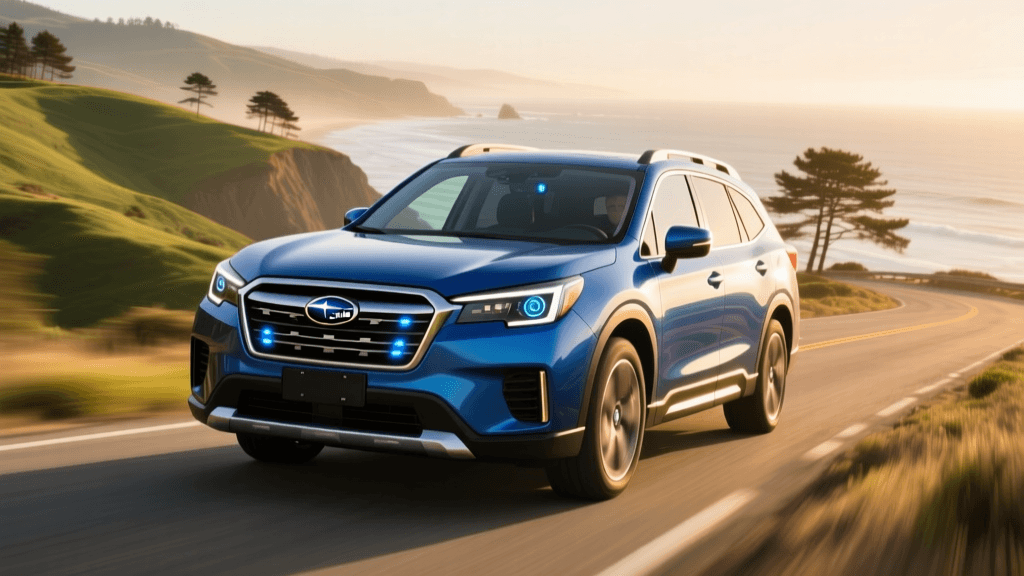
The advanced driver assistance systems (ADAS) market is defined by a fundamental divergence in sensor philosophy. While the majority of global automakers—including Toyota, Honda, and Ford—rely heavily on millimeter-wave radar paired with a single monocular camera, Subaru has historically bet the farm on a different technology: the stereo camera. Marketed under the Subaru EyeSight banner, this binocular vision system mimics human depth perception to navigate complex traffic scenarios. But as vehicles move toward higher levels of autonomy, how does Subaru’s optical approach stack up against the radio-frequency dominance of radar? This data-driven comparison breaks down the physics, real-world crash statistics, environmental limitations, and ownership costs of stereo cameras versus traditional automotive radar.
The Physics of Perception: Parallax vs. Time-of-Flight
To understand the performance data, we must first examine the underlying physics of both sensor types. Subaru’s EyeSight system (through its third generation) relies almost exclusively on two high-definition color cameras mounted near the rearview mirror. By spacing the lenses approximately 20 to 30 centimeters apart, the system captures two slightly different images of the road ahead. An onboard processor compares these images to calculate 'disparity'—the difference in the position of an object between the left and right frames. Using trigonometric parallax, the system generates a dense 3D depth map of the environment in real-time.
Conversely, traditional automotive radar (operating primarily in the 77 GHz frequency band) emits radio waves and measures the time-of-flight for the echoes to return. By analyzing the Doppler shift of the returning waves, radar excels at calculating the exact relative velocity of objects ahead. However, radar lacks the spatial resolution of an optical sensor. A radar point cloud can tell a vehicle that an obstacle is 50 meters away and closing at 20 km/h, but it struggles to identify whether that obstacle is a stalled car, a discarded tire, or an overpass shadow.
Technical Specifications: Stereo Camera vs. Millimeter-Wave Radar
The following data table contrasts the core operational parameters of a traditional stereo camera system (like EyeSight Gen 3) against a standard long-range millimeter-wave radar system used by competitors. Note that Subaru’s latest Generation 4 system introduces a sensor-fusion approach, adding radar to its optical suite, which is reflected in the final column.
| Metric | Stereo Camera (EyeSight Gen 3) | 77GHz Long-Range Radar | Sensor Fusion (EyeSight Gen 4) |
|---|---|---|---|
| Primary Depth Calculation | Optical Parallax / Disparity Map | Radio Wave Time-of-Flight | Combined Optical & RF |
| Effective Range | ~110 meters | 200+ meters | 200+ meters |
| Field of View (FOV) | ~50 degrees (wide) | ~15 to 20 degrees (narrow) | Up to 90 degrees (combined) |
| Object Classification | Excellent (Color, shape, text) | Poor (Size and velocity only) | Excellent |
| Relative Velocity Accuracy | Good (Derived from frame delta) | Exceptional (Doppler effect) | Exceptional |
| Stationary Object Filtering | High (Can identify bridges vs. cars) | Low (Prone to ghost braking) | High |
Field of View and the 'Ghost Braking' Phenomenon
One of the most significant advantages of Subaru’s stereo camera is its wide Field of View (FOV). A 50-degree optical FOV allows the system to detect pedestrians stepping off curbs or vehicles cutting into the lane much earlier than a narrow-beam radar. Furthermore, radar systems are notorious for 'ghost braking'—sudden, unprovoked emergency braking on highways. This occurs because radar struggles to differentiate between a stationary vehicle in your lane and a stationary metal guardrail or overhead sign just outside your lane. The stereo camera’s dense disparity map and color recognition allow it to confidently classify overhead signs as non-threats, drastically reducing false-positive braking events.
Real-World Crash Avoidance Data
Theoretical physics only matter if they translate to real-world safety. According to extensive studies by the Insurance Institute for Highway Safety (IIHS), Subaru’s EyeSight system has consistently posted elite crash-avoidance statistics. IIHS data indicates that vehicles equipped with EyeSight reduce rear-end crashes with injuries by up to 64% compared to identical models without the system. When comparing this to industry averages for radar-based Automatic Emergency Braking (AEB), Subaru’s optical approach often yields superior pedestrian detection rates in daylight conditions, largely due to the camera’s ability to recognize human shapes and clothing contrast, rather than just the radar reflectivity of a person.
However, the National Highway Traffic Safety Administration (NHTSA) notes that all AEB systems face limitations. While stereo cameras dominate in complex urban environments with diverse obstacles, radar maintains a distinct advantage in high-speed, straight-line highway braking where closing velocities are extreme and early detection at 200+ meters is critical.
Environmental Degradation: Weather and Lighting
The Achilles' heel of any optical system is environmental interference. Stereo cameras require light to function. In conditions of heavy fog, blinding snow, torrential rain, or direct sun glare, the camera lenses can become obscured or blinded, forcing the system to issue a 'System Disabled' warning on the dashboard. Radar, on the other hand, operates on radio frequencies that easily penetrate fog, rain, and darkness. A radar-centric ADAS suite will maintain adaptive cruise control functionality in a heavy blizzard long after Subaru’s Gen 3 EyeSight has shut down for safety reasons.
To mitigate this, Subaru introduced Generation 4 EyeSight, which incorporates a wide-angle monocular camera and, crucially, a front-facing radar unit. This sensor fusion acknowledges the physical limits of optics and marries them with the all-weather reliability of radio frequencies, bringing Subaru in line with the industry standard for redundant sensor arrays.
Maintenance and Calibration Costs
For buyers, the data-driven comparison must also include the total cost of ownership, specifically regarding sensor calibration after minor collisions or windshield replacements.
- Stereo Camera Calibration: Because the cameras are mounted to the windshield, any glass replacement requires precise optical recalibration. This process requires specialized targets, a perfectly level floor, and dealership-grade software. Expect to pay between $800 and $1,200 for a windshield replacement and EyeSight recalibration.
- Radar Calibration: Radar units are typically mounted behind the front bumper or the lower grille emblem. While they are less susceptible to damage from rock chips than windshield cameras, minor front-end bumps can knock the radar out of alignment. Recalibration typically costs between $300 and $500, as it relies on electronic targeting rather than strict optical geometry.
Actionable Buyer Advice: Which System Fits Your Drive?
Choosing between a stereo-camera-dominant system and a radar-dominant system depends heavily on your daily driving environment.
Choose Subaru EyeSight (Stereo-Dominant) If:
- You drive primarily in urban or suburban areas: The wide FOV and superior object classification excel at detecting pedestrians, cyclists, and erratic city traffic.
- You hate 'ghost braking': If your commute involves winding roads with metal guardrails, stereo cameras are much less likely to slam on the brakes for roadside infrastructure.
- You value lane centering precision: Stereo cameras read faded lane lines and road-edge contrasts better than radar, providing smoother lane-keeping assistance on poorly marked rural roads.
Choose Radar-Dominant ADAS (Toyota/Honda/Ford) If:
- You commute in severe weather: If you frequently drive in heavy rain, fog, or snow, radar will maintain adaptive cruise control when optical systems fail.
- You do mostly high-speed highway driving: Radar’s 200-meter range provides earlier braking initiation for sudden highway traffic stops.
- You want lower glass-replacement costs: Avoiding windshield-mounted calibration sensors can save you hundreds of dollars over the lifespan of the vehicle.
Conclusion
Subaru’s commitment to stereo camera technology has yielded one of the most effective, natural-feeling ADAS suites on the market, backed by undeniable IIHS crash-reduction data. By prioritizing spatial awareness and object classification over raw distance, EyeSight Gen 3 mastered the urban and suburban commute. However, the laws of physics dictate that optics cannot conquer severe weather. The transition to Generation 4 sensor fusion proves that the future of ADAS does not belong to a single sensor type, but to the intelligent synthesis of both stereo vision and millimeter-wave radar.