Quick Verdict: The XC90 Recharge T8 PHEV at a Glance
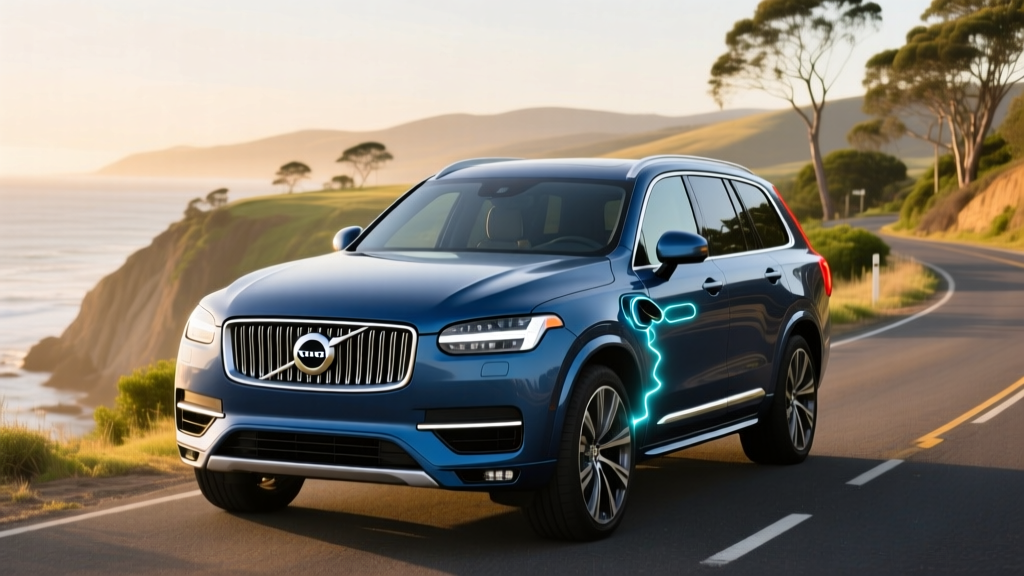
The Volvo XC90 Recharge T8 plug-in hybrid remains one of the most practical bridges between a gasoline SUV and a full battery-electric vehicle. With an EPA-rated 35 miles of electric-only driving, a combined 455 horsepower, and three rows of seating, it targets families who want daily electric commuting without sacrificing road-trip flexibility. For 2026, Volvo continues the Recharge T8 powertrain with its 18.8 kWh (usable) battery and upgraded infotainment, but the question for buyers is whether the PHEV premium over a mild-hybrid XC90 B5/B6 pays off — and whether federal tax credits still apply.
| Spec | Value |
|---|---|
| Powertrain | 2.0L turbo + supercharged I4 + rear electric motor (PHEV) |
| Combined Horsepower | 455 hp / 523 lb-ft torque |
| Battery (usable) | 18.8 kWh lithium-ion NMC |
| EPA Electric-Only Range | 35 miles |
| EPA MPGe (electric + gas) | 55 MPGe |
| EPA MPG (gas only, charge-depleted) | 27 combined (26 city / 28 highway) |
| Total Combined Range | ~430 miles |
| 0–60 mph | 4.5 seconds |
| Level 2 Charging (240V) | ~5 hours (3.7 kW onboard charger) |
| DC Fast Charging | Not supported |
| Battery Warranty | 8 years / 100,000 miles |
| Base MSRP (Core trim) | $76,850 |
HEV vs PHEV: What the XC90 Hybrid Lineup Actually Offers
Volvo sells two distinct hybrid flavors in the XC90 for 2026, and confusing them is the most common buyer mistake:
| Feature | XC90 B5/B6 (Mild Hybrid HEV) | XC90 Recharge T8 (PHEV) |
|---|---|---|
| Plug-in capable? | No — self-charging via regen only | Yes — plug in to access electric-only mode |
| Electric-only driving | None (electric assist only) | Up to 35 miles EPA |
| Battery size | 0.4 kWh (48V system) | 18.8 kWh usable (high-voltage) |
| Combined output | 247 hp (B5) / 295 hp (B6) | 455 hp |
| EPA combined MPG | 24–26 MPG | 27 MPG (gas) / 55 MPGe (combined) |
| Starting MSRP | ~$58,600 | ~$76,850 |
| Federal tax credit eligible? | No | Potentially — see §30D details below |
Key distinction: The mild-hybrid B5/B6 uses a small 48-volt battery and integrated starter-generator to smooth stop-start events and recapture braking energy. You never plug it in, and it cannot drive on electricity alone. The Recharge T8 is a true plug-in hybrid (PHEV) with a much larger battery and a dedicated rear electric motor that can propel the vehicle independently for 35 miles.
Fuel Economy: EPA Numbers and Real-World MPG
According to fueleconomy.gov, the 2026 XC90 Recharge T8 posts these official figures:
| Mode | City | Highway | Combined |
|---|---|---|---|
| Charge-sustaining (gas only) | 26 MPG | 28 MPG | 27 MPG |
| Charge-depleting (electric + gas) | 55 MPGe combined | ||
| Electric-only energy consumption | 58 kWh/100 mi | ||
Real-world MPG reality check: If you charge nightly and your commute falls within 35 miles round-trip, you may use almost no gasoline for weeks. Owners who plug in daily commonly report 80–100+ MPGe effective averages over mixed driving. However, once the battery depletes on a long highway trip, expect the 27 MPG combined figure — or closer to 24–25 MPG at sustained 75–80 mph speeds with a full load of passengers and cargo. Cold weather reduces electric-only range by roughly 20–30%, dropping the EV portion to approximately 25 miles in freezing conditions.
Electric-only range — EPA vs real world:
EPA sticker: 35 miles
Typical real-world (moderate climate, mixed driving): 30–34 miles
Cold weather (below 32°F, cabin heat on): ~24–28 miles
Highway-only at 70+ mph: ~27–30 miles
Powertrain Deep Dive: Engine, Motor, and Battery
The XC90 Recharge T8 pairs a 2.0-liter four-cylinder engine that is both turbocharged and supercharged with a rear-axle electric motor. The gas engine produces 312 hp and sends power to the front wheels via an 8-speed automatic transmission, while the electric motor contributes 143 hp to the rear axle, yielding a combined 455 hp and standard all-wheel drive.
The 18.8 kWh usable battery pack (gross capacity is approximately 18.8 kWh in the current-generation architecture, up from the earlier 11.6 kWh pack Volvo used pre-2023) sits in the center tunnel and beneath the rear seats. This placement preserves all three rows of seating and the full cargo area — a significant advantage over some PHEVs that sacrifice third-row space to accommodate batteries.
Charging the battery: The onboard charger is limited to 3.7 kW (Level 2, 240V). A full 0–100% charge takes roughly 5 hours on a Level 2 home charger. On a standard 120V household outlet (Level 1), expect 12–14 hours for a full charge — adequate for overnight replenishment if your daily driving stays under 25 miles. The XC90 Recharge does not support DC fast charging, which is typical for PHEVs in this class. You will not find a CCS or NACS port here — only a J1772 connector for Level 1 and Level 2 AC charging.
Pricing, Trims, and Federal Tax Credit Eligibility
The 2026 XC90 Recharge T8 lineup starts at approximately $76,850 (Core trim, including destination) and climbs through Plus (~$81,000), Ultimate (~$85,000), and the Ultra/Executive packages approaching $90,000+.
Federal §30D PHEV tax credit — eligibility checklist (2026 rules):
- Credit amount: Up to $7,500 for qualifying PHEVs with ≥7 kWh battery capacity (XC90's 18.8 kWh qualifies on capacity)
- MSRP cap: SUVs must be ≤$80,000 — only the Core trim at $76,850 clears this cap; higher trims exceed it
- Buyer income cap: AGI ≤$300,000 (joint), ≤$225,000 (head of household), ≤$150,000 (single)
- Battery sourcing: Critical minerals and battery component requirements must be met — verify on the IRS's qualifying vehicle list before purchase, as sourcing rules tighten annually
- Point-of-sale transfer: You can transfer the credit to the dealer at purchase to reduce your out-of-pocket cost, rather than waiting to claim it on your tax return
Critical caveat: Because the MSRP cap for SUVs is $80,000, most XC90 Recharge trims exceed the cap and are ineligible. Only the base Core trim potentially qualifies, and only if battery sourcing requirements are satisfied for the specific build month. Always check the IRS Clean Vehicle Credits page and confirm with your dealer before relying on the credit.
Battery Longevity, Warranty, and Replacement Costs
Volvo high-voltage battery warranty: 8 years or 100,000 miles (whichever comes first), covering defects and capacity loss below 70% of original capacity. This is mandated by CARB-emissions states and adopted nationally by Volvo.
PHEV batteries experience less stress than full EV batteries because they operate in a narrower state-of-charge window — Volvo's software buffers the top and bottom of the pack to reduce degradation. The 18.8 kWh pack uses NMC (nickel-manganese-cobalt) chemistry, which offers strong energy density but is slightly more degradation-prone than LFP over very high cycle counts. That said, PHEV cycle counts are low: a full daily discharge of 18.8 kWh equates to roughly one partial cycle per day, so over 8 years you accumulate approximately 2,000–2,500 cycles — well within NMC's typical 3,000+ cycle life before significant degradation.
Battery replacement cost: If the high-voltage battery requires replacement out of warranty, expect a parts-and-labor cost in the range of $8,000–$12,000 based on current Volvo dealer estimates. This is a significant figure, but the 8-year/100,000-mile warranty covers the vast majority of ownership periods. The separate 12V auxiliary battery and 48V system in the mild-hybrid models are distinct and less expensive to service.
Reliability: The XC90 Recharge powertrain has been in production since the 2016 model year (with the larger battery arriving for 2023). Major failure modes have been uncommon, though some owners have reported software glitches in the infotainment system and occasional issues with the charge-port door mechanism. Volvo's overall brand reliability scores from Consumer Reports and J.D. Power remain mid-pack among luxury competitors — adequate but not class-leading. The hybrid system itself has proven durable.
Who Should Choose the XC90 PHEV vs a Full EV or Gas SUV
Choose the XC90 Recharge T8 PHEV if:
- Your daily commute is under 35 miles and you can charge at home nightly
- You need three rows but take 2–4 long road trips per year where charging infrastructure is uncertain
- You want 455 hp and AWD without the range anxiety of a full EV on remote routes
- You're transitioning from gas to electric and want a stepping stone
Choose a full EV (e.g., Volvo EX90, Tesla Model X, Rivian R1S) if:
- Your daily driving is predictable and you have reliable home charging
- You want the lowest per-mile fuel cost and minimal maintenance
- You want access to the full $7,500 federal credit (many EVs qualify more easily than PHEVs)
Choose the XC90 B5/B6 mild hybrid if:
- You cannot charge at home (apartment, no garage, street parking only)
- You want a lower purchase price and simpler ownership with no plug-in routine
- Your annual mileage is low and the fuel savings of PHEV wouldn't offset the ~$18,000 price premium
Pros
- 35 miles of real electric commuting covers most daily driving
- 455 hp and 4.5-second 0–60 — genuinely quick for a 3-row SUV
- Three rows preserved — no battery packaging compromise
- Luxury interior quality, Google-based infotainment, strong safety ratings
- No range anxiety — gas engine covers any distance
Cons
- Most trims exceed the $80K MSRP cap for federal tax credit
- 3.7 kW onboard charger is slow — 5 hours for a full charge
- No DC fast charging capability
- $18,000+ premium over the mild-hybrid B5 — long payback period
- 27 MPG gas-only is unremarkable for a luxury SUV once the battery depletes
Ownership Costs: 5-Year Total Cost Snapshot
| Cost Category | Recharge T8 PHEV | B6 Mild Hybrid |
|---|---|---|
| Purchase price (mid-trim) | $81,000 | $65,000 |
| Federal tax credit | $0–$7,500 (trim/sourcing dependent) | $0 |
| Fuel (gas + electricity) | ~$5,800 | ~$10,200 |
| Maintenance | ~$3,800 | ~$4,200 |
| Insurance (avg) | ~$12,500 | ~$11,000 |
| Depreciation (est.) | ~$34,000 | ~$28,000 |
| Est. 5-yr total | ~$130,100–$137,600 | ~$118,400 |
The PHEV saves roughly $4,000–$4,500 in fuel over five years if you charge regularly, but the higher purchase price and steeper depreciation (luxury PHEVs tend to depreciate faster than their gas counterparts in the current market) mean the total cost gap persists. The math improves if you secure the $7,500 credit on a Core trim — narrowing the gap to under $5,000 — and if electricity rates in your area are low.
Frequently Asked Questions
How many MPG does the XC90 hybrid get?
The 2026 XC90 Recharge T8 PHEV achieves 27 MPG combined (26 city / 28 highway) when operating on gasoline alone after the battery is depleted. When factoring in electric-only driving, the EPA rates it at 55 MPGe combined. The mild-hybrid B5/B6 models get 24–26 MPG combined without any plug-in capability.
How far can the XC90 Recharge drive on electric only?
The EPA rates the XC90 Recharge T8 at 35 miles of electric-only range. Real-world results typically fall between 30–34 miles in moderate weather, dropping to approximately 24–28 miles in freezing temperatures when the cabin heater draws significant energy from the pack.
Does the XC90 hybrid qualify for a federal tax credit?
The XC90 Recharge T8 potentially qualifies for up to $7,500 under IRS §30D, but only if the specific vehicle meets the $80,000 MSRP cap for SUVs (limiting eligibility to the base Core trim), the buyer's income falls below the AGI thresholds, and the battery sourcing requirements are met. Higher trims exceed the MSRP cap and are ineligible. Always verify current eligibility on irs.gov before purchasing.
Is the XC90 hybrid reliable, and what does battery replacement cost?
The Recharge T8 powertrain has been in production since 2016 (with the larger battery since 2023) and has demonstrated adequate reliability. The high-voltage battery is warrantied for 8 years or 100,000 miles against defects and capacity loss below 70%. Out-of-warranty replacement costs are estimated at $8,000–$12,000. The 4-cylinder engine is more complex than a naturally aspirated V6 due to the turbocharger, supercharger, and electric motor, but major failures have been uncommon.
Can the XC90 Recharge DC fast charge?
No. The XC90 Recharge T8 only supports AC charging at up to 3.7 kW via a J1772 connector. A full charge takes approximately 5 hours on a 240V Level 2 charger. DC fast charging is not available, which is standard for PHEVs in this class — the battery is simply too small to justify the cost and weight of DC fast-charge hardware.
Should I buy the XC90 PHEV or wait for the fully electric EX90?
If you need a three-row Volvo SUV today and cannot reliably access charging on road trips, the XC90 Recharge is the pragmatic choice. The Volvo EX90 is Volvo's all-electric flagship SUV with 300+ miles of range, but availability, pricing, and software maturity may factor into your timing. If your driving is 90% local with predictable charging, the EX90 will offer lower running costs. If you regularly drive 300+ miles into areas with sparse charging, the PHEV's gas backup remains a genuine advantage.