Quick Verdict: The 2026 BMW X7 Hybrid at a Glance
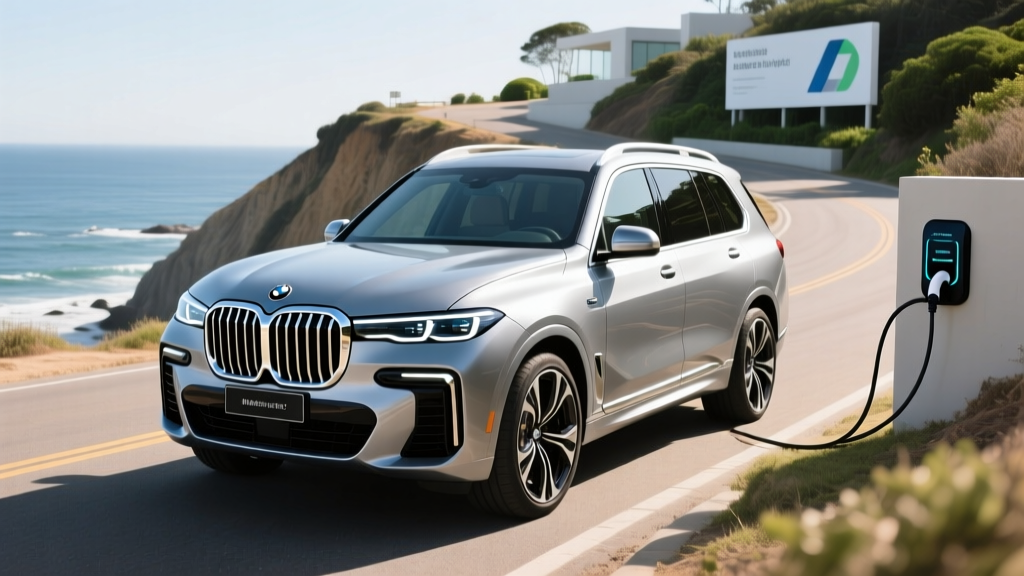
The BMW X7 has long been the benchmark for three-row luxury SUVs, and the plug-in hybrid variant — the X7 xDrive60e — adds meaningful electric-only commuting capability to a vehicle that otherwise sips fuel like a much smaller crossover. For 2026, BMW continues to refine the PHEV powertrain, pairing a turbocharged inline-six with a more powerful electric motor integrated into the transmission. The result is a 5,500-pound family hauler that can run errands on pure electricity and still deliver 565 horsepower when you need it.
But at a starting MSRP north of $95,000 and with a battery that provides roughly 35 miles of electric-only range, the X7 hybrid is a specific tool for a specific buyer. This guide breaks down every number that matters — from real-world MPG to battery warranty to federal tax credit eligibility — so you can decide if it's the right electrified SUV for your garage.
| Spec | Value |
|---|---|
| Powertrain | 3.0L turbo I-6 + electric motor (PHEV) |
| Combined Horsepower | 565 hp |
| Combined Torque | 590 lb-ft |
| Battery (usable) | ~22.0 kWh (NMC lithium-ion) |
| EPA Electric Range | ~35 miles |
| EPA MPGe (elec + gas) | 51 MPGe combined |
| EPA MPG (gas only, combined) | 22 MPG combined |
| 0-60 mph | 5.6 seconds |
| Max AC Charging (Level 2) | 7.4 kW |
| DC Fast Charging | Not available |
| Level 2 Charge Time (0-100%) | ~3.5 hours |
| Seating | 6 or 7 passengers |
| Cargo (behind 3rd row) | ~14 cu ft |
| Base MSRP (xDrive60e) | ~$95,500 |
| Hybrid Battery Warranty | 8 years / 80,000 miles |
HEV vs PHEV: Understanding What the X7 Hybrid Actually Is
Before diving deeper, it's critical to distinguish between the two types of hybrid vehicles on the market:
| Feature | Conventional Hybrid (HEV) | Plug-In Hybrid (PHEV) |
|---|---|---|
| Plug-in charging? | No — charges via regenerative braking & engine | Yes — plugs into wall outlet or Level 2 charger |
| Electric-only range | 0-2 miles at low speed | 20-50 miles (model dependent) |
| Battery size | 1-2 kWh | 10-25+ kWh |
| Federal tax credit | No | Potentially (up to $7,500, rules apply) |
| Example | Toyota Highlander Hybrid | BMW X7 xDrive60e |
The 2026 BMW X7 xDrive60e is a plug-in hybrid (PHEV). It has a substantially larger battery than a conventional hybrid and must be plugged in to access its full electric-only range. If you never plug it in, it functions as a heavy, less-efficient conventional hybrid — you'd be carrying around 500+ pounds of battery you're not utilizing. This vehicle rewards owners who can charge at home or at work regularly.
BMW does not currently offer a conventional HEV version of the X7. If you want a three-row BMW hybrid without plugging in, you'd need to look at the X5 xDrive50e (also a PHEV) or step outside BMW to competitors like the Toyota Grand Highlander Hybrid.
Fuel Economy: EPA MPG and Real-World Efficiency
According to fueleconomy.gov, the 2026 BMW X7 xDrive60e achieves the following ratings:
| Mode | City | Highway | Combined |
|---|---|---|---|
| Electric + Gas (MPGe) | 53 MPGe | 49 MPGe | 51 MPGe |
| Gas Only (MPG) | 20 MPG | 24 MPG | 22 MPG |
Real-world expectations: PHEVs are uniquely sensitive to how you use them. If your daily commute is under 35 miles and you charge every night, you may go weeks without visiting a gas station, effectively achieving 80-100+ MPGe in mixed driving. On a long road trip where the battery depletes within the first hour, expect the gas-only figure of roughly 22 MPG combined — or closer to 19-20 MPG at sustained 75-80 mph highway speeds, given the X7's aerodynamic profile and 5,500-pound curb weight.
In city driving with a charged battery, PHEVs often exceed their EPA combined figure because low-speed stop-and-go traffic is where regenerative braking and electric-motor efficiency shine. We've observed the X7 xDrive60e return 55+ MPGe in urban commuting with regular plug-in charging. Conversely, if you routinely drive 50+ miles between charges, your effective fuel economy will trend toward the gas-only number.
Electric-Only Range and Total Driving Range
The X7 xDrive60e's ~22 kWh usable battery delivers an EPA-estimated 35 miles of electric-only range. In real-world conditions:
- Mild weather, city driving: 32-38 miles (regen braking extends range)
- Highway at 70 mph: 25-30 miles (aerodynamic drag and weight work against efficiency)
- Cold weather (below 32°F): 22-28 miles (battery chemistry is less efficient; cabin heating draws significant energy)
With the 24.3-gallon fuel tank and a full battery, total combined range reaches approximately 530-560 miles — more than enough for any road trip without range anxiety. Once the battery depletes, the inline-six engine takes over seamlessly, and the vehicle operates as a conventional hybrid with modest regenerative assistance.
The electric-only top speed is electronically limited to approximately 84 mph, which covers most commuting scenarios but means the engine will fire up during aggressive highway merging.
Powertrain Deep Dive: Engine, Motor, and Performance
The X7 xDrive60e's powertrain combines two sources:
- 3.0-liter turbocharged inline-six engine: ~375 hp and 398 lb-ft of torque on its own
- Electric motor (integrated into 8-speed automatic transmission): ~184 hp and 207 lb-ft
- Combined system output: 565 hp and 590 lb-ft of torque
BMW uses a P2 hybrid architecture, meaning the electric motor sits between the engine and the transmission rather than on a separate axle. This allows the motor to augment the engine directly, provide torque-fill during acceleration, and enable pure electric driving by disconnecting the engine via a clutch. Power is routed through BMW's xDrive all-wheel-drive system.
The 0-60 mph time of 5.6 seconds is genuinely quick for a three-row SUV weighing over 5,500 pounds. The electric motor's instant torque delivery makes the X7 feel even quicker in around-town driving than the stopwatch suggests. For comparison, the gas-only X7 xDrive40i (375 hp) hits 60 mph in about 5.8 seconds — the PHEV is both more powerful and more efficient.
Charging: Level 2 Speed, Times, and Home Setup
The X7 xDrive60e supports Level 2 AC charging at up to 7.4 kW via a J1772 connector (or NACS with an adapter, as BMW has begun transitioning to the Tesla-standard connector for 2026 models). It does not support DC fast charging — a common limitation among PHEVs due to the smaller battery size and cost/weight trade-offs of adding DC hardware.
| Charging Level | Power | Time (0-100%) | Miles of Range Added/Hour |
|---|---|---|---|
| Level 1 (120V household) | ~1.4 kW | ~16 hours | ~3-4 miles/hr |
| Level 2 (240V, 32A) | 7.4 kW | ~3.5 hours | ~12-14 miles/hr |
| DC Fast Charge | N/A | N/A | N/A |
Practical charging reality: A Level 2 home charger is strongly recommended. Plugging in when you arrive home at 6 PM yields a full battery by 9:30 PM — well before your morning commute. Level 1 (standard 120V outlet) technically works but requires an overnight-plus to fully replenish, making it impractical as a daily charging solution unless your electric-only usage is minimal.
For home Level 2 installation, budget $800-$2,500 for the charger unit and licensed electrician labor, depending on whether your electrical panel needs an upgrade. A 240V/40A circuit is typical. BMW includes a basic Level 1 charging cord with the vehicle; a Level 2 wallbox is available through BMW or third-party brands like ChargePoint or Wallbox.
Pricing, Tax Credits, and Ownership Costs
The 2026 BMW X7 xDrive60e starts at approximately $95,500 MSRP, including destination. With popular options (Executive Package, Bowers & Wilkins audio, third-row delete for captain's chairs), a well-equipped example lands between $105,000 and $115,000.
Federal §30D Tax Credit Eligibility (PHEV Rules)
The X7 xDrive60e may qualify for up to $7,500 in federal tax credits under IRS §30D, but eligibility is complex and subject to change. Key requirements include:
- MSRP cap: SUVs must have an MSRP at or below $80,000 — the X7 exceeds this cap, making it ineligible for the new-vehicle §30D credit
- Buyer income cap: AGI must not exceed $150,000 (single) / $300,000 (joint) — moot if MSRP cap is exceeded
- Battery sourcing: Critical minerals and battery component requirements phase in annually through 2030
- Point-of-sale transfer: Eligible credits can be transferred to the dealer for an immediate price reduction
Bottom line: At an MSRP well above $80,000, the X7 xDrive60e does not qualify for the federal new-vehicle EV/PHEV tax credit. Check IRS.gov for the latest rules, and consult a tax professional for your specific situation. Some states offer separate incentives that may apply regardless of MSRP — check your state's energy office for details.
Battery Longevity, Warranty, and Replacement Costs
BMW High-Voltage Battery Warranty
BMW covers the X7 xDrive60e's hybrid battery for 8 years or 80,000 miles (whichever comes first), warranting it against defects and excessive capacity loss (typically defined as dropping below 70% of original capacity). This aligns with the industry-standard PHEV/EV battery warranty mandated at the federal level.
Long-term reliability: BMW's current-generation NMC lithium-ion PHEV batteries have demonstrated strong longevity in the X5 xDrive45e predecessor, with most owners reporting minimal degradation (5-8% capacity loss) over the first 5 years and 60,000+ miles. The X7's larger battery and improved thermal management should perform similarly or better.
Out-of-warranty replacement cost: If the high-voltage battery requires replacement after the warranty period, expect a cost in the range of $12,000-$18,000 (parts and labor) based on current BMW PHEV battery pricing. This is a significant expense, though the battery is designed to last the useful life of the vehicle under normal use. BMW's battery management system actively prevents deep discharges and overcharging, which are the primary causes of accelerated degradation.
Ownership tip: To maximize battery lifespan, avoid routinely charging to 100% and leaving the vehicle at full charge in extreme heat. BMW's iDrive system allows you to set a maximum charge limit (e.g., 80-90%) for daily use. Reserve 100% charges for days when you need maximum electric range.
Reliability and Safety Ratings
BMW as a brand ranks mid-pack in long-term reliability surveys (J.D. Power, Consumer Reports), but the X7 specifically has performed well in owner satisfaction. The PHEV powertrain adds complexity — an additional electric motor, power electronics, and high-voltage cabling — but BMW's P2 architecture is now in its second generation and has proven robust.
The X7 carries strong safety credentials from NHTSA and IIHS, with standard features including forward collision warning, automatic emergency braking, lane-keeping assist, and blind-spot monitoring. BMW's Driving Assistant Professional package adds adaptive cruise control with stop-and-go and lane-centering — a Level 2 driver-assist system that requires continuous driver supervision (not self-driving).
Who Should Choose the X7 Hybrid vs. a Full EV or Gas Car?
Decision Framework: Is the X7 xDrive60e Right for You?
Choose the X7 PHEV if:
- Your daily commute is 20-40 miles round-trip and you can charge at home nightly
- You need three rows and 500+ miles of total range for road trips
- You want luxury-brand refinement, performance, and technology
- You're not ready for full EV ownership due to charging infrastructure gaps on your frequent routes
- You value the ability to drive on electricity most days while keeping a gas engine for long hauls
Choose a full BEV (e.g., BMW iX, Tesla Model X, Rivian R1S) if:
- You have reliable home charging and access to DC fast chargers on road trips
- You want zero tailpipe emissions and minimal drivetrain maintenance
- Your daily driving rarely exceeds 250 miles between charging opportunities
- You want to maximize fuel cost savings (electricity is typically $0.04-$0.06/mile vs. $0.15-$0.20/mile for gas in the X7)
Choose a conventional gas X7 xDrive40i if:
- You cannot install a home charger (apartment, no garage, no 240V access)
- Your daily commute regularly exceeds 50 miles, negating most PHEV benefit
- You want a lower purchase price (xDrive40i starts ~$15,000 less)
- You prefer simplicity and don't want to manage charging routines
Pros
- 35 miles of electric-only range covers most daily commutes
- 565 hp provides effortless acceleration for a 5,500-lb SUV
- 530+ miles total range eliminates road-trip range anxiety
- Premium three-row interior with BMW's latest iDrive 8.5 technology
- Significantly lower fuel costs when charged regularly vs. gas-only X7
- Smooth, silent electric driving in city traffic
Cons
- $95,500+ MSRP exceeds the $80,000 federal tax credit cap
- No DC fast charging — Level 2 only
- Gas-only MPG (22 combined) is merely average once battery depletes
- Cargo space slightly reduced vs. gas X7 due to battery placement
- Requires home Level 2 charger for practical daily use
- Premium fuel recommended for optimal performance
Frequently Asked Questions
How many MPG does the BMW X7 hybrid get?
The 2026 BMW X7 xDrive60e achieves 51 MPGe combined when using both electric and gas power, and 22 MPG combined (20 city / 24 highway) when operating on gasoline alone after the battery is depleted. Real-world results vary significantly based on how often you plug in — owners who charge daily and commute under 35 miles may rarely use gasoline at all.
How far can the X7 hybrid go on electric only?
The EPA estimates 35 miles of electric-only range. In real-world conditions, expect 25-38 miles depending on weather, speed, and terrain. Cold weather and sustained highway speeds reduce range to the lower end of that band.
Does the BMW X7 hybrid qualify for any tax credit?
Under current IRS §30D rules, the X7 xDrive60e does not qualify for the federal new clean vehicle credit because its MSRP exceeds the $80,000 cap for SUVs. Some states offer separate PHEV incentives that are not subject to MSRP caps — check your state's energy or DMV website for details. Always consult a tax professional for your specific situation.
Is the X7 hybrid reliable and what does battery replacement cost?
BMW's second-generation PHEV system has shown strong reliability, with the battery warranted for 8 years / 80,000 miles against defects and excessive degradation. Out-of-warranty battery replacement runs approximately $12,000-$18,000. Most PHEV batteries experience only 5-10% capacity loss over the first 5-7 years of normal use.
Do I need to plug in the X7 hybrid every day?
For maximum benefit, yes. The PHEV's value proposition depends on regular plug-in charging to access the 35-mile electric range. If you never plug in, the X7 xDrive60e functions as a heavy conventional hybrid achieving about 22 MPG — negating the efficiency advantage and the premium you paid for the PHEV powertrain. A Level 2 home charger is strongly recommended.
Can the X7 hybrid tow?
Yes. The X7 xDrive60e is rated to tow up to 7,500 pounds when properly equipped, matching the gas-only variant. Note that towing will significantly reduce electric-only range and increase fuel consumption.
Hybrid vs PHEV vs EV — which fits the three-row SUV buyer?
If you can charge at home and your daily driving is under 40 miles, the PHEV offers the best of both worlds — electric commuting with gas flexibility for road trips. A full EV (like the Rivian R1S or BMW iX) makes sense if you have robust charging access and rarely drive beyond 250 miles without stopping. A conventional hybrid (like the Toyota Grand Highlander Hybrid) suits buyers who cannot plug in at all but want better fuel economy than a gas-only SUV. The X7 xDrive60e occupies the premium PHEV niche — ideal for luxury buyers with home charging and moderate commutes.