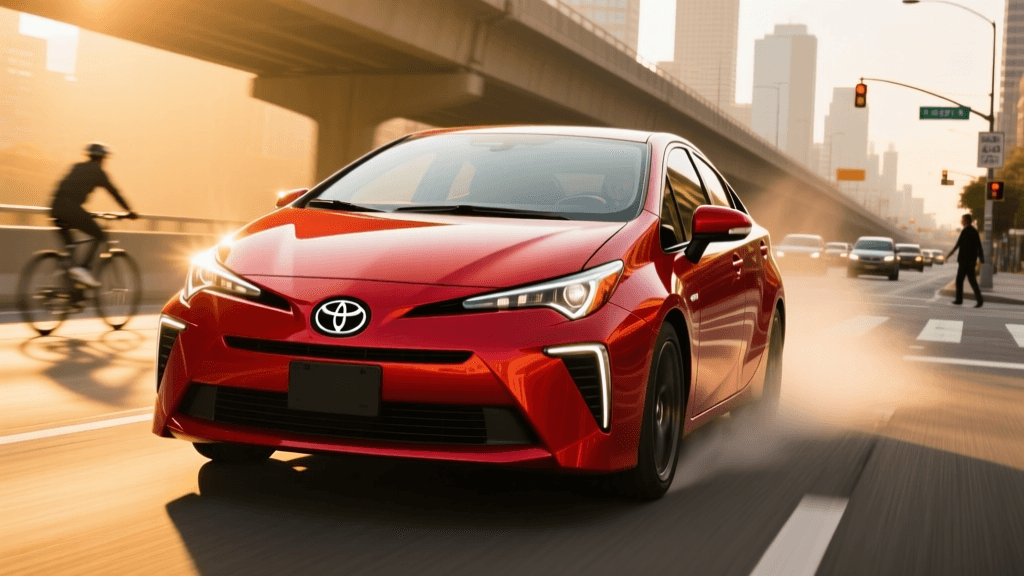
Introduction: The Modern Prius Daily Driving Experience
The latest generation of the Toyota Prius has completely shattered the stereotype of the boring, slow, and eccentric hybrid. With a sleek, aerodynamic silhouette, a lowered center of gravity, and a hybrid powertrain pushing nearly 200 horsepower in all-wheel-drive trims, it is genuinely engaging to drive. However, beneath the stunning exterior lies a complex network of hybrid sensors, lithium-ion battery management systems, and regenerative braking algorithms. For daily drivers, this complexity occasionally translates into quirks that require troubleshooting. Whether you are experiencing sudden drops in fuel economy, dealing with the infamous 12V battery drain, or trying to optimize your regenerative braking, understanding how to diagnose and solve these issues is critical to maximizing your ownership experience.
Real-World MPG vs. EPA Estimates: Setting Expectations
According to the EPA Fuel Economy guide, the front-wheel-drive Prius LE achieves an astonishing 57 MPG combined, while the AWD trims and higher-tier XSE models hover around 52 to 54 MPG combined. In our real-world daily driving tests, achieving these numbers is entirely possible, but it requires specific driving conditions. On a flat, 65-mph highway loop in moderate temperatures (around 65°F to 75°F), we consistently saw between 53 and 56 MPG. However, urban stop-and-go traffic, hilly terrain, and extreme weather can cause the onboard trip computer to display numbers in the mid-to-low 40s. Understanding why these deviations occur is the first step in troubleshooting your daily commute efficiency.
Troubleshooting Sudden MPG Drops in Your Prius
If your Prius is suddenly averaging 10 to 15 MPG less than its historical average, do not immediately assume the hybrid traction battery is failing. Most fuel economy drops are tied to environmental factors and maintenance oversights that are easily correctable.
The Winter Weather Penalty
Hybrid vehicles suffer a disproportionate fuel economy penalty in cold weather compared to internal combustion engine (ICE) vehicles. When the ambient temperature drops below freezing, the Prius engine will run continuously for the first several miles of your trip. It does this not only to heat the cabin but also to warm up the catalytic converter to meet emissions standards and to bring the hybrid battery up to its optimal operating temperature. Troubleshooting Step: If you own a Prius Prime (PHEV), always pre-condition the cabin while the car is still plugged into the wall. For standard hybrids, rely on the heated seats and heated steering wheel rather than blasting the cabin air heater, as the electric resistance heaters draw less overall system energy than forcing the gas engine to stay on for cabin heat.
Tire Pressure and Rolling Resistance
The Prius is equipped with Low Rolling Resistance (LRR) tires from the factory. A drop in tire pressure of just 3 to 4 PSI—which happens naturally when the temperature drops from summer to winter—can increase rolling resistance enough to shave 2 to 3 MPG off your average. Troubleshooting Step: Check your tire pressures monthly. The door jamb sticker usually recommends 36 to 38 PSI. Many hypermilers safely inflate their LRR tires to 40 or 42 PSI to further reduce rolling resistance, though this will result in a slightly firmer ride and increased susceptibility to pothole damage.
The 'ECO' Mode Myth
Many new owners instinctively throw the Prius into ECO mode, assuming it will yield the best fuel economy. However, ECO mode dulls the throttle response and limits the air conditioning output. In stop-and-go traffic, this lethargic throttle response often forces the driver to push the pedal deeper to keep up with traffic, inadvertently triggering the gas engine to engage harder and longer. Troubleshooting Step: Try driving in NORMAL mode. You may find that the more linear power delivery allows you to modulate the pedal more precisely, keeping the car in EV mode longer and actually improving your real-world MPG.
Solving the Infamous 12V Battery Drain Issue
While the massive high-voltage hybrid battery gets all the attention, the small 12-volt battery is the Achilles' heel of the modern Prius. The 12V battery is responsible for booting up the car's computers, which then close the relays to connect the main hybrid battery. If the 12V battery dies, the car is completely bricked, even if the main hybrid battery is at 100% charge. In newer models, Toyota uses a small Lithium-Ion 12V battery, which is highly sensitive to parasitic drains.
Common Culprits of Parasitic Drain:
- OBD2 Dongles: Insurance trackers, BimmerCode adapters, or generic OBD2 scanners left plugged in will drain the small 12V battery in a matter of days if the car is not driven.
- Aftermarket Dashcams: Hardwired dashcams with 'parking mode' features will easily deplete the 12V battery over a weekend.
- Infrequent Driving: The Prius DC-DC converter charges the 12V battery only when the car is in 'Ready' mode. Short, 5-minute trips may not provide enough time to replenish the energy used to boot the computers.
Troubleshooting Step: If your Prius frequently refuses to start after sitting for 48 hours, unplug all aftermarket accessories. Invest in a smart battery tender specifically designed for Lithium-Ion 12V batteries (do not use a standard lead-acid trickle charger, as the voltage profiles differ and can damage the Li-Ion 12V battery). For expert insights on maintaining hybrid battery systems and avoiding accessory-related drains, resources from Consumer Reports offer excellent long-term reliability data and maintenance tips for hybrid owners.
Prius 12V & Efficiency Troubleshooting Matrix
| Issue | Symptom | Troubleshooting Step |
|---|---|---|
| 12V Battery Drain | Car won't enter 'Ready' mode; dashboard flashes erratically; smart key fob unresponsive. | Remove all OBD2 dongles and dashcams. Jump-start using the dedicated 12V jump points under the hood (never the main hybrid battery). Test resting voltage. |
| Winter MPG Drop | 10-20% lower fuel economy; gas engine runs constantly on short trips. | Use seat heaters instead of cabin air. Block the lower front grille to retain engine heat (monitor coolant temps). Pre-condition PHEV models. |
| Regen Braking Weakness | Brake pedal feels grabby; EV mode engages less frequently on deceleration. | Clean the front radar sensor. Check brake fluid moisture content. Ensure tires are not slipping, as traction control disables regen. |
| TSS Radar Blocked | 'Radar Blocked' warning on dash; adaptive cruise control disables. | Wipe the Toyota emblem on the front grille. Ensure no aftermarket wraps or thick waxes are covering the radar sensor. |
Maximizing Regenerative Braking and EV Mode
A common complaint among new Prius drivers is that the regenerative braking feels inconsistent. Sometimes the car slows down aggressively when you lift off the throttle; other times, it coasts freely, forcing you to use the mechanical friction brakes. This is usually not a mechanical failure but a software and environmental response.
The Prius will automatically disable or limit regenerative braking under two main conditions: when the hybrid battery is fully charged, or when the battery is too cold. Furthermore, if the front tires experience even a micro-slip on wet leaves or rain, the traction control system will instantly cut regenerative braking to prevent the driven wheels from locking up. Troubleshooting Step: To maximize regen and extend brake pad life, utilize the 'B' (Brake) gear on the shift knob during long downhill descents. This tells the system to maximize energy recapture and simulate engine braking, saving your physical brake pads from overheating. For daily driving on flat ground, leave it in 'D' to maximize coasting efficiency, which is often more energy-efficient than converting kinetic energy to electricity and back again.
Infotainment and Sensor Calibration Fixes
The latest Prius features Toyota's updated Audio Multimedia system, available in 8-inch and 12.3-inch variants. While wireless Apple CarPlay and Android Auto are fantastic features, daily drivers frequently report intermittent connection drops or audio lag. Troubleshooting Step: Before heading to the dealership for a head-unit replacement, perform a hard reset of the infotainment system by holding down the power/volume knob for 10 to 15 seconds until the Toyota logo reappears. Additionally, check your smartphone's settings to ensure the car is not being put to 'sleep' by your phone's battery optimization features.
Regarding the Toyota Safety Sense (TSS) suite, the millimeter-wave radar is housed behind the front Toyota emblem. Owners in snowy or heavily bugged regions frequently encounter the 'Dynamic Radar Cruise Control Unavailable' error. Because the radar cannot penetrate thick layers of ice, snow, or even dense accumulations of highway grime, keeping the front emblem clean is a mandatory daily driving chore. Do not apply vinyl wraps, thick ceramic coatings, or aftermarket badges over the front emblem, as this will permanently blind the radar and require dealership recalibration.
Conclusion: Mastering Your Hybrid Commute
The Toyota Prius remains the undisputed king of the daily commute, offering an unmatched blend of reliability, striking design, and real-world fuel economy. However, transitioning from a traditional gas car to a sophisticated hybrid requires a shift in habits and a basic understanding of hybrid troubleshooting. By managing your 12V battery parasitic drains, adjusting your tire pressures for the seasons, and understanding the nuances of the regenerative braking system, you can ensure your Prius consistently delivers the 50+ MPG it was engineered to achieve. Armed with these troubleshooting steps, your daily driving experience will be as seamless and efficient as the hybrid synergy drive itself.