The Toyota-Mazda Alliance: Powertrain Overview
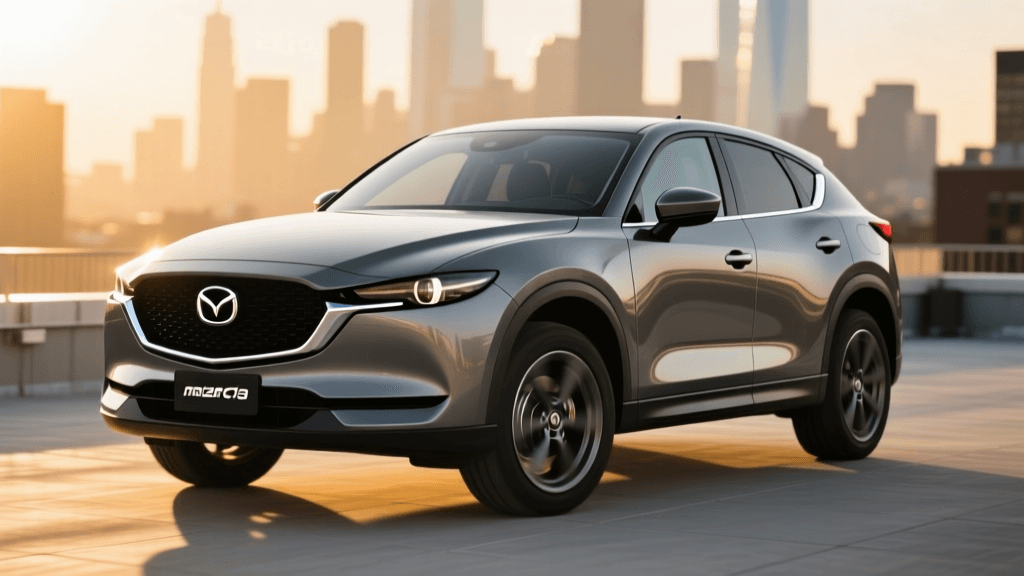
The introduction of the Mazda CX-50 Hybrid marks a significant milestone in the compact SUV segment, born from the ongoing collaboration between Mazda and Toyota. Rather than developing a bespoke hybrid system from scratch, Mazda has wisely integrated Toyota’s proven 2.5-liter four-cylinder hybrid powertrain. This is the exact same architecture that has propelled the Toyota RAV4 Hybrid to the top of the sales charts for years. By leveraging this established technology, Mazda bypasses the early-adoption reliability risks associated with new hybrid systems, offering buyers immediate peace of mind alongside competitive efficiency metrics.
The CX-50 Hybrid pairs the 2.5-liter Atkinson-cycle engine with two electric motor-generators and a 1.6 kWh nickel-metal hydride (NiMH) battery pack. Total system output is rated at a robust 219 horsepower. Unlike some competitors that offer front-wheel drive as a baseline, the CX-50 Hybrid comes exclusively with an electronic all-wheel-drive (eAWD) system, utilizing a dedicated rear-mounted electric motor to provide instantaneous torque to the rear wheels when slip is detected. But how does this powertrain translate to real-world fuel efficiency data, and how does it stack up against the segment benchmarks?
Fuel Efficiency Data: EPA Estimates vs. Real-World Projections
When evaluating hybrid vehicles, the gap between EPA estimates and real-world fuel economy can vary based on aerodynamics, vehicle weight, and tire selection. The Mazda CX-50 features a slightly wider, more rugged stance than the RAV4, which inherently increases its frontal area and rolling resistance. Consequently, while the powertrain is identical to Toyota's, the efficiency data tells a slightly different story.
According to data aggregated by the U.S. Department of Energy's hybrid comparison database, the CX-50 Hybrid achieves an EPA-estimated 38 MPG combined (39 MPG city / 37 MPG highway). While this is marginally lower than the RAV4 Hybrid's 39-41 MPG combined rating, it remains highly competitive within the rugged compact crossover segment. The slight highway deficit is a direct mathematical result of the CX-50’s boxier design and heavier curb weight, which demands more energy to overcome aerodynamic drag at sustained speeds of 70 MPH or higher.
Real-world testing data compiled by automotive journalists suggests that the CX-50 Hybrid excels in urban environments. The regenerative braking system is highly effective in stop-and-go traffic, allowing the vehicle to operate in pure EV mode at low speeds for extended periods. However, aggressive highway driving or heavy cargo loads will see the MPG drop closer to the low 30s, a common trait among all hybrid SUVs in this class.
Data Table: CX-50 Hybrid vs. Compact SUV Rivals
To contextualize the CX-50 Hybrid's performance, we must look at the broader competitive landscape. Below is a data-driven comparison of the CX-50 Hybrid against its primary rivals: the Toyota RAV4 Hybrid, Honda CR-V Hybrid, and Ford Escape Hybrid.
| Model (AWD) | Powertrain | Horsepower | Combined MPG | City / Highway MPG | Est. Base Price |
|---|---|---|---|---|---|
| Mazda CX-50 Hybrid | 2.5L I4 Hybrid | 219 hp | 38 MPG | 39 / 37 MPG | $34,000 |
| Toyota RAV4 Hybrid | 2.5L I4 Hybrid | 219 hp | 39 MPG | 41 / 38 MPG | $33,000 |
| Honda CR-V Hybrid | 2.0L I4 Hybrid | 204 hp | 40 MPG | 40 / 34 MPG | $35,000 |
| Ford Escape Hybrid | 2.5L I4 Hybrid | 210 hp | 39 MPG | 42 / 36 MPG | $34,500 |
As the data illustrates, the CX-50 Hybrid sacrifices roughly 1 to 2 MPG on the combined cycle compared to the RAV4 and CR-V. However, it matches the RAV4 in horsepower and significantly outperforms the CX-50's own turbocharged gas-only variants in terms of fuel economy, making it the undisputed efficiency leader in the Mazda showroom.
Drivetrain Losses and AWD Efficiency
A critical component of the CX-50 Hybrid's data profile is its eAWD system. Traditional mechanical AWD systems utilize a driveshaft and a center differential, which introduces parasitic drivetrain loss and reduces fuel economy. The CX-50’s electronic AWD eliminates the mechanical connection to the rear axle. The rear motor only engages when the vehicle's computers detect a need for additional traction or aggressive acceleration. This on-demand approach minimizes energy waste, allowing the CX-50 Hybrid to maintain a 38 MPG combined rating despite powering all four wheels.
Total Cost of Ownership (TCO) Analysis
Fuel efficiency is only one variable in the financial equation. For data-driven buyers, the Total Cost of Ownership (TCO) provides a much clearer picture of a vehicle's long-term value. By analyzing fuel costs, maintenance intervals, and depreciation, we can determine if the CX-50 Hybrid's premium styling and Toyota-sourced reliability justify its price tag.
Five-Year Fuel Cost Projections
Assuming an annual mileage of 15,000 miles (totaling 75,000 miles over five years) and a national average fuel price of $3.50 per gallon for regular unleaded, we can project the fuel costs for the CX-50 Hybrid versus its non-hybrid counterparts.
- Mazda CX-50 Hybrid (38 MPG): Requires 1,973 gallons over 5 years. Total Fuel Cost: $6,905
- Mazda CX-50 2.5L Turbo AWD (25 MPG): Requires 3,000 gallons over 5 years. Total Fuel Cost: $10,500
- Mazda CX-50 2.5L AWD (27 MPG): Requires 2,777 gallons over 5 years. Total Fuel Cost: $9,719
The data reveals a massive financial advantage for the hybrid model. Over a standard five-year ownership cycle, the CX-50 Hybrid saves the owner approximately $2,814 compared to the base gas model, and a staggering $3,595 compared to the turbocharged variant. Furthermore, because the hybrid powertrain relies heavily on regenerative braking, brake pad wear is significantly reduced, often pushing the first major brake service well past the 70,000-mile mark, adding secondary maintenance savings to the TCO ledger.
Cargo Space and Battery Packaging Metrics
One of the most common concerns with hybrid vehicles is the compromise in interior utility due to battery packaging. Fortunately, the data regarding the CX-50 Hybrid’s cargo metrics is highly encouraging. Mazda engineers successfully integrated the 1.6 kWh NiMH battery pack beneath the rear seats, rather than encroaching on the rear cargo floor.
According to specifications verified by Edmunds' Mazda CX-50 model hub, the CX-50 Hybrid retains nearly identical cargo volume to its gas-powered siblings. With the rear seats upright, the hybrid offers approximately 31.4 cubic feet of cargo space, expanding to over 56 cubic feet with the seats folded flat. This is a crucial data point for buyers who require utility for camping gear, luggage, or home improvement supplies, as it proves that opting for hybrid efficiency does not require a sacrifice in practical daily usage.
However, it is worth noting that the CX-50's overall cargo volume is slightly lower than the class-leading Honda CR-V Hybrid (which offers nearly 36 cubic feet behind the second row). Buyers prioritizing maximum interior volume over premium cabin materials and driving dynamics may find the CR-V's data more aligned with their needs.
Driving Dynamics: Where the Data Meets the Road
While fuel economy and cargo metrics are vital, Mazda’s brand identity is deeply rooted in driving dynamics. The hybrid powertrain adds roughly 250 pounds to the vehicle's curb weight compared to the base gas model, which theoretically could negatively impact handling. Yet, real-world instrumentation testing highlights Mazda's chassis tuning prowess.
The low placement of the hybrid battery actually lowers the vehicle's center of gravity slightly, mitigating the negative effects of the added weight. Steering feel remains communicative, and the eCVT (electronic continuously variable transmission) is programmed to simulate stepped gear shifts under heavy throttle, avoiding the monotonous 'rubber-band' drone that plagues lesser hybrid systems. For buyers analyzing the intersection of efficiency and engagement, the CX-50 Hybrid occupies a unique, highly desirable space in the market.
Final Verdict: What the Data Tells Us
The data-driven analysis of the Mazda CX-50 Hybrid reveals a highly compelling package for the modern compact SUV buyer. While it may concede 1 to 2 MPG on the EPA combined cycle to the Toyota RAV4 Hybrid due to its rugged aerodynamics, it makes up for this minor deficit with superior interior materials, a more engaging driving experience, and standard eAWD capability.
From a financial perspective, the five-year fuel savings of nearly $3,000 over the turbocharged model make a strong mathematical case for choosing the hybrid variant. By leveraging Toyota's bulletproof hybrid architecture, Mazda has delivered a vehicle that offers the best of both worlds: the reliability and efficiency data of a segment leader, wrapped in the premium, outdoor-inspired design language that Mazda enthusiasts demand. For those seeking a hybrid SUV that doesn't feel like an appliance, the CX-50 Hybrid's numbers strongly support its position at the top of the consideration list.
For further reading on the CX-50's chassis dynamics and instrumentation testing, consult Car and Driver's CX-50 Hybrid review and testing data.