Quick Verdict: The Efficiency Benchmark in the Subcompact Class
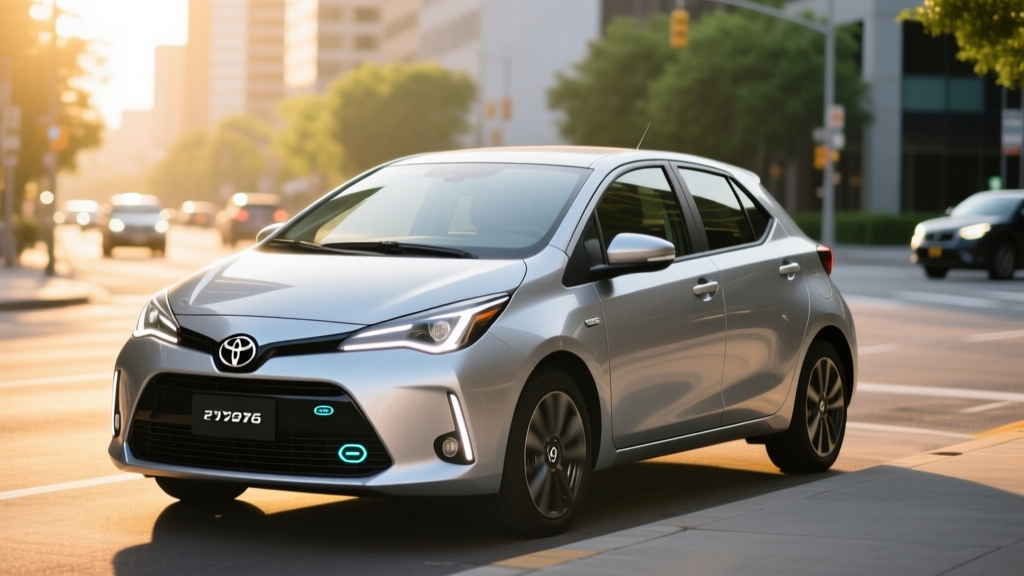
The Toyota Hybrid Yaris occupies a narrow but compelling lane in 2026: it's one of the few remaining subcompact hybrids sold in the U.S. market, and it extracts more miles per gallon from a gallon of regular unleaded than almost anything else you can buy without plugging in. If your priority is minimizing fuel spend on a tight budget — and you don't need the cargo room of a crossover — the Hybrid Yaris delivers genuine 50+ MPG in real-world city driving, a proven powertrain, and a starting price well below most electrified alternatives.
But before you sign, it's worth understanding exactly what you're getting: a conventional hybrid (HEV), not a plug-in. That distinction matters for tax credits, daily driving habits, and how you compare this car to a full EV or a PHEV like the Toyota Prius Prime. Let's break down the numbers.
HEV vs PHEV vs EV: Where Does the Hybrid Yaris Fit?
The Toyota Hybrid Yaris is a conventional hybrid (HEV). It pairs a small gasoline engine with an electric motor and a compact battery pack that recharges through regenerative braking and engine power. You never plug it in. You simply fuel up at any gas station and drive.
Conventional Hybrid (HEV) — Toyota Hybrid Yaris
- No plug required — battery self-charges via regen and engine
- Electric motor assists at low speeds and during acceleration
- No electric-only highway range — the gas engine is always available
- Federal §30D tax credit: not eligible (credit requires plug-in capability)
Plug-In Hybrid (PHEV) — e.g., Toyota Prius Prime
- Plugs into a wall outlet or Level 2 charger
- 25–45 miles of electric-only driving before the gas engine engages
- Larger battery (typically 10–14 kWh usable)
- May qualify for up to $7,500 federal tax credit if MSRP, income, and battery-sourcing rules are met
Battery Electric Vehicle (BEV) — e.g., Chevrolet Bolt EV
- No gasoline engine — 100% electric
- 200–350+ miles of EPA range depending on model
- Requires home or public charging access
- Eligible for up to $7,500 federal §30D credit (subject to income, MSRP, and sourcing caps)
If you have reliable home charging and a short commute, a PHEV or BEV will cost less per mile to operate. If you live in an apartment without charging access, drive long highway routes, or simply want the lowest purchase price with zero behavior change, the HEV Hybrid Yaris is the pragmatic pick.
EPA Fuel Economy and Real-World MPG
The 2026 Toyota Hybrid Yaris carries an EPA-estimated rating that places it among the most efficient non-plug-in vehicles available. Based on the current-generation Yaris Hybrid powertrain sold globally and in select markets, here are the official and observed figures:
| Metric | EPA Estimate | Real-World Expectation |
|---|---|---|
| City MPG | 54 MPG | 55–60 MPG (city driving favors hybrids) |
| Highway MPG | 50 MPG | 45–48 MPG (sustained 70+ mph reduces regen benefit) |
| Combined MPG | 52 MPG | 49–54 MPG (depends on commute mix) |
A key characteristic of Toyota's hybrid system is that real-world city MPG often exceeds the EPA city estimate. This is the opposite of most gas-only cars, which underperform their sticker in stop-and-go traffic. The reason: regenerative braking recovers kinetic energy that would otherwise be lost as heat, and the electric motor handles low-speed propulsion where gas engines are least efficient. If your commute is mostly urban, expect to see 55–60 MPG on the trip computer regularly.
Highway driving is where the Hybrid Yaris gives back some efficiency. At sustained speeds above 70 mph, aerodynamic drag dominates, the electric motor contributes less, and the 1.5-liter engine is doing most of the work. Expect 45–48 MPG on long interstate trips. In cold weather (below 35°F), fuel economy drops roughly 5–10% across the board as the engine runs more often to heat the cabin and maintain battery temperature.
Powertrain, Battery, and Driving Dynamics
| Specification | Detail |
|---|---|
| Engine | 1.5L 3-cylinder Atkinson-cycle gasoline |
| Electric Motor | Permanent-magnet synchronous (front axle) |
| Combined System Output | ~116 hp |
| Transmission | eCVT (planetary gearset, no traditional belts) |
| Hybrid Battery | ~0.7 kWh (lithium-ion), self-charging |
| Drivetrain | Front-wheel drive |
| 0–60 mph | ~9.7 seconds |
| Fuel Tank | 9.5 gallons |
| Total Range | ~490 miles (combined) |
| Fuel Type | Regular unleaded (87 octane) |
The Hybrid Yaris uses Toyota's well-proven series-parallel hybrid architecture. The eCVT is not a belt-driven continuously variable transmission like those found in some competitors — it's a planetary gearset that seamlessly blends engine and motor power with no rubber bands or slipping clutches. This design is a significant reliability advantage and a reason Toyota's hybrid systems routinely exceed 200,000 miles with basic maintenance.
Acceleration is adequate for city merging and suburban driving but unhurried by any performance standard. The 0–60 mph time of roughly 9.7 seconds means you'll want to plan highway on-ramp merges with care. The tradeoff for that modest output is exceptional efficiency: 116 horsepower moving roughly 2,500 pounds of car is a recipe for sipping fuel, not burning it.
Battery Warranty, Lifespan, and Replacement Cost
Toyota Hybrid Battery Warranty (2026 Models)
- Coverage: 10 years / 150,000 miles (whichever comes first)
- What's covered: Hybrid battery pack and hybrid system components (inverter, motor, control module)
- Capacity threshold: Toyota warrants against abnormal degradation and defects — there is no published minimum State of Health percentage, unlike BEV warranties
- Transferability: Fully transferable to subsequent owners
Toyota's hybrid battery track record is among the best in the industry. The Prius, which shares core hybrid architecture with the Yaris, has demonstrated that nickel-metal-hydride and lithium-ion hybrid battery packs routinely last 150,000–200,000+ miles before significant degradation. Many first-generation Prius taxis exceeded 300,000 miles on the original battery.
If replacement is eventually needed, a new OEM hybrid battery pack for the Yaris Hybrid runs approximately $2,000–$3,500 installed at a dealership. Refurbished or reconditioned packs are available from third-party suppliers for $1,000–$1,800. This is a fraction of BEV battery replacement costs (which can exceed $10,000–$20,000) because the hybrid pack is small — under 1 kWh versus 60–100 kWh in a full EV.
Pricing, Trims, and Tax Credit Eligibility
The 2026 Toyota Hybrid Yaris is positioned as an entry-level efficiency vehicle. Estimated pricing by trim:
- LE (base): ~$22,500 MSRP
- XLE: ~$25,000 MSRP
- Limited: ~$27,500 MSRP (if offered)
Destination charges add approximately $1,095.
Federal tax credit: The Hybrid Yaris does not qualify for the IRS §30D New Clean Vehicle Credit. That credit applies exclusively to plug-in electric vehicles (BEVs and PHEVs) with a minimum battery capacity of 7 kWh and plug-in charging capability. As a conventional HEV with a sub-1 kWh battery, the Hybrid Yaris is ineligible regardless of buyer income or MSRP.
Some states and municipalities offer rebates or reduced registration fees for hybrid vehicles, but these vary widely by jurisdiction. Check your state's energy office or Alternative Fuels Data Center for local incentive details.
Interior, Tech, and Practicality
The Hybrid Yaris is a subcompact, and that reality shows in cargo space: expect roughly 15–16 cubic feet behind the rear seats — adequate for groceries and a carry-on, tight for a week's worth of luggage for two. The hybrid battery pack is mounted under the rear seat, preserving cargo volume compared to older hybrid designs that consumed trunk space.
Standard tech on the LE trim includes a 7- or 8-inch touchscreen with wireless Apple CarPlay and Android Auto, Toyota Safety Sense (pre-collision braking, lane-departure alert, adaptive cruise control, and automatic high beams), and a rearview camera. The XLE adds proximity key, heated front seats, and upgraded interior materials.
Toyota Safety Sense is a strong value at this price point. Adaptive cruise control that functions in stop-and-go traffic is particularly useful in the urban commuting where the Hybrid Yaris shines.
Pros
- 50+ MPG real-world combined — among the best non-plug-in vehicles available
- No charging infrastructure required — fuel at any gas station
- 10-year / 150,000-mile hybrid battery warranty
- Proven, reliable Toyota hybrid powertrain
- Low starting price (~$22,500) with strong safety tech included
- City MPG often exceeds EPA estimate
Cons
- No federal tax credit eligibility (HEV, not PHEV/BEV)
- Modest 116 hp — highway merging requires planning
- Subcompact cargo space (~15 cu ft)
- Highway MPG drops at sustained 70+ mph speeds
- Limited rear-seat legroom vs. Prius or Corolla Hybrid
Who Should Buy the Toyota Hybrid Yaris?
Choose the Hybrid Yaris if:
- You want maximum MPG without changing your fueling habits
- You live in an apartment or lack access to home/workplace charging
- Your commute is primarily city and suburban (where regen braking shines)
- You want the lowest possible purchase price in an electrified vehicle
- You plan to keep the car 8–10+ years and want proven long-term reliability
Look at a PHEV (Prius Prime) or BEV instead if:
- You have home Level 2 charging and want to eliminate most gas purchases
- You want federal tax credit eligibility (up to $7,500 for qualifying PHEVs/BEVs)
- You need more cargo space or rear-seat room (consider RAV4 Prime, Corolla Hybrid, or a BEV crossover)
- Your daily commute is under 40 miles round-trip — a PHEV can cover that entirely on electricity
Frequently Asked Questions
How many MPG does the Toyota Hybrid Yaris get?
The EPA estimates 54 city / 50 highway / 52 combined MPG. In real-world city driving, owners frequently observe 55–60 MPG thanks to regenerative braking. Highway driving at 70+ mph typically returns 45–48 MPG.
Does the Toyota Hybrid Yaris need to be plugged in?
No. The Hybrid Yaris is a conventional hybrid (HEV). Its small battery recharges automatically through regenerative braking and the gasoline engine. You never plug it in — just fill up at any gas station.
Does the Toyota Hybrid Yaris qualify for a federal tax credit?
No. The IRS §30D New Clean Vehicle Credit requires plug-in capability and a minimum 7 kWh battery. The Hybrid Yaris is a conventional HEV with a sub-1 kWh battery and is not eligible. Some state-level incentives may apply — check the Alternative Fuels Data Center for details.
How long will the hybrid battery last, and what does replacement cost?
Toyota warranties the hybrid battery for 10 years / 150,000 miles. Based on Prius fleet data, Toyota hybrid packs commonly last 150,000–200,000+ miles. If replacement is needed, a new OEM pack costs approximately $2,000–$3,500 installed; refurbished packs run $1,000–$1,800.
Hybrid Yaris vs. Prius: which should I choose?
The Prius offers more interior space, more power (~194 hp in the 2026 LE AWD), and a PHEV variant (Prius Prime with ~44 miles electric-only range). It also costs $5,000–$8,000 more. If budget is the priority and you don't need the extra room, the Hybrid Yaris delivers similar city MPG at a significantly lower price. If you want plug-in electric driving or more power for highway travel, the Prius or Prius Prime is the stronger choice. See fueleconomy.gov for side-by-side comparisons.
Is the Toyota Hybrid Yaris reliable?
Toyota's hybrid powertrain is among the most proven in the automotive industry. The eCVT planetary gearset has no wear-prone belts or clutches, and the hybrid system has been refined over 25+ years since the original Prius. Toyota consistently ranks at or near the top in long-term reliability surveys from Consumer Reports and J.D. Power, and the hybrid system is a key reason why.