If you're shopping for an electrified vehicle but aren't ready to commit to a full battery-electric car, hybrids and plug-in hybrids occupy a practical middle ground. But understanding which models actually qualify for hybrid vehicle incentives — federal tax credits, state rebates, and utility programs — requires navigating a thicket of rules that treat conventional hybrids (HEVs) and plug-in hybrids (PHEVs) very differently.
This guide breaks down exactly how the 2026 federal §30D tax credit applies to PHEVs, why conventional hybrids are excluded from the federal credit, which state-level incentives still exist for HEVs, and how to calculate whether a hybrid's fuel savings justify its price premium over a gas-only equivalent.
HEV vs PHEV: The Incentive Divide
The single most important distinction when researching hybrid vehicle incentives is whether the vehicle is a conventional hybrid (HEV) or a plug-in hybrid (PHEV). The federal government treats them entirely differently under current law.
| Feature | Conventional Hybrid (HEV) | Plug-in Hybrid (PHEV) |
|---|---|---|
| Plugs in to charge? | No — charges via regenerative braking and engine | Yes — has a charge port and larger battery |
| Electric-only range | None (motor assists engine only) | 20–45 miles typical (2026 models) |
| Battery size | 0.6–1.6 kWh | 13–25 kWh usable |
| Federal §30D tax credit | Not eligible | Up to $7,500 (if all requirements met) |
| State/utility rebates | Rare, but some states offer $500–$1,500 | Common — $1,000–$4,500 depending on state |
| Typical price premium over gas model | $1,000–$2,500 | $4,000–$8,000 (before incentives) |
A conventional hybrid like the Toyota Camry Hybrid or Honda CR-V Hybrid never plugs in. Its small battery is charged by the gasoline engine and regenerative braking. Because it cannot be charged from an external source and has a battery far below the 7 kWh threshold, it does not qualify for the federal §30D clean vehicle credit.
A PHEV like the Toyota RAV4 Prime or Jeep Wrangler 4xe has a substantially larger battery pack (typically 13–25 kWh usable), a charge port, and enough electric-only range to handle most daily commutes without burning gasoline. These vehicles can qualify for the federal credit — but only if they meet every requirement under current IRS rules.
Federal §30D Tax Credit: PHEV Eligibility Rules for 2026
The IRS §30D New Clean Vehicle Credit offers up to $7,500 for qualifying new PHEVs (and BEVs). However, "up to" is the operative phrase. The credit is split into two components, each worth $3,750:
- $3,750 — Battery Component Requirement: A specified percentage of battery components must be manufactured or assembled in North America. For 2026, this threshold is 75%.
- $3,750 — Critical Minerals Requirement: A specified percentage of critical minerals in the battery must be sourced from the U.S. or a free-trade-agreement partner. For 2026, this is 80%.
A PHEV that meets both requirements earns the full $7,500. One that meets only one earns $3,750. One that meets neither earns nothing — even if it has a plug and a large battery.
Additional §30D Requirements for 2026
- MSRP cap: Vans, SUVs, and pickups — $80,000. Sedans and other vehicles — $55,000.
- Buyer income cap: Modified AGI must not exceed $150,000 (single), $225,000 (head of household), or $300,000 (joint).
- Battery capacity: Minimum 7 kWh for PHEVs and BEVs.
- Final assembly: Must occur in North America.
- Point-of-sale transfer: Buyers can transfer the credit to the dealer for an immediate price reduction at purchase.
- FEOC exclusion: Vehicles with battery components from a Foreign Entity of Concern (China, Russia, North Korea, Iran) are disqualified entirely as of 2024–2025 phase-in rules.
Source: IRS.gov — New Clean Vehicle Credit. Eligibility rules are subject to legislative change. Consult a tax professional for your specific situation.
PHEVs That Qualify for Federal Incentives in 2026
The list of PHEVs eligible for the full or partial §30D credit shifts frequently as automakers adjust battery supply chains. Below are several popular 2026 PHEV models with their incentive status, based on the latest fueleconomy.gov data and manufacturer disclosures. Always verify current eligibility at the point of sale.
| Model (2026) | PHEV Battery (kWh) | EV Range (mi) | Combined MPG (gas-only) | Combined HP | MSRP (base) | Est. §30D Credit |
|---|---|---|---|---|---|---|
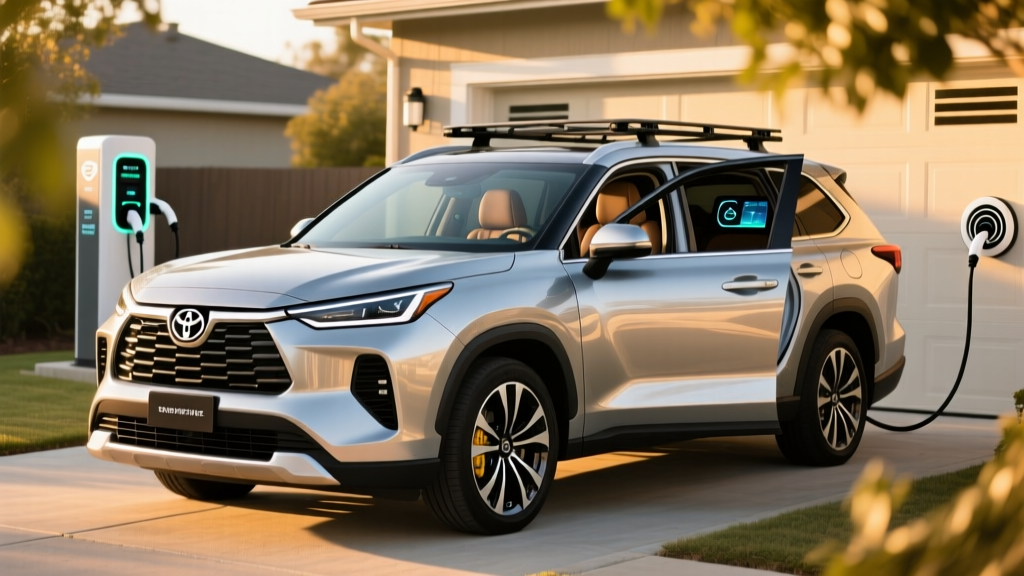
| Toyota RAV4 Prime | 18.1 kWh | 42 mi | 38 MPG | 302 hp | $44,900 | $3,750 (partial) |
| Jeep Wrangler 4xe | 17.3 kWh | 22 mi | 20 MPG | 375 hp | $51,795 | $3,750 (partial) |
| Chrysler Pacifica PHEV | 16.0 kWh | 32 mi | 30 MPG | 260 hp | $51,095 | $7,500 (full) |
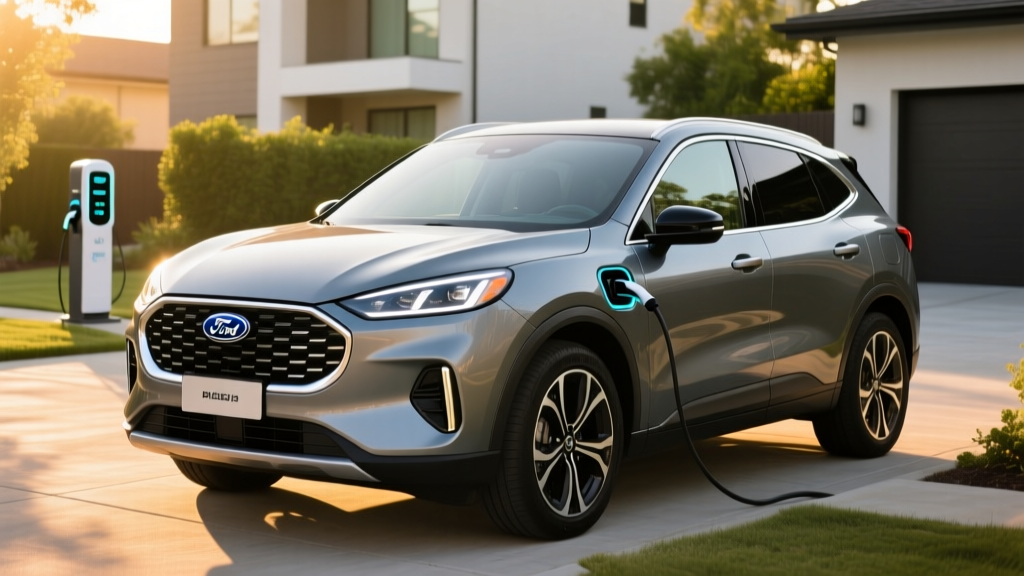
| Ford Escape PHEV | 14.4 kWh | 37 mi | 40 MPG | 210 hp | $39,500 | $3,750 (partial) |
| Hyundai Tucson PHEV | 13.8 kWh | 33 mi | 35 MPG | 261 hp | $39,750 | $3,750 (partial) |
Key takeaway: Most PHEVs on the market in 2026 qualify for the partial $3,750 credit because they meet one of the two sourcing requirements but not both. The Chrysler Pacifica PHEV, assembled in Ontario with North American battery sourcing, is among the few that can earn the full $7,500 — provided the buyer meets income limits and the MSRP stays under the $80,000 SUV cap.
Conventional Hybrid (HEV) Incentives: What's Available?
Conventional hybrids do not qualify for the federal §30D credit. Period. There is no federal tax incentive for buying a Toyota Camry Hybrid, Honda Accord Hybrid, or Ford Maverick Hybrid in 2026.
However, some state and local programs still offer incentives for HEVs, though these are becoming less common as policy focus shifts to PHEVs and BEVs:
- State rebates: A small number of states (e.g., Connecticut's CHEAPR program, Colorado's innovative vehicle tax credit) have historically offered $500–$1,500 rebates for HEVs. Check your state energy office for current availability — these programs frequently sunset or redirect funds to PHEVs/BEVs.
- Utility company rebates: Some electric utilities offer $250–$500 rebates for purchasing any electrified vehicle, including HEVs, though most now require a plug (PHEV or BEV).
- HOV lane access: Several states (California, Virginia, Maryland, New Jersey) have offered HOV lane stickers or exemptions for hybrids. However, many of these programs have been phased out or restricted to PHEVs and BEVs only. California's Clean Air Vehicle decals, for example, now require a PHEV or BEV — conventional HEVs no longer qualify.
- Insurance discounts: Some insurers offer 5–10% discounts for hybrid vehicles due to their statistically lower claim rates. This is not a government incentive but can offset the HEV price premium over time.
For most buyers, the financial case for a conventional hybrid rests entirely on fuel savings rather than incentives. A Camry Hybrid achieving 52 MPG combined vs. a gas Camry at 32 MPG combined saves roughly $600–$800 per year in fuel at 12,000 miles/year and $3.40/gallon — enough to recoup the ~$1,500 hybrid premium in about two years.
Real-World MPG: EPA Sticker vs. Actual Driving
Hybrids are one of the few vehicle categories where real-world fuel economy often exceeds the EPA combined estimate in city driving, because stop-and-go traffic maximizes regenerative braking and electric-motor assist. Highway driving, however, can fall short of the EPA number because the engine bears more of the load at sustained speeds.
| Model (2026) | EPA City | EPA Highway | EPA Combined | Real-World Observed |
|---|---|---|---|---|
| Toyota Camry Hybrid | 51 MPG | 53 MPG | 52 MPG | 48–55 MPG (city-biased drivers see higher) |
| Honda CR-V Hybrid | 43 MPG | 36 MPG | 40 MPG | 36–42 MPG |
| Toyota RAV4 Hybrid | 41 MPG | 38 MPG | 39 MPG | 35–41 MPG |
| Ford Maverick Hybrid | 42 MPG | 33 MPG | 37 MPG | 34–40 MPG (city-heavy routes favor it) |
| Toyota Prius | 57 MPG | 56 MPG | 57 MPG | 52–60 MPG |
Source: fueleconomy.gov EPA estimates. Real-world figures reflect aggregated owner reports and independent testing; individual results vary based on driving style, climate, and terrain.
For PHEVs, the real-world picture is more complex. The EPA provides two numbers: MPGe (miles-per-gallon-equivalent when running on electricity) and gas-only MPG (when the battery is depleted). A RAV4 Prime, for instance, achieves 94 MPGe in charge-depleting mode and 38 MPG once the battery is exhausted. If you charge daily and commute under 40 miles, you may use almost no gasoline for months. If you never charge, you're driving a heavy hybrid that gets slightly worse MPG than the non-plug RAV4 Hybrid due to the added battery weight.
Battery Longevity, Warranty, and Replacement Costs
Hybrid battery reliability is one of the most common concerns among first-time hybrid buyers. The data is reassuring: modern hybrid battery packs are among the most durable components in the vehicle.
Hybrid Battery Warranty Standards (2026)
- Federal minimum: All hybrid and PHEV batteries sold in the U.S. must carry a minimum warranty of 8 years / 100,000 miles (10 years / 150,000 miles in CARB states including CA, NY, MA, and others).
- Toyota: 10 years / 150,000 miles on all hybrid batteries nationwide (since 2020 model year).
- Honda: 8 years / 100,000 miles (10 / 150,000 in CARB states).
- Hyundai/Kia: 10 years / 100,000 miles on hybrid and PHEV batteries.
- Ford: 8 years / 100,000 miles on hybrid and PHEV battery components.
In practice, hybrid batteries routinely last 150,000–200,000+ miles before significant degradation. Toyota's nickel-metal-hydride (NiMH) packs in the Prius and Camry Hybrid have an especially strong track record, with many examples exceeding 250,000 miles on the original battery. PHEV batteries, which are lithium-ion and undergo deeper daily cycling, may degrade somewhat faster, but the larger initial capacity means usable range remains adequate for well over a decade of normal use.
Replacement cost if out of warranty:
- Conventional HEV battery (Prius, Camry Hybrid): $2,000–$4,000 installed
- PHEV battery (RAV4 Prime, Escape PHEV): $6,000–$12,000 installed
- Refurbished/reconditioned HEV batteries are available from $1,000–$2,000, offering a cost-effective alternative for older vehicles
Who Should Choose a Hybrid, PHEV, or Full EV?
The decision between HEV, PHEV, and BEV comes down to three variables: charging access, daily mileage, and budget.
Choose a Conventional Hybrid (HEV) If:
- You have no access to home or workplace charging (apartment, street parking)
- You want maximum fuel savings with zero behavior change
- Your budget is tight and the $1,000–$2,500 hybrid premium is manageable without incentives
- You drive mostly in the city where hybrids shine (stop-and-go regen)
- You plan to keep the car 8–10+ years and value proven reliability
Choose a Plug-in Hybrid (PHEV) If:
- You can charge at home (even a standard 120V outlet works overnight for 20–40 mi of range)
- Your daily commute is under 30–40 miles, meaning you can drive mostly electric
- You take regular road trips where gas-only flexibility eliminates range anxiety
- You want to capture a $3,750–$7,500 federal tax credit plus potential state rebates
- You're transitioning from gas to electric and want a stepping stone
Choose a Full EV (BEV) If:
- You have reliable Level 2 home charging and access to DC fast charging for road trips
- You want the lowest per-mile fuel cost (electricity at $0.13/kWh ≈ $1.20/gallon equivalent)
- You want to eliminate oil changes, spark plugs, and transmission maintenance entirely
- You qualify for the full $7,500 §30D credit plus state incentives (potentially $10,000+ total)
- You're comfortable with 250–350 miles of range and route planning for longer trips
State Hybrid and PHEV Incentives: Where to Look
Because state incentive programs change frequently and vary enormously by jurisdiction, it's impractical to list every active program here. However, the states with the most robust PHEV and hybrid incentives as of early 2026 include:
- California: Up to $7,000 via the Clean Cars 4 All program (income-dependent, targeted at lower-income households replacing older vehicles). PHEVs qualify; HEVs generally do not.
- Colorado: State tax credit of up to $5,000 for new PHEVs and BEVs (HEVs excluded). The credit is refundable and can be combined with the federal §30D credit.
- New York: Drive Clean Rebate program offering up to $2,000 for eligible PHEVs at the point of sale.
- Massachusetts: MOR-EV rebate of up to $3,500 for PHEVs with ≥25 miles of electric range.
- Oregon: Oregon Clean Vehicle Rebate Project offers up to $2,500 for PHEVs; income-based programs offer up to $5,000.
For conventional HEVs, state incentive options have narrowed significantly. Your best strategy is to check your state's energy office or department of environmental quality website, and to ask your local utility whether any electrified-vehicle rebates apply to non-plug hybrids.
Hybrid Vehicle Incentives FAQ
Do conventional hybrids qualify for any federal tax credit in 2026?
No. The federal §30D New Clean Vehicle Credit requires a minimum battery capacity of 7 kWh and the ability to charge from an external power source. Conventional hybrids (HEVs) like the Toyota Camry Hybrid, Honda CR-V Hybrid, and Ford Maverick Hybrid have batteries under 2 kWh and no charge port, making them ineligible for the federal credit.
Which PHEV gets the most electric-only range in 2026?
Among mainstream PHEVs, the Toyota RAV4 Prime leads with 42 miles of EPA-rated electric-only range, followed by the Ford Escape PHEV at 37 miles and the Hyundai Tucson PHEV at 33 miles. The now-discontinued Toyota Prius Prime achieved up to 44 miles in its final model years. For 2026, several upcoming PHEVs from Stellantis and Hyundai are targeting 45+ miles, but availability is limited.
Can I get the §30D tax credit as a point-of-sale discount?
Yes. Since 2024, the IRS allows buyers to transfer the §30D credit to the dealer at the point of sale, effectively reducing the purchase price by $3,750 or $7,500 on the spot. This is available regardless of your tax liability — meaning even if you owe less than $7,500 in federal taxes, you can still receive the full benefit as a price reduction. The dealer must be registered with the IRS Energy Credits Online system.
How long do hybrid batteries actually last?
Based on two decades of real-world data, conventional hybrid batteries (especially Toyota's NiMH packs) routinely last 150,000–250,000+ miles. PHEV lithium-ion batteries are designed for deeper daily cycling and typically retain 80%+ capacity after 100,000 miles. All are warranted for a minimum of 8 years/100,000 miles (10 years/150,000 in CARB states). Battery replacement is rarely needed within the typical ownership period of a new vehicle.
Is a PHEV worth it if I can't charge at home?
Generally, no. A PHEV that is never plugged in operates as a heavy conventional hybrid, often achieving 2–5 MPG less than its dedicated HEV counterpart due to the added weight of the larger battery and electric drivetrain. You'd pay a $4,000–$8,000 premium for PHEV capability you never use. If you lack home charging access, a conventional hybrid delivers similar fuel savings at a lower purchase price — though you'll forgo the federal tax credit that makes PHEVs compelling for those who can plug in.
Do any states still offer incentives for conventional (non-plug) hybrids?
A few do, but the list is shrinking. Most state incentive programs have shifted their focus to PHEVs and BEVs. Your best bet is to check your state's energy office or environmental agency website, and to inquire with your electric utility about any hybrid-friendly rebate programs. Insurance discounts (5–10%) remain available from several major carriers for any hybrid vehicle.