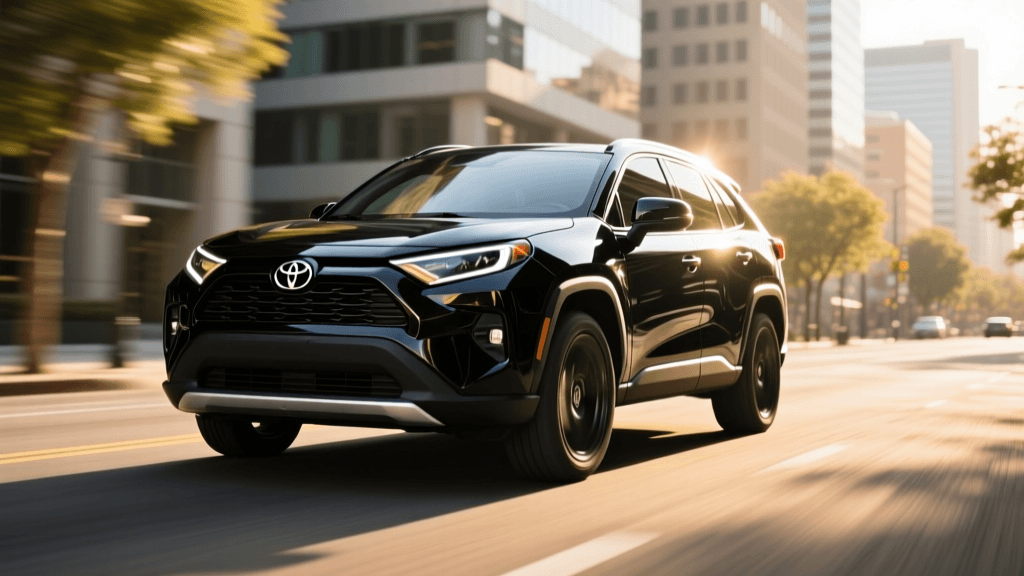
Introduction to the Toyota Highlander Hybrid
When it comes to family hauling, the three-row SUV segment is fiercely competitive. However, the Toyota Highlander Hybrid has consistently carved out a unique niche by offering the space and utility families demand without the punishing fuel costs typically associated with large vehicles. For beginners stepping into the world of hybrid electric vehicles (HEVs), the Highlander serves as an excellent gateway. It requires no plug-in charging infrastructure, operates seamlessly like a traditional gas-powered car, and delivers exceptional efficiency.
In this comprehensive beginner's guide, we will break down the real-world fuel economy of the Toyota Highlander Hybrid, explore how its powertrain works, and provide actionable tips to help you maximize your miles per gallon (MPG). Whether you are commuting to work or embarking on a cross-country road trip, understanding your vehicle's efficiency is the key to long-term savings.
EPA Estimates vs. Real-World Fuel Economy
The Environmental Protection Agency (EPA) provides standardized fuel economy estimates, but real-world driving conditions—including weather, terrain, cargo weight, and driving habits—can cause variations. The Toyota Highlander Hybrid utilizes a 2.5-liter four-cylinder engine paired with electric motors, generating a combined 243 horsepower. According to testing by automotive experts at Car and Driver, the Highlander Hybrid's real-world highway fuel economy often mirrors or slightly exceeds its EPA estimates, a rarity in the three-row SUV segment.
| Configuration | EPA City | EPA Highway | EPA Combined | Real-World Observed |
|---|---|---|---|---|
| LE (FWD) | 36 mpg | 35 mpg | 36 mpg | 34 - 38 mpg |
| LE (AWD / eAWD) | 35 mpg | 34 mpg | 35 mpg | 33 - 36 mpg |
| XLE / Limited (AWD) | 35 mpg | 34 mpg | 35 mpg | 32 - 35 mpg |
| Platinum (AWD) | 35 mpg | 34 mpg | 35 mpg | 31 - 34 mpg |
As the table illustrates, opting for the Electronic On-Demand All-Wheel Drive (eAWD) system only costs you 1 mpg compared to the Front-Wheel Drive (FWD) model. This is because the AWD system uses a dedicated rear electric motor rather than a heavy mechanical driveshaft, preserving efficiency while providing crucial traction in rain and snow.
Understanding the Hybrid Synergy Drive
To master the Highlander Hybrid's fuel economy, it helps to understand what is happening under the hood. Toyota's Hybrid Synergy Drive system automatically manages the flow of power between the gasoline engine and the electric motors. When you accelerate from a stop, the vehicle relies heavily on electric torque, which is incredibly efficient for city driving. During steady highway cruising, the gas engine takes over, operating in its most efficient RPM range.
Unlike Plug-in Hybrid Electric Vehicles (PHEVs) that require you to plug into a wall charger to see maximum benefits, the Highlander Hybrid uses regenerative braking to recharge its nickel-metal hydride (or lithium-ion, depending on the model year) battery pack. Every time you coast or brake, kinetic energy that would normally be lost as heat is captured and stored for later use.
How Driving Modes Impact Your MPG
The Highlander Hybrid features several selectable driving modes that alter throttle response, transmission mapping, and climate control output to prioritize different driving characteristics.
- Eco Mode: This is your best friend for fuel economy. It softens the throttle response, preventing aggressive acceleration, and reduces the power draw of the air conditioning system. Use this for city commuting and stop-and-go traffic.
- Normal Mode: The default setting that balances power and efficiency. Ideal for mixed driving and suburban errands.
- Sport Mode: Sharpens throttle response and increases steering weight. While fun for merging onto highways or driving on winding roads, it will noticeably decrease your MPG.
- EV Mode: Forces the vehicle to run on electric power only. This is highly limited by speed (usually under 25 mph) and battery charge, but can be useful for creeping through quiet neighborhoods or drive-thrus.
5 Actionable Tips to Maximize Fuel Economy
According to the Alternative Fuels Data Center, driver behavior plays a massive role in hybrid efficiency. Here are five practical steps you can take to squeeze every last mile out of your Highlander Hybrid:
1. Master the Art of Regenerative Braking
Instead of slamming on the brakes at the last second, begin braking early and gently. This gives the hybrid system more time to capture kinetic energy and feed it back into the battery. If you brake too hard, the mechanical friction brakes engage, wasting that energy as heat.
2. Monitor Your Tire Pressure
Under-inflated tires increase rolling resistance, forcing the engine and motors to work harder. Check your tire pressure monthly and keep them inflated to the exact PSI recommended on the driver's side door jamb sticker, especially before long road trips where the vehicle is fully loaded with cargo.
3. Use the Climate Control Wisely
The air conditioning compressor draws power directly from the engine and battery. In mild weather, use the 'Auto' climate setting rather than max A/C. In Eco mode, the vehicle automatically manages the A/C compressor to minimize fuel consumption while keeping the cabin comfortable.
4. Plan Your Routes to Avoid Idling
While hybrids are excellent at idling (the gas engine shuts off when stopped), sitting in gridlock still yields zero miles per gallon. Use navigation apps to find routes with steady, flowing traffic, even if the distance is slightly longer. A steady 45 mph is often more efficient than a stop-and-go 3-mile shortcut.
5. Remove Excess Weight and Drag
A fully loaded roof cargo box can decrease highway fuel economy by up to 15% due to aerodynamic drag. If you are not using the roof box, take it off. Similarly, clear out heavy, unnecessary items from the trunk to reduce the vehicle's overall mass.
Total Cost of Ownership: Hybrid vs. Gas
Is the hybrid premium worth it? Let's look at a real-world financial breakdown comparing the gas-only Toyota Highlander (which averages roughly 24 mpg combined) to the Highlander Hybrid (averaging 35 mpg combined).
Assuming an annual mileage of 15,000 miles and a national average gas price of $3.50 per gallon:
- Gas Highlander: 15,000 miles / 24 mpg = 625 gallons. Annual fuel cost: $2,187
- Highlander Hybrid: 15,000 miles / 35 mpg = 428 gallons. Annual fuel cost: $1,498
This results in an annual savings of approximately $689. Over a standard five-year ownership period, you will save roughly $3,445 at the pump. When you factor in the Highlander Hybrid's historically strong resale value and lower brake wear (due to regenerative braking saving your physical brake pads), the total cost of ownership becomes incredibly attractive. For deeper insights into long-term reliability and ownership costs, resources like Edmunds provide excellent five-year cost-to-own data that further validates the hybrid's financial benefits.
Final Verdict for Families
The Toyota Highlander Hybrid remains a benchmark in the family SUV segment. It proves that you do not need to sacrifice passenger space, cargo utility, or all-weather capability to achieve excellent fuel economy. By understanding how the hybrid powertrain operates, utilizing Eco mode, and adopting smooth driving habits, families can easily achieve—or even beat—the EPA's combined estimates. For beginners looking to reduce their carbon footprint and monthly fuel bills without the anxiety of range or charging stations, the Highlander Hybrid is an outstanding, future-proof investment.