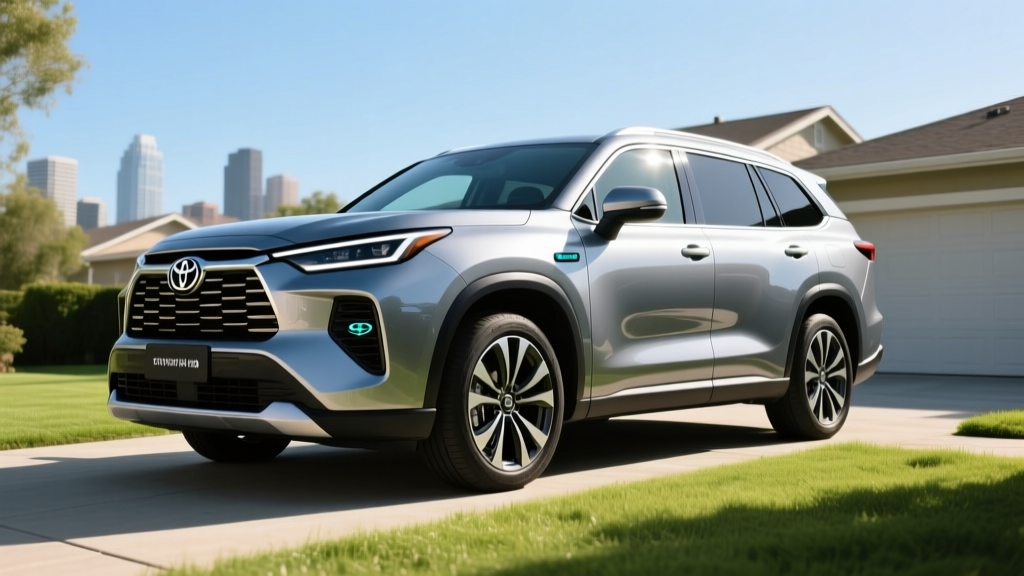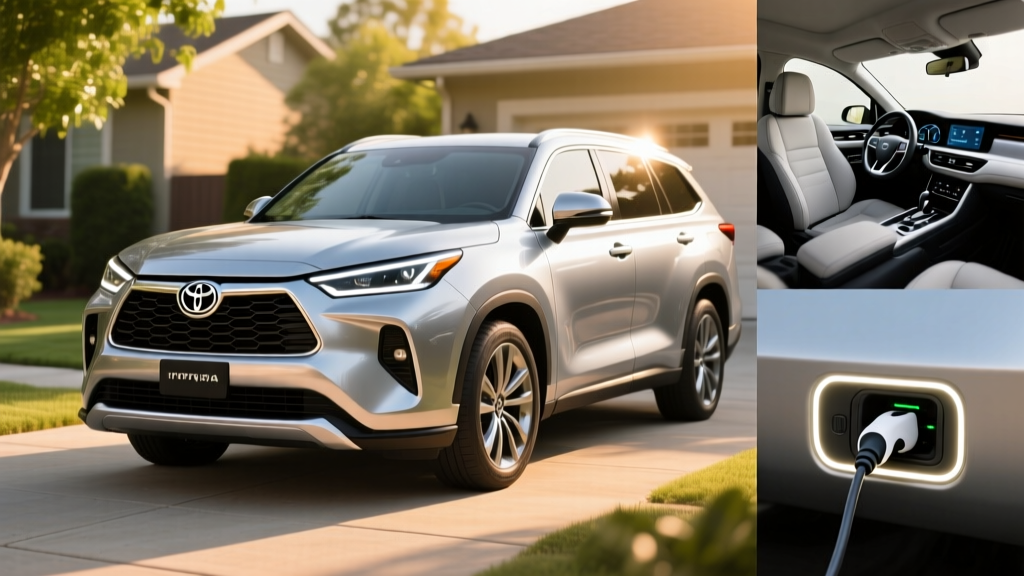
If you have searched dealer inventories lately, you already know the frustration: the Toyota Highlander Hybrid remains one of the most sought-after three-row SUVs in America, and finding one on a lot can still feel like a treasure hunt. For the 2026 model year, Toyota has ramped up production at its Princeton, Indiana plant, but demand continues to outstrip supply in many metro areas. This guide breaks down exactly which trims are available, what you will actually pay, the real-world fuel economy you can expect, and whether the Highlander Hybrid is the right electrified choice for your family — or whether a PHEV or full EV makes more sense.
2026 Toyota Highlander Hybrid: Trim Availability and Pricing
The 2026 Toyota Highlander Hybrid is offered across five trims. Toyota has simplified the lineup slightly compared to prior years, dropping the Limited's FWD-only option and standardizing AWD across most configurations. Here is what is currently in production and how easy each trim is to find:
| Trim | Drivetrain | MSRP | Typical Availability | Markups Common? |
|---|---|---|---|---|
| LE | AWD (eAWD) | $42,320 | Moderate — 4-8 week wait | Rare |
| XLE | AWD (eAWD) | $46,570 | Tight — 6-12 week wait | Sometimes ($500-$1,500) |
| XLE Nightshade | AWD (eAWD) | $47,870 | Limited allocation | Yes ($1,000-$2,500) |
| Limited | AWD (eAWD) | $51,120 | Moderate — 4-8 week wait | Rare |
| Platinum | AWD (eAWD) | $55,070 | Tight — 8-14 week wait | Yes ($1,000-$3,000) |
Availability reality check: As of early 2026, the XLE and Platinum trims are the hardest to find at MSRP. The LE and Limited tend to have shorter wait times because fleet buyers and lease programs absorb a large share of base-trim production. If you need a Highlander Hybrid within 30 days, the LE in Celestial Silver or Midnight Black is your best bet. For the Platinum, consider placing a factory order through your dealer and negotiating a guaranteed-MSRP agreement in writing.
Fuel Economy: EPA Ratings vs. Real-World MPG
The Highlander Hybrid's headline number is its efficiency — remarkable for a 4,600-pound, three-row SUV. The EPA rates the 2026 Highlander Hybrid identically across all trims:
| Driving Cycle | MPG |
|---|---|
| City | 35 MPG |
| Highway | 35 MPG |
| Combined | 35 MPG |
Real-world MPG reconciliation: The EPA's equal city/highway rating reflects how hybrids work — regenerative braking recovers energy in stop-and-go driving, while the engine runs more often at sustained highway speeds. In practice, owners consistently report:
- City / suburban driving: 36-39 MPG (hybrids often exceed EPA city figures)
- Highway cruising (70-75 mph): 30-33 MPG
- Cold weather (below 32°F): 28-31 MPG combined (engine runs more to heat the cabin)
- Mountainous terrain / towing: 22-26 MPG (the 3,500-lb tow rating takes a fuel penalty)
Compared to the gas-only Highlander (which was discontinued after the 2024 model year), the hybrid delivers roughly 40% better fuel economy in mixed driving. At current national gas averages around $3.40/gallon, that translates to approximately $650-$800 in annual fuel savings over a gas V6 equivalent.
Powertrain: How the Hybrid System Works
The 2026 Highlander Hybrid uses Toyota's fourth-generation hybrid system, pairing a 2.5-liter inline-four Atkinson-cycle engine with three electric motors — one driving the front axle via the transaxle, a second assisting the front wheels, and a third powering the rear axle independently (eAWD).
| Component | Specification |
|---|---|
| Engine | 2.5L 4-cyl Atkinson cycle |
| Engine output | 186 hp / 175 lb-ft torque |
| Front electric motor | 134 kW (180 hp) |
| Rear electric motor | 40 kW (54 hp) |
| Combined system output | 243 hp |
| Transmission | eCVT (planetary gearset) |
| Hybrid battery | 1.87 kWh (NiMH, sealed) |
| 0-60 mph | ~7.8 seconds |
| Towing capacity | 3,500 lbs |
The eAWD system is not a traditional mechanical AWD — there is no driveshaft connecting front and rear axles. Instead, the rear electric motor engages on demand for traction, typically during acceleration, slippery conditions, or when the system detects front-wheel slip. This is seamless in normal driving, but be aware: the rear motor's 54 hp means the AWD system is traction-aid, not performance-oriented. In deep snow or off-road conditions, it is adequate but not a substitute for a body-on-frame SUV.
HEV vs. PHEV vs. EV: Is the Highlander Hybrid Right for You?
This is the most important decision framework for three-row SUV buyers in 2026. The Highlander is a conventional hybrid (HEV) — it charges its own small battery through regenerative braking and engine power. You never plug it in. Here is how it compares to the alternatives:
| Factor | Highlander Hybrid (HEV) | Toyota Grand Highlander Hybrid MAX (HEV) | Kia Sorento PHEV | Kia EV9 (BEV) |
|---|---|---|---|---|
| Plug-in required? | No | No | Yes (Level 2 recommended) | Yes (Level 2 + DC fast) |
| Electric-only range | N/A | N/A | 32 miles | 270-304 miles |
| Combined efficiency | 35 MPG | 27 MPG | 79 MPGe / 34 MPG gas | 85-89 MPGe |
| Starting MSRP | $42,320 | $54,405 | $51,990 | $59,900 |
| Federal tax credit | None | None | Up to $3,750* | Up to $7,500* |
| Third-row usability | Tight for adults | Genuine adult space | Tight for adults | Genuine adult space |
| Cargo (behind 3rd row) | 16.1 cu ft | 20.6 cu ft | 12.6 cu ft | 20.2 cu ft (frunk adds 3.2) |
*Tax credit eligibility depends on buyer income, battery sourcing, and MSRP caps under IRS §30D. See IRS clean vehicle credit rules for current requirements.
- You cannot install a Level 2 home charger (apartment, street parking, no garage)
- You want zero behavior change from your current gas car
- Your annual mileage is 12,000-18,000 miles and you want simple, proven reliability
- You prioritize lowest total cost of ownership over maximum efficiency
- You have a garage with a 240V outlet and your daily commute is under 30 miles
- You want electric-only school runs and grocery trips but gas flexibility for road trips
- You have reliable home Level 2 charging and access to DC fast chargers on your common routes
- You want the lowest per-mile fuel cost and zero tailpipe emissions
- You can absorb the higher upfront cost (offset partially by the $7,500 credit)
Battery Warranty, Reliability, and Replacement Cost
Hybrid battery anxiety is the single most common concern among first-time hybrid buyers. Here is the data:
Coverage: 10 years / 150,000 miles (whichever comes first)
Threshold: Toyota warrants the hybrid battery will retain sufficient capacity to operate the hybrid system normally. If it falls below operational threshold, Toyota replaces it at no cost.
Transferable: Yes, the warranty transfers to subsequent owners automatically.
Reliability track record: Toyota's hybrid systems are among the most proven in the industry. The Highlander Hybrid's NiMH battery pack is deliberately undersized (1.87 kWh) and lightly cycled — it never fully charges or fully depletes, which dramatically extends cell life. Real-world data from fleet operators and long-term owners shows:
- Most Highlander Hybrid batteries last 180,000-250,000+ miles before meaningful degradation
- Out-of-warranty replacement cost: approximately $3,500-$5,000 (dealer), $2,000-$3,200 (independent hybrid specialist with refurbished pack)
- Individual module replacement (if only one cell group fails): $400-$800 at a hybrid specialist
For comparison, a conventional automatic transmission replacement on a gas SUV costs $4,000-$7,000. The hybrid system eliminates the traditional transmission (the eCVT is a simple planetary gearset with no clutch packs or bands to wear), so you are trading one potential failure point for another — and the hybrid battery has a better reliability record than most automatic transmissions.
The IIHS rates the 2026 Highlander as a Top Safety Pick, and Toyota Safety Sense 3.0 (pre-collision, lane tracing, adaptive cruise, road sign assist) is standard on every trim.
Tax Credits and Incentives: What You Actually Get
Let's be direct: the Toyota Highlander Hybrid does not qualify for the federal §30D Clean Vehicle Credit. That credit is reserved for plug-in vehicles (PHEVs and BEVs) with batteries above 7 kWh. The Highlander Hybrid's 1.87 kWh pack does not meet the threshold.
However, several states and localities offer incentives for conventional hybrids:
- State hybrid rebates: A handful of states (check your local energy office) offer $500-$1,500 rebates for HEVs — these change frequently
- HOV lane access: Several states (notably California, though the program has tightened) previously granted HOV stickers to hybrids — most have now restricted this to PHEVs and BEVs
- Insurance discounts: Some insurers (Geico, Liberty Mutual) offer 5-10% discounts for hybrid vehicles
- Employer commuter benefits: A growing number of companies offer $250-$500 annual bonuses for employees who drive electrified vehicles, including HEVs
The Highlander Hybrid's value proposition is fuel savings, not tax incentives. Over five years and 75,000 miles at 35 MPG vs. a gas SUV at 22 MPG, you save approximately $3,000-$3,800 in fuel alone — effectively a built-in rebate.
Ownership Costs: 5-Year Total Cost Breakdown
| Category | Estimated Cost |
|---|---|
| Purchase price (MSRP) | $42,320 |
| Federal tax credit | $0 |
| Insurance (5 yr avg) | $9,200 |
| Fuel (75k mi at 35 MPG, $3.40/gal) | $7,286 |
| Maintenance (5 yr) | $3,100 |
| Estimated depreciation (5 yr) | $16,800 |
| Total 5-year cost | $61,706 |
The Highlander Hybrid holds its value exceptionally well. Toyota's brand strength, combined with hybrid demand, means 5-year depreciation hovers around 40% — significantly better than most EVs (which average 50-60% over the same period) and comparable to the best gas SUVs. This resale strength is a major reason the Highlander Hybrid's total cost of ownership punches above its price class.
How to Actually Get One: Buying Strategies for 2026
Given the ongoing Toyota Highlander Hybrid availability constraints, here are proven strategies from successful buyers:
- Expand your search radius to 200+ miles. Rural and smaller-market dealers often have inventory that urban dealers do not. A $400 flight or a dealer trade can save you $2,000 in markup.
- Place a factory order. Most Toyota dealers will submit a build order for a Highlander Hybrid. Typical lead time is 6-14 weeks. Get the agreed price in writing before placing the order — some dealers attempt to renegotiate at delivery.
- Target the LE or Limited trims. These have the highest production volume and shortest wait times. The XLE Nightshade and Platinum are allocation-limited.
- Check Toyota's national inventory tool weekly. New shipments arrive Tuesday-Thursday at most dealers. Being first to call on a fresh delivery is how many buyers avoid markups.
- Consider certified pre-owned (CPO). A 2024-2025 CPO Highlander Hybrid carries the remainder of the 10-year hybrid battery warranty plus Toyota's CPO extension, and avoids the new-car markup premium entirely.
Frequently Asked Questions
How many MPG does the 2026 Toyota Highlander Hybrid get?
The EPA rates it at 35 MPG city, 35 MPG highway, and 35 MPG combined. In real-world driving, expect 36-39 MPG in city conditions, 30-33 MPG on the highway, and 28-31 MPG in cold weather below freezing.
Does the Highlander Hybrid need to be plugged in?
No. The Highlander Hybrid is a conventional hybrid (HEV). Its small 1.87 kWh battery charges entirely through regenerative braking and the gasoline engine. You fuel it like any other car — just less often.
Is there a plug-in hybrid (PHEV) version of the Highlander?
Not in the United States. Toyota sells the RAV4 Prime as a PHEV, and the Grand Highlander is HEV-only in the US market. If you want a three-row Toyota with a plug, it does not currently exist — the closest Toyota PHEV is the RAV4 Prime (two-row). For a three-row PHEV, look at the Kia Sorento PHEV or Mitsubishi Outlander PHEV.
Is the Highlander Hybrid reliable, and what does battery replacement cost?
Toyota's hybrid system has a two-decade reliability track record. The hybrid battery is warranted for 10 years/150,000 miles. Most batteries last 180,000-250,000+ miles. Out-of-warranty replacement runs $3,500-$5,000 at a dealer or $2,000-$3,200 at an independent hybrid specialist.
Does the Highlander Hybrid qualify for any tax credit?
It does not qualify for the federal §30D Clean Vehicle Credit, which requires a plug-in vehicle with a battery of at least 7 kWh. Some states and insurers offer modest hybrid incentives — check your local programs.
How is the Highlander Hybrid different from the Grand Highlander Hybrid?
The Grand Highlander is 6.5 inches longer, has a genuinely usable third row for adults, offers 20.6 cu ft of cargo space behind the third row (vs. 16.1 in the standard Highlander), and starts at $40,720 for the gas model or $54,405 for the Hybrid MAX. If third-row passenger comfort is a priority, the Grand Highlander is the better choice. If you want the best fuel economy in a midsize three-row, the standard Highlander Hybrid wins at 35 MPG vs. the Grand's 27 MPG (Hybrid MAX) or 34 MPG (standard hybrid).
What is the towing capacity?
The 2026 Highlander Hybrid is rated for 3,500 pounds — adequate for a small boat, utility trailer, or a pair of jet skis. For heavier towing, you would need to look at a body-on-frame SUV like the Toyota 4Runner or Sequoia (the Sequoia is hybrid-only and rated for 9,000 lbs, but starts at $62,000+).