Quick Verdict: A Proven 3-Row Hybrid That Still Holds Up
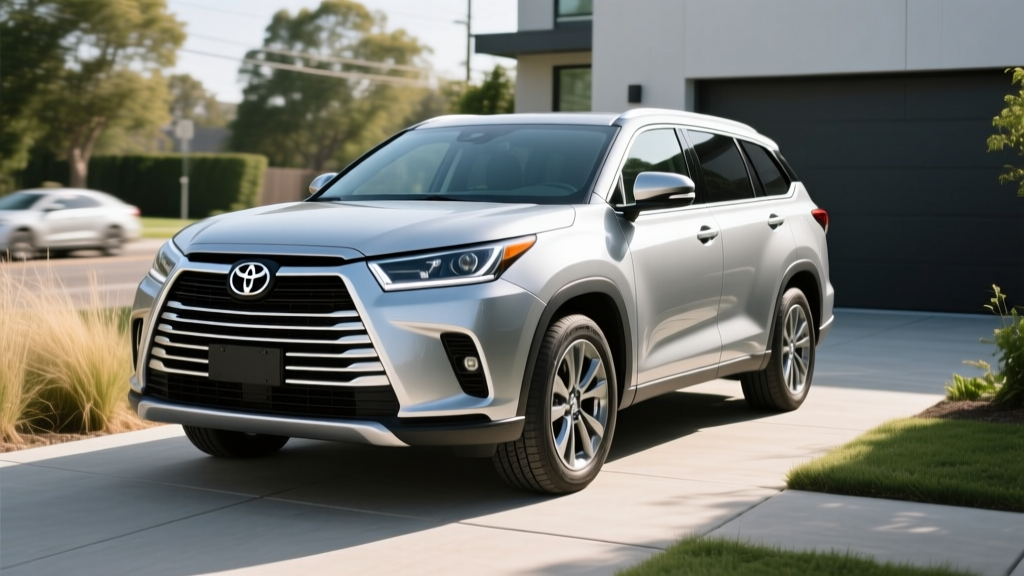
The 2020 Toyota Highlander Hybrid arrived as a complete redesign on Toyota's TNGA-K platform, swapping the old V6 hybrid setup for a more efficient 2.5-liter four-cylinder hybrid system. In 2026, it remains one of the most practical used three-row hybrid SUVs available, offering EPA-rated 35–36 MPG combined, standard all-wheel drive on every trim, and Toyota's reputation for long-term hybrid reliability. If you need three rows, want to avoid plug-in charging infrastructure headaches, and prioritize fuel savings over EV-level performance, this is a strong candidate on the used market.
| Spec | Value |
|---|---|
| Powertrain | 2.5L 4-cyl + 3 electric motors (AWD-i) |
| Combined Horsepower | 243 hp |
| EPA MPG (City / Hwy / Combined) | 35 / 35 / 35 (LE, XLE); 36 / 35 / 35 (Limited, Platinum) |
| Fuel Tank | 17.9 gallons |
| Total Range | ~626–644 miles |
| Drivetrain | Electronic AWD (standard all trims) |
| 0–60 mph | ~7.8 seconds |
| Towing Capacity | 3,500 lbs |
| Cargo Volume (behind 3rd / 2nd / 1st) | 16.1 / 48.4 / 84.3 cu ft |
| Hybrid Battery Warranty (original) | 10 years / 150,000 miles |
| Original MSRP (LE–Platinum) | $39,320–$50,200 |
| Typical Used Price (2026) | $24,000–$36,000 |
This Is a Conventional Hybrid (HEV), Not a Plug-In
Before going further, it's critical to understand what you're buying. The 2020 Highlander Hybrid is a conventional hybrid electric vehicle (HEV) — not a plug-in hybrid (PHEV) and not a battery electric vehicle (BEV). You never plug it in. The hybrid battery charges exclusively through regenerative braking and the gasoline engine. There is no electric-only driving range to speak of (perhaps a mile at very low speeds), and no charging port on the vehicle.
| Feature | HEV (Highlander Hybrid) | PHEV (e.g., RAV4 Prime) | BEV (e.g., Tesla Model X) |
|---|---|---|---|
| Plug-in Charging Required? | No | Yes (Level 1 or 2) | Yes (Level 2 + DC fast) |
| Electric-Only Range | ~0 miles | 30–42 miles typical | 250–400 miles |
| Battery Size | ~1.6 kWh (NiMH) | 18–20 kWh (Li-ion) | 75–130 kWh (Li-ion) |
| Gas Engine | Yes (primary + regen) | Yes (backup after EV range) | None |
| Home Charging Install Needed? | No | Recommended (240V) | Essential (240V) |
| Federal Tax Credit (§30D) | Not eligible | Eligible (if requirements met) | Eligible (if requirements met) |
Toyota did not offer a Highlander plug-in hybrid variant for 2020. If plug-in capability is a priority, you'd need to look at the RAV4 Prime (42 miles EV range) or step up to a three-row PHEV like the Chrysler Pacifica Hybrid or Hyundai Santa Fe Plug-in Hybrid.
Fuel Economy: EPA Numbers vs Real-World MPG
The 2020 Highlander Hybrid's fuel economy depends on trim level due to wheel size and weight differences:
| Trim | City | Highway | Combined | Wheel Size |
|---|---|---|---|---|
| LE | 35 MPG | 35 MPG | 35 MPG | 18-inch |
| XLE | 35 MPG | 35 MPG | 35 MPG | 18-inch |
| Limited | 36 MPG | 35 MPG | 35 MPG | 20-inch |
| Platinum | 36 MPG | 35 MPG | 35 MPG | 20-inch |
Data sourced from fueleconomy.gov.
Real-World MPG: What Owners Actually See
Toyota's hybrid system excels in stop-and-go city driving, where regenerative braking recovers energy constantly. In real-world ownership, expect:
- City / suburban driving: 33–38 MPG. Many owners report matching or slightly exceeding the EPA city figure in moderate climates.
- Highway cruising (70–80 mph): 28–33 MPG. The boxy three-row SUV shape creates aerodynamic drag, and the hybrid system provides less benefit at sustained high speeds.
- Cold weather (below 30°F): 27–31 MPG combined. The engine runs more frequently to provide cabin heat and maintain battery temperature.
- Mountainous terrain: 25–30 MPG on steep grades, though regenerative braking on descents partially recovers losses.
For a three-row SUV with standard AWD, these are impressive figures. The gasoline-only 2020 Highlander with the turbocharged 2.4L four-cylinder achieves just 24 MPG combined — meaning the hybrid saves roughly 3–4 gallons per 100 miles driven.
Powertrain Details: 243 Horsepower, Three Motors, No Turbo Lag
The 2020 Highlander Hybrid uses Toyota's fourth-generation hybrid system:
- Engine: 2.5-liter inline-4 (Atkinson cycle), producing 186 hp and 175 lb-ft of torque on its own
- Front electric motor: Integrated into the transaxle, contributing to a combined system output of 243 hp
- Rear electric motors (AWD-i): Two independent rear-mounted motors provide electronic all-wheel drive without a mechanical driveshaft
- Hybrid battery: Nickel-metal hydride (NiMH), approximately 1.6 kWh capacity, mounted under the second-row seats
- Transmission: eCVT (electronically controlled continuously variable transmission)
The result is smooth, linear acceleration without the turbo lag or gear-shift shock of conventional powertrains. The 0–60 mph time of roughly 7.8 seconds is adequate for family hauling but not sporty. The AWD-i system can send up to 80% of available torque to the rear wheels when needed, providing confident traction in rain and light snow — though this is not a serious off-road system.
Hybrid Battery Reliability, Warranty & Replacement Cost
Original Hybrid Battery Warranty
For the 2020 model year, Toyota covers the hybrid battery for 10 years or 150,000 miles (whichever comes first) from the date of first use. This was an upgrade from the prior 8-year/100,000-mile coverage and applies to all 2020 Toyota hybrids.
How Long Do Toyota Hybrid Batteries Actually Last?
Toyota's NiMH hybrid batteries have an extensive track record dating to the 2001 Prius. Real-world data suggests:
- Most Toyota hybrid batteries last 150,000–200,000+ miles before significant degradation
- The NiMH chemistry in the Highlander Hybrid is less energy-dense than lithium-ion but extremely durable and tolerant of daily charge/discharge cycles
- Failure before 100,000 miles is uncommon under normal use
- Individual cell replacement is sometimes possible rather than replacing the entire pack
Battery Replacement Cost
If the hybrid battery does fail out of warranty:
- New OEM battery (Toyota dealer): $3,000–$5,000 including labor
- Refurbished/remanufactured battery: $1,500–$3,000 including labor
- Individual cell repair: $500–$1,500 at a hybrid specialist shop
For a 2020 model purchased in 2026, most examples will still carry some portion of the original 10-year/150,000-mile hybrid battery warranty — transferable to subsequent owners. Always verify remaining warranty coverage with a Toyota dealer using the VIN before purchasing.
Tax Credits and Incentives: Does the 2020 Highlander Hybrid Qualify?
No. The 2020 Toyota Highlander Hybrid is a conventional HEV and does not qualify for the federal §30D Clean Vehicle Credit (up to $7,500). That credit applies only to plug-in electric vehicles — battery electric vehicles (BEVs) and plug-in hybrids (PHEVs) with sufficient battery capacity.
Because this is a used vehicle purchased after its original sale year, you would also not qualify for the federal Used Clean Vehicle Credit (up to $4,000 under §25E), which similarly requires a plug-in vehicle.
Some states previously offered modest incentives for conventional hybrids, but most have shifted focus to plug-in vehicles. Check your state's energy office or department of environmental quality for any remaining programs. According to IRS.gov, only vehicles that can be plugged in to charge are eligible for current federal clean vehicle credits.
Who Should Buy the 2020 Highlander Hybrid in 2026?
Pros
- 35 MPG combined in a 3-row SUV — exceptional for the segment
- Standard AWD on every trim (no FWD-only base model)
- No plug-in charging required — works with existing gas infrastructure
- Strong reliability track record; 10-yr/150k hybrid battery warranty
- ~626 miles of total range between fill-ups
- Smooth, quiet powertrain with no turbo lag
- Competitive used pricing ($24k–$36k in 2026)
Cons
- No electric-only driving range — always burns gasoline
- No federal tax credit eligibility (HEV, not PHEV/BEV)
- Modest 243 hp — not quick for highway merging when loaded
- Third row is tight for adults on longer trips
- Cargo space (16.1 cu ft behind 3rd row) trails some rivals
- Infotainment system feels dated vs. 2024+ models
- No DC fast charging capability (not applicable — no plug)
Choose the 2020 Highlander Hybrid If:
- You need three rows and AWD but want to minimize fuel costs
- You cannot install a Level 2 home charger (apartment, no garage)
- You regularly drive in areas with sparse EV charging infrastructure
- You want a proven, low-risk powertrain with strong resale value
- Your daily commute involves heavy stop-and-go traffic where hybrids shine
Consider a PHEV or BEV Instead If:
- You have home charging access and want electric-only commuting (look at the Toyota RAV4 Prime or Hyundai Santa Fe PHEV)
- You want to qualify for federal tax credits on a new or used plug-in vehicle
- You want zero tailpipe emissions for daily driving (BEV)
- You prioritize acceleration and driving dynamics over fuel economy
Frequently Asked Questions
How many MPG does the 2020 Toyota Highlander Hybrid get?
The EPA rates it at 35 MPG combined (35 city / 35 highway) for LE and XLE trims, and 36 city / 35 highway / 35 combined for Limited and Platinum trims. Real-world results typically range from 28 MPG on long highway trips to 38 MPG in city driving.
Can I plug in the 2020 Highlander Hybrid to charge?
No. The 2020 Highlander Hybrid is a conventional hybrid (HEV), not a plug-in hybrid. It has no charging port. The hybrid battery recharges through regenerative braking and the gasoline engine. Toyota did not offer a plug-in Highlander variant for 2020.
Is the 2020 Highlander Hybrid reliable?
Toyota's hybrid system is among the most proven in the industry, with over two decades of real-world data. The 2020 Highlander Hybrid carries above-average reliability ratings from major evaluators. The hybrid battery is warranted for 10 years/150,000 miles and commonly lasts well beyond that.
What does a replacement hybrid battery cost?
A new OEM hybrid battery runs $3,000–$5,000 installed at a Toyota dealer. Refurbished batteries cost $1,500–$3,000, and individual cell repairs can be as low as $500–$1,500 at specialist shops. Most 2020 models in 2026 will still have remaining factory hybrid battery warranty coverage.
Does the 2020 Highlander Hybrid qualify for any tax credit?
No. As a conventional hybrid (not a plug-in), it does not qualify for the federal §30D Clean Vehicle Credit or the §25E Used Clean Vehicle Credit. These credits are reserved for battery electric and plug-in hybrid vehicles. Check your state for any remaining hybrid-specific incentives, though most have been discontinued.
How does the Highlander Hybrid compare to the gasoline-only version?
The gasoline 2020 Highlander (turbo 2.4L 4-cylinder) gets 24 MPG combined vs. the hybrid's 35 MPG — a 46% improvement. Over 15,000 miles/year at $3.50/gallon, the hybrid saves approximately $950–$1,000 annually in fuel costs. The hybrid also comes with standard AWD (optional on gas models) and delivers smoother acceleration.
What's the towing capacity of the 2020 Highlander Hybrid?
The hybrid is rated to tow 3,500 pounds — sufficient for a small boat, utility trailer, or a pair of jet skis. This matches the gasoline four-cylinder Highlander but falls short of the previous V6 Highlander's 5,000-pound rating. For heavy towing, consider a body-on-frame SUV or a truck.