Quick Verdict: The Efficiency Bargain That Keeps Delivering
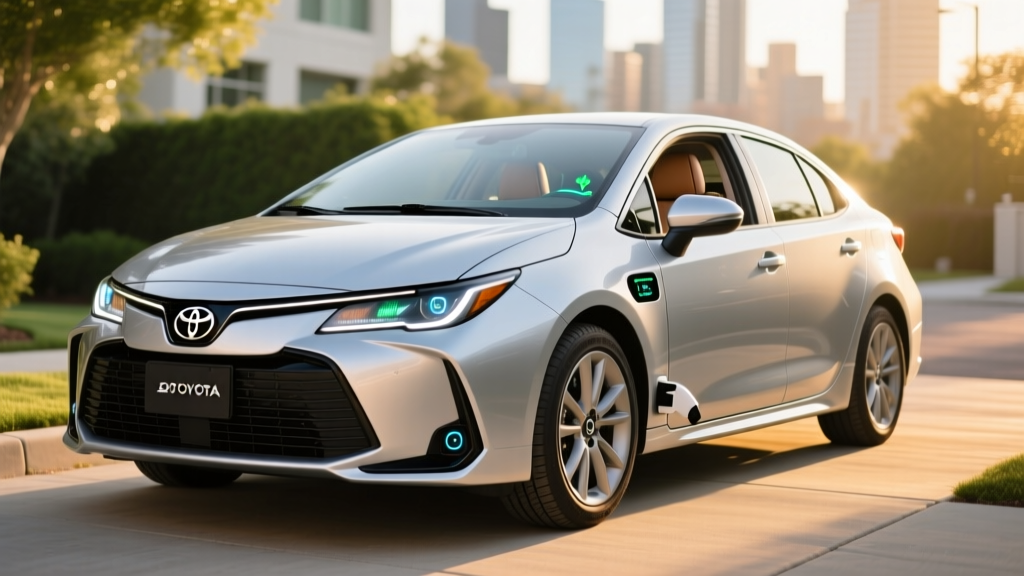
The 2022 Toyota Corolla Hybrid remains one of the most fuel-efficient non-plug-in vehicles on the road. With an EPA-estimated 52 MPG combined and a starting MSRP that undercut nearly every competitor at launch, it carved out a niche as the default choice for buyers who want hybrid efficiency without paying a premium. Now in 2026, used and certified pre-owned examples are flooding the market, and the math only gets more compelling — especially if you qualify for the federal used-EV and plug-in credit on qualifying electrified vehicles, though the Corolla Hybrid's eligibility is limited since it is a conventional hybrid (HEV), not a plug-in.
This guide breaks down every number that matters: real-world MPG vs. EPA sticker, powertrain specs, battery longevity, warranty coverage, and who should still consider this car versus stepping up to a PHEV or full battery-electric vehicle.
HEV vs. PHEV: What the Corolla Hybrid Actually Is
Conventional Hybrid (HEV): The 2022 Corolla Hybrid is a series-parallel hybrid that never plugs in. It recovers energy through regenerative braking and uses a small battery buffer to assist the gas engine. You fuel it exclusively at the pump. There is no electric-only driving range of any meaningful distance — the electric motor assists at low speeds and during acceleration, but the engine is always the primary energy source.
Plug-In Hybrid (PHEV): A PHEV like the Toyota Prius Prime or RAV4 Prime carries a larger battery (typically 13–18 kWh), can be plugged into a wall outlet or Level 2 charger, and delivers 25–42 miles of electric-only driving before the gas engine engages. The Corolla Hybrid does not offer a PHEV variant in the US market.
This distinction matters because some shoppers confuse the Corolla Hybrid with the Prius Prime. They share Toyota's hybrid synergy drive DNA, but the Corolla Hybrid operates strictly as a self-charging HEV. No plug. No charging cable. No electric-only commute. Just exceptional fuel economy from a system that manages energy automatically.
Fuel Economy: EPA Numbers and Real-World MPG
| Metric | EPA Estimate | Real-World Expectation |
|---|---|---|
| City | 53 MPG | 54–58 MPG |
| Highway | 52 MPG | 46–50 MPG |
| Combined | 52 MPG | 49–55 MPG |
| Fuel Tank | 11.4 gallons | ~560–590 mi range |
Source: fueleconomy.gov — EPA ratings for the 2022 Toyota Corolla Hybrid LE.
Real-world note: Toyota hybrids consistently exceed their EPA city estimates because regenerative braking recovers more energy in stop-and-go traffic than the test cycle captures. Highway driving tells the opposite story — at sustained 75+ MPH speeds, aerodynamic drag dominates and the electric motor contributes less. Expect 46–50 MPG on long highway trips and 54+ MPG in urban commuting. In cold weather (below 30°F), the engine runs more frequently to heat the cabin, dropping observed MPG by 5–10% until the system reaches operating temperature.
Powertrain: 121 HP From a Proven System
| Specification | Detail |
|---|---|
| Combined Net Horsepower | 121 HP |
| Gas Engine | 1.8L 4-cylinder Atkinson-cycle, 98 HP |
| Electric Motor | 53 kW (71 HP) AC synchronous |
| Transmission | eCVT (planetary gearset, not belt-driven) |
| Drivetrain | Front-wheel drive (AWD-e available on select trims) |
| 0–60 MPH | ~9.1 seconds |
| Hybrid Battery | ~1.3 kWh nickel-metal hydride (NiMH) |
| Towing Capacity | Not rated for towing |
The 1.8-liter Atkinson-cycle engine prioritizes thermal efficiency over peak power. Combined with the electric motor through Toyota's eCVT — which uses a planetary gearset rather than a traditional belt-and-pulley CVT — the system delivers seamless power blending without the rubber-band sensation some CVTs produce. The AWD-e option adds a small rear-mounted electric motor that engages the rear wheels only when slip is detected, improving traction in rain and light snow without a mechanical driveshaft.
Performance is adequate, not exciting. The 9.1-second 0–60 time puts it behind most turbocharged compact sedans, but the electric motor's instant torque makes city acceleration feel livelier than the number suggests. Highway merging requires planning at full load, but around town the Corolla Hybrid feels responsive and composed.
Hybrid Battery Warranty, Lifespan, and Replacement Cost
Toyota Hybrid Battery Warranty:
- Coverage: 10 years / 150,000 miles (whichever comes first) for 2020 and newer model years — an upgrade from the previous 8-year/100,000-mile standard
- What's covered: Hybrid battery pack, battery control module, hybrid control module, and inverter with converter
- Capacity threshold: Toyota warrants against abnormal degradation; if the battery cannot hold sufficient charge to operate the hybrid system properly, it is covered
- Transferability: Warranty transfers to subsequent owners automatically — no paperwork required
How long do Toyota hybrid batteries actually last? Real-world data from Toyota's Prius fleet (which shares the same hybrid architecture) shows NiMH battery packs commonly reaching 150,000–200,000 miles before any capacity-related replacement is needed. Some taxi fleets have logged 300,000+ miles on original packs. The Corolla Hybrid's battery is smaller and less stressed than a PHEV or BEV pack because it operates in a narrow state-of-charge window — Toyota's hybrid system never fully charges or fully depletes the battery, which dramatically reduces degradation.
Replacement cost if out of warranty: A new OEM hybrid battery for the Corolla Hybrid runs approximately $2,000–$3,500 installed at a Toyota dealer. Independent hybrid specialists often offer refurbished or reconditioned packs for $1,000–$2,000 installed. This is a fraction of what a full BEV battery replacement costs ($5,000–$20,000+), and the 10-year/150,000-mile warranty means most first and second owners will never face this expense.
Pricing in 2026: Used Market and Tax Credit Eligibility
When new, the 2022 Corolla Hybrid LE started at an MSRP of approximately $23,750 (including destination). Higher trims were not offered — the Corolla Hybrid came in a single well-equipped LE trim for 2022, with AWD-e adding roughly $1,400.
Used pricing in 2026: Clean-title examples with 30,000–50,000 miles typically trade between $17,000 and $21,000 depending on region, condition, and AWD-e option. Certified pre-owned (CPO) models from Toyota dealers command a $1,000–$2,000 premium but include an extended powertrain warranty.
Federal Tax Credit Status: The 2022 Toyota Corolla Hybrid is a conventional HEV — it does not qualify for the IRS §30D new clean vehicle credit (up to $7,500) or the §25E used clean vehicle credit (up to $4,000). These credits apply only to plug-in vehicles: battery-electric vehicles (BEVs) and plug-in hybrids (PHEVs) with sufficient battery capacity. The Corolla Hybrid's ~1.3 kWh NiMH pack falls well below the 4 kWh minimum threshold for any federal electrification incentive.
Some states offer rebates for conventional hybrids, but these are increasingly rare as incentive programs shift toward plug-in vehicles. Check your state's energy office or IRS §30D guidance for current rules.
Who Should Choose the Corolla Hybrid vs. a PHEV or Full EV?
✔ Choose the Corolla Hybrid If
- You cannot install a home charger (apartment, street parking, no garage)
- Your budget is under $22,000 and you want proven reliability
- You drive 15,000+ miles/year and want the lowest cost-per-mile without plug-in infrastructure
- You live in an area with limited public charging (rural routes, charging deserts)
- You want zero behavioral change — just drive and refuel normally
- You prioritize a 560+ mile total range for road trips without stop planning
✘ Consider a PHEV or BEV Instead If
- You can charge at home and want electric-only commuting (PHEV: 25–42 mi; BEV: 250–350 mi)
- You want to qualify for federal tax credits ($4,000 used or up to $7,500 new)
- Your daily commute is under 30 miles and you want zero tailpipe emissions on most trips
- You want stronger acceleration (most BEVs deliver 0–60 in 5–7 seconds)
- You want access to HOV lanes (many states grant access only to plug-in vehicles)
- You plan to pair with home solar for near-zero "fuel" cost
The decision framework is simple: If you can charge at home, a PHEV like the Toyota Prius Prime (44 miles electric-only, ~48 MPG after depletion) or a BEV like the Chevrolet Equinox EV (315 miles EPA, eligible for $7,500 credit) will save you more on fuel and may net you thousands in incentives. If you cannot charge at home, or if you drive routes with unreliable charging infrastructure, the Corolla Hybrid delivers the best no-compromise efficiency available — 52 MPG combined with zero plug-in requirements.
Reliability and Ownership Costs
Toyota's hybrid powertrain is among the most proven in the industry. The Hybrid Synergy Drive system has been in continuous production since the 1997 Prius, with cumulative global sales exceeding 20 million hybrid vehicles. The eCVT has no belts, no clutch packs, and no traditional transmission fluid changes — it uses a gear-based power-split device that is essentially wear-free under normal operation.
Consumer Reports and J.D. Power consistently rank Toyota among the top brands for long-term reliability, and the Corolla Hybrid benefits from the same architecture that has made the Prius a fleet and taxi favorite. Brake wear is significantly reduced thanks to regenerative braking — many owners report original brake pads at 80,000+ miles.
Estimated 5-year ownership cost advantage: At 15,000 miles/year and $3.50/gallon regular unleaded, the Corolla Hybrid consumes approximately 288 gallons/year ($1,009). A comparable gas-only compact sedan at 33 MPG combined burns 455 gallons/year ($1,591). That's roughly $582/year in fuel savings, or $2,910 over five years — not counting the Corolla Hybrid's lower maintenance costs from reduced brake wear and no traditional transmission service.
Frequently Asked Questions
How many MPG does the 2022 Toyota Corolla Hybrid get?
The EPA rates it at 53 city / 52 highway / 52 combined. In real-world driving, expect 54–58 MPG in city traffic (regen braking helps), 46–50 MPG on sustained highway trips at 75+ MPH, and a combined average of 49–55 MPG depending on your driving mix. Cold weather reduces efficiency by roughly 5–10% due to increased engine runtime for cabin heating.
Does the Corolla Hybrid need to be plugged in?
No. The 2022 Corolla Hybrid is a conventional hybrid (HEV), not a plug-in hybrid (PHEV). It charges its small battery exclusively through regenerative braking and the gas engine. There is no charging port, no plug, and no electric-only driving range. You fuel it at any gas station with regular 87-octane unleaded.
Does the 2022 Corolla Hybrid qualify for any tax credit?
No. Federal tax credits under IRS §30D (new vehicles) and §25E (used vehicles) require a plug-in vehicle with a battery capacity of at least 4 kWh. The Corolla Hybrid's ~1.3 kWh NiMH battery does not meet this threshold. It does not qualify for the $7,500 new-vehicle credit or the $4,000 used-vehicle credit. Some state-level hybrid incentives may exist — check your state energy office for current programs.
How long will the hybrid battery last, and what does replacement cost?
Toyota warranties the hybrid battery for 10 years / 150,000 miles on 2022 models. Real-world data from Toyota's hybrid fleet shows packs commonly lasting 150,000–200,000+ miles. If replacement is needed out of warranty, expect $2,000–$3,500 for a new OEM pack at a dealer, or $1,000–$2,000 for a refurbished unit from an independent hybrid specialist. This is far less than a full EV battery replacement.
Is the AWD-e system worth it?
If you regularly drive in rain, light snow, or on gravel roads, the AWD-e system adds meaningful traction confidence for a ~$1,400 premium and a negligible fuel economy penalty (EPA drops to approximately 50 combined). It uses a small independent rear electric motor that activates only when front-wheel slip is detected — there is no mechanical connection to the rear axle, so it adds no weight penalty from a driveshaft or differential. For dry-climate drivers who rarely see inclement weather, FWD is sufficient.
How does the Corolla Hybrid compare to the Prius?
The 2022 Corolla Hybrid and 2022 Prius share the same 1.8L hybrid powertrain and similar EPA ratings (52 vs. 54–58 MPG combined depending on Prius trim). The Prius offers a hatchback body style with more cargo versatility and was available as a PHEV (Prius Prime, 25 miles electric-only). The Corolla Hybrid offers a traditional sedan trunk, a more conventional exterior design, and a slightly lower starting price. If cargo flexibility or plug-in capability matters, the Prius or Prius Prime is the better choice. If you prefer a sedan and the lowest purchase price, the Corolla Hybrid wins.