Quick Verdict: A Three-Row Hybrid That Actually Delivers
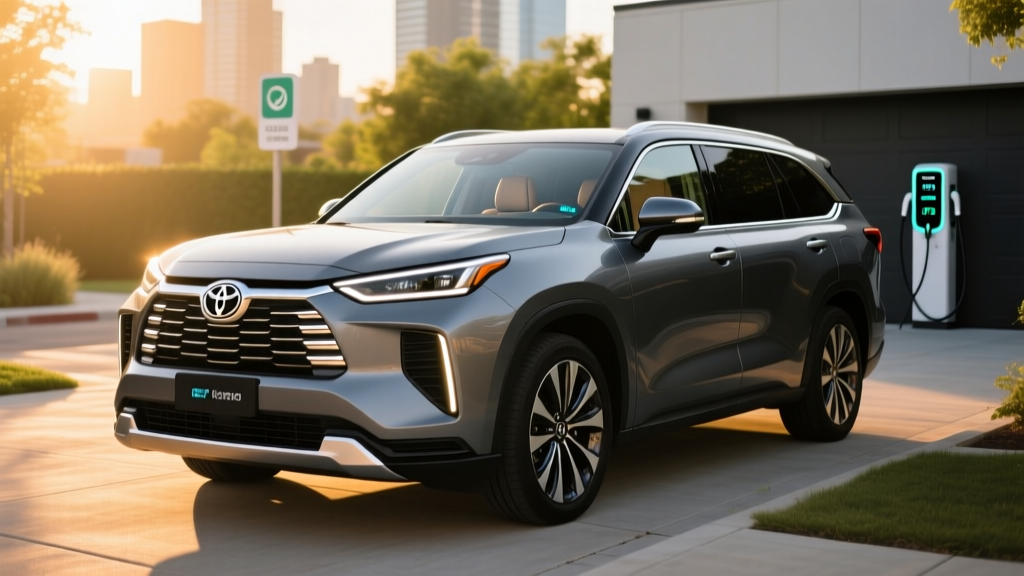
The 2026 Toyota Grand Highlander Hybrid occupies a rare sweet spot: three-row family space with fuel economy that shames compact sedans. Unlike a plug-in hybrid or full EV, this is a conventional self-charging hybrid (HEV) — no plug, no range anxiety, no behavior change required. You just drive it and watch the fuel gauge barely move.
With EPA ratings up to 36 MPG combined and a starting price around $46,000, the Grand Highlander Hybrid undercuts most three-row EVs by $20,000+ while costing pennies more per mile to fuel than a midsize sedan. But Toyota offers two distinct hybrid powertrains here, and choosing the wrong one costs you 9 MPG and thousands in fuel over the ownership cycle.
Fuel Economy: EPA Numbers and Real-World MPG
The Grand Highlander Hybrid comes in two powertrain flavors, and the efficiency gap between them is significant. Here's the official EPA breakdown from fueleconomy.gov:
| Powertrain | City MPG | Highway MPG | Combined MPG | AWD/2WD |
|---|---|---|---|---|
| Standard Hybrid (2.5L I4) | 37 | 34 | 36 | FWD or AWD |
| Hybrid MAX (2.4L Turbo) | 27 | 28 | 27 | AWD only |
For context, the non-hybrid Grand Highlander (turbocharged 2.4L gas) rates at 24 MPG combined. Choosing the standard hybrid over the gas model saves approximately $550-$700 per year in fuel costs at 15,000 miles annually and $3.50/gallon regular unleaded, based on EPA estimates.
Powertrain Breakdown: Standard Hybrid vs Hybrid MAX
Toyota offers two fundamentally different hybrid systems in the Grand Highlander, and understanding the trade-off is critical to getting the right vehicle.
Standard Hybrid (LE, XLE trims)
The efficiency-focused powertrain pairs a 2.5-liter inline-4 Atkinson-cycle engine with two electric motor-generators through Toyota's eCVT (planetary gearset, not a belt-driven CVT). The front motor handles primary propulsion and regeneration; a rear motor enables electronic on-demand AWD. Combined system output is 245 horsepower and 173 lb-ft of torque.
This is the same proven architecture found in the Highlander Hybrid and RAV4 Hybrid — bulletproof reliability, seamless power delivery, and the fuel economy numbers above. The trade-off: 0-60 MPH in approximately 7.8 seconds. Adequate for merging, not exciting.
Hybrid MAX (Limited, Platinum trims)
The performance-oriented powertrain uses a turbocharged 2.4-liter inline-4 paired with a more powerful electric motor and a traditional 6-speed automatic transmission (no eCVT). Combined output jumps to 362 horsepower and 400 lb-ft of torque, with a 0-60 MPH time of approximately 5.8 seconds and a 5,000-pound towing capacity.
The Hybrid MAX uses a smaller, higher-output battery pack optimized for power delivery rather than efficiency. You gain serious passing power and towing capability but sacrifice 9 MPG combined. AWD is standard and uses a torque-vectoring rear electric motor for improved handling.
| Spec | Standard Hybrid | Hybrid MAX |
|---|---|---|
| Engine | 2.5L I4 Atkinson | 2.4L Turbo I4 |
| Combined HP | 245 | 362 |
| Combined Torque | 173 lb-ft | 400 lb-ft |
| Transmission | eCVT | 6-speed auto |
| 0-60 MPH | ~7.8 sec | ~5.8 sec |
| Max Towing | 3,500 lbs | 5,000 lbs |
| Fuel Required | Regular (87 oct) | Premium (91 oct) |
Note the fuel requirement difference: the Hybrid MAX requires premium gasoline, which adds roughly $0.50-$0.70 per gallon and widens the operating cost gap further.
Hybrid Battery: Size, Warranty, and Replacement Cost
The Grand Highlander Hybrid uses a nickel-metal hydride (NiMH) traction battery in the standard hybrid and a lithium-ion pack in the Hybrid MAX. Both are sealed, self-charging systems — you never plug them in, and the vehicle manages charge levels automatically, typically operating between 40-80% state of charge to maximize longevity.
Toyota's hybrid battery track record is among the best in the industry. The Prius, now in its fifth generation, routinely sees original batteries lasting 200,000+ miles. Real-world failure data from fleet operators and Consumer Reports reliability surveys consistently rank Toyota hybrid systems at or near the top for long-term dependability.
If replacement is needed outside warranty, a refurbished hybrid battery for the standard 2.5L system runs approximately $2,500-$4,000 installed at an independent hybrid specialist. A new OEM battery from Toyota is approximately $4,500-$6,000 installed. The Hybrid MAX lithium-ion pack is more expensive — expect $5,000-$8,000 for OEM replacement. These costs are comparable to a major transmission repair on a conventional vehicle and far less than EV battery replacement.
Pricing, Trims, and Tax Credit Eligibility
The 2026 Grand Highlander Hybrid lineup spans four trims. All prices below include Toyota's destination charge:
| Trim | Powertrain | MSRP (est.) |
|---|---|---|
| LE | Standard Hybrid | ~$46,100 |
| XLE | Standard Hybrid | ~$49,500 |
| Limited | Hybrid MAX | ~$55,800 |
| Platinum | Hybrid MAX | ~$60,200 |
Federal Tax Credit: Does It Qualify?
No. The federal §30D Clean Vehicle Credit of up to $7,500 applies exclusively to battery electric vehicles (BEVs) and plug-in hybrids (PHEVs) that meet battery sourcing, critical mineral, MSRP, and buyer income requirements. Since the Grand Highlander Hybrid is a conventional HEV that cannot be plugged in, it does not qualify for the federal purchase credit.
Some states offer separate incentives for conventional hybrids — for example, certain state-level rebates or HOV lane access — but these vary by jurisdiction and change frequently. Check your state's energy or environmental agency for current programs.
Hybrid vs PHEV vs EV: Which Fits Your Situation?
The Grand Highlander Hybrid is one option in a broader electrification spectrum. Here's how to decide which powertrain type matches your lifestyle:
Choose the HEV (This Vehicle) If:
- You lack home charging access (apartment, street parking)
- You want zero behavior change — just gas up and go
- You drive 15,000+ miles/year and want proven reliability
- You need three rows but find EVs too expensive
- You frequently tow or take long road trips
Choose a PHEV If:
- You can install a Level 2 charger at home
- Your daily commute is under 35 miles round-trip
- You want electric-only weekday driving with gas flexibility for road trips
- A model exists in your preferred segment (Toyota RAV4 Prime, Chrysler Pacifica PHEV)
Choose a Full EV If:
- You have reliable home Level 2 charging
- You want the lowest per-mile fuel cost ($0.04-$0.06/mi on home electricity)
- You qualify for the $7,500 federal tax credit
- You rarely tow or can accept range reduction while towing
- Three-row EVs like the Kia EV9 or Rivian R1S fit your budget
For three-row family haulers specifically, the PHEV options are currently limited to the Chrysler Pacifica Hybrid (minivan). If you need an SUV form factor with three rows and plug-in capability, you're looking at full EVs or waiting for upcoming PHEV models from other manufacturers.
Pros and Cons at a Glance
✓ Pros
- 36 MPG combined (standard hybrid) — class-leading for three-row SUVs
- No plug-in required; zero lifestyle adjustment
- 10-year/150,000-mile hybrid battery warranty
- Proven Toyota hybrid reliability track record
- Genuine adult-sized third row with usable cargo space behind it
- Hybrid MAX offers 362 HP and 5,000-lb towing when needed
- Toyota Safety Sense 3.0 standard (adaptive cruise, lane-keeping, auto emergency braking)
✗ Cons
- No federal tax credit eligibility (HEV, not PHEV/BEV)
- Hybrid MAX requires premium fuel, eroding some efficiency gains
- Standard hybrid's 245 HP feels modest for a 4,700-lb vehicle when loaded
- No electric-only driving mode — engine runs at all speeds
- Higher starting price than gas-only Grand Highlander (~$4,000 premium)
- No DC fast charging capability (not applicable to HEVs)
- Third-row access requires folding/sliding second row
Ownership Costs: 5-Year Projection
To put the Grand Highlander Hybrid's value in perspective, here's a 5-year/75,000-mile cost comparison against the gas-only Grand Highlander and a comparable three-row EV (Kia EV9 Land AWD):
| Cost Factor | Grand Highlander Hybrid (Std) | Grand Highlander Gas | Kia EV9 Land AWD |
|---|---|---|---|
| Fuel/Energy | ~$7,300 | ~$10,900 | ~$3,800* |
| Maintenance | ~$2,800 | ~$3,200 | ~$1,500 |
| Federal Tax Credit | $0 | $0 | Up to $7,500** |
| Purchase Price (approx) | $46,100 | $42,000 | $60,000 |
*EV9 energy cost assumes 70% home charging at $0.14/kWh, 30% public DC at $0.40/kWh. **EV9 §30D credit eligibility depends on buyer income, battery sourcing, and MSRP caps per current IRS rules.
The hybrid's fuel savings over the gas model recoup the ~$4,100 purchase premium in approximately 3 years of average driving. Against the EV9, the hybrid has a much lower entry price but higher operating costs — the break-even point depends heavily on your annual mileage and electricity rates.
Frequently Asked Questions
How many MPG does the Toyota Grand Highlander Hybrid get?
The standard hybrid powertrain achieves 37 city / 34 highway / 36 combined MPG (EPA). The Hybrid MAX achieves 27 city / 28 highway / 27 combined MPG. Real-world city driving in the standard hybrid often matches or exceeds the EPA city figure thanks to frequent regenerative braking. Highway-only driving at 75+ MPH typically yields 30-32 MPG for the standard hybrid.
Does the Grand Highlander Hybrid need to be plugged in?
No. This is a conventional self-charging hybrid (HEV), not a plug-in hybrid (PHEV). The battery charges automatically through regenerative braking and the gasoline engine. You fuel it exactly like any other gas car — at a gas station, with no cables or charging stations involved.
How far can it drive on electric power alone?
Effectively zero miles in sustained electric-only mode. Unlike a PHEV, the Grand Highlander Hybrid does not have a meaningful electric-only driving range. The electric motor assists the gasoline engine at low speeds and during acceleration, and the vehicle can creep short distances (a few hundred feet) on electric power at very low speeds, but the engine is always running during normal driving.
Is the Toyota Grand Highlander Hybrid reliable?
Toyota's hybrid systems have an exceptional reliability record spanning 25+ years since the original Prius. The hybrid battery, motor-generators, and power control unit are covered by a 10-year/150,000-mile warranty. Independent reliability data from Consumer Reports and J.D. Power consistently ranks Toyota hybrids among the most dependable vehicles in their segments. The eCVT transmission in the standard hybrid has no belts, clutches, or bands to wear — it's a simple planetary gearset that Toyota has refined over millions of units in service.
What does hybrid battery replacement cost?
Outside of the 10-year/150,000-mile warranty, a replacement hybrid battery for the standard 2.5L system costs approximately $2,500-$4,000 for a refurbished unit or $4,500-$6,000 for a new OEM battery, installed. The Hybrid MAX lithium-ion pack runs $5,000-$8,000 OEM. However, Toyota hybrid batteries routinely last 200,000+ miles, and many original Prius batteries are still in service after 15+ years.
Does the Grand Highlander Hybrid qualify for any tax credit?
The federal §30D Clean Vehicle Credit (up to $7,500) does not apply to conventional hybrids — it's limited to BEVs and PHEVs. The Grand Highlander Hybrid does not qualify for the federal credit. Some states offer smaller incentives for hybrid vehicles (rebates, reduced registration fees, HOV lane access), but these vary widely by jurisdiction and change frequently. Consult your state's energy office or a tax professional for current local incentives.
How does the Grand Highlander Hybrid compare to a three-row EV?
The primary advantages of the hybrid are lower purchase price (~$15,000-$25,000 less than comparable three-row EVs), no charging infrastructure needed, unrestricted road-trip range, and no cold-weather range loss. The primary advantages of a three-row EV (Kia EV9, Rivian R1S) are lower per-mile fuel cost, zero tailpipe emissions, stronger acceleration, eligibility for the $7,500 federal credit, and reduced maintenance. For families without home charging or who frequently drive 400+ mile trips, the hybrid remains the more practical choice in 2026.