Quick Verdict: A Chinese Luxury PHEV With Big Ambitions
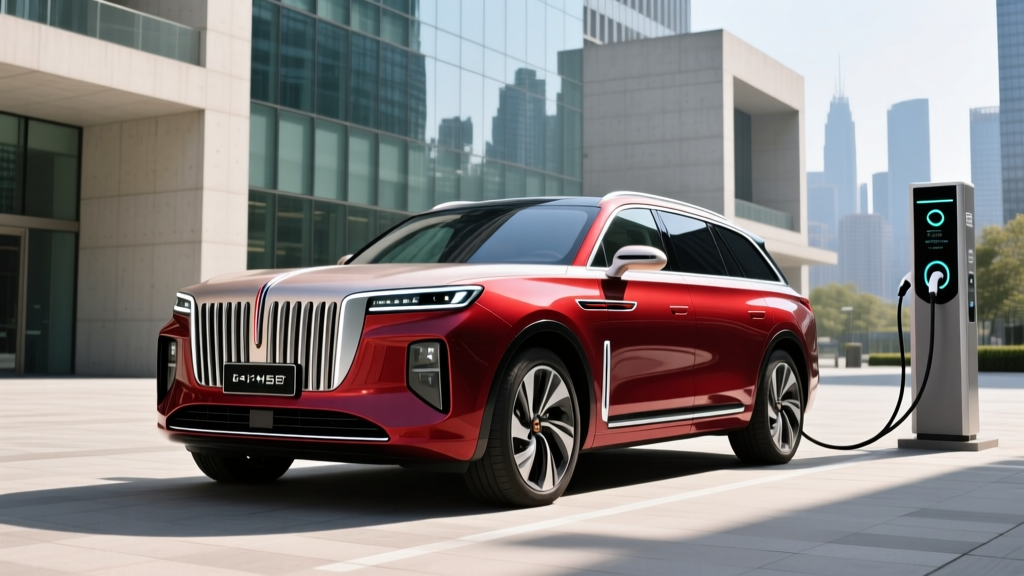
The Hongqi E-HS9 is a full-size luxury plug-in hybrid SUV from China's FAW Group — a vehicle that positions itself against the BMW X5 xDrive50e, Mercedes GLE 350de, and Volvo XC90 Recharge. Known domestically as the "Chinese Rolls-Royce" of SUVs, the E-HS9 pairs a turbocharged gasoline engine with dual electric motors and a sizable battery pack to deliver both electric-only commuting and long-distance capability.
Before we get into specifics, a critical note for US-based readers: as of early 2026, the Hongqi E-HS9 is not officially sold in the United States. FAW Hongqi has focused its export strategy on markets including China, Norway, the Middle East, and parts of Southeast Asia. This guide covers the E-HS9 PHEV variant's specifications based on manufacturer data and international-market testing — useful for import-curious buyers, expats, or those tracking the brand's eventual US entry.
A conventional hybrid (HEV) like the Toyota Highlander Hybrid uses a small battery charged only by regenerative braking and the engine — you never plug it in. A plug-in hybrid (PHEV) like the Hongqi E-HS9 has a much larger battery that you charge from a wall outlet or charger, giving it meaningful electric-only range (typically 30-50+ miles) before the gasoline engine kicks in. The E-HS9 is strictly a PHEV — there is no non-plug HEV variant.
Powertrain and Performance Specs
The Hongqi E-HS9 PHEV uses a series-parallel plug-in hybrid architecture. Here is the full breakdown:
| Spec | Value |
|---|---|
| Engine | 2.0L turbocharged inline-4 |
| Electric Motors | Dual motor (front + rear), AWD |
| Combined System Output | ~429 hp / 516 lb-ft torque (high-output trim) |
| Battery Capacity | ~84 kWh (gross), NMC lithium-ion |
| Electric-Only Range (CLTC) | Up to ~315 miles (510 km) CLTC |
| Estimated EPA-Equivalent EV Range | ~200–230 miles (EPA testing typically 25-35% lower than CLTC) |
| Total Combined Range | ~620+ miles (EV + gasoline) |
| 0-100 km/h (0-62 mph) | ~5.0 seconds |
| DC Fast Charge Capability | Yes — up to ~90 kW DC (CCS/GB/T depending on market) |
| AC Level 2 Charge Time | ~8–10 hours (0–100% at 7.2 kW) |
| Drivetrain | AWD (electric + engine) |
| Seating | 6 or 7 passengers |
The E-HS9's battery is unusually large for a PHEV — at roughly 84 kWh, it rivals dedicated battery-electric vehicles like the base Tesla Model Y. This is what enables its headline-grabbing electric-only range. Most competing luxury PHEVs (the BMW X5 xDrive50e at 25.7 kWh, the Volvo XC90 Recharge at 18.6 kWh) offer only 30–40 miles of electric driving. The E-HS9 operates more like an extended-range EV that happens to have a gas engine for backup.
Fuel Economy: MPG and MPGe Breakdown
Because the Hongqi E-HS9 has not been EPA-certified for US sale, official fueleconomy.gov figures do not exist. However, we can estimate based on CLTC data and real-world reports from international reviewers:
| Metric | CLTC (China) | Estimated EPA-Equivalent |
|---|---|---|
| EV Mode Efficiency | ~18.5 kWh/100 km | ~29.8 kWh/100 mi (~112 MPGe) |
| Gas-Only (charge-depleted) Combined | ~7.5 L/100 km | ~31 MPG combined |
| Gas-Only City | ~8.2 L/100 km | ~29 MPG city |
| Gas-Only Highway | ~6.9 L/100 km | ~34 MPG highway |
When the battery is depleted and you're running on gasoline only, expect roughly 28–32 MPG combined in real-world driving — comparable to a Volvo XC90 Recharge in charge-sustaining mode (~27 MPG) and better than a gas-only BMW X5 (~24 MPG combined). In EV mode, most owners will rarely visit a gas station during daily commuting if they charge nightly. Highway-heavy driving at 75+ mph will reduce both EV range and gas MPG by 10–15%.
Charging: What the 84 kWh Battery Means for Your Schedule
The E-HS9's massive battery is both its greatest strength and its biggest practical challenge. Here's how charging breaks down:
| Level | Power | 0–100% Time | Miles of EV Range Added per Hour |
|---|---|---|---|
| Level 1 (120V household) | ~1.4 kW | ~60 hours | ~5 mi/hr |
| Level 2 (240V home/public) | ~7.2 kW | ~10–12 hours | ~25 mi/hr |
| DC Fast Charge | ~90 kW peak | 10–80% in ~45 min | ~130 mi/hr (at peak) |
A few important observations from a practical standpoint:
- Level 1 is impractical for daily full recharges with an 84 kWh pack. You'd add only ~5 miles of EV range per hour — fine for topping off, not for overnight recovery.
- Level 2 home charging is essential. A 48-amp Level 2 charger (11.5 kW) could reduce full-charge time to roughly 7–8 hours, making overnight charging feasible. Installation typically costs $800–$2,000 depending on panel capacity and wiring distance.
- DC fast charging at 90 kW is modest by 2026 standards. Competing BEVs like the Hyundai Ioniq 5 peak at 240 kW. However, for a PHEV — even one with a large battery — 90 kW is reasonable. Expect the charge curve to taper significantly above 80% SoC, as is standard for NMC chemistry.
- Preconditioning matters. In cold weather (below 40°F), charging speeds will drop unless the battery is preconditioned. The E-HS9 includes a battery thermal management system, but real-world DC charging in winter may stretch 10–80% to 60+ minutes.
Pricing and Tax Credit Eligibility
In its primary market (China), the Hongqi E-HS9 PHEV is priced between approximately ¥509,800 and ¥729,800 RMB, which converts to roughly $70,000–$100,000 USD depending on trim. European export pricing, where available, has been positioned in the €70,000–€90,000 range.
If the E-HS9 were sold in the US, it would face significant hurdles for the IRS §30D clean vehicle credit:
- MSRP cap: SUVs must be under $80,000 MSRP. Only the base E-HS9 trim might qualify.
- Battery sourcing requirements: Critical minerals and battery components must meet phased-in thresholds from US or FTA-partner countries. Chinese-sourced batteries and minerals currently trigger a foreign entity of concern (FEOC) exclusion, effectively disqualifying most Chinese-manufactured PHEVs.
- Income caps: Buyer AGI must not exceed $300,000 (joint), $225,000 (head of household), or $150,000 (single).
- Final assembly: Must occur in North America. The E-HS9 is assembled in Changchun, China.
Bottom line: The E-HS9 would almost certainly not qualify for the $7,500 federal credit under current rules due to FEOC battery sourcing restrictions and final-assembly requirements. Always consult a tax professional for your specific situation.
Battery Warranty, Reliability, and Replacement Cost
Hongqi offers an 8-year / 160,000 km (~100,000 mile) warranty on the E-HS9's high-voltage battery pack for the Chinese market, guaranteeing a minimum of 70% state-of-health (SoH) retention. Some trims sold with a first-owner "lifetime" battery warranty in China. International-market warranty terms vary by dealer and importer.
On reliability: FAW Hongqi as a brand has limited long-term reliability data outside China. The E-HS9's powertrain components — the 2.0L turbo engine and electric motors — use proven technology, but the integration complexity of a large-battery PHEV system means more potential failure points than a simple HEV or BEV. Parts availability and service expertise would be a significant concern for any US-based buyer importing one.
Battery replacement cost: While Hongqi does not publish official replacement pricing, an 84 kWh NMC pack in 2026 is estimated at $12,000–$18,000 for the battery module alone, plus labor. This is comparable to replacing a large BEV battery (e.g., Tesla Model X) and significantly more expensive than smaller PHEV packs like the Toyota RAV4 Prime's 18.1 kWh unit (~$4,000–$6,000).
Hongqi E-HS9 vs the Competition
How does the E-HS9 PHEV stack up against luxury PHEV SUVs that US buyers can actually purchase?
| Spec | Hongqi E-HS9 | BMW X5 xDrive50e | Volvo XC90 Recharge |
|---|---|---|---|
| Battery (kWh) | ~84 | 25.7 | 18.6 |
| EV Range (est. EPA) | ~200–230 mi | 38 mi (EPA) | 32 mi (EPA) |
| Combined HP | ~429 | 483 | 455 |
| Gas MPG (charge-depleted) | ~31 est. | ~25 | ~27 |
| DC Fast Charge | ~90 kW | No (AC only) | No (AC only) |
| US MSRP | Not sold in US | ~$74,000 | ~$78,000 |
| US §30D Credit | No | Eligible (partial) | No (FEOC sourcing) |
The E-HS9's standout advantage is its massive battery and EV range — roughly 5–6× more electric miles than European competitors. However, the BMW and Volvo are available in the US, have established dealer networks, and offer competitive performance figures. The E-HS9's DC fast-charge capability is also a differentiator; most luxury PHEVs still rely on AC-only charging.
Pros
- Massive 84 kWh battery — 200+ mi EV range
- DC fast charging (rare for PHEVs)
- Luxurious interior with premium materials
- AWD with strong combined output
- 6/7-seat configuration
Cons
- Not available in the United States
- No US dealer network or parts support
- Would not qualify for §30D federal tax credit
- Heavy vehicle — impacts tire wear and handling
- Limited long-term reliability data outside China
- Battery replacement cost ($12K–$18K) is high
Who Should Consider the E-HS9 — and Who Shouldn't
The Hongqi E-HS9 PHEV makes sense if you:
- Live in a market where it's officially sold (China, Norway, Middle East, select SE Asian countries)
- Want EV-range capability that blurs the line between PHEV and full BEV
- Need 6–7 seats and luxury appointments without committing to a full EV
- Have reliable home charging and want to drive 90%+ of daily miles on electricity
Look elsewhere if you:
- Are a US-based buyer — the lack of availability, service network, and tax-credit eligibility make it impractical
- Want a simpler, proven PHEV with strong US dealer support (consider the Toyota RAV4 Prime, Jeep Wrangler 4xe, or BMW X5 xDrive50e)
- Don't have access to Level 2 home charging — the 84 kWh battery makes Level 1 charging painfully slow
- Are considering a full BEV — at this battery size, a dedicated EV like the Rivian R1S or BMW iX may be a more straightforward choice
Decision Framework: Hybrid vs PHEV vs EV
Choose a conventional hybrid (HEV) if you have no charging access and want maximum simplicity — e.g., Toyota Highlander Hybrid (35 MPG combined, no plug needed).
Choose a PHEV like the E-HS9 if you have home charging, want 30–200+ miles of electric commuting, but need a gas engine for long road trips without charging-planning anxiety.
Choose a full BEV if you want the lowest operating cost, have reliable charging access, and are comfortable planning DC fast-charge stops on road trips — e.g., Tesla Model X, Rivian R1S.
Frequently Asked Questions
How many MPG does the Hongqi E-HS9 PHEV get?
When the battery is depleted and the vehicle runs on gasoline only, the E-HS9 achieves an estimated 29 MPG city / 34 MPG highway / 31 MPG combined (EPA-equivalent estimates). In EV mode, efficiency is approximately 112 MPGe. Actual figures vary with driving style, temperature, and terrain.
How far can the Hongqi E-HS9 go on electric only?
Hongqi claims up to 315 miles (510 km) of EV range on the CLTC cycle. In real-world conditions — and adjusted to EPA-equivalent testing standards — expect approximately 200–230 miles of electric-only range in moderate temperatures, dropping to 160–190 miles in cold weather (below 30°F).
Does the Hongqi E-HS9 qualify for the US federal EV tax credit?
No. Even if sold in the US, the E-HS9 would fail multiple §30D requirements: final assembly is in China (not North America), battery components and critical minerals are sourced from FEOC entities, and most trims exceed the $80,000 SUV MSRP cap.
Is the Hongqi E-HS9 reliable, and what does battery replacement cost?
Long-term reliability data is limited outside China. The battery is covered by an 8-year / 100,000-mile warranty (China market). Estimated out-of-warranty battery replacement is $12,000–$18,000 for the 84 kWh NMC pack. Service and parts availability in non-export markets is a significant risk.
Can the Hongqi E-HS9 DC fast charge?
Yes — unlike most PHEVs, the E-HS9 supports DC fast charging at up to approximately 90 kW. A 10–80% charge takes roughly 45 minutes under optimal conditions. This is a significant advantage over competitors like the BMW X5 xDrive50e and Volvo XC90 Recharge, which are limited to AC Level 2 charging only.
Should I buy the E-HS9 PHEV or a full EV?
If you regularly drive more than 200 miles between charging opportunities, the E-HS9's gas backup eliminates range anxiety. If 95%+ of your driving is within 200 miles and you have reliable home charging, a full BEV (like the BMW iX or Rivian R1S) offers lower maintenance costs, stronger US support, and potential tax-credit eligibility.