The midsize sedan segment has gone hybrid almost entirely, and the 2026 Toyota Camry Hybrid LE FWD sits at the top of the sales charts for good reason. With an EPA-estimated 51 MPG combined, a starting MSRP under $31,000, and Toyota's long-proven hybrid synergy drive system, this trim represents the value sweet spot in the Camry lineup. But spec-sheet numbers only tell part of the story. Real-world fuel economy, long-term battery reliability, and the question of whether you should consider a plug-in hybrid or full EV instead all factor into a smart purchase decision.
This guide covers everything a buyer needs to know about the 2026 Camry Hybrid LE with front-wheel drive — from exact EPA figures and powertrain details to battery warranty coverage and total cost of ownership.
HEV vs PHEV: Understanding the Camry Hybrid's Powertrain
Before diving into specs, it's critical to understand what the Camry Hybrid LE actually is — and what it isn't.
Conventional Hybrid (HEV) — What the Camry Hybrid LE Is
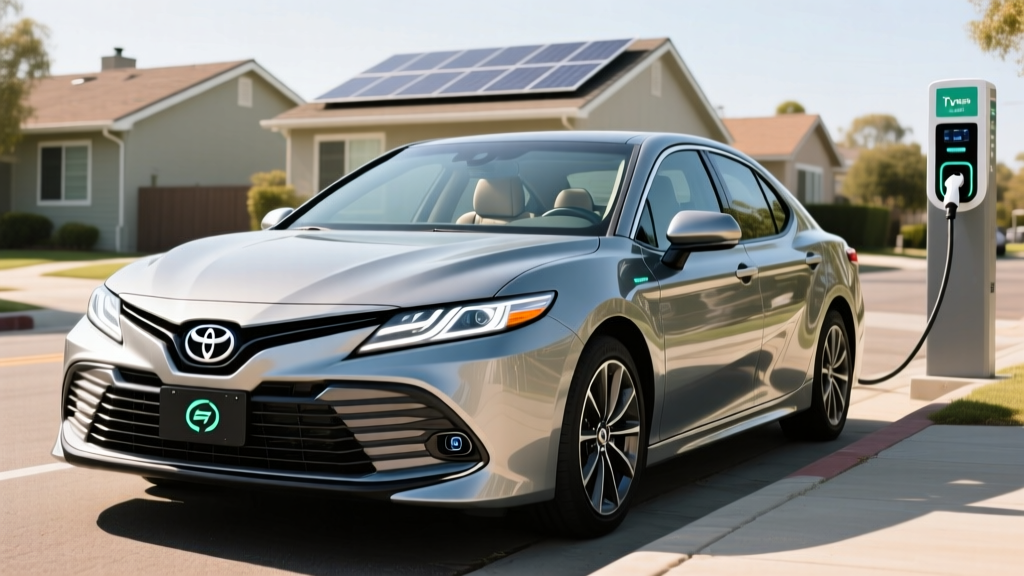
The Camry Hybrid LE is a conventional hybrid electric vehicle (HEV). It pairs a gasoline engine with an electric motor and a small battery pack that recharges through regenerative braking and the engine itself. You never plug it in. The hybrid system automatically manages when to use electric power, gasoline, or both, optimizing efficiency without any change to your driving or fueling habits.
Plug-In Hybrid (PHEV) — What the Camry Hybrid LE Is Not
A plug-in hybrid (PHEV) like the Toyota RAV4 Prime or Toyota Prius Prime features a larger battery that can be charged from a wall outlet or public charger, enabling 25–45 miles of pure electric driving before the gasoline engine kicks in. Toyota does not currently offer the Camry as a PHEV in the US market. If plug-in electric range is a priority, you'd need to look at other Toyota models or competitors like the Hyundai Sonata PHEV.
This distinction matters because it directly affects your daily routine, fuel costs, and tax-credit eligibility. An HEV is a "fill up and forget" proposition — no charging infrastructure needed, no range anxiety, but also no electric-only driving and no federal EV tax credit.
Fuel Economy: EPA Ratings and Real-World MPG
The 2026 Toyota Camry Hybrid LE FWD carries the highest fuel-economy rating in the Camry lineup, thanks to its lighter curb weight and front-wheel-drive configuration (AWD trims lose a few MPG to drivetrain losses).
| Metric | EPA Estimate | Real-World Expectation |
|---|---|---|
| City MPG | 53 MPG | 50–56 MPG (hybrids often exceed EPA in stop-and-go) |
| Highway MPG | 50 MPG | 44–49 MPG (sustained high speed reduces regen benefit) |
| Combined MPG | 51 MPG | 47–53 MPG depending on driving mix |
| Fuel Tank Capacity | 13.2 gallons | — |
| Total Driving Range | ~673 miles | ~580–660 miles real-world |
Real-world context: Toyota's hybrid system excels in city driving, where frequent stops allow regenerative braking to recharge the battery and the electric motor handles low-speed propulsion. Many owners report exceeding the EPA city estimate in congested urban driving. Highway efficiency drops somewhat because the gasoline engine does most of the work at sustained speeds, and aerodynamic drag increases significantly above 70 mph. In mixed suburban driving with moderate speeds, hitting or slightly beating the 51 MPG combined figure is realistic.
For comparison, the non-hybrid 4-cylinder Camry trims were discontinued for 2025 — every new Camry is now a hybrid. The Camry Hybrid SE/XSE trims with sportier tuning and AWD drop to around 44–47 MPG combined. According to fueleconomy.gov, the Camry Hybrid LE FWD's 51 MPG combined ranks among the most efficient non-plug-in midsize sedans available.
Powertrain Specs: Engine, Motor, and Horsepower
The 2026 Camry Hybrid LE FWD uses Toyota's fifth-generation Hybrid Synergy Drive system, built around a 2.5-liter Dynamic Force four-cylinder engine paired with a permanent-magnet electric motor.
| Specification | Value |
|---|---|
| Engine | 2.5L 4-cylinder DOHC (A25A-FXS) |
| Engine Power | 184 hp @ 5,700 rpm |
| Electric Motor Power | 134 hp |
| Net Combined System Horsepower | 225 hp |
| Drivetrain | Front-wheel drive (FWD) |
| Transmission | Electronically controlled CVT (eCVT) |
| Hybrid Battery | Lithium-ion, ~1.6 kWh (nominal) |
| 0–60 mph | ~7.2 seconds (est.) |
| Curb Weight | ~3,430 lbs |
| Cargo Volume | 15.1 cu ft |
| Seating | 5 passengers |
The 225 combined horsepower is competitive with turbocharged rivals and provides confident highway merging and passing. The eCVT isn't a traditional belt-and-pulley CVT — it uses a planetary gearset to seamlessly blend engine and motor power, which is both smoother and more durable than conventional CVT designs. The ~1.6 kWh lithium-ion traction battery is compact, mounted under the rear seat, and doesn't compromise trunk space.
Note on the hybrid battery size: This small battery is not designed for electric-only driving beyond very short, low-speed maneuvers (parking lots, brief traffic crawls). Its role is to assist the gasoline engine, enable regenerative braking, and allow engine-off coasting — not to serve as a primary energy source.
Pricing, Trims, and Tax Credit Eligibility
The 2026 Camry Hybrid LE FWD is the entry point for the Camry lineup.
| Trim | MSRP (approx.) |
|---|---|
| LE FWD | $30,495 |
| SE FWD | $32,095 |
| XLE FWD | $34,495 |
| XSE FWD | $35,495 |
Prices include destination charge. AWD adds approximately $1,500 to applicable trims. Pricing subject to change; confirm with dealer.
Does the Camry Hybrid Qualify for a Federal Tax Credit?
No. The federal Clean Vehicle Credit under IRS §30D applies only to plug-in electric vehicles (BEVs and PHEVs) with a minimum battery capacity of 7 kWh that meet specific critical-mineral and battery-component sourcing requirements. The Camry Hybrid LE is a conventional HEV with a ~1.6 kWh battery and no plug-in capability. It does not qualify for the §30D credit, nor does it qualify for the used-EV credit under §25E.
Some states offer their own incentives for hybrids, though these have become rare as state programs increasingly focus on zero-emission vehicles. Check your state's energy office or department of environmental quality for current programs. There are no federal income caps or MSRP caps to worry about here simply because the credit does not apply.
Hybrid Battery Warranty, Lifespan, and Replacement Cost
Battery longevity is the single most common concern among first-time hybrid buyers. Here's what Toyota provides and what real-world data shows.
Toyota Hybrid Battery Warranty
- Hybrid Battery Coverage: 10 years / 150,000 miles (whichever comes first)
- Hybrid System Components: 8 years / 100,000 miles
- Capacity Retention Threshold: Toyota does not publish a specific degradation percentage trigger, but warranty covers defects and abnormal capacity loss
- Transferability: Warranty is fully transferable to subsequent owners
Real-world longevity data: Toyota's hybrid batteries have an excellent track record. The Prius, which shares similar hybrid architecture, routinely sees original batteries lasting 150,000–200,000+ miles before significant degradation. The lithium-ion pack in the current-generation Camry Hybrid is more durable than the older nickel-metal-hydride packs. Complete failure is rare; more commonly, individual cell modules weaken over time, which can be repaired by replacing specific modules rather than the entire pack.
Replacement cost if out of warranty: A new OEM hybrid battery pack from Toyota runs approximately $2,500–$3,500 including labor. Refurbished or reconditioned packs are available from third-party shops for $1,500–$2,200. Individual module replacement (the more common repair) can cost $500–$1,000. Compared to the $8,000–$18,000+ cost of replacing a full EV traction battery, hybrid battery maintenance is modest.
Driving Impressions and Daily Ownership
The 2026 Camry Hybrid LE FWD prioritizes comfort and efficiency over sportiness. The ride is compliant, cabin noise is well-managed at cruising speeds, and the 8-inch touchscreen (wireless Apple CarPlay and Android Auto standard) handles infotainment duties adequately. Toyota Safety Sense 3.0 comes standard — including pre-collision braking, lane-departure alert, adaptive cruise control, and lane-tracing assist. This is a SAE Level 2 driver-assistance system, meaning you must keep your hands on the wheel and eyes on the road at all times.
The LE trim rides on 16-inch steel wheels with wheel covers, which actually contributes to its superior fuel economy (less rolling resistance, lighter weight) compared to the 18- and 19-inch alloy wheels on higher trims. You'll notice the difference most in city driving, where the hybrid system's seamless electric-assist launches make stoplights and traffic feel effortless.
What the LE trim doesn't include: leather seats, heated front seats, a power-adjustable passenger seat, wireless phone charging, or a premium audio system. If those matter, the XLE trim adds them for roughly $4,000 more — at a small MPG penalty.
Camry Hybrid LE FWD vs. PHEV vs. Full EV: Which Should You Choose?
The right electrified vehicle depends on your driving patterns, home charging access, and budget. Here's a practical decision framework.
Choose the Camry Hybrid LE FWD (HEV) If:
- You don't have reliable access to home or workplace charging
- You want maximum range (~670 miles per tank) for road trips
- Your budget is $30,000–$33,000 out the door
- You want a proven, low-maintenance powertrain with minimal learning curve
- Your daily commute is under 40 miles but includes highway segments
- You live in an apartment or street-park and can't install a charger
Consider a PHEV (e.g., Prius Prime) If:
- You can charge at home (Level 1 or 2) and want 35–44 miles of electric-only commuting
- Your daily round-trip commute is under 40 miles (you'd rarely use gas)
- You want to qualify for the federal §30D tax credit (up to $7,500, subject to eligibility)
- You still want a gasoline engine for long road trips without charging stops
- You're willing to pay a higher upfront price ($33,000–$40,000) offset partially by incentives
Consider a Full EV (e.g., Tesla Model 3, Hyundai Ioniq 6) If:
- You can install a Level 2 home charger and your daily driving is under 250 miles
- You want zero tailpipe emissions and the lowest per-mile fuel cost
- You're eligible for the full $7,500 federal tax credit and can leverage point-of-sale transfer
- You're comfortable planning DC fast-charging stops on road trips
- You want minimal routine maintenance (no oil changes, no engine)
The honest math for most buyers: If you drive 12,000 miles per year at 51 MPG with gas at $3.20/gallon, your annual fuel cost in the Camry Hybrid LE is roughly $753. A comparable gasoline-only midsize sedan at 30 MPG would cost about $1,280/year — a $527 annual savings with the hybrid. Over a 10-year ownership period, that's approximately $5,270 in fuel savings, which more than covers any hybrid-system premium. A full EV charging at home at $0.14/kWh and averaging 3.5 miles/kWh would cost about $480/year — a further $273/year savings over the hybrid, but with higher upfront cost, insurance premiums, and charging-infrastructure requirements.
Frequently Asked Questions
How many MPG does the 2026 Toyota Camry Hybrid LE FWD get?
The EPA rates it at 53 MPG city, 50 MPG highway, and 51 MPG combined. Real-world results vary: city-heavy drivers often see 52–56 MPG thanks to regenerative braking, while sustained highway driving at 75+ mph may return 44–48 MPG. The combined real-world average for most owners falls in the 47–53 MPG range.
Does the Camry Hybrid need to be plugged in?
No. The Camry Hybrid LE is a conventional hybrid (HEV). Its battery recharges automatically through regenerative braking and the gasoline engine. You simply fill up at any gas station as you would with a traditional car. There is no plug, no charging cable, and no need for home charging infrastructure.
Is the Camry Hybrid battery reliable, and what does replacement cost?
Toyota's hybrid batteries are among the most reliable in the industry. The lithium-ion pack is covered by a 10-year/150,000-mile warranty. Real-world data from similar Toyota hybrid systems shows original batteries frequently lasting 150,000–200,000+ miles. If replacement is needed out of warranty, expect $2,500–$3,500 for a new OEM pack or $1,500–$2,200 for a refurbished unit. Partial module replacement — the more common repair — costs $500–$1,000.
Does the 2026 Camry Hybrid qualify for any federal tax credit?
No. The federal §30D Clean Vehicle Credit applies only to plug-in vehicles (BEVs and PHEVs) meeting specific battery-capacity, sourcing, MSRP, and buyer-income requirements. The Camry Hybrid LE is a conventional hybrid with no plug-in capability and does not qualify. Check your state's environmental or energy agency for any local hybrid incentives, though these are increasingly uncommon.
How does the Camry Hybrid LE compare to the Prius for fuel economy?
The 2026 Toyota Prius LE FWD achieves an EPA-estimated 57 MPG combined — about 6 MPG better than the Camry Hybrid LE. However, the Prius is a compact car with less rear-seat room, a smaller trunk (~20 cu ft hatchback vs. 15.1 cu ft sedan trunk), and a lower starting MSRP. If maximum interior space and a traditional midsize-sedan driving experience matter, the Camry Hybrid is the better fit. If pure fuel economy and a lower price are your priorities, the Prius wins.
Can I get the Camry Hybrid LE with all-wheel drive?
Yes, AWD is available on the Camry Hybrid LE, adding an independent rear electric motor for all-wheel traction. However, AWD reduces fuel economy to approximately 49 MPG combined and adds roughly $1,500 to the MSRP. If you live in a region with mild winters and rarely encounter snow or ice, the FWD model's 2 MPG advantage and lower cost make it the more efficient choice.
What maintenance does the Camry Hybrid require?
Routine maintenance mirrors a conventional Camry: oil changes every 10,000 miles, tire rotations, brake fluid, cabin air filter, and coolant service. The hybrid system adds virtually no maintenance items — there's no alternator, starter motor, or traditional accessory belt to replace. Regenerative braking significantly extends brake pad life, with many owners reporting 80,000–100,000+ miles on original pads. Toyota recommends hybrid-system coolant replacement at 100,000 miles.
Sources: EPA fueleconomy.gov, Toyota Motor Corporation, IRS §30D Clean Vehicle Credit.