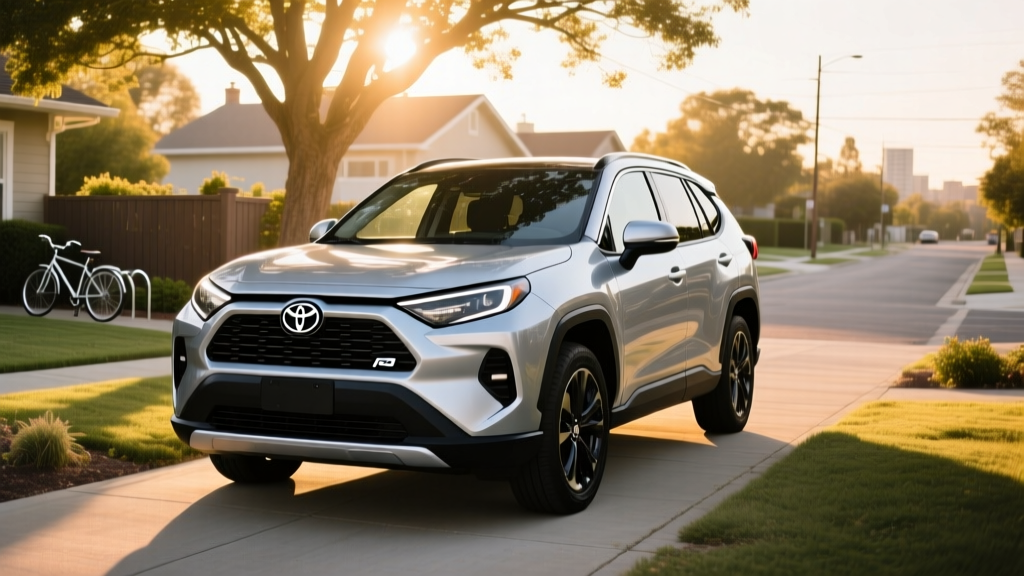
Quick Verdict: The 2023 Toyota RAV4 Hybrid Limited at a Glance
The 2023 Toyota RAV4 Hybrid Limited sits at the top of Toyota's conventional hybrid SUV lineup, pairing a 2.5-liter four-cylinder engine with dual electric motors for a combined 219 horsepower and standard electronic all-wheel drive. With an EPA-estimated 41 MPG combined, premium features like a panoramic moonroof, heated and ventilated front seats, and Toyota Safety Sense 2.5+, the Limited trim targets buyers who want maximum efficiency without sacrificing upscale amenities — and without ever plugging in.
This is a conventional hybrid (HEV), not a plug-in hybrid (PHEV). That means no charging cable, no electric-only range to manage, and no federal EV tax credit eligibility. You simply fill it with gas and drive. For the majority of SUV buyers who lack home charging access or don't want the complexity of plug-in ownership, the RAV4 Hybrid remains one of the most compelling packages on the market — even as newer competitors have entered the space.
| Spec | Value |
|---|---|
| Powertrain | 2.5L 4-cyl + dual electric motors (HEV) |
| Combined Horsepower | 219 hp |
| Drivetrain | Electronic AWD (eAWD) |
| EPA MPG (City / Hwy / Combined) | 41 / 38 / 41 |
| Fuel Tank | 14.5 gallons |
| Total Range | ~594 miles |
| 0–60 mph | 7.4 seconds |
| Cargo Volume (behind rear seats) | 37.6 cu ft |
| Hybrid Battery Warranty | 10 years / 150,000 miles |
| Base MSRP (Limited AWD) | $40,345 |
HEV vs PHEV: Understanding What the RAV4 Hybrid Is (and Isn't)
Toyota sells two electrified RAV4 variants, and confusing them is a common buyer mistake. Here's the distinction:
RAV4 Hybrid (HEV) — This Article
- No plug; charges itself via regenerative braking and the gasoline engine
- Small traction battery (~1.6 kWh usable) — not designed for electric-only driving
- EPA combined: 41 MPG
- Lower starting price; no charging infrastructure needed
- Not eligible for the federal §30D tax credit
RAV4 Prime (PHEV) — Separate Model
- Plug-in capable; 18.1 kWh battery with 42 miles of EPA electric-only range
- 302 combined hp; significantly faster (0–60 in 5.7 sec)
- EPA combined (gas only): 38 MPG; combined gas + electric: 94 MPGe
- Higher starting price (~$43,000+); requires charging access to maximize value
- Previously eligible for §30D credit (subject to current-year IRS sourcing rules)
If you're reading this article specifically about the 2023 Toyota RAV4 Hybrid Limited, you're looking at the HEV. It's the simpler, more affordable, and more widely available option — and for drivers who can't charge at home, it's the right call.
Fuel Economy: EPA Ratings vs Real-World MPG
The EPA rates the 2023 RAV4 Hybrid (all trims, including Limited) at 41 MPG city, 38 MPG highway, and 41 MPG combined. That city-biased rating is typical of Toyota's hybrid synergy drive system: the electric motor handles low-speed propulsion where gasoline engines are least efficient, while the engine takes over at highway speeds.
| Driving Cycle | EPA MPG |
|---|---|
| City | 41 |
| Highway | 38 |
| Combined | 41 |
Source: fueleconomy.gov
Real-World MPG: What Owners Actually Report
Hybrid owners frequently exceed EPA estimates in mixed suburban driving. The RAV4 Hybrid's regenerative braking recaptures energy in stop-and-go traffic, and the engine shuts off at stops, eliminating idle fuel burn. In real-world owner surveys on forums like RAV4World and Fuelly, many drivers report 42–45 MPG in warm-weather city and suburban cycles.
However, real-world highway driving at 75+ mph tends to drop efficiency to 34–37 MPG. Cold weather (below 30°F) also reduces MPG by roughly 5–10% because the engine runs more frequently to provide cabin heat and maintain battery temperature. If your commute is mostly highway, expect numbers closer to the low-to-mid 30s. If you drive primarily in town, mid-to-high 40s is realistic.
Powertrain and Driving Performance
The 2023 RAV4 Hybrid Limited uses Toyota's fourth-generation Hybrid Synergy Drive. A 2.5-liter Atkinson-cycle four-cylinder engine produces 176 hp and 163 lb-ft of torque on its own, while a front electric motor adds 118 hp and a rear electric motor (providing eAWD) contributes 54 hp. Net system output is 219 hp.
The electronic continuously variable transmission (eCVT) manages power delivery smoothly, though it produces the characteristic engine drone under hard acceleration that some drivers find unrefined. The 0–60 mph time of 7.4 seconds is adequate for merging and passing but won't feel sporty. Where the RAV4 Hybrid shines is low-speed responsiveness — the electric motor delivers instant torque off the line, making it feel quicker around town than the 0–60 number suggests.
The eAWD system is not a traditional mechanical all-wheel-drive setup. The rear axle is driven entirely by the electric motor, engaging only when the system detects slip or when additional traction is needed. This means no driveshaft, no transfer case, and no fuel-efficiency penalty compared to the front-wheel-drive variant. In practice, the eAWD handles rain, light snow, and gravel roads competently, but it's not designed for serious off-road use.
Limited Trim: What You Get for $40,345
The Limited is the top trim in the RAV4 Hybrid lineup, and the 2023 model year brought a comprehensive feature set:
- SofTex-trimmed heated and ventilated front seats
- Panoramic glass roof with power sunshade
- 9-inch touchscreen with wireless Apple CarPlay and Android Auto
- 11-speaker JBL premium audio system
- Wireless Qi phone charging
- Heated leather-trimmed steering wheel
- Power liftgate
- 360-degree camera with perimeter scan
- Digital rearview mirror
- Toyota Safety Sense 2.5+ (pre-collision, lane tracing, adaptive cruise, blind spot monitor, rear cross-traffic alert)
At an MSRP of $40,345 (including destination), the Limited is a significant step up from the XLE ($33,425) and XLE Premium ($35,925). The question is whether the premium features justify the ~$7,000 upcharge over the XLE. For buyers prioritizing value, the XLE delivers identical powertrain and fuel economy. For those who want luxury-adjacent features without stepping to a Lexus NX Hybrid, the Limited makes a strong case.
Tax Credits and Incentives: What Applies to the RAV4 Hybrid
Because the 2023 Toyota RAV4 Hybrid is a conventional HEV — not a plug-in vehicle — it does not qualify for the federal §30D Clean Vehicle Credit. That credit, worth up to $7,500, applies only to battery electric vehicles (BEVs) and plug-in hybrid electric vehicles (PHEVs) that meet battery sourcing, MSRP, and buyer income requirements as defined by the IRS.
However, some states and local utilities offer rebates for hybrid vehicles. These vary widely by jurisdiction and change frequently. Check your state energy office and local utility for current programs. Some employers also offer hybrid purchase incentives as part of commuter benefits programs.
If tax credit eligibility is a primary purchase driver, consider the RAV4 Prime (PHEV) instead — though verify current-year §30D eligibility on the IRS website, as battery sourcing requirements have tightened significantly since the Inflation Reduction Act took effect.
Reliability, Battery Warranty, and Long-Term Ownership
Toyota's hybrid system is among the most proven in the industry, with over two decades of real-world deployment since the original Prius. The RAV4 Hybrid uses a nickel-metal hydride (NiMH) traction battery in most trims, though some 2023 model-year units may use lithium-ion depending on production batch. Toyota's hybrid battery warranty covers 10 years or 150,000 miles, whichever comes first — a strong signal of manufacturer confidence.
Battery Replacement Cost
If the hybrid battery fails outside warranty coverage, replacement costs typically range from $3,000 to $5,000 including labor at a Toyota dealership. Independent hybrid specialists often offer refurbished battery packs for $2,000–$3,000. In practice, Toyota hybrid batteries frequently last 150,000–200,000+ miles before significant degradation, and many original Prius batteries from the early 2000s are still in service. The RAV4 Hybrid's battery is smaller and less stressed than a PHEV or BEV pack, which contributes to its longevity.
Overall Reliability
The 2023 RAV4 Hybrid receives strong reliability marks. Consumer Reports rates the RAV4 Hybrid among the most reliable compact SUVs in its class, and the model has consistently earned top marks in J.D. Power dependability studies. The eCVT transmission has no traditional gears, belts, or clutches to wear, reducing long-term maintenance costs. There's no timing belt to replace (the 2.5L uses a timing chain), and regenerative braking significantly extends brake pad life — many owners report 60,000–80,000 miles on original brake pads.
For the latest safety data, the 2023 RAV4 earned the IIHS Top Safety Pick designation and a 5-Star overall rating from NHTSA.
Hybrid vs PHEV vs EV: Which Fits Your Situation?
Choose the RAV4 Hybrid (HEV) if:
- You don't have access to home or workplace charging
- You want a lower purchase price and simpler ownership experience
- Your daily driving is under 50 miles with frequent stops (where hybrids excel)
- You take regular long road trips and don't want to plan around charging
- You want proven reliability with minimal new technology risk
Choose the RAV4 Prime (PHEV) if:
- You can charge at home (Level 2, 240V) and want 42 miles of electric-only range
- Your daily commute is under 40 miles (you'll rarely use gas)
- You want faster acceleration (302 hp, 5.7-sec 0–60)
- You want to reduce tailpipe emissions on daily drives while keeping gas for road trips
Choose a Full EV (e.g., Tesla Model Y, Hyundai Ioniq 5) if:
- You have reliable home Level 2 charging
- You want zero tailpipe emissions and minimal maintenance
- You want to qualify for the federal §30D tax credit (up to $7,500)
- Your daily driving is predictable and within the EV's real-world range
- You're comfortable with long-term battery degradation considerations
Pros and Cons: 2023 Toyota RAV4 Hybrid Limited
Pros
- 41 MPG combined — excellent for an AWD SUV
- No plug-in required; zero charging anxiety
- Proven hybrid reliability with 10yr/150k battery warranty
- Strong resale value; Toyota hybrids hold premium on used market
- Comprehensive Toyota Safety Sense 2.5+ standard
- Limited trim offers near-luxury amenities (JBL, panoramic roof, ventilated seats)
- 594-mile total range — fewer fuel stops on road trips
Cons
- eCVT drone under hard acceleration
- Limited trim at $40,345 is expensive for a compact SUV
- No federal tax credit eligibility (HEV)
- Rear seat space is tighter than some competitors (Honda CR-V Hybrid)
- eAWD is light-duty only; not for serious off-road use
- Infotainment system, while improved, lags behind some rivals in responsiveness
- Highway MPG drops to mid-30s at sustained 75+ mph speeds
Frequently Asked Questions
How many MPG does the 2023 Toyota RAV4 Hybrid Limited get?
The EPA rates it at 41 MPG city, 38 MPG highway, and 41 MPG combined. In real-world suburban driving, many owners report 42–45 MPG. Sustained highway driving at 75+ mph typically yields 34–37 MPG.
Does the RAV4 Hybrid need to be plugged in?
No. The RAV4 Hybrid is a conventional HEV. It charges its small traction battery through regenerative braking and the gasoline engine. You never plug it in — you simply fill it with gas like any other vehicle.
How far can the RAV4 Hybrid go on a full tank?
With a 14.5-gallon fuel tank and 41 MPG combined, the EPA-estimated range is approximately 594 miles. Real-world mixed driving typically yields 540–580 miles per tank.
Is the hybrid battery reliable, and what does replacement cost?
Toyota's hybrid batteries are among the most reliable in the industry, frequently lasting 150,000–200,000+ miles. The battery is warranted for 10 years / 150,000 miles. Out-of-warranty replacement costs $3,000–$5,000 at a dealership, or $2,000–$3,000 for a refurbished pack from an independent specialist.
Does the 2023 RAV4 Hybrid qualify for any federal tax credit?
No. The federal §30D Clean Vehicle Credit applies only to plug-in vehicles (BEVs and PHEVs). The RAV4 Hybrid is a conventional HEV and does not qualify. Some state or utility incentives may apply — check your local programs.
What's the difference between the RAV4 Hybrid and the RAV4 Prime?
The RAV4 Hybrid (HEV) doesn't plug in and gets 41 MPG combined. The RAV4 Prime (PHEV) plugs in, offers 42 miles of electric-only range, produces 302 hp, and starts at a higher price. The Prime is better if you can charge at home; the Hybrid is better if you can't.
Is the 2023 RAV4 Hybrid Limited worth the price premium over the XLE?
That depends on your priorities. The XLE ($33,425) delivers identical fuel economy, powertrain, and safety features. The Limited ($40,345) adds the panoramic roof, ventilated seats, JBL audio, 360-degree camera, and other premium features. If those amenities matter to you, the Limited delivers near-luxury content at a mainstream price. If you're buying purely for efficiency and value, the XLE is the smarter financial choice.