The Ultimate Plug-In Family Hauler
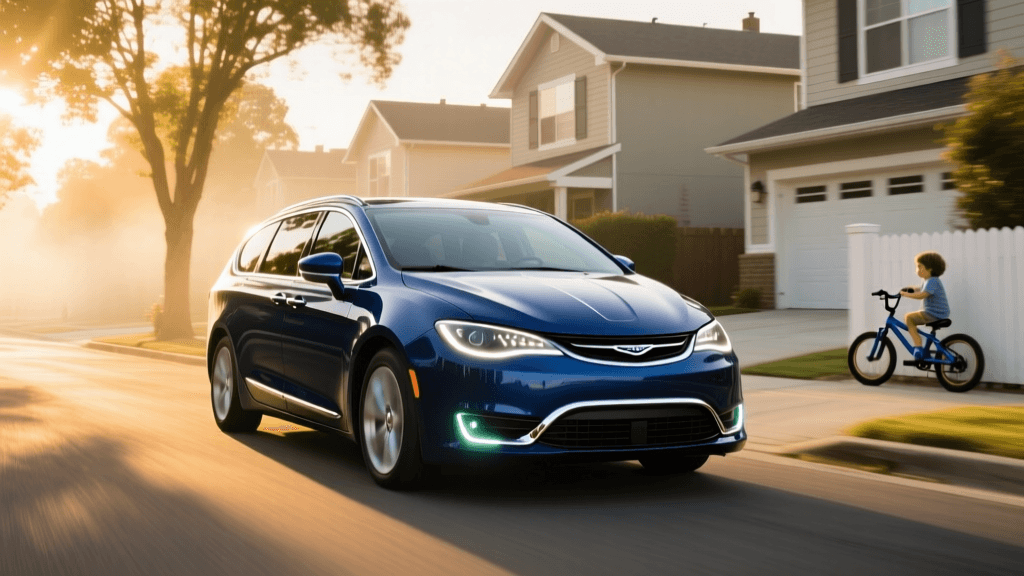
When it comes to balancing the chaotic demands of family life with the growing desire for eco-friendly transportation, the Chrysler Pacifica Hybrid stands in a class of its own. As the only plug-in hybrid electric vehicle (PHEV) minivan currently dominating the North American market, it offers a compelling bridge between full electric adoption and traditional gasoline convenience. However, simply owning a PHEV is not enough; understanding how to leverage its dual powertrain is the key to unlocking its true value. In this expert review, we dive deep into the Pacifica Hybrid's electric range, charging best practices, and actionable tips to maximize your daily efficiency without sacrificing family utility.
Decoding the 32-Mile Electric Range
The Chrysler Pacifica Hybrid is equipped with a 16-kWh lithium-ion battery pack (with roughly 13-14 kWh of usable capacity) paired with a 3.6-liter Pentastar V6 engine and an electrically variable transmission (eVT). The Environmental Protection Agency (EPA) rates its all-electric range at 32 miles. For many families, this 32-mile buffer is the sweet spot. According to the Alternative Fuels Data Center, the majority of daily commutes and local errands fall well within this radius, meaning you can complete school drop-offs, grocery runs, and soccer practice entirely on zero-emission electric power.
However, real-world range can fluctuate based on payload, terrain, and climate. A fully loaded Pacifica carrying seven passengers and cargo will naturally see a slight dip in electric range compared to a solo driver. Furthermore, highway speeds above 65 mph will deplete the battery faster than stop-and-go city driving, where regenerative braking can actively recapture energy.
Expert Tips to Maximize Real-World EV Range
To get the most out of your Pacifica Hybrid's battery, you need to move beyond the default driving settings and adopt a few expert strategies.
1. Master the E-Save Mode for Highway Commutes
One of the most underutilized features in the Pacifica Hybrid is the E-Save driving mode. Electric motors are incredibly efficient in the city but less so at sustained highway speeds. Conversely, the gasoline V6 engine is optimized for highway cruising. If your commute involves 15 miles of highway driving followed by 10 miles of city traffic, engage E-Save at the start of your trip. This forces the minivan to use the gasoline engine on the highway, preserving your battery's state of charge for the city streets where electric propulsion is vastly more efficient.
2. Pre-Condition the Cabin While Plugged In
HVAC systems are notorious battery drains. By using the Uconnect app to pre-condition the cabin (heating in the winter, cooling in the summer) while the van is still plugged into your home charger, you draw power from the grid rather than the battery. This ensures you leave your driveway with a full 100% state of charge and a comfortable interior, effectively extending your on-road electric range.
3. Optimize Regenerative Braking
The Pacifica Hybrid features a regenerative braking system that captures kinetic energy during deceleration. While it doesn't offer true one-pedal driving like a full EV, you can maximize regen by shifting into 'L' (Low) gear instead of 'D' (Drive) when navigating hilly terrain or heavy traffic. This increases the aggressive nature of the regen system, feeding more electricity back into the battery and reducing wear on your physical brake pads.
Charging Best Practices and Times
To maintain battery health and ensure your Pacifica is always ready for the morning school run, establishing a consistent charging routine is vital. The Pacifica Hybrid comes with a dual-voltage Level 1 charging cord, but investing in a dedicated Level 2 home setup is highly recommended for PHEV owners. As noted by the EPA's Green Vehicle Guide, Level 2 charging not only reduces charging times drastically but also promotes better long-term battery thermal management.
| Charging Level | Voltage / Amperage | Estimated Time (0-100%) | Best Use Case |
|---|---|---|---|
| Level 1 (Standard) | 120V / 12A | ~14 Hours | Overnight emergency top-ups |
| Level 1 (Max) | 120V / 15A | ~11 Hours | Standard overnight home charging |
| Level 2 (Recommended) | 240V / 32A | ~2 Hours | Daily home charging, mid-day top-ups |
Pro Tip: Since the Pacifica Hybrid's onboard charger is capped at 6.6 kW, there is no need to purchase an expensive 48-amp or 80-amp Level 2 EVSE (Electric Vehicle Supply Equipment). A high-quality 32-amp or 40-amp Level 2 wallbox is perfectly sufficient and will charge the battery from empty to full in roughly two hours.
The Utility Compromise: Battery vs. Stow 'n Go
No expert review of the Pacifica Hybrid is complete without addressing the elephant in the minivan: the second-row seating. In the standard gas-powered Pacifica, Chrysler's famous Stow 'n Go seats allow the second row to fold completely flat into the floor, creating a massive, cavernous cargo area. In the Hybrid, the 16-kWh battery pack is mounted directly beneath the floor where those second-row seats would normally stow.
Consequently, the second-row captain's chairs in the Hybrid cannot fold into the floor; they must be physically unbolted and removed from the vehicle if you need maximum flat cargo space. Fortunately, the third-row seats still fold flat into the rear cargo well, and the front passenger seat folds forward to accommodate extra-long items like lumber or kayaks. For most families, the second-row captain's chairs remain in place 95% of the time, making this a minor compromise for the sake of daily electric commuting.
Total Cost of Ownership and Fuel Economy
When the battery is fully depleted, the Pacifica Hybrid transitions into a standard hybrid, relying on its V6 and eVT to achieve an EPA-estimated 30 MPG combined. While this is slightly lower than the Toyota Sienna Hybrid's 36 MPG, the Pacifica makes up for it in sheer electric savings. If you charge daily and drive under 30 miles, your liquid fuel consumption drops to near zero, requiring only occasional fill-ups to keep the gasoline fresh and to lubricate the engine internals during long road trips.
Furthermore, because the engine is off for a significant portion of your driving, you will experience extended intervals between oil changes and brake pad replacements, lowering your long-term maintenance costs. When factoring in the available federal and local EV tax incentives, the total cost of ownership over five years often undercuts premium three-row SUVs and rivals the standard gas minivans.
Final Verdict
The Chrysler Pacifica Hybrid remains the undisputed champion of the plug-in family hauler segment. By mastering E-Save modes, utilizing Level 2 charging, and pre-conditioning your cabin, you can easily turn this spacious minivan into a daily zero-emission commuter. While the loss of second-row Stow 'n Go is a notable trade-off, the ability to silently glide through neighborhoods on electric power while carrying seven passengers makes the Pacifica Hybrid a brilliant, future-proof choice for the modern family.