Introduction to the Crosstrek PHEV Value Proposition
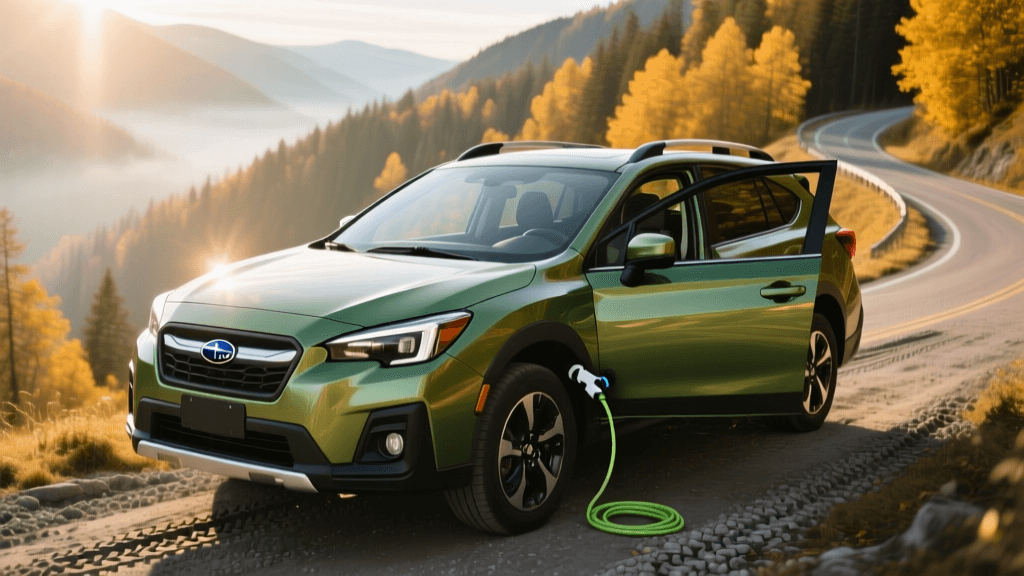
The Subaru Crosstrek Hybrid occupies a unique and somewhat complicated space in the automotive market. As a plug-in hybrid electric vehicle (PHEV) equipped with Subaru’s legendary Symmetrical All-Wheel Drive, it was designed for eco-conscious adventurers who refuse to compromise on foul-weather capability. However, Subaru discontinued the Crosstrek Hybrid in the United States after the 2023 model year, citing low consumer take rates and global battery supply chain constraints. Today, the conversation around this vehicle has shifted entirely to the used market and the long-term ownership experience for those who already hold the keys.
When evaluating any PHEV, the most critical metric isn't just the sticker price or the EPA-estimated MPGe; it is the Total Cost of Ownership (TCO). Does the premium paid for the plug-in powertrain actually pay for itself at the pump and the charging station? In this comprehensive cost and value breakdown, we will dissect the real-world electric range, fuel economy, maintenance realities, and five-year TCO of the Subaru Crosstrek Hybrid to determine if it remains a smart financial move today.
Real-World Electric Range and Efficiency
The Crosstrek Hybrid pairs a 2.0-liter naturally aspirated Boxer engine with two electric motors and an 8.8 kWh lithium-ion battery pack. Because a portion of that battery is reserved to maintain hybrid functionality and protect battery health, the usable capacity is closer to 7.2 kWh. According to EPA Fuel Economy data, this translates to an estimated 17 miles of pure electric range and a combined 90 MPGe.
However, real-world ownership tells a more nuanced story, particularly regarding weather. In mild, 70-degree weather with city driving, owners frequently report achieving 19 to 21 miles on a single charge, easily covering daily commutes without burning a drop of gasoline. Conversely, winter ownership drastically alters the value equation. Because the battery is air-cooled rather than liquid-cooled, sub-freezing temperatures restrict battery chemistry. Furthermore, running the cabin heater draws heavily from the pack unless the gas engine is engaged. In harsh winter conditions, expect the electric range to plummet to 10 or 12 miles.
Once the battery is depleted, the Crosstrek operates as a standard hybrid, returning an impressive 35 MPG combined. This is a massive leap over the standard gas-powered Crosstrek, which averages around 29 MPG combined. With a full tank of gas and a fully charged battery, the total driving range exceeds 420 miles, eliminating any range anxiety for road trips.
The Cost & Value Breakdown: 5-Year TCO Analysis
To understand the true financial impact of the Crosstrek Hybrid, we must compare it directly to its closest internal combustion sibling: the gas-powered Crosstrek Premium trim. When new, the Hybrid commanded a massive premium of nearly $10,000. While it qualified for a Federal Tax Credit, the credit was limited to $4,543 due to the battery's capacity and the specific tax code formulas in place at the time.
Below is a structured 5-year Total Cost of Ownership comparison, assuming 15,000 miles driven annually (6,000 miles on electricity, 9,000 miles on gas for the PHEV), and an average gas price of $3.60 per gallon.
| Cost Category (5-Year) | Gas Crosstrek Premium | Crosstrek Hybrid (PHEV) |
|---|---|---|
| Original Average MSRP | $27,445 | $36,845 |
| Federal Tax Credit | $0 | -$4,543 |
| Net Purchase Price | $27,445 | $32,302 |
| 5-Year Fuel / Energy Cost | $9,300 | $5,800 |
| 5-Year Maintenance | $3,400 | $3,400 |
| 5-Year Insurance | $6,800 | $7,200 |
| Estimated 5-Year TCO | $46,945 | $48,702 |
The Verdict: Strictly from a financial perspective, the Crosstrek Hybrid struggles to recoup its initial price premium through fuel savings alone over a five-year period. The PHEV saves roughly $3,500 in fuel over five years, but that is offset by higher insurance premiums and the initial net purchase price. The financial value of this vehicle only tips in your favor if you have access to free workplace charging, if local gas prices surge dramatically, or if you purchase the vehicle at a steep discount on the secondary market.
Charging Realities and the Cargo Compromise
Owning a PHEV requires a shift in daily habits. The Crosstrek Hybrid does not support DC Fast Charging. According to the Alternative Fuels Data Center, PHEVs are primarily designed to be replenished via Level 1 or Level 2 AC charging. Plugging into a standard 120V household outlet (Level 1) will recharge the Crosstrek's battery in about 5 hours. Upgrading to a 240V Level 2 home charger reduces this time to roughly 2.5 hours. For most owners, a Level 2 charger is a mandatory investment to ensure the car is topped up during quick stops at home between errands.
Beyond the financial costs, there is a spatial cost. The 8.8 kWh battery pack is mounted beneath the rear cargo floor. Consequently, the Crosstrek Hybrid loses nearly 5 cubic feet of cargo space compared to the gas model, dropping from 20.8 cubic feet to just 15.9 cubic feet. For outdoor enthusiasts who chose Subaru specifically for hauling camping gear, snowboards, or large dogs, this compromise is a significant factor in the vehicle's overall value proposition.
Depreciation, Reliability, and the Used Market
Because the vehicle has been discontinued, depreciation curves are highly relevant for current owners and prospective used buyers. Historically, PHEVs have suffered from steeper depreciation than standard hybrids or pure EVs, largely due to consumer confusion and the rapid evolution of EV range. However, Subaru's brand loyalty and the desirability of standard AWD help cushion the blow in snowy, mountainous regions.
From a reliability standpoint, Subaru’s hybrid system is robust, and the battery is backed by an 8-year/100,000-mile warranty. Furthermore, the vehicle maintains excellent safety credentials, consistently earning top marks from the Insurance Institute for Highway Safety (IIHS). For used buyers, targeting a 2022 or 2023 model year allows you to let the original owner absorb the initial depreciation hit, drastically improving the TCO and making the Hybrid a much more compelling financial decision.
Actionable Advice for Owners and Buyers
If you are considering purchasing a used Subaru Crosstrek Hybrid, or if you currently own one and want to maximize its value, follow these practical guidelines:
- Master the Drive Modes: The steering wheel features 'Save' and 'Charge' buttons. Use 'Save' mode when embarking on a highway commute to preserve your battery for stop-and-go city traffic at your destination, where electric motors are most efficient. Use 'Charge' mode sparingly, as it forces the gas engine to generate electricity, dropping your MPG into the low 20s.
- Invest in a Level 2 Charger: Relying on a 120V wall outlet limits your ability to 'opportunity charge' during the day. A $400-$600 investment in a home Level 2 charger ensures you can maximize your 17-mile range multiple times a day if you work from home or have a flexible schedule.
- Target the Used Market: If you are buying today, do not overpay. Look for examples priced under $28,000. At this price point, the depreciation has already offset the original MSRP premium, allowing your fuel savings to actually generate a positive return on investment.
- Precondition the Cabin: During winter, plug the car in and use the Subaru Starlink app to precondition the cabin while it is still drawing power from the grid. This saves precious battery capacity for actual driving once you unplug.
Final Thoughts on the Crosstrek Hybrid
The Subaru Crosstrek Hybrid is a vehicle that appeals more to the heart and the conscience than to the spreadsheet. As a pure financial instrument, it is difficult to justify the premium over the highly efficient, lower-cost gas model. However, if you value the ability to complete your daily school runs and grocery trips with zero tailpipe emissions, while retaining the uncompromising all-weather traction that Subaru is famous for, the Crosstrek Hybrid offers a highly specialized ownership experience. By purchasing smartly on the used market and optimizing your daily charging habits, you can turn this discontinued PHEV into a highly rewarding daily driver.