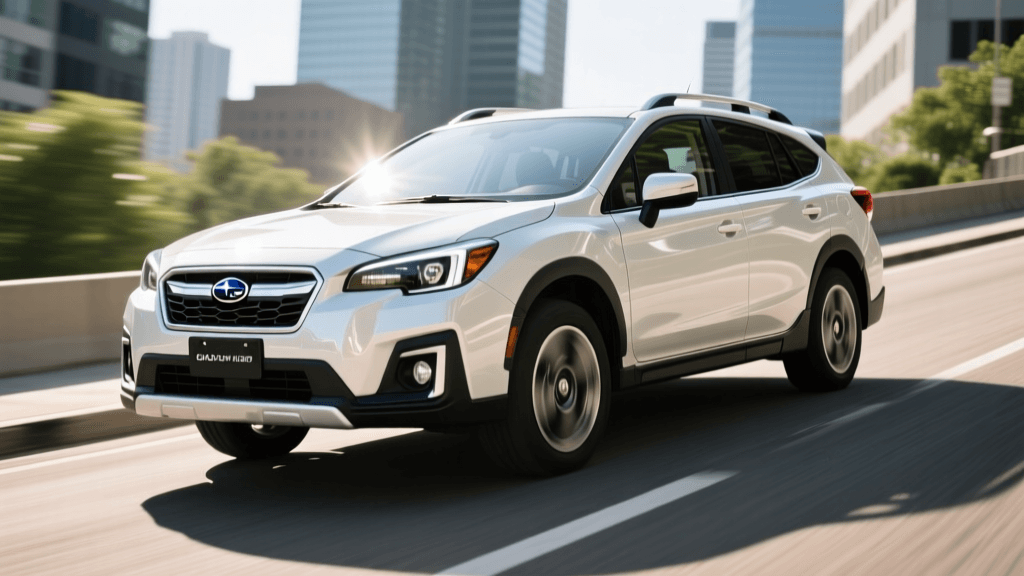
The Subaru Crosstrek Hybrid: A Niche PHEV with a Complex Value Proposition
When Subaru introduced the Crosstrek Hybrid, it brought something entirely unique to the compact crossover segment: a plug-in hybrid electric vehicle (PHEV) with standard Symmetrical All-Wheel Drive and genuine off-road capability. By borrowing heavily from Toyota’s renowned Hybrid Synergy Drive and pairing it with a 2.0-liter Boxer engine, Subaru created a vehicle that promised the best of both worlds. However, following its discontinuation in the U.S. market after the 2023 model year, the Crosstrek Hybrid has transitioned into a fascinating case study for the used and certified pre-owned markets.
For prospective buyers, the ultimate question is not just about capability, but about cost and value. Does the premium paid for the hybrid powertrain pay off at the pump and in long-term ownership costs? In this comprehensive breakdown, we analyze the real-world electric range, charging logistics, and total cost of ownership (TCO) to determine if the Subaru Crosstrek Hybrid is a smart financial move for eco-conscious adventurers.
Real-World Electric Range and the Depleted Battery Experience
The Crosstrek Hybrid is equipped with an 8.8 kWh lithium-ion battery pack. According to EPA estimates, this translates to roughly 17 miles of pure electric range. However, real-world ownership reveals a more nuanced picture. Because the Crosstrek Hybrid utilizes Subaru’s AWD system—which requires the rear electric motor to engage when traction is needed or when X-Mode is activated—aggressive driving or inclement weather can reduce that EV range to 12 or 13 miles.
Conversely, during mild weather on flat, urban routes, diligent drivers can squeeze out up to 19 miles before the gas engine fires up. According to data regarding PHEV efficiency from the U.S. Department of Energy's Alternative Fuels Data Center, maximizing this electric range is heavily dependent on consistent home charging and ambient temperatures. Once the battery is depleted, the Crosstrek Hybrid doesn't become a sluggish, heavy brick. Instead, it seamlessly transitions into a traditional hybrid, returning an impressive 35 MPG combined. This is a significant bump over the standard gas-powered Crosstrek, which averages around 29 MPG combined in real-world highway and city driving.
Charging Logistics: Level 1 vs. Level 2
Because the battery is relatively small compared to full EVs or larger PHEVs like the Toyota RAV4 Prime, the charging requirements for the Crosstrek Hybrid are incredibly manageable. Using a standard 120-volt household outlet (Level 1 charging), the battery can be fully replenished in about 5 hours. This means that even without a dedicated home charging station, owners can plug in when they return from work and wake up to a full battery.
If you opt for a 240-volt Level 2 home charger, that time drops to approximately 2 hours. While installing a Level 2 charger can cost anywhere from $500 to $1,500 depending on your home's electrical panel, the convenience of rapid top-offs makes it a worthwhile investment for PHEV owners. Furthermore, the Crosstrek Hybrid does not support DC Fast Charging, a deliberate engineering choice to save weight, cost, and space, which aligns with its identity as a daily commuter and weekend trail vehicle rather than a cross-country electric cruiser.
Cost & Value Breakdown: The Math Behind the Premium
When new, the Crosstrek Hybrid carried a massive price premium—often $8,000 to $10,000 more than an equivalently equipped gas-powered Crosstrek Premium. This steep entry price was the primary reason for its slow sales and eventual discontinuation. However, in the used market, that depreciation curve has created a compelling value proposition, especially when factoring in fuel savings and potential tax incentives.
Under the current Inflation Reduction Act guidelines, buyers purchasing a used PHEV from a licensed dealer may qualify for a Used Clean Vehicle Credit of up to $4,000, provided the vehicle is sold for $25,000 or less and meets income requirements. This drastically alters the TCO calculation. To illustrate the financial differences, we have modeled a 5-year ownership scenario comparing the Gas Crosstrek, the Crosstrek Hybrid, and the segment-leading Toyota RAV4 Prime.
5-Year Total Cost of Ownership Comparison
| Metric (5-Year Estimate) | Gas Crosstrek (Premium) | Crosstrek Hybrid (Used) | Toyota RAV4 Prime (SE) |
|---|---|---|---|
| Average Purchase Price | $28,500 | $23,000 (Used/CPO) | $42,000 |
| EV Range | 0 Miles | 14-17 Miles | 42 Miles |
| Combined MPG (Depleted) | 29 MPG | 35 MPG | 38 MPG |
| 5-Year Fuel/Energy Cost | $9,800 | $6,200 | $5,100 |
| 5-Year Maintenance | $3,900 | $3,400 | $3,600 |
| Estimated Depreciation | $11,000 | $8,500 | $16,000 |
| Total 5-Year Cost | $53,200 | $41,100 | $66,700 |
Note: Estimates based on 15,000 miles driven annually, national average gas prices of $3.40/gallon, and residential electricity rates of $0.16/kWh. Data aggregated from Edmunds' long-term testing and cost-to-own metrics and current used market listings.
As the table demonstrates, the used Crosstrek Hybrid offers a remarkably low total cost of ownership. The combination of a lower used purchase price, excellent fuel economy when the battery is depleted, and Subaru's legendary resale value retention makes it a financial sweet spot for buyers who want AWD and electrification without the RAV4 Prime's massive markup.
Maintenance, Reliability, and Battery Longevity
One of the most common concerns with any hybrid or PHEV is the long-term reliability of the high-voltage battery and the complexity of the powertrain. The Crosstrek Hybrid benefits immensely from its Toyota-sourced hybrid components. The Hybrid Synergy Drive system is widely regarded as one of the most reliable powertrains ever engineered, with countless examples surpassing 200,000 miles with minimal degradation.
Subaru backs the hybrid battery with an 8-year/100,000-mile warranty (extended to 10 years/150,000 miles in CARB states). Because the battery is relatively small, replacement costs are significantly lower than those of full EVs or larger PHEVs. Routine maintenance on the Crosstrek Hybrid is also surprisingly affordable. Regenerative braking drastically extends the life of the brake pads, often allowing them to last well past 70,000 miles. Oil changes are required every 6,000 miles, but the engine runs less frequently, keeping the oil cleaner for longer intervals compared to pure gas vehicles.
Insurance rates for the Crosstrek Hybrid are generally on par with the gas models, as insurers recognize the vehicle's excellent safety ratings from the IIHS and its relatively low repair costs for minor collisions. The primary maintenance premium comes from Subaru's AWD system, which requires regular differential fluid changes and tire rotations every 6,000 miles to protect the viscous coupling and electric rear motor.
The Verdict: Who is the Crosstrek Hybrid For?
The Subaru Crosstrek Hybrid is not for everyone. If your daily commute exceeds 40 miles one-way, the 17-mile EV range will feel inadequate, and you would be better served by a traditional hybrid like the Toyota Prius or a standard Crosstrek. Furthermore, the discontinuation of the model means you are largely shopping in the used or CPO market, which requires careful vehicle history inspections.
However, for the specific buyer who has a short, predictable daily commute (under 20 miles round-trip), access to home charging, and a weekend lifestyle that demands unpaved road capability and AWD, the Crosstrek Hybrid is an absolute hidden gem. By targeting the used market and leveraging federal used-EV tax credits, buyers can secure a highly capable, fuel-efficient PHEV at a total cost of ownership that undercuts almost every other AWD crossover on the market. It represents a brilliant, albeit short-lived, experiment in Subaru's electrification journey, offering immense real-world value for those who know how to utilize its unique powertrain.