Introduction: The Midsize Sedan Benchmark Evolves
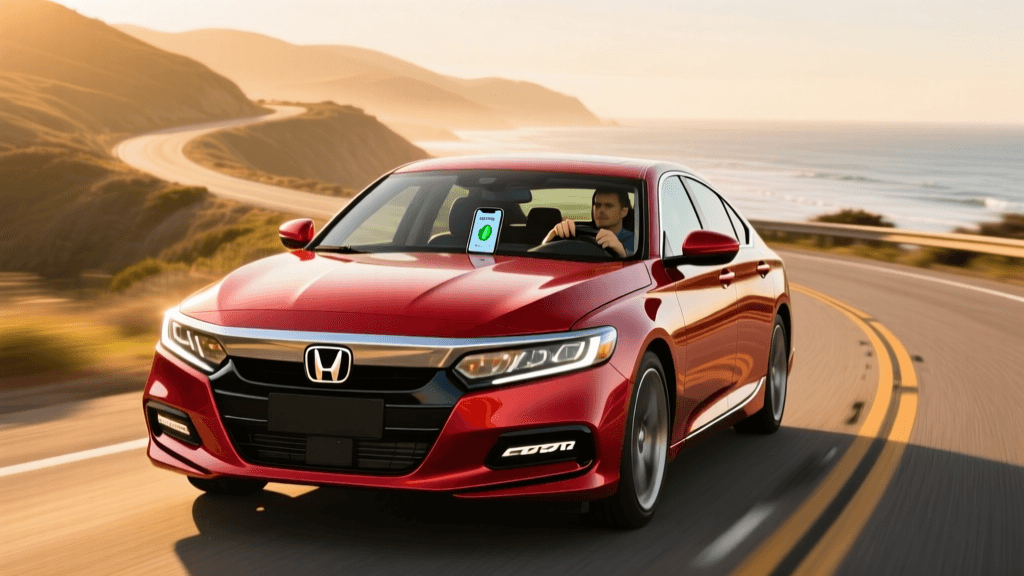
When discussing the midsize sedan segment, the Honda Accord has long been the gold standard, but the introduction of the latest 11th-generation hybrid powertrain has elevated it from a practical family hauler to a sophisticated, efficiency-focused powerhouse. For buyers torn between the traditional turbocharged gas models and the hybrid variants, the decision ultimately comes down to a meticulous cost and value breakdown. In this comprehensive review, we evaluate the Honda Accord Hybrid specifically through the lens of daily commuting and long-distance road trips, analyzing whether the upfront premium translates into tangible long-term savings, superior driving dynamics, and everyday practicality.
The Daily Commute: Stop-and-Go Mastery
Stop-and-go traffic is the natural habitat of any hybrid vehicle, and the Accord Hybrid excels in this environment. Powered by a 2.0-liter Atkinson-cycle inline-four engine paired with a two-motor hybrid system, the sedan produces a combined 204 horsepower and an impressive 247 lb-ft of torque. Unlike traditional planetary gear-set hybrids, Honda’s system primarily uses the electric motors to drive the wheels, with the gas engine acting mostly as a generator at lower speeds. This results in an EV-like driving experience characterized by instant torque delivery and seamless acceleration from a standstill.
According to the U.S. Department of Energy's Fuel Economy Guide, the Accord Hybrid achieves an EPA-estimated 51 mpg in the city for the Sport trim. In real-world commuting scenarios involving heavy congestion, the regenerative braking system aggressively recaptures kinetic energy, often allowing drivers to exceed the EPA estimates in strictly urban environments. The inclusion of steering wheel-mounted paddle shifters allows drivers to adjust the regen levels on the fly, enabling one-pedal-style driving in slow-moving traffic without coming to a complete halt. Furthermore, the seamless integration of wireless Apple CarPlay and Android Auto, alongside Google built-in infotainment on higher trims, ensures that your navigation and media are always connected, making the daily grind significantly more tolerable.
Road Trip Dynamics: Highway Cruising and Cargo
While hybrids shine in the city, highway cruising is where traditional gas engines typically maintain an edge. However, the Accord Hybrid bridges this gap remarkably well. The EX-L and Sport-L trims are rated at 44 mpg on the highway, while the heavier, feature-laden Touring trim dips slightly to 41 mpg. On a 500-mile road trip, the difference in fuel stops between the hybrid and the 1.5L turbo gas model is substantial, saving drivers both time and money at the pump.
Beyond fuel economy, road trip comfort is where the Accord truly justifies its price tag. The cabin is exceptionally quiet, thanks to active noise cancellation and acoustic glass, minimizing highway drone and wind noise. Honda’s Sensing suite of driver-assistive features, which includes Adaptive Cruise Control (ACC) with Low-Speed Follow and Lane Keeping Assist, reduces fatigue on monotonous interstate stretches. The Accord Hybrid’s battery placement beneath the rear seats preserves the massive 16.7 cubic-foot trunk, meaning luggage capacity is entirely uncompromised compared to the gas models. Furthermore, the Insurance Institute for Highway Safety (IIHS) consistently rewards the Accord with Top Safety Pick+ accolades, providing invaluable peace of mind for families embarking on cross-country journeys.
Cost & Value Breakdown: Upfront Premium vs. Long-Term Savings
The crux of the hybrid debate is financial. Does the fuel savings justify the higher sticker price? The 2024 Honda Accord Hybrid lineup starts with the Sport trim at approximately $34,000, climbing to nearly $39,000 for the fully loaded Touring trim. In comparison, the entry-level gas-powered LX starts around $29,000. This creates an upfront premium of roughly $4,500 to $5,000 for the hybrid powertrain. To determine if this premium is worth it, we must calculate the break-even point based on current fuel prices and average driving distances.
5-Year Total Cost of Ownership Comparison
| Metric (5 Years / 75,000 Miles) | Accord 1.5L Turbo (Gas) | Accord Hybrid (Sport) | Difference |
|---|---|---|---|
| Estimated Fuel Cost ($3.50/gal) | $5,833 (32 MPG Combined) | $3,645 (48 MPG Combined) | -$2,188 (Savings) |
| Estimated Routine Maintenance | $2,400 | $2,100 | -$300 (Savings) |
| Upfront Price Premium | $0 | +$4,500 | +$4,500 (Cost) |
| Net 5-Year Cost Difference | Baseline | +$2,012 | Hybrid Costs More (Short-Term) |
While the table above shows a slight short-term financial deficit for the hybrid over exactly five years, this calculation ignores two critical factors: the vastly superior driving experience and the long-term resale value. High-mileage commuters who drive 20,000+ miles annually will easily surpass the break-even point within three to four years.
Maintenance, Reliability, and Resale Value
Hybrids often carry a stigma of expensive battery replacements, but Honda mitigates this risk with a robust 8-year/100,000-mile hybrid battery warranty (10 years/150,000 miles in CARB states). Furthermore, because the electric motors handle the bulk of low-speed acceleration and regenerative braking, wear and tear on the traditional friction brakes is significantly reduced. It is common for hybrid owners to go 70,000 miles or more before needing a brake pad replacement. Routine maintenance is dictated by Honda’s Maintenance Minder system, and because the e-CVT lacks the complex clutch packs and torque converters of traditional automatic transmissions, long-term drivetrain maintenance costs are generally lower.
According to long-term depreciation and cost-to-own analyses by Kelley Blue Book, hybrid midsize sedans often retain their value better than their gas-only counterparts. As fuel prices fluctuate and emissions regulations tighten, the used market demand for reliable, fuel-efficient hybrids remains incredibly strong, further offsetting the initial purchase premium when it comes time to sell or trade in the vehicle.
Final Verdict: Who Should Buy the Accord Hybrid?
The Honda Accord Hybrid is not merely an economy play; it is a premium upgrade to an already stellar midsize sedan. For city dwellers and suburban commuters facing daily stop-and-go traffic, the fuel savings and EV-like smoothness are undeniable. For road trippers, the uncompromised cargo space, exceptional highway comfort, and advanced safety features make it an ideal long-distance companion. While the upfront cost requires a longer horizon to recoup purely at the pump, the overall value proposition—factoring in reduced maintenance, superior refinement, and strong resale value—makes the Accord Hybrid the definitive choice in the midsize sedan segment.