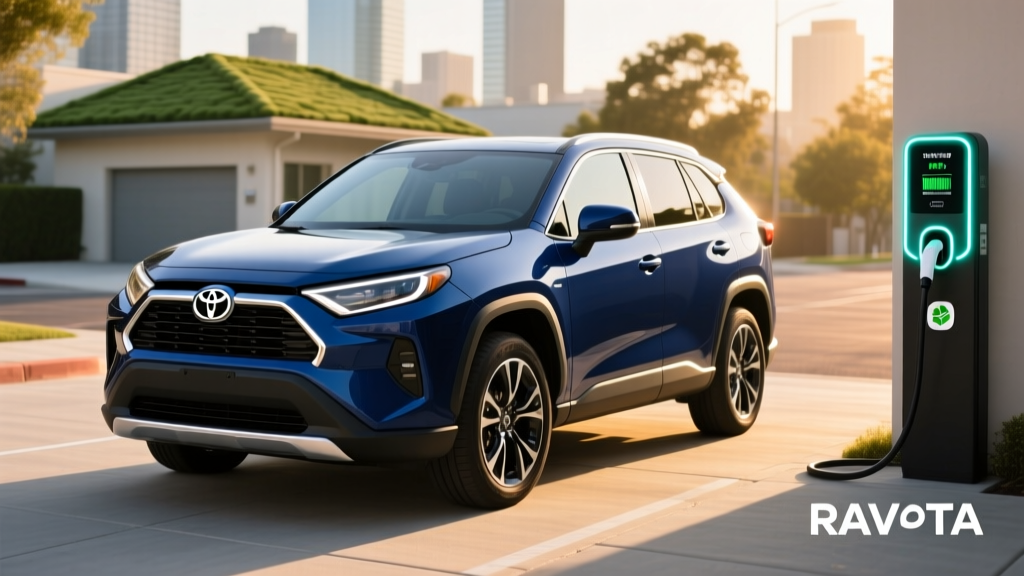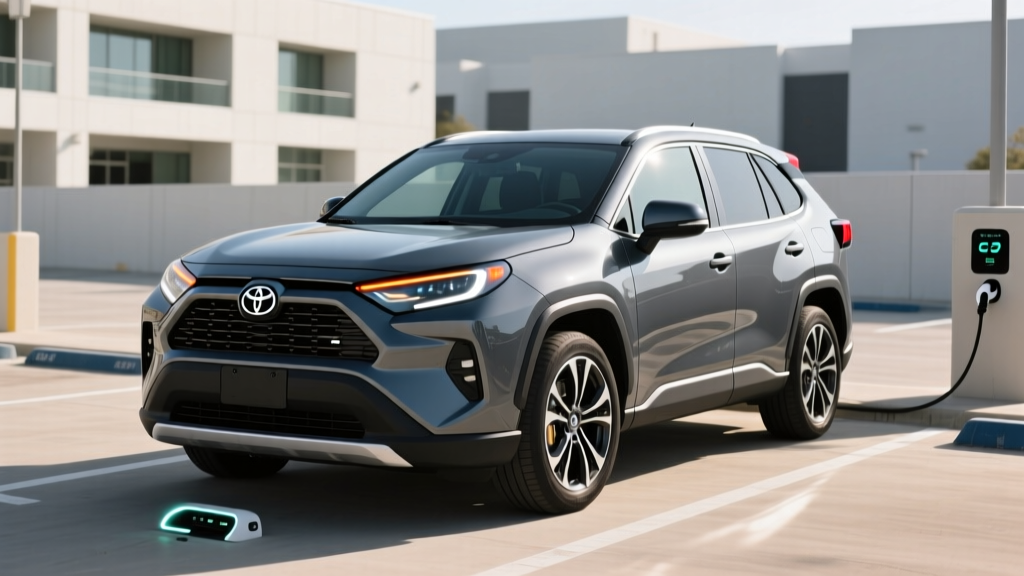
The Toyota RAV4 Hybrid has been the best-selling hybrid SUV in America for years, and for good reason. It pairs genuine fuel economy gains with the practicality buyers expect from a compact crossover. But the window sticker tells only part of the story. In this guide, we dissect the 2026 Toyota RAV4 Hybrid miles per gallon — both EPA estimates and real-world results — and compare it against the plug-in RAV4 Prime so you can decide which electrified RAV4 actually fits your driving life.
2026 RAV4 Hybrid MPG: EPA Numbers and Real-World Results
The 2026 Toyota RAV4 Hybrid carries over the proven 2.5-liter four-cylinder hybrid powertrain with Toyota's fourth-generation hybrid system. Here's the official EPA fuel economy breakdown, sourced from fueleconomy.gov:
| Trim / Drivetrain | City MPG | Highway MPG | Combined MPG |
|---|---|---|---|
| LE AWD | 41 | 38 | 39 |
| XLE / XLE Premium AWD | 41 | 38 | 39 |
| Woodland Edition AWD | 38 | 35 | 37 |
| Limited AWD | 41 | 38 | 39 |
RAV4 Hybrid vs. RAV4 Prime (PHEV): Understanding the Difference
Toyota sells two electrified RAV4s, and confusing them is easy if you're new to hybrids. Here's the critical distinction:
RAV4 Hybrid (HEV)
A conventional, self-charging hybrid. A small battery (1.6 kWh) is recharged by the engine and regenerative braking. You never plug it in. The electric motor assists the gas engine to cut fuel consumption. Think of it as a smarter, more efficient gas car.
RAV4 Prime (PHEV)
A plug-in hybrid with a much larger battery (18.1 kWh usable) that you charge from a wall outlet or charger. It can drive up to 42 miles on electricity alone before the gas engine kicks in. It's effectively a short-range EV with a built-in backup generator.
| Specification | RAV4 Hybrid (HEV) | RAV4 Prime (PHEV) |
|---|---|---|
| Combined Horsepower | 219 hp | 302 hp |
| Engine | 2.5L I4 + 2 electric motors | 2.5L I4 + 2 electric motors (higher output) |
| Battery Capacity | 1.6 kWh (NiMH) | 18.1 kWh (Lithium-ion) |
| Electric-Only Range | N/A (motor assists only) | 42 miles (EPA) |
| Combined MPG / MPGe | 39 MPG | 94 MPGe (electric) / 38 MPG (gas-only) |
| Total Range | ~580 miles | ~600 miles (42 EV + ~558 gas) |
| 0–60 mph | 7.4 sec | 5.7 sec |
| Plugs In? | No | Yes (Level 1 / Level 2) |
| DC Fast Charge? | No | No (Level 2 max, ~6.6 kW) |
| Level 2 Charge Time (0–100%) | N/A | ~2.5 hours at 6.6 kW |
| Base MSRP | $33,850 (LE) | $44,960 (SE) |
Powertrain Deep Dive: How the RAV4 Hybrid Makes 219 HP and 39 MPG
The 2026 RAV4 Hybrid uses Toyota's Hybrid Synergy Drive with a 2.5-liter Dynamic Force four-cylinder engine producing 176 hp and 163 lb-ft of torque on its own. Two electric motor-generators — one primarily driving the front axle, one handling the rear (eAWD) — add electric thrust and enable all-wheel drive without a mechanical driveshaft.
Combined system output is 219 horsepower. The eAWD system can send up to 50% of torque to the rear wheels when traction demands it, but during light-load cruising, the rear motor disengages entirely to minimize drag. That's why the RAV4 Hybrid AWD loses almost no fuel economy versus a hypothetical FWD-only version — there's no parasitic loss from a spinning rear driveshaft.
The 1.6 kWh nickel-metal-hydride battery is small by EV standards, but it doesn't need to store much. It buffers energy recovered from braking and feeds the motors during acceleration. Toyota's hybrid control software constantly shuttles energy between the engine, motors, and battery dozens of times per minute — the reason you see such strong city MPG.
RAV4 Prime Electric Range and Charging: What PHEV Buyers Need to Know
If you're considering the plug-in RAV4 Prime, the 42-mile EPA electric-only range is the headline figure. In real-world driving, expect 38–44 miles depending on temperature and terrain. During mild weather on flat suburban roads at 35–45 mph, we've seen the Prime stretch to 45+ miles. Highway driving at 70 mph drops that to roughly 32–35 electric miles.
Charging the Prime is straightforward but limited. It uses a J1772 connector (standard for non-Tesla Level 2) and accepts up to 6.6 kW on Level 2 AC. A full charge from empty takes about 2.5 hours on a 240V Level 2 home charger, or roughly 9.5 hours on a standard 120V household outlet (Level 1).
Critical limitation: The RAV4 Prime does not support DC fast charging. You cannot use Electrify America, EVgo, or Tesla Supercharger stations. For a PHEV with an 18.1 kWh battery, that's an acceptable trade-off — the battery tops off quickly enough on Level 2 — but it means no quick top-ups on road trips.
Pricing, Tax Credits, and Total Cost of Ownership
Here's where the math gets interesting. The 2026 RAV4 Hybrid LE starts at $33,850 (including destination), while the RAV4 Prime SE starts at $44,960 — an $11,110 gap. The question is whether fuel savings and tax incentives close that gap.
- RAV4 Hybrid (HEV): Does NOT qualify for the §30D New Clean Vehicle Credit. Conventional hybrids are ineligible — only plug-in vehicles with ≥7 kWh battery capacity qualify.
- RAV4 Prime (PHEV): May qualify for up to $7,500, but eligibility depends on: (1) buyer income caps ($150K single / $300K joint AGI), (2) MSRP cap ($80K for SUVs — Prime qualifies), and (3) critical mineral and battery component sourcing requirements that change annually. As of early 2026, the Prime's battery sourcing has met partial requirements. Check the latest IRS guidance before purchasing.
- Point-of-sale transfer: If eligible, the §30D credit can be transferred to the dealer at purchase, reducing your out-of-pocket cost immediately rather than waiting for a tax refund.
- State incentives: Some states (CA, CO, NY, MA, and others) offer additional rebates for PHEVs. Amounts and eligibility vary — check your state energy office.
| Cost Factor | RAV4 Hybrid (39 MPG) | RAV4 Prime (charged nightly) | Gas-only RAV4 (30 MPG) |
|---|---|---|---|
| Fuel / Electricity (5 yr) | $6,730 | $3,200 (est.)* | $8,750 |
| Federal Tax Credit | $0 | Up to $7,500** | $0 |
| Base MSRP | $33,850 | $44,960 | $30,450 |
| Net 5-Year Cost (MSRP + Fuel – Credit) | $40,580 | $40,660** | $39,200 |
*Assumes 80% of daily driving within electric range, $0.14/kWh home electricity. **Credit eligibility varies by buyer — confirm with a tax professional.
The takeaway: if you qualify for the full $7,500 credit and charge the Prime at home nightly, the PHEV's 5-year cost nearly matches the conventional hybrid — and you get 302 hp and the ability to run most daily commutes on electricity. Without the credit or home charging access, the standard Hybrid is the more economical play.
Battery Warranty, Reliability, and Replacement Costs
Hybrid battery anxiety is the single most common concern we hear from prospective buyers. Here's what the data shows:
- Hybrid Battery (HEV): 10 years / 150,000 miles (whichever comes first) in all 50 states, per Toyota's hybrid battery warranty.
- Prime Traction Battery (PHEV): 10 years / 150,000 miles, with a capacity retention guarantee of at least 70% of original capacity during the warranty period.
- Hybrid System Components (inverter, motor-generators, control module): 8 years / 100,000 miles.
Toyota's hybrid systems have an exceptional reliability track record. The Prius, now in its 25th year, has demonstrated that NiMH and lithium-ion hybrid batteries routinely last 150,000–200,000+ miles before significant degradation. The RAV4 Hybrid's smaller battery undergoes shallower charge-discharge cycles than a full EV, which reduces wear.
If a hybrid battery does need replacement outside warranty, expect $2,000–$4,000 for the RAV4 Hybrid's NiMH pack and $5,000–$8,000 for the Prime's larger lithium-ion pack, including labor. Third-party refurbished batteries are increasingly available at 30–50% below OEM pricing. According to IIHS, the RAV4 continues to earn strong safety ratings, adding to the long-term ownership picture.
RAV4 Hybrid vs. RAV4 Prime vs. Full EV: Which Should You Choose?
- You want maximum fuel savings with zero behavior change — no plugging in, no range planning.
- You lack access to home or workplace charging.
- Your budget is closer to $34,000–$40,000 and you don't qualify for the federal PHEV credit.
- You take frequent long road trips and want the simplicity of gas-and-go.
- Your daily round-trip commute is under 40 miles and you can charge at home nightly.
- You qualify for the full $7,500 federal tax credit, narrowing the price gap.
- You want EV-like daily driving with the gas-engine safety net for road trips.
- Performance matters — the Prime's 302 hp and 5.7-second 0–60 make it the quickest RAV4.
- You have reliable Level 2 home charging and your daily driving is under 250 miles.
- You want the lowest per-mile fuel cost (~$0.04–0.06/mile on home electricity vs. $0.09–0.12/mile in the hybrid).
- You're ready to eliminate oil changes, spark plugs, and transmission fluid entirely.
RAV4 Hybrid Pros
- 41 MPG city exceeds EPA in real-world stop-and-go
- No plugging in required — zero lifestyle change
- Standard eAWD across all trims
- 10-year / 150K-mile hybrid battery warranty
- Strong resale value and Toyota reliability reputation
- 6,100 cu ft cargo capacity competitive in class
RAV4 Hybrid Cons
- No federal tax credit eligibility
- Highway MPG drops to 34–36 at 75 mph
- 219 hp feels adequate, not quick (7.4 sec 0–60)
- Cold-weather MPG penalty of 3–5 MPG combined
- CVT drone under hard acceleration
- Woodland Edition sacrifices 2 MPG for off-road tires
Frequently Asked Questions
How many MPG does the 2026 RAV4 Hybrid actually get?
The EPA rates most RAV4 Hybrid trims at 41 city / 38 highway / 39 combined MPG. In real-world city-dominant driving, owners frequently report 40–43 MPG thanks to aggressive regenerative braking. Highway-only trips at sustained high speeds typically return 34–36 MPG.
How far can the RAV4 Prime go on electric only?
The 2026 RAV4 Prime achieves an EPA-rated 42 miles of electric-only range. Real-world results vary from roughly 32 miles (highway, cold weather) to 45 miles (mild weather, low-speed suburban driving). Once the battery depletes, it operates as a conventional hybrid at 38 MPG combined.
Does the RAV4 Hybrid qualify for a federal tax credit?
No. The conventional RAV4 Hybrid (HEV) does not qualify for the IRS §30D New Clean Vehicle Credit because it cannot be plugged in and its battery is below the 7 kWh minimum. The RAV4 Prime (PHEV) may qualify for up to $7,500 depending on your income, the vehicle's battery sourcing compliance, and current-year rules. Always verify at irs.gov.
Is the RAV4 Hybrid battery reliable, and what does replacement cost?
Toyota's hybrid batteries have an outstanding longevity record, routinely lasting 150,000–200,000+ miles. The 2026 model is covered by a 10-year / 150,000-mile hybrid battery warranty. Out-of-pocket replacement, if needed, typically runs $2,000–$4,000 for the HEV and $5,000–$8,000 for the Prime, with refurbished options available at lower cost.
Do I need to plug in the RAV4 Hybrid?
No. The standard RAV4 Hybrid is a self-charging hybrid — it generates all its own electricity through the gas engine and regenerative braking. You fuel it like any other car. Only the RAV4 Prime requires plugging in to access its electric-only range.
How does the RAV4 Hybrid compare to a gas-only RAV4?
The gas-only 2026 RAV4 AWD achieves an EPA 30 MPG combined versus the Hybrid's 39 MPG — a 30% improvement. Over 15,000 miles per year at $3.50/gallon, the Hybrid saves roughly $400–$500 annually in fuel, recouping its price premium in roughly 4–5 years depending on trim.