Infiniti's Hybrid SUV Lineup for 2026: What's Actually Available?
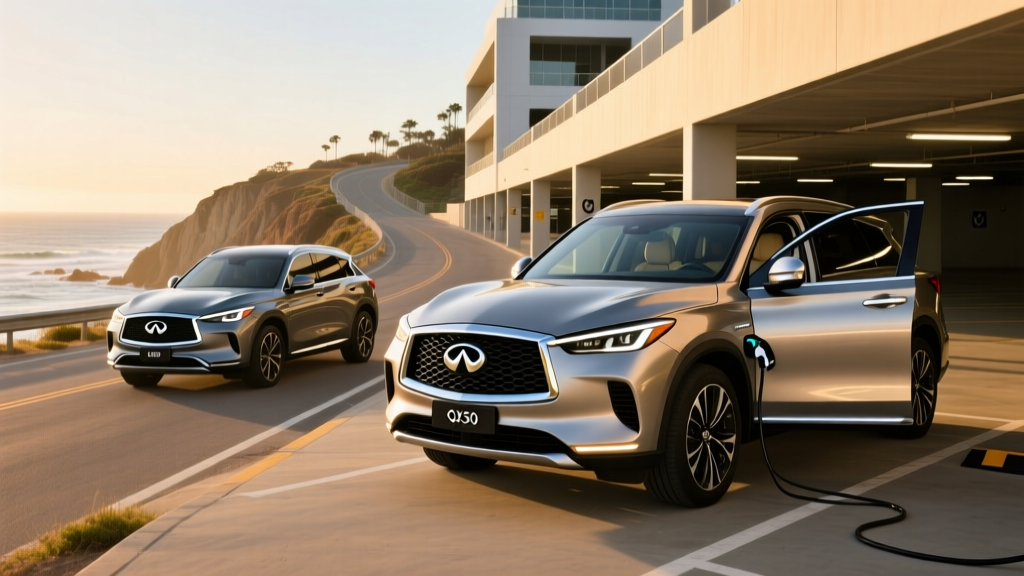
If you're searching for an Infiniti SUV hybrid, the brand's electrified offerings remain narrow compared to rivals like Toyota, Lexus, and Hyundai. As of the 2026 model year, Infiniti sells two SUVs with any form of electrification in the U.S. market: the QX60 three-row crossover (available in a conventional hybrid variant in select trims) and the QX50 compact SUV equipped with Infiniti's variable-compression turbo engine paired with a mild-hybrid system. Neither is a plug-in hybrid (PHEV), and neither offers a full battery-electric variant yet.
This guide breaks down exactly what each model delivers in fuel economy, powertrain design, real-world efficiency, battery warranty coverage, and whether either qualifies for federal tax incentives — so you can decide if an Infiniti hybrid SUV fits your garage or if a competitor's PHEV or BEV makes more sense.
HEV vs. Mild Hybrid vs. PHEV: Where Infiniti Fits
Before diving into specs, it's critical to understand the distinctions, because Infiniti's lineup doesn't include a true full hybrid (HEV) or plug-in hybrid (PHEV) in the traditional sense for 2026.
| Type | How It Works | Plug In? | Electric-Only Range | Typical MPG Gain |
|---|---|---|---|---|
| Full Hybrid (HEV) | Gas engine + electric motor; battery recharges via regen and engine | No | Very short (under 1 mi at low speed) | +30-50% vs gas-only |
| Mild Hybrid (MHEV) | Small motor/generator assists engine; cannot drive on electric alone | No | None | +5-10% vs gas-only |
| Plug-In Hybrid (PHEV) | Larger battery + motor; can drive electric-only for 20-40+ mi | Yes | 20-50 mi typically | MPGe 70-100+; gas MPG similar to HEV after battery depletes |
Where Infiniti lands: The QX50 uses a mild-hybrid-assisted variable-compression turbo (VC-Turbo) powertrain. The QX60 in recent model years has been offered with a conventional gas V6 only, though Infiniti has signaled hybrid variants for future model years. As of early 2026, there is no Infiniti PHEV SUV on sale in the U.S. — if plug-in capability is a priority, you'll need to look at competitors like the Toyota RAV4 Prime, Hyundai Tucson PHEV, or Lexus NX 450h+.
2026 Infiniti QX50: Mild-Hybrid Powertrain and MPG
The 2026 Infiniti QX50 carries over its unique 2.0-liter VC-Turbo four-cylinder engine, which uses a variable-compression mechanism to shift between efficient (high-compression) and powerful (low-compression) modes on the fly. A belt-driven starter-generator provides mild-hybrid assistance, smoothing stop-start transitions and offering minor torque fill — but it cannot propel the vehicle on electric power alone.
| Specification | 2026 Infiniti QX50 (AWD) |
|---|---|
| Engine | 2.0L VC-Turbo I-4 + mild-hybrid assist |
| Combined Horsepower | 268 hp @ 5,600 rpm |
| Combined Torque | 280 lb-ft @ 1,600-4,800 rpm |
| Transmission | CVT (continuously variable) |
| Drivetrain | FWD standard; AWD available |
| EPA MPG (City / Highway / Combined) | 22 / 28 / 25 (AWD) |
| 0-60 mph | ~6.9 seconds |
| Cargo Volume | 31.4 cu ft (rear seats up) / 65.1 cu ft (folded) |
| Starting MSRP | ~$42,550 (Pure trim, FWD) |
Real-World MPG: What Owners Actually See
The EPA rates the QX50 AWD at 22 city / 28 highway / 25 combined MPG per fueleconomy.gov. In real-world mixed driving, owners commonly report 23-26 MPG combined, with highway cruising occasionally touching 29-30 MPG on flat terrain. City-heavy commutes with frequent stop-start traffic can actually push figures slightly above the EPA city estimate thanks to the mild-hybrid system's regen assist during deceleration — a pattern typical of hybridized powertrains.
However, aggressive driving or sustained mountain grades will drop observed economy to 19-21 MPG. The CVT prioritizes smoothness over sportiness, and the VC-Turbo's efficiency advantage is most pronounced in light-load cruising, not hard acceleration.
2026 Infiniti QX60: Three-Row SUV Powertrain
The 2026 QX60 is Infiniti's three-row family hauler, competing against the Lexus TX, Acura MDX, and Volvo XC90. For the current generation, the QX60 is powered by a 3.5-liter V6 producing 295 hp and 270 lb-ft of torque, mated to a 9-speed automatic transmission. A previous-generation QX60 offered a hybrid variant (a 2.5L supercharged four-cylinder paired with an electric motor), but that powertrain was discontinued and has not returned for 2026.
| Specification | 2026 QX60 (AWD) |
|---|---|
| Engine | 3.5L V6 naturally aspirated |
| Horsepower / Torque | 295 hp / 270 lb-ft |
| EPA MPG (City / Hwy / Combined) | 20 / 25 / 22 (AWD) |
| Seating | 7 passengers (3 rows) |
| Cargo (behind 3rd / 2nd / 1st row) | 14.5 / 41.6 / 76.2 cu ft |
| Towing Capacity | 6,000 lbs (properly equipped) |
| Starting MSRP | ~$51,450 (Pure trim) |
If a hybrid QX60 is on your radar, Infiniti has confirmed that an electrified variant is in development, but it has not been officially detailed or priced for the U.S. market as of early 2026. Buyers who need three rows and hybrid efficiency today should cross-shop the Toyota Grand Highlander Hybrid (35-36 MPG combined) or the Lexus TX 500h (estimated ~28 MPG combined).
Tax Credit Eligibility: Does Any Infiniti Hybrid Qualify?
This is where the distinction between HEV, MHEV, and PHEV matters most for your wallet.
Federal §30D Clean Vehicle Credit — 2026 Rules: The IRS offers up to $7,500 for qualifying new plug-in electric vehicles (PHEVs and BEVs) that meet battery-sourcing, critical-mineral, MSRP cap, and buyer income requirements. Key thresholds for 2026:
- SUV MSRP cap: $80,000 (sedans: $55,000)
- Buyer AGI limits: $300K joint / $225K head of household / $150K single
- Battery components must meet North American manufacturing and critical-mineral sourcing thresholds (phased in annually)
- Credit can be transferred to the dealer at point of sale for an immediate price reduction
Source: IRS.gov — Clean Vehicle Credits
Bottom line for Infiniti: Because neither the QX50 mild-hybrid nor the current QX60 V6 is a plug-in vehicle, neither qualifies for the federal §30D tax credit. Mild hybrids and conventional gas vehicles are excluded. If Infiniti releases a PHEV or BEV variant in the future, eligibility would depend on battery sourcing compliance at that time.
Some states offer separate incentives for hybrids (not just PHEVs/BEVs), but these vary widely. Check your state energy office or department of environmental quality for current programs.
Reliability, Battery Warranty, and Long-Term Costs
Hybrid battery longevity is a top concern for buyers, and the answer depends on which type of hybrid system you're considering.
QX50 Mild-Hybrid System
The QX50's mild-hybrid system uses a small lithium-ion battery (typically under 1 kWh) and a belt-driven starter-generator. This is a low-stress, low-complexity system — there's no large traction battery to worry about. The 48V or belt-integrated components carry the same powertrain warranty as the rest of the vehicle: 6 years / 70,000 miles. Replacement of a belt-integrated starter-generator, if needed outside warranty, typically runs $800-$1,500 — far less than a full hybrid battery pack.
QX60 V6 (No Hybrid Battery)
The current QX60 has no hybrid battery at all — it's a conventional V6 with a standard 12V auxiliary battery. Reliability concerns here are traditional: transmission longevity, engine maintenance, and Infiniti's historical CVT issues (which apply to the QX50 more than the QX60's 9-speed auto).
General Hybrid Battery Lifespan
For reference, full hybrid (HEV) and PHEV battery packs from competitors like Toyota and Hyundai typically carry warranties of 8 years / 100,000 miles (or 10 years / 150,000 miles in CARB states). Real-world data shows most hybrid batteries last 150,000-200,000+ miles before significant degradation. Replacement costs for a full HEV battery pack range from $2,000-$5,000 depending on the model. Since Infiniti doesn't currently offer a full HEV or PHEV, this applies mainly if you're cross-shopping.
Pros of the Infiniti Hybrid SUV Lineup
- VC-Turbo engine is mechanically innovative — strong low-end torque
- QX50 offers luxury features at a lower entry price than German rivals
- QX60 provides genuine three-row space with 6,000-lb towing
- Mild-hybrid stop-start is smoother than non-hybrid competitors
- No plug-in hassle — fuel only, no charging infrastructure needed
Cons of the Infiniti Hybrid SUV Lineup
- No PHEV option — zero electric-only range
- QX50 MPG (25 combined AWD) trails hybrid rivals like the RAV4 Hybrid (39 MPG)
- QX60 V6 MPG (22 combined) is below hybrid three-row competitors
- No federal tax credit eligibility
- CVT in QX50 can feel sluggish under hard acceleration
- Infiniti brand resale value trails Lexus and Porsche
Infiniti Hybrid vs. PHEV vs. Full EV: Which Should You Choose?
Your decision hinges on three factors: charging access, daily mileage, and budget.
Choose an Infiniti QX50/QX60 (gas/mild-hybrid) if:
- You have no home charging access (apartment, street parking)
- You regularly drive 300+ miles in a single trip and don't want to plan charging stops
- You want luxury features at a ~$42K-$55K entry point without PHEV price premiums
- Your daily commute is under 40 miles and fuel cost savings are secondary to convenience
Choose a competitor PHEV (RAV4 Prime, Tucson PHEV, NX 450h+) if:
- You can install a Level 2 home charger and want 25-37 miles of electric-only commuting
- You want to qualify for the up-to-$7,500 federal tax credit
- Your weekday driving is under 30 miles — you could go weeks without using gas
- You want combined MPGe figures of 80-94 when the battery is charged
Choose a full BEV (Tesla Model Y, Hyundai Ioniq 5, BMW iX) if:
- You have reliable home Level 2 charging
- You want the lowest per-mile "fuel" cost (electricity at $0.12-$0.16/kWh vs. gas at $3.20-$4.00/gal)
- You want zero tailpipe emissions and minimal drivetrain maintenance
- You qualify for federal/state EV incentives and your budget supports a $45K-$70K purchase
Frequently Asked Questions
How many MPG does the Infiniti QX50 hybrid get?
The 2026 Infiniti QX50 with AWD is EPA-rated at 22 city / 28 highway / 25 combined MPG. Real-world mixed driving typically yields 23-26 MPG combined. Note that the QX50 uses a mild-hybrid system, not a full hybrid — it cannot drive on electric power alone, and its fuel economy advantage over a conventional turbo-four is modest (roughly 1-2 MPG).
Does Infiniti make a plug-in hybrid SUV?
As of the 2026 model year, Infiniti does not sell a plug-in hybrid (PHEV) SUV in the United States. The brand has announced plans for electrified models, but no PHEV or BEV SUV is currently available. Buyers seeking a luxury PHEV SUV should consider the Lexus NX 450h+ (37 mi electric range), BMW X5 xDrive50e (~38 mi), or Volvo XC60 Recharge (~35 mi).
How far can the Infiniti QX60 go on electric only?
The current-generation QX60 has no electric-only driving capability. It uses a conventional 3.5L V6 with no hybrid or plug-in system. The discontinued previous-generation QX60 Hybrid could travel very short distances at low speed on electric assist, but it was not a PHEV and had no meaningful electric-only range.
Is the Infiniti QX50 reliable, and what does battery replacement cost?
The QX50's VC-Turbo engine is mechanically complex but has shown acceptable reliability in J.D. Power and Consumer Reports assessments for recent model years. The mild-hybrid battery is small (under 1 kWh) and low-stress; replacement costs are modest ($800-$1,500 for the starter-generator assembly) compared to full hybrid packs. Infiniti's powertrain warranty covers 6 years / 70,000 miles. Long-term CVT durability remains a watch item based on Infiniti's historical CVT issues in other models, though the current Xtronic CVT in the QX50 has been improved.
Does any Infiniti SUV qualify for the federal EV tax credit?
No. The federal §30D Clean Vehicle Credit applies only to plug-in electric vehicles (PHEVs and BEVs) that meet battery sourcing, MSRP, and buyer income requirements. Since Infiniti's current SUV lineup consists of gas and mild-hybrid models with no plug-in capability, none qualify. Check IRS.gov for the latest qualifying vehicle list, which updates periodically as manufacturers confirm sourcing compliance.
What Infiniti hybrid SUV should I expect in the future?
Infiniti's parent company Nissan has committed to an electrified lineup by the late 2020s, and Infiniti has previewed concepts suggesting both PHEV and BEV SUVs are in development. However, no specific model, pricing, or on-sale date has been confirmed for the U.S. market. We'll update this guide when official details are released.
The Bottom Line on Infiniti Hybrid SUVs
If you're specifically searching for an Infiniti SUV hybrid, the 2026 lineup offers only mild-hybrid assistance in the QX50 — not the meaningful fuel savings or electric-only driving that full hybrids and PHEVs from Toyota, Lexus, Hyundai, and BMW provide. The QX60 remains a capable gas-only three-row SUV but trails hybrid competitors in efficiency by 10-15 MPG.
Infiniti's strength lies in luxury content per dollar, strong feature availability, and a distinctive engine in the VC-Turbo. If those qualities matter more to you than maximizing MPG or accessing federal tax credits, the QX50 remains a competent compact luxury SUV. But if fuel economy, electric commuting, or incentive eligibility drive your purchase, the honest answer is that Infiniti's hybrid SUV options aren't there yet — and you'll find stronger electrified choices elsewhere in 2026.