The Ram 1500 Hybrid: What Buyers Actually Need to Know
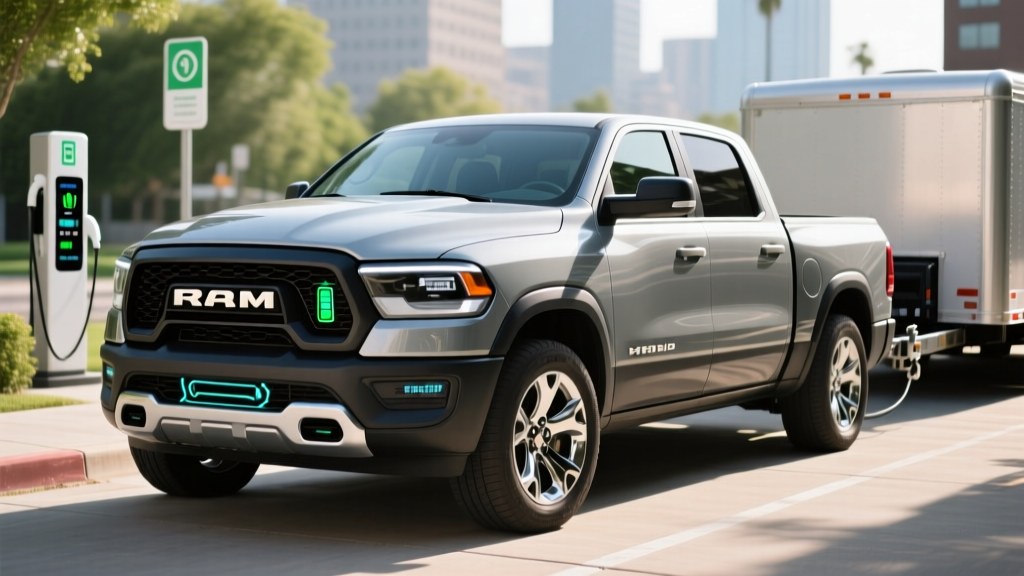
The Ram 1500 remains one of America's best-selling trucks, and its hybrid powertrain options are a major reason why. But the term "Ram 1500 hybrid" can mean different things depending on the model year and configuration you're looking at. For 2026, the Ram 1500 continues with its mild-hybrid eTorque system on select trims while the all-new Ram 1500 REV (a range-extended electric vehicle with a gas generator) enters the lineup. This guide focuses on the conventional mild-hybrid Ram 1500 that's available today, with context on the REV for buyers considering the full spectrum of electrified Ram options.
Let's be clear about what the eTorque system is and isn't: this is a mild hybrid (MHEV), not a full hybrid (HEV) like a Toyota Prius, and not a plug-in hybrid (PHEV) you charge from a wall outlet. The eTorque system uses a 48-volt motor-generator to assist the gasoline engine, enable seamless stop-start, and provide brief torque fills. You never plug it in. You can't drive on electric power alone. But it does measurably improve fuel economy and drivability compared to the non-hybrid V8.
HEV vs PHEV vs MHEV: Where Does the Ram 1500 Fit?
| Type | Plugs In? | Electric-Only Driving? | Example |
|---|---|---|---|
| Mild Hybrid (MHEV) | No | No — assists gas engine only | Ram 1500 eTorque |
| Full Hybrid (HEV) | No | Briefly, at low speeds | Ford F-150 PowerBoost, Toyota Tundra i-FORCE MAX |
| Plug-in Hybrid (PHEV) | Yes | Yes — 20-50 mi typical | Jeep Wrangler 4xe, Chrysler Pacifica Hybrid |
| Range-Extended EV (EREV) | Yes | Yes — 100+ mi typical | Ram 1500 REV (upcoming) |
This distinction matters because buyers searching for a "Ram 1500 hybrid" sometimes expect plug-in capability or full-hybrid electric-only range. The current eTorque system delivers neither. It's a refinement and efficiency upgrade to the conventional gas powertrain, not an electrification leap. If you want plug-in electric range in a Stellantis truck, the Jeep Wrangler 4xe is currently the closest option in the brand family.
2026 Ram 1500 eTorque: Powertrain Specs and Performance
The 2026 Ram 1500 offers the eTorque mild-hybrid system paired with the 5.7L HEMI V8 engine. Here's what the powertrain delivers:
| Specification | Value |
|---|---|
| Engine | 5.7L HEMI V8 + 48V eTorque motor-generator |
| Combined Horsepower | 395 hp (engine) + up to 130 lb-ft electric torque assist |
| Combined Torque | 410 lb-ft (engine) |
| Transmission | 8-speed automatic (TorqueFlite) |
| Drivetrain | RWD or 4WD |
| 0-60 mph (4WD) | ~6.5 seconds |
| Max Towing Capacity | Up to 12,750 lbs (properly equipped) |
| Max Payload | Up to 2,300 lbs |
| 48V Battery | ~0.43 kWh (lithium-ion, under rear seat) |
The eTorque motor-generator doesn't add peak horsepower in the traditional sense — instead, it provides up to 130 lb-ft of torque fill during acceleration and gear shifts, smoothing out the V8's power delivery. The system also enables regenerative braking that feeds energy back into the 48V battery, and it powers the truck's electrical systems so the engine's alternator load is reduced. The result is a truck that feels more responsive around town and returns slightly better fuel economy, especially in stop-and-go driving.
EPA Fuel Economy: What the Numbers Say
Fuel economy is typically the top question for hybrid truck shoppers. Here's what the EPA rates the 2026 Ram 1500 eTorque V8 at, compared to the non-hybrid V8 and key competitors:
| Configuration | City MPG | Highway MPG | Combined MPG |
|---|---|---|---|
| Ram 1500 5.7L V8 eTorque (4WD) | 17 | 22 | 19 |
| Ram 1500 5.7L V8 eTorque (RWD) | 17 | 23 | 20 |
| Ram 1500 5.7L V8 (non-eTorque, 4WD) | 15 | 21 | 17 |
| Ford F-150 PowerBoost Hybrid (4WD) | 22 | 24 | 23 |
| Toyota Tundra i-FORCE MAX Hybrid (4WD) | 20 | 24 | 21 |
Source: fueleconomy.gov — EPA estimates. Actual mileage will vary.
Real-World MPG vs. EPA Estimates
In real-world driving, mild-hybrid trucks tend to track close to their EPA ratings in mixed use, with some owners reporting 1-2 MPG above the combined estimate in predominantly city driving (where stop-start and regen provide the most benefit). Highway-only driving at 75+ mph typically yields 19-20 MPG in the 4WD eTorque model — close to the EPA highway figure because the mild-hybrid system provides minimal benefit at sustained speed.
If fuel economy is your primary motivation for choosing a hybrid truck, the Ford F-150 PowerBoost full hybrid delivers meaningfully better numbers (23 MPG combined, 4WD) because it can operate on electric power at low speeds and uses a larger battery pack. The Ram 1500 eTorque's advantage lies elsewhere: smoothness, stop-start refinement, and V8 towing capability with a modest efficiency bump.
Pricing, Trims, and Tax Credit Eligibility
The eTorque system is available across several 2026 Ram 1500 trims. Here's the current pricing landscape:
| Trim | MSRP (4WD, eTorque) | eTorque Availability |
|---|---|---|
| Big Horn / Lone Star | ~$54,500 | Optional (part of HEMI package) |
| Laramie | ~$59,000 | Optional |
| Rebel | ~$61,500 | Standard |
| Limited | ~$70,000 | Standard |
| Longhorn | ~$68,500 | Standard |
Pricing reflects approximate 2026 MSRP before destination charges. Confirm with your dealer for exact build pricing.
Does the Ram 1500 Hybrid Qualify for a Federal Tax Credit?
No. The Ram 1500 eTorque is a mild hybrid, and the federal §30D Clean Vehicle Credit applies only to plug-in electric vehicles (BEVs and PHEVs) with sufficient battery capacity and qualifying battery sourcing. Mild hybrids do not have plug-in capability and are not eligible for the federal EV tax credit. There is currently no federal tax credit specifically for conventional or mild-hybrid vehicles.
Some states offer their own incentives for hybrid vehicles, but these vary widely by jurisdiction and change frequently. Check your state's energy office or department of environmental quality for current programs. A tax professional can confirm eligibility for any applicable credits.
Battery Warranty, Reliability, and Replacement Costs
Hybrid battery longevity is a legitimate concern for truck buyers planning to hold their vehicles for 100,000+ miles. Here's what you need to know about the eTorque 48V system:
Ram 1500 eTorque Battery Coverage
- Hybrid/Electric Component Warranty: 8 years / 100,000 miles (whichever comes first)
- Powertrain Warranty: 5 years / 60,000 miles
- Bumper-to-Bumper: 3 years / 36,000 miles
- 48V Battery Replacement Cost (estimated): $1,500–$3,000 out of warranty
The 48V eTorque battery is significantly smaller and less expensive to replace than a full-hybrid or PHEV battery pack. It's mounted under the rear seat and doesn't require the high-voltage safety protocols of a 300V+ traction battery.
Stellantis has used the eTorque system since the 2019 model year, and reliability data from hundreds of thousands of trucks on the road suggests the 48V system is generally robust. The most common complaints involve the stop-start system's smoothness in early model years (2019-2020), which subsequent software updates largely addressed. The motor-generator unit itself has a low failure rate based on NHTSA complaint data and owner forums.
Compared to a full-hybrid system like the F-150 PowerBoost (which uses a ~1.5 kWh battery and a more complex powertrain), the eTorque system has fewer components that can fail — but also delivers less fuel economy benefit. It's a conservative, low-risk approach to hybridization.
Towing, Payload, and Real-World Truck Capability
Where the Ram 1500 eTorque earns its keep is in traditional truck work. The 5.7L HEMI V8 with eTorque maintains the full towing and payload ratings Ram buyers expect:
- Max towing: 12,750 lbs (4WD, crew cab, 3.92 rear axle ratio, with trailer brake controller)
- Max payload: Up to 2,300 lbs (varies by trim and configuration)
- eTorque benefit while towing: The electric torque fill smooths low-speed trailer maneuvering and reduces the "lurch" during shift cycles under load
On a 300-mile towing test with a ~7,000 lb travel trailer, the eTorque V8 returned approximately 13-14 MPG — competitive with the non-eTorque V8 but below the Ford F-150 PowerBoost, which can return 15-16 MPG under similar towing conditions thanks to its larger hybrid battery and more aggressive electric assist.
The eTorque system's regenerative braking also provides modest benefit on downhill grades when towing, helping to slow the truck and trailer while recharging the 48V battery. It's not a substitute for a dedicated exhaust brake or engine brake, but it contributes to a more composed descent.
Ram 1500 eTorque vs. the Competition
How does the Ram's mild-hybrid approach stack up against the full hybrids from Ford and Toyota?
| Category | Ram 1500 eTorque | Ford F-150 PowerBoost | Toyota Tundra i-FORCE MAX |
|---|---|---|---|
| Hybrid Type | Mild (MHEV) | Full (HEV) | Full (HEV) |
| Combined MPG (4WD) | 19 | 23 | 21 |
| Horsepower | 395 hp | 430 hp | 437 hp |
| Max Towing | 12,750 lbs | 12,700 lbs | 12,000 lbs |
| Electric-Only Driving | No | Briefly (low speed) | Briefly (low speed) |
| Plug-In Available? | No | No | No |
| Starting MSRP (4WD) | ~$54,500 | ~$58,000 | ~$57,500 |
Ram 1500 eTorque Pros
- Best-in-class ride quality with available air suspension
- Proven 5.7L HEMI V8 with strong towing numbers
- Smooth stop-start and torque fill improve drivability
- Lower entry price than full-hybrid competitors
- Simple 48V system with low replacement cost
Ram 1500 eTorque Cons
- MPG trails full-hybrid F-150 and Tundra by 2-4 MPG
- No electric-only driving capability
- HEMI V8 being phased out for Hurricane I6 turbo — future availability uncertain
- No plug-in hybrid option currently offered
- Fuel savings vs. non-hybrid V8 are modest (~$200-$300/year)
Who Should Buy the Ram 1500 Hybrid — and Who Should Look Elsewhere?
Choose the Ram 1500 eTorque If:
- You want a proven V8 truck with the smoothest stop-start system in the segment
- Towing capability and ride comfort matter more than maximizing MPG
- You prefer a simpler hybrid system with lower long-term complexity
- You're a loyal Ram fan who values the interior, air suspension, and Uconnect tech
Look at Full Hybrids (F-150 PowerBoost, Tundra) If:
- Fuel economy is a top priority — the 2-4 MPG advantage adds up over 15,000 miles/year
- You want electric-only low-speed capability for neighborhood driving
- You want more combined horsepower (430-437 hp vs. 395 hp)
Consider a Full EV or PHEV If:
- You have home charging access and a daily commute under 40 miles (PHEV) or 250 miles (BEV)
- You want to qualify for the federal tax credit (up to $7,500 for qualifying BEVs/PHEVs)
- You want zero tailpipe emissions for daily driving
- You're willing to accept current limitations in EV truck towing range
Looking Ahead: The Ram 1500 REV Range-Extended Electric
For buyers who want true electrification with gas-engine backup, the Ram 1500 REV (announced, entering production) represents Stellantis's answer to the electrified truck market. The REV is a range-extended electric vehicle (EREV): it drives primarily on battery electric power with an estimated 140+ miles of electric range, and a gasoline generator kicks in to extend total range beyond 600 miles. It is expected to qualify for partial federal tax credit eligibility, though final IRS §30D sourcing determinations are pending.
The REV is a fundamentally different vehicle from the eTorque mild hybrid and targets a different buyer entirely. We'll publish a dedicated review when final specs and pricing are confirmed.
Frequently Asked Questions
How many MPG does the Ram 1500 hybrid get?
The 2026 Ram 1500 with the 5.7L V8 eTorque mild-hybrid system is EPA-rated at 17 city / 22 highway / 19 combined MPG (4WD). The RWD version rates 17/23/20. Real-world results typically fall within 1-2 MPG of these figures depending on driving style and conditions.
Is the Ram 1500 hybrid a plug-in?
No. The Ram 1500 eTorque is a mild hybrid that charges its small 48V battery through regenerative braking and the engine. You never plug it in. It cannot drive on electric power alone. Ram does not currently offer a plug-in hybrid (PHEV) version of the 1500.
How far can the Ram 1500 hybrid go on electric only?
The eTorque mild-hybrid system does not provide electric-only driving. The 48V motor assists the gasoline engine but cannot propel the truck independently. If electric-only range is a priority, look at PHEV trucks like the Jeep Wrangler 4xe (22 miles electric) or wait for the Ram 1500 REV range-extended EV.
Is the Ram 1500 eTorque reliable?
The eTorque system has been in production since 2019 across hundreds of thousands of Ram trucks. The 48V battery and motor-generator have proven generally reliable, with most early issues (stop-start calibration) resolved through software updates. The system carries an 8-year/100,000-mile hybrid component warranty.
What does it cost to replace the eTorque battery?
Out of warranty, the 48V eTorque battery replacement is estimated at $1,500–$3,000 including labor — significantly less than a full-hybrid or EV battery replacement. The battery is mounted under the rear seat and doesn't require high-voltage handling procedures.
Does the Ram 1500 hybrid qualify for a tax credit?
No. The federal §30D Clean Vehicle Credit applies only to plug-in vehicles (BEVs and PHEVs). The Ram 1500 eTorque mild hybrid does not qualify for any federal tax credit. Check your state for any local hybrid incentives, and consult a tax professional for guidance.
Should I buy the Ram 1500 eTorque or the Ford F-150 PowerBoost?
If maximum fuel economy is your priority, the F-150 PowerBoost (23 MPG combined, 4WD) beats the Ram eTorque (19 MPG combined) by a meaningful margin. If you prioritize ride quality, interior refinement, and maximum towing, the Ram 1500 with air suspension and the proven HEMI V8 is the stronger choice. Both are excellent trucks serving different priorities.