Quick Verdict: Two Sportage Hybrids, Two Very Different Buyers
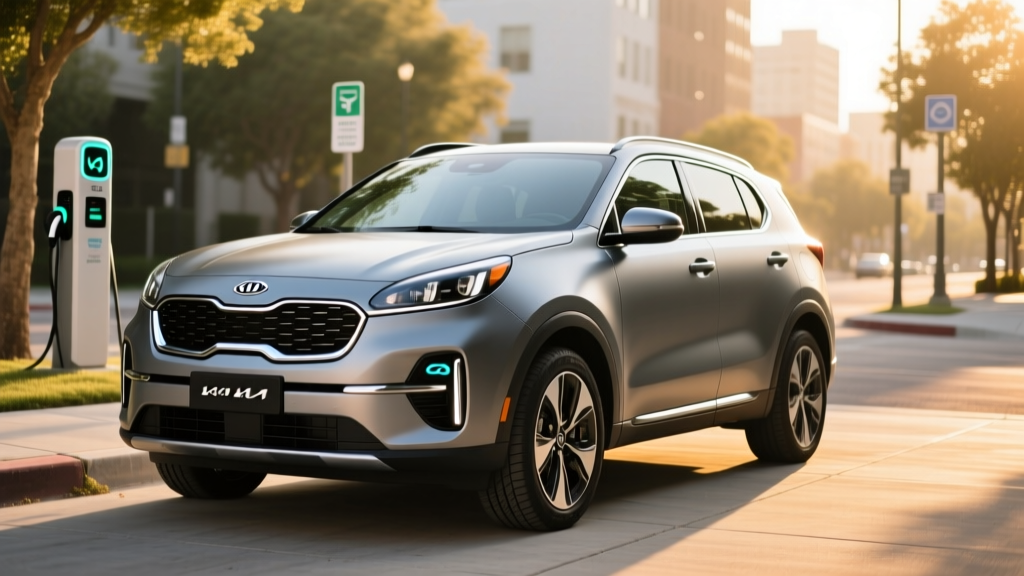
The 2023 Kia Sportage arrived fully redesigned on the N3 platform, and for the first time Kia offered both a conventional hybrid (HEV) and a plug-in hybrid (PHEV) alongside the gas-only model. If you're searching for the kia sportage 2023 hybrid, you're actually choosing between two distinct powertrains with different use cases, price points, and tax-credit implications.
The HEV delivers outstanding 43 MPG combined without ever plugging in — ideal for apartment dwellers and high-mileage commuters who lack home charging. The PHEV trades some cargo space and highway efficiency for 34 miles of electric-only driving and a more powerful combined output. Both share Kia's 10-year/100,000-mile powertrain warranty, one of the longest in the segment.
HEV vs PHEV at a Glance
| Attribute | Sportage HEV | Sportage PHEV |
|---|---|---|
| Powertrain | 1.6L turbo + 44 kW motor | 1.6L turbo + 72 kW motor |
| Combined HP | 226 hp | 261 hp |
| Battery | 1.49 kWh (self-charging) | 13.8 kWh (plug-in) |
| Electric-Only Range | N/A | 34 miles (EPA) |
| EPA Combined MPG/MPGe | 43 MPG / 38 MPG (AWD) | 84 MPGe / 35 MPG (gas only) |
| Plugs In? | No | Yes (Level 1/2 only) |
| Starting MSRP | ~$28,590 | ~$39,990 |
Fuel Economy: EPA Numbers and Real-World MPG
For the FWD Sportage HEV, the EPA rates fuel economy at 42 city / 44 highway / 43 combined MPG. The AWD variant drops slightly to 38 city / 38 highway / 38 combined MPG — a meaningful difference if you're in a northern climate where AWD is essential.
EPA Fuel Economy Breakdown
| Model | City MPG | Highway MPG | Combined MPG |
|---|---|---|---|
| Sportage HEV FWD | 42 | 44 | 43 |
| Sportage HEV AWD | 38 | 38 | 38 |
| Sportage PHEV AWD (gas) | 36 | 35 | 35 |
| Sportage PHEV AWD (elec) | 84 MPGe combined | ||
Real-World MPG: Why Hybrids Often Beat the Sticker in Town
Conventional hybrids like the Sportage HEV tend to exceed their EPA city ratings in stop-and-go driving because regenerative braking recovers energy that a gas car wastes as heat. In urban commuting with frequent stops, owners routinely report 44–47 MPG in the FWD model. Highway driving is the opposite story: sustained 75–80 mph speeds reduce regenerative opportunities and increase aerodynamic drag, so expect 37–40 MPG from the FWD and 34–36 from the AWD on long road trips.
The PHEV's gas-only mode (after the battery is depleted) returns roughly 33–36 MPG combined in real-world mixed driving — slightly lower than the HEV because the PHEV carries approximately 350 lbs of additional battery mass and uses a heavier AWD-only drivetrain.
PHEV Electric-Only Range and Charging
The Sportage PHEV carries a 13.8 kWh lithium-ion battery (NMC chemistry), of which roughly 11.5 kWh is usable to protect long-term state of health. The EPA rates electric-only range at 34 miles, with a total combined range (electric + gas) of approximately 430 miles.
Real-world electric range depends heavily on conditions. In mild weather (55–75°F) at city speeds, expect 32–36 miles. In winter (below 30°F), cabin heating and battery thermal losses cut that to roughly 24–28 miles. Highway speeds above 65 mph will also reduce electric range to around 27–30 miles.
Charging the PHEV
| Level | Power (kW) | 0–100% Time | Notes |
|---|---|---|---|
| Level 1 (120V) | ~1.4 kW | ~10 hours | Standard household outlet; overnight top-up |
| Level 2 (240V) | ~7.2 kW | ~2 hours | Home wallbox or public Level 2 station |
| DC Fast Charge | N/A | N/A | Sportage PHEV does NOT support DC fast charging |
The PHEV uses a standard J1772 connector for Level 1 and Level 2 charging. There is no DC fast-charge port — this is typical for PHEVs with smaller batteries. A full Level 2 charge in roughly two hours means you can easily replenish during a workday or between errands if you have access to a 240V outlet or public Level 2 station.
Powertrain Specs and Performance
Both hybrid variants use Kia's 1.6-liter turbocharged four-cylinder (Smartstream G1.6T) paired with an electric motor integrated into a 6-speed automatic transmission — not a CVT, which gives the Sportage hybrid a more natural, stepped-gear feel that enthusiast drivers appreciate.
Powertrain Specifications
| Spec | Sportage HEV | Sportage PHEV |
|---|---|---|
| Engine | 1.6L turbo I4 | 1.6L turbo I4 |
| Engine Output | 178 hp / 195 lb-ft | 178 hp / 195 lb-ft |
| Electric Motor | 44 kW (59 hp) / 195 lb-ft | 72 kW (97 hp) / 224 lb-ft |
| Combined System Output | 226 hp / 258 lb-ft | 261 hp / 258 lb-ft |
| Transmission | 6-speed auto | 6-speed auto |
| Drivetrain | FWD or AWD | AWD only |
| 0–60 mph (est.) | ~7.7 sec | ~7.0 sec |
| Towing Capacity | 2,000 lbs | 2,000 lbs |
The PHEV's larger motor and standard AWD give it a noticeably quicker launch off the line and confident passing power, even with the added weight. In EV mode, acceleration is adequate for city merging but not brisk — expect 0–30 mph in roughly 4.5 seconds on electric alone.
Pricing, Trims, and Tax Credit Eligibility
The 2023 Sportage HEV launched with three trims, while the PHEV was offered in two:
- Sportage HEV LX: ~$28,590 (FWD)
- Sportage HEV EX: ~$31,590 (FWD or AWD)
- Sportage HEV SX-Prestige: ~$36,090 (AWD)
- Sportage PHEV X-Line: ~$39,990 (AWD)
- Sportage PHEV X-Line Prestige: ~$43,490 (AWD)
Federal Tax Credit: The §30D Reality
Under current IRS §30D rules, the Sportage PHEV may qualify for a partial or full federal tax credit of up to $7,500 — but eligibility hinges on three moving targets:
- MSRP cap: SUVs must have an MSRP at or below $80,000 (both Sportage PHEV trims clear this).
- Buyer income cap: Modified AGI must not exceed $150,000 (single), $225,000 (head of household), or $300,000 (joint).
- Battery sourcing: Critical minerals and battery component requirements phase in annually and can reduce the credit to $3,750 or eliminate it entirely depending on the vehicle's build date and supply chain compliance.
Beginning in 2024, eligible buyers can transfer the credit to the dealer as a point-of-sale discount. For the 2023 model year purchased new in 2023, the credit was claimed on your tax return. Consult a tax professional before assuming a specific credit amount — battery sourcing rules change frequently, and the IRS maintains a qualified vehicle list that updates periodically.
The conventional Sportage HEV does not qualify for the §30D federal credit because it lacks sufficient plug-in electric range. Some states and utilities offer separate rebates for hybrids — check your local programs.
Reliability, Battery Warranty, and Replacement Costs
Kia Hybrid Battery Warranty
Hybrid/EV battery: 10 years / 100,000 miles (whichever comes first) for the original owner. In states that follow California emissions standards (CARB states), coverage extends to 10 years / 150,000 miles.
Powertrain: 10 years / 100,000 miles.
Bumper-to-bumper: 5 years / 60,000 miles.
Kia's hybrid system has proven durable since its introduction in the Niro and Sorento lines. The 1.49 kWh battery in the HEV is small and operates within a narrow state-of-charge window (roughly 40–60% SoC), which minimizes degradation. Most Hyundai/Kia hybrid batteries from the 2017–2022 era show less than 5% capacity loss at 100,000 miles based on owner fleet data.
The PHEV's larger 13.8 kWh battery undergoes deeper cycling but benefits from active thermal management. Expect 8–12% capacity loss over 10 years / 100,000 miles under normal use — meaning your 34-mile electric range might decrease to roughly 30–31 miles by year 10. This is still well above Kia's warranty threshold, which covers the battery if capacity drops below approximately 70% of original.
Battery Replacement Cost
If the hybrid battery does fail outside warranty:
- HEV battery replacement: $2,000–$3,500 (parts and labor) — the small pack is relatively affordable.
- PHEV battery replacement: $5,000–$8,000 (parts and labor) — larger pack with more cells and thermal management hardware.
These are current estimates based on dealer parts pricing and independent shop labor rates. Costs may decrease as third-party refurbishers expand coverage for Kia/Hyundai hybrid packs. In practice, premature hybrid battery failure is rare — the vast majority of owners will sell or trade the vehicle before encountering this expense.
Sportage HEV vs PHEV vs Full EV: Which Fits You?
Sportage HEV Pros
- 43 MPG combined without plugging in
- Lower starting price (~$28,590)
- No home charging infrastructure needed
- FWD available for weight/efficiency advantage
- Strong real-world city MPG (often exceeds EPA)
Sportage HEV Cons
- No electric-only driving mode
- No federal tax credit eligibility
- Less power than PHEV (226 vs 261 hp)
- AWD reduces MPG to 38 combined
Sportage PHEV Pros
- 34 miles electric-only covers most daily commutes
- 261 hp — quickest Sportage variant
- Potential federal tax credit up to $7,500
- Standard AWD for all-weather confidence
- 430+ miles total range eliminates range anxiety
Sportage PHEV Cons
- ~$11,400 price premium over base HEV
- Requires home/work Level 2 charging to maximize value
- Heavy — gas-only MPG drops to 35 combined
- No DC fast charging
- Reduced cargo space due to battery placement
Choose the Sportage HEV if:
- You rent or live in an apartment without charging access
- Your daily driving is mostly city/stop-and-go (where hybrids shine)
- You want maximum MPG without behavioral changes
- Budget is a primary concern and you don't qualify for the EV credit
Choose the Sportage PHEV if:
- You can install a Level 2 charger at home (garage or driveway with 240V)
- Your daily commute is under 34 miles round-trip (you'll rarely use gas)
- You qualify for the §30D credit, which narrows the price gap significantly
- You want EV-like daily driving with gas-car road-trip flexibility
Choose a full EV (e.g., Ioniq 5, EV6) if:
- You have reliable home Level 2 charging
- Your typical trips are under 250 miles or you're comfortable with DC fast charging on road trips
- You want zero tailpipe emissions and the lowest per-mile energy cost
Frequently Asked Questions
How many MPG does the 2023 Kia Sportage Hybrid get?
The FWD Sportage HEV is EPA-rated at 42 city / 44 highway / 43 combined MPG. The AWD HEV drops to 38/38/38 MPG. The PHEV returns 84 MPGe on electricity and 35 MPG combined in gas-only mode. In real-world city driving, the FWD HEV often achieves 44–47 MPG thanks to aggressive regenerative braking.
How far can the Sportage PHEV go on electric only?
The EPA rates the Sportage PHEV at 34 miles of electric-only range. In mild conditions at city speeds, expect 32–36 miles. In winter or at sustained highway speeds, that drops to roughly 24–30 miles. The total combined range (electric + full gas tank) is approximately 430 miles.
Does the 2023 Kia Sportage Hybrid qualify for a tax credit?
The conventional HEV does not qualify for the federal §30D credit. The PHEV may qualify for up to $7,500, depending on battery sourcing compliance, buyer income limits ($150K single / $300K joint), and the vehicle's MSRP (both trims fall under the $80K SUV cap). Check the IRS qualified vehicle list and consult a tax professional for your specific situation. Some states and utilities offer additional rebates for PHEVs.
Is the Kia Sportage Hybrid reliable?
Kia's hybrid powertrain has a strong track record across the Niro, Sorento, and now Sportage lines. The 10-year/100,000-mile hybrid battery and powertrain warranty is among the industry's best. The 6-speed automatic transmission (rather than a CVT) is a proven, conventional design. IIHS and NHTSA ratings for the 2023 Sportage have been strong, with top marks in crash testing.
What does it cost to replace the hybrid battery?
The HEV battery replacement runs approximately $2,000–$3,500; the PHEV battery costs roughly $5,000–$8,000 out of warranty. However, premature failure is uncommon, and Kia's 10-year/100,000-mile coverage protects most original owners through the vehicle's prime ownership period.
Does the Sportage Hybrid need to be plugged in?
No — the conventional Sportage HEV charges its small battery through regenerative braking and the gas engine. You fuel it like any other car. Only the PHEV variant needs (and benefits from) plug-in charging to access its 34-mile electric range.
How does the Sportage Hybrid compare to the Toyota RAV4 Hybrid?
The RAV4 Hybrid is EPA-rated at 41 city / 38 highway / 40 combined MPG (AWD standard), slightly below the Sportage HEV FWD's 43 combined but competitive with the Sportage AWD. The RAV4 Prime PHEV offers 42 miles of electric range (vs. Sportage PHEV's 34) and 302 combined hp, but starts several thousand dollars higher and has faced persistent availability constraints. The Sportage hybrid offers a fresher interior design and Kia's longer warranty; the RAV4 benefits from Toyota's long-standing hybrid reliability reputation.