2026 Porsche Cayenne E-Hybrid: The Performance PHEV SUV
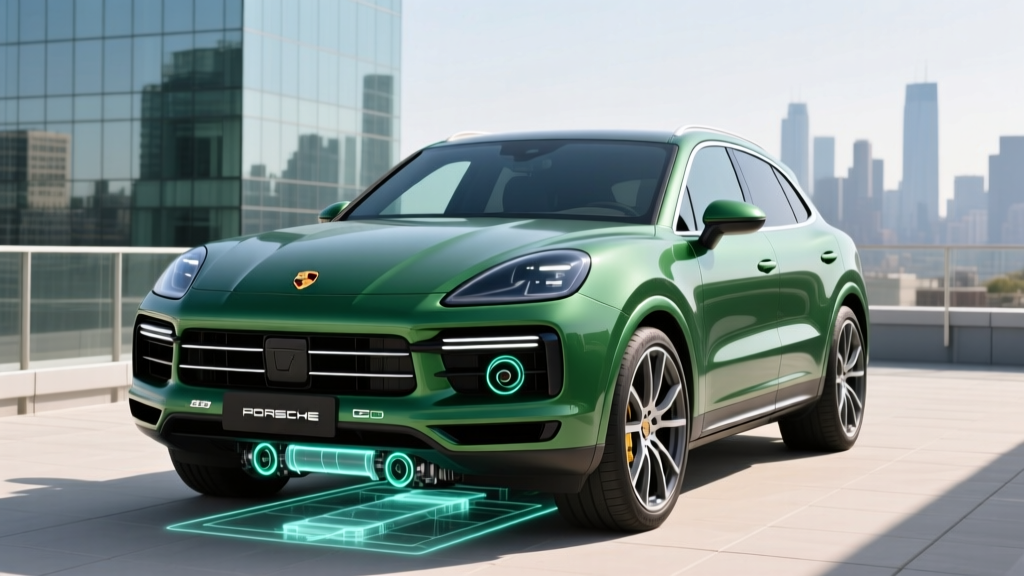
The 2026 Porsche Cayenne E-Hybrid occupies a rare lane: a plug-in hybrid SUV that delivers genuine sports-car acceleration, a usable electric-only commute, and the practicality of a gasoline engine for road trips. With the fourth-generation Cayenne now fully established, Porsche has refined the E-Hybrid powertrain to produce up to 670 horsepower in the top Turbo E-Hybrid variant while maintaining an EPA-estimated electric range exceeding 30 miles. For buyers searching for a Porsche hybrid SUV, the 2026 lineup offers three distinct E-Hybrid trims — each a plug-in hybrid (PHEV), not a conventional hybrid — that can be plugged in to charge but also operate seamlessly without ever touching a charger.
This guide breaks down real-world MPG, electric range, charging logistics, powertrain specs, pricing, and whether the Cayenne E-Hybrid qualifies for federal tax credits under current IRS §30D rules.
HEV vs. PHEV: Which Is the Cayenne?
Conventional Hybrid (HEV): Cannot be plugged in. A small battery recharges via regenerative braking and the engine. Improves MPG modestly. No electric-only driving beyond very low speeds.
Plug-in Hybrid (PHEV) — This is the Cayenne E-Hybrid: Has a larger battery (25.9 kWh usable) that can be charged via a plug. Delivers 30+ miles of electric-only driving before the gasoline V6 engine engages. Functions as a conventional hybrid once the battery is depleted.
Powertrain and Performance Specs
The 2026 Cayenne E-Hybrid pairs a 3.0-liter turbocharged V6 with an electric motor integrated into the 8-speed Tiptronic S transmission. The standard E-Hybrid produces a combined 463 horsepower and reaches 0–60 mph in approximately 4.7 seconds. The Cayenne S E-Hybrid bumps output to 512 hp (0–60 in 4.4 seconds), while the range-topping Cayenne Turbo E-Hybrid delivers a staggering 670 hp with a 3.7-second 0–60 time — figures that rival dedicated sports cars, let alone SUVs.
| Spec | Cayenne E-Hybrid | Cayenne S E-Hybrid | Cayenne Turbo E-Hybrid |
|---|---|---|---|
| Combined HP | 463 hp | 512 hp | 670 hp |
| Engine | 3.0L Turbo V6 + E-Motor | 3.0L Turbo V6 + E-Motor | 4.0L Twin-Turbo V8 + E-Motor |
| 0–60 mph | 4.7 sec | 4.4 sec | 3.7 sec |
| Battery (usable) | 25.9 kWh | 25.9 kWh | 25.9 kWh |
| EPA Electric Range | ~32 mi | ~30 mi | ~28 mi |
| EPA Combined MPG (hybrid mode) | ~21 MPG | ~20 MPG | ~18 MPG |
| Max DC Fast Charge | 11 kW (AC only) | 11 kW (AC only) | 11 kW (AC only) |
| Base MSRP | $91,700 | $103,800 | $148,500 |
All three trims use the same 25.9 kWh (usable) lithium-ion battery pack positioned beneath the cargo floor. Notably, the Cayenne E-Hybrid does not support DC fast charging — it is limited to Level 2 AC charging at up to 11 kW. This means a full 0–100% charge takes roughly 2.5 hours on a dedicated Level 2 home charger, or about 8–10 hours on a standard 120V household outlet (Level 1). For most PHEV owners who charge overnight at home, this is perfectly adequate, but it means you cannot top up quickly at a highway DC fast-charging station.
Electric Range, MPG, and Real-World Efficiency
The EPA estimates the standard Cayenne E-Hybrid at approximately 32 miles of electric-only range, which covers the average American one-way commute. Once the battery depletes, the vehicle operates as a conventional hybrid, with an EPA-estimated combined fuel economy around 21 MPG.
| Metric | City | Highway | Combined |
|---|---|---|---|
| Electric-only (MPGe) | ~54 MPGe | ~51 MPGe | ~52 MPGe |
| Hybrid mode (MPG) | ~22 MPG | ~20 MPG | ~21 MPG |
Real-World Range and MPG Expectations
EPA electric range: ~32 miles
Real-world expectation: 25–28 miles in mixed driving; 20–23 miles at sustained highway speeds or in cold weather (below 40°F).
Real-world hybrid MPG: Expect 19–22 MPG combined. City driving with regenerative braking tends to match or slightly exceed the EPA city number. Highway cruising at 75+ mph drops efficiency to 18–19 MPG.
Source: fueleconomy.gov — verify exact figures for your trim and model year.
A critical advantage of the PHEV architecture: if you charge nightly and your commute is under 30 miles round-trip, you may go weeks without visiting a gas station. Porsche's hybrid management system also offers an "E-Hold" mode to save battery for later (useful for entering zero-emission city zones) and an "E-Charge" mode that uses the engine to replenish the battery while driving — though this reduces fuel economy significantly.
Charging: What You Need at Home
Since the Cayenne E-Hybrid lacks DC fast charging, your home Level 2 setup is the primary refueling method. Here's what to plan for:
| Level | Voltage / Power | Charge Time (0–100%) | Miles of Range Added/Hour |
|---|---|---|---|
| Level 1 (standard outlet) | 120V / ~1.4 kW | ~18–20 hours | ~2–3 mi/hr |
| Level 2 (home wallbox) | 240V / 11 kW (max) | ~2.5 hours | ~12–14 mi/hr |
| DC Fast Charge | Not supported | N/A | N/A |
For a full Level 2 home installation, budget between $800 and $2,500 total (charger hardware plus licensed electrician labor and permit fees). If your electrical panel requires an upgrade to 200A service, add $1,500–$3,000. Porsche offers the Porsche Mobile Charger Connect as an included portable Level 2 unit, which is convenient but a dedicated wallbox (such as the ChargePoint Home Flex or Emporia Vue) typically offers better app integration and load management. Always consult a licensed electrician for final specs.
Pricing, Trims, and Federal Tax Credit Eligibility
The 2026 Cayenne E-Hybrid starts at $91,700 (base MSRP, before destination). The S E-Hybrid begins at $103,800, and the Turbo E-Hybrid commands $148,500. Porsche's options list is famously expansive — expect well-equipped examples to add $10,000–$25,000 above base.
Federal §30D Tax Credit — Does the Cayenne E-Hybrid Qualify?
- MSRP Cap: SUVs must be under $80,000 MSRP. The Cayenne E-Hybrid starts at $91,700 — it exceeds the cap and does NOT qualify for the federal §30D new clean vehicle credit.
- Battery Sourcing: Even if priced within cap, §30D requires critical minerals and battery components to meet phased-in domestic-sourcing thresholds. Porsche's supply chain currently does not satisfy these requirements for the Cayenne.
- Buyer Income Cap: AGI limits apply ($300K joint / $150K single), but this is moot since the vehicle itself is ineligible.
- State Incentives: Some states offer rebates for PHEVs regardless of MSRP. Check your state energy office or the AFDC state incentives database for local programs.
Source: IRS §30D New Clean Vehicle Credit. Consult a tax professional for personal eligibility.
The bottom line: do not purchase the Cayenne E-Hybrid expecting a federal tax credit. Its value proposition rests on performance, luxury, and the flexibility of electric commuting — not incentive economics.
Battery Warranty, Reliability, and Replacement Costs
Cayenne E-Hybrid Battery Warranty
Hybrid battery warranty: 8 years / 100,000 miles (whichever comes first), covering defects and capacity loss below a defined threshold (typically 70% state of health).
Powertrain warranty: 4 years / 50,000 miles (Porsche's standard limited warranty).
Battery replacement cost (out of warranty): Estimated $12,000–$18,000 for the high-voltage pack, plus labor. This is a projected figure based on comparable luxury PHEV packs; confirm with a Porsche dealer for current pricing.
Porsche's hybrid battery technology has proven durable in the Panamera E-Hybrid and previous Cayenne generations, with most owners reporting minimal degradation within the warranty period. The larger concern for buyers is overall vehicle reliability — Porsche typically ranks mid-pack among luxury brands in J.D. Power and Consumer Reports reliability surveys. The complexity of a twin-powertrain system (engine + electric motor + high-voltage electronics) means maintenance costs are higher than a conventional Cayenne, particularly post-warranty.
For peace of mind, consider an extended warranty or Certified Pre-Owned (CPO) program if purchasing outside the initial 8-year battery coverage window. Hybrid battery replacement is rare before 120,000+ miles based on industry-wide PHEV data, but the cost is significant if it occurs out of pocket.
Cayenne E-Hybrid vs. Full EV vs. Gas Cayenne: Which Fits You?
Decision Framework
Choose the Cayenne E-Hybrid (PHEV) if:
- Your daily commute is under 30 miles and you can charge at home nightly
- You want EV-like silence for errands but need gasoline range for road trips
- Performance is non-negotiable — 463+ hp with instant electric torque
- You don't qualify for or need a federal tax credit to justify the purchase
Choose a full EV (e.g., Porsche Taycan Cross Turismo, BMW iX, Tesla Model X) if:
- You have reliable home charging and access to DC fast chargers for road trips
- You want zero tailpipe emissions and minimal maintenance (no oil changes, no engine)
- You prefer lower per-mile "fuel" costs — electricity is typically $0.04–$0.06/mile vs. $0.15–$0.20/mile for premium gasoline
Choose the gas Cayenne if:
- You lack home charging access (apartment, street parking)
- You want a lower purchase price (base gas Cayenne starts around $79,200)
- You drive predominantly long highway miles where PHEV electric range offers little benefit
Pros and Cons at a Glance
Pros
- Class-leading performance: 463–670 hp with instant electric torque
- 30+ mile electric range covers most daily commutes
- Seamless transition between electric and hybrid modes
- Porsche build quality, interior materials, and driving dynamics
- No range anxiety — gasoline engine for unlimited road-trip range
- 8-year / 100,000-mile hybrid battery warranty
Cons
- No DC fast charging — limited to 11 kW AC
- Exceeds $80K MSRP cap — ineligible for federal §30D tax credit
- Hybrid-mode MPG (18–21) is unremarkable for the class
- Premium fuel required; high running costs post-warranty
- Cargo space reduced vs. gas Cayenne due to battery placement
- Base price starts at $91,700 before options
Frequently Asked Questions
How many MPG does the Porsche Cayenne hybrid get?
The 2026 Cayenne E-Hybrid achieves an EPA-estimated 21 MPG combined (22 city / 20 highway) in hybrid mode once the battery is depleted. In electric-only mode, it rates approximately 52 MPGe combined. Real-world results vary: expect 19–22 MPG in mixed driving, with highway cruising at 75+ mph dropping to around 18 MPG.
How far can the Cayenne E-Hybrid go on electric only?
The EPA estimates approximately 32 miles of electric-only range for the base E-Hybrid trim. In real-world conditions — particularly at highway speeds or in cold weather — expect 20–28 miles before the gasoline engine engages. This is sufficient for most daily commutes if you charge nightly.
Is the Cayenne a hybrid or a plug-in hybrid?
The Cayenne E-Hybrid is a plug-in hybrid (PHEV). It has a 25.9 kWh battery that can be charged by plugging into a Level 2 outlet, providing 30+ miles of electric driving. It is not a conventional hybrid (HEV) — you can plug it in, though it will still function perfectly well if you never do.
Does the Porsche Cayenne E-Hybrid qualify for a tax credit?
No. Under current IRS §30D rules, the Cayenne E-Hybrid does not qualify for the federal new clean vehicle credit. Its MSRP exceeds the $80,000 SUV cap, and its battery supply chain does not meet critical-mineral sourcing requirements. Some state-level incentives may apply — check the AFDC database for your jurisdiction.
Is the Cayenne E-Hybrid reliable and what does battery replacement cost?
Porsche's hybrid systems have demonstrated good durability in prior generations. The high-voltage battery is warranted for 8 years / 100,000 miles against defects and excessive degradation. Out-of-warranty replacement is estimated at $12,000–$18,000. Overall vehicle reliability is average for the luxury segment — plan for higher maintenance costs than a mainstream-brand PHEV.
Can the Cayenne E-Hybrid DC fast charge?
No. The Cayenne E-Hybrid supports only AC charging (Level 2) at up to 11 kW. A full charge takes approximately 2.5 hours on a home wallbox. DC fast charging is not available on this platform.