Quick Verdict: Luxury First, Efficiency Second
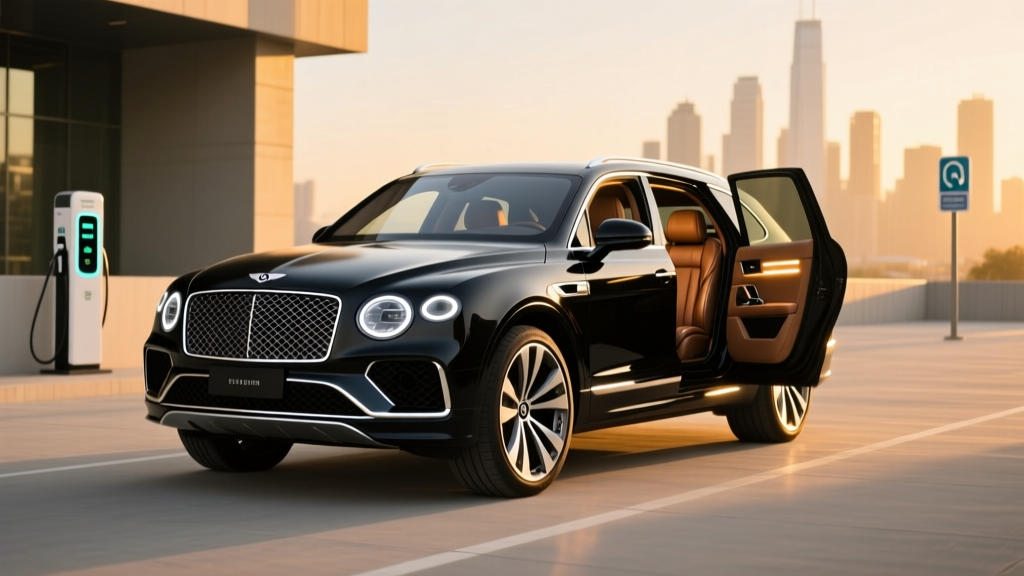
The 2026 Bentley Bentayga Hybrid is not a fuel-saving play — it's a torque-rich luxury SUV that happens to offer short-distance electric commuting. With an EPA-estimated 18 miles of electric-only range and 19 MPG combined once the 3.0-liter V6 kicks in, this plug-in hybrid (PHEV) targets buyers who want Bentley refinement with the occasional zero-tailpipe-emission school run, not hypermilers chasing triple-digit MPGe.
At a starting MSRP near $213,100 (before destination and a near-inevitable options spiral), the Bentayga Hybrid occupies a rarefied space. It competes less with efficiency-minded PHEVs like the Toyota RAV4 Prime and more with the Porsche Cayenne E-Hybrid and Range Rover P460e. Here's what the numbers actually look like in real-world driving.
HEV vs. PHEV: Where the Bentayga Fits
Before diving into specs, it's critical to distinguish the two hybrid architectures:
Conventional Hybrid (HEV): A small battery (typically 1–2 kWh) recharges via regenerative braking and the engine. You never plug it in. The Toyota Highlander Hybrid is a classic example — it offers no electric-only range but delivers strong city MPG.
Plug-In Hybrid (PHEV): A larger battery (typically 12–25 kWh usable) charges from a wall outlet or public charger, enabling 20–50 miles of electric-only driving before the gas engine engages. The Bentayga Hybrid is a PHEV.
The Bentayga Hybrid's architecture is a parallel PHEV: a 100 kW (134 hp) electric motor is sandwiched between the V6 engine and the 8-speed automatic transmission, allowing either power source to drive the wheels independently or together.
Powertrain, Horsepower, and Performance Specs
| Spec | 2026 Bentayga Hybrid |
|---|---|
| Engine | 3.0L turbocharged V6 |
| Electric Motor | 100 kW (134 hp) permanent-magnet synchronous |
| Combined System Output | 455 hp / 516 lb-ft torque |
| Transmission | 8-speed automatic (ZF) |
| Drivetrain | All-wheel drive |
| 0–60 mph | 5.3 seconds (manufacturer) |
| Top Speed | 158 mph |
| Usable Battery Capacity | ~18.0 kWh (NMC chemistry) |
| Onboard Charger (AC) | 7.2 kW |
| DC Fast Charging | Not supported |
| Fuel Tank | 19.8 gallons |
| Base MSRP | $213,100 (before destination) |
The 455 combined horsepower figure is a system peak — you won't see it sustained indefinitely, but the immediate electric torque fill makes the Bentayga Hybrid feel more responsive than its curb weight (roughly 5,900 lbs) would suggest. The V6 alone produces around 335 hp, with the electric motor bridging the gap until the turbo spools.
Electric-Only Range, MPG, and Real-World Efficiency
| Metric | EPA Estimate | Real-World Expectation |
|---|---|---|
| Electric-Only Range | 18 miles | 14–17 mi (highway/cold weather) |
| MPGe (electric + gas combined) | 46 MPGe | Varies heavily by charge frequency |
| MPG (gas-only, combined) | 19 MPG | 17–20 MPG (18–21 city, 16–19 highway) |
| MPG (city, gas-only) | 18 MPG | 18–21 MPG (regen helps in stop-and-go) |
| MPG (highway, gas-only) | 20 MPG | 16–19 MPG at 75+ mph |
| Total Combined Range | ~410 miles | ~370–400 miles |
Let's be direct about that 18-mile EPA electric range. It's among the shortest of any current PHEV on the market. The Cayenne E-Hybrid delivers roughly 17 miles on a similar architecture, while the BMW X5 xDrive50e achieves around 38 miles with a larger battery. The Bentayga's relatively small 18 kWh usable pack and heavy curb weight conspire against it here.
In practice, expect 14–15 miles of electric range at highway speeds or in cold weather (below 40°F), and up to 17 miles in mild conditions around town. The electric motor can push the Bentayga Hybrid to 84 mph before the engine must engage, so suburban commuting is viable if your round trip is short.
Once the battery depletes, the V6 takes over and you're looking at roughly 19 MPG combined. That's not terrible for a 5,900-pound luxury SUV, but it's not transformative either. A non-hybrid V8 Bentayga returns around 17 MPG combined — so the PHEV saves you perhaps 2 MPG in gas-only mode, with the real benefit coming from those short electric-only trips.
Charging: Level 2 Only, No DC Fast Charging
The Bentayga Hybrid accepts AC charging only, via a 7.2 kW onboard charger. There is no DC fast-charging capability — a notable limitation for a vehicle at this price point.
| Charging Method | Power | 0–100% Time | Practical Use |
|---|---|---|---|
| Level 1 (120V household) | ~1.4 kW | ~13–14 hours | Emergency / overnight trickle |
| Level 2 (240V, home/public) | 7.2 kW | ~2.5 hours | Primary charging method |
| DC Fast Charge | N/A | N/A | Not supported |
A full charge on a home Level 2 station takes about 2.5 hours. Most owners will plug in overnight and wake to a full battery every morning. The 7.2 kW onboard charger is adequate for this use case but means you can't take advantage of faster public Level 2 stations that deliver 11–19 kW — the car will cap at 7.2 kW regardless.
For home Level 2 installation, expect to budget $800–$2,500 total (charger hardware plus licensed electrician labor and potential panel upgrades), depending on your electrical panel's proximity to the parking spot. Consult a licensed electrician for your specific setup.
Pricing, Tax Credits, and Ownership Economics
The 2026 Bentayga Hybrid starts at an MSRP of approximately $213,100 before a $3,495 destination charge. Well-optioned examples routinely exceed $240,000.
Federal §30D PHEV Tax Credit — Does the Bentayga Qualify?
- MSRP cap: The §30D credit caps at $80,000 for SUVs. The Bentayga Hybrid's MSRP far exceeds this. It does NOT qualify for the federal §30D new-vehicle credit.
- Battery capacity: The 18+ kWh pack would meet the 7 kWh minimum — but the MSRP cap disqualifies it regardless.
- Income limits: Even if it qualified, buyer AGI must not exceed $300K (joint), $225K (head of household), or $150K (single).
- Critical minerals / battery sourcing: Moot given MSRP disqualification.
Source: IRS §30D Clean Vehicle Credit rules. Consult a tax professional for your specific situation.
Some states offer additional PHEV incentives that are not MSRP-capped (California's CVRP, for example, has its own income-based structure). Check your state's energy office for current programs.
On the operating-cost side: charging 18 kWh nightly at the US average residential rate of ~$0.17/kWh costs roughly $3.06 per full charge, yielding about $0.17 per electric mile. Gas-only driving at 19 MPG and $3.50/gallon works out to ~$0.18 per mile. The per-mile savings are negligible — this is a vehicle chosen for refinement, not economics.
Reliability, Battery Warranty, and Replacement Cost
High-Voltage Battery Warranty: 8 years / 100,000 miles (whichever comes first), covering defects and capacity loss below a specified threshold (typically 70% state of health).
Powertrain Warranty: 3 years / unlimited miles (Bentley's standard coverage).
Estimated Battery Replacement Cost: $12,000–$18,000+ out of warranty (parts and labor). Exact figures are rarely published by Bentley; independent hybrid specialists may offer refurbished options at lower cost.
Bentley's powertrain warranty is shorter than mainstream brands (Toyota covers hybrids for 10 years / 150,000 miles on the battery), but the 8-year / 100,000-mile battery warranty meets the federal minimum for emissions-related components. Given typical Bentayga ownership patterns — low annual mileage, garage-kept — most owners will not approach the battery warranty limits.
NMC battery chemistry in PHEVs of this era typically shows 10–15% degradation over 8 years with normal use. The Bentayga's relatively small battery means it cycles more frequently than a larger pack, which could accelerate wear slightly. Keeping charge between 20–80% when possible and avoiding prolonged 100% storage will help longevity.
For reliability data, Bentley as a brand consistently ranks near the bottom of J.D. Power and Consumer Reports surveys. The complex powertrain (turbo V6 + electric motor + 8-speed auto + air suspension) presents multiple potential failure points once warranties expire. Pre-purchase inspections and extended coverage are strongly recommended for second-owners.
Who Should Choose the Bentayga Hybrid vs. a Full EV or Gas Car
Choose the Bentayga Hybrid if:
- You want Bentley luxury and badge prestige with the ability to do short electric-only commutes (under 15 miles).
- You can charge at home nightly but lack the charging infrastructure confidence for a full EV on long road trips.
- You value the instant electric torque fill for around-town responsiveness.
- You live in a city with low-emission zone requirements that favor PHEVs.
Choose a full EV (e.g., Lotus Eletre, BMW iX, Tesla Model X) if:
- You want 250+ miles of range, zero tailpipe emissions, and minimal maintenance.
- You have reliable home and/or workplace charging.
- You want lower per-mile operating costs and fewer moving parts.
Choose the gas V8 Bentayga if:
- You rarely drive short enough trips to benefit from 18 miles of electric range.
- You want the simpler powertrain and don't care about plug-in capability.
- You prioritize the V8's sound and character over marginal efficiency gains.
Pros
- Genuine Bentley craftsmanship and cabin materials
- 455 hp with seamless electric torque fill
- Quiet, emission-free short commutes
- No range anxiety — gas engine for long trips
- Hand-built exclusivity
Cons
- 18-mile electric range is among the shortest PHEVs available
- No DC fast charging at any price
- No federal tax credit eligibility (MSRP far exceeds $80K cap)
- 19 MPG gas-only is modest for the weight class
- Below-average brand reliability ratings
- Extreme purchase price with steep depreciation
FAQ: Bentayga Hybrid Ownership Questions
How many MPG does the Bentayga Hybrid get?
The EPA rates it at 19 MPG combined (18 city / 20 highway) in gas-only mode. In real-world driving, expect 17–20 MPG combined depending on driving style and conditions. The MPGe rating is 46 MPGe when factoring in electric-only operation, but this number is highly dependent on how frequently you charge.
How far can the Bentayga Hybrid go on electric only?
The EPA estimates 18 miles of electric-only range. In real-world conditions — particularly at highway speeds or in cold weather — expect 14–17 miles. The electric motor can propel the vehicle up to 84 mph before the engine must engage.
Hybrid vs PHEV vs EV — which fits my lifestyle?
A conventional hybrid (HEV) like the Toyota Highlander Hybrid needs no plug-in and delivers consistent MPG improvement. A PHEV like the Bentayga Hybrid offers short electric-only range if you plug in nightly. A full EV eliminates gas entirely but requires charging infrastructure. If your daily driving is under 15 miles and you can charge at home, the Bentayga's PHEV system is useful. For longer commutes, a full EV with 300+ miles of range is more practical.
Is the Bentayga Hybrid reliable and what does battery replacement cost?
Bentley as a brand ranks low in major reliability surveys. The high-voltage battery is warrantied for 8 years / 100,000 miles. Out-of-warranty battery replacement is estimated at $12,000–$18,000+. The complex powertrain makes extended warranty coverage advisable for second-owners.
Does the Bentayga Hybrid qualify for any tax credit?
No. The federal §30D Clean Vehicle Credit caps eligible SUVs at $80,000 MSRP. The Bentayga Hybrid starts above $213,000, disqualifying it entirely. Some state-level incentives may still apply — check your state's energy office. Per IRS guidelines, consult a tax professional for your eligibility.
Can the Bentayga Hybrid DC fast charge?
No. It supports only AC charging at up to 7.2 kW via Level 2. A full charge takes approximately 2.5 hours on a 240V home charger. There is no DC fast-charging hardware.