Why the Porsche 919 Hybrid Still Matters in 2026
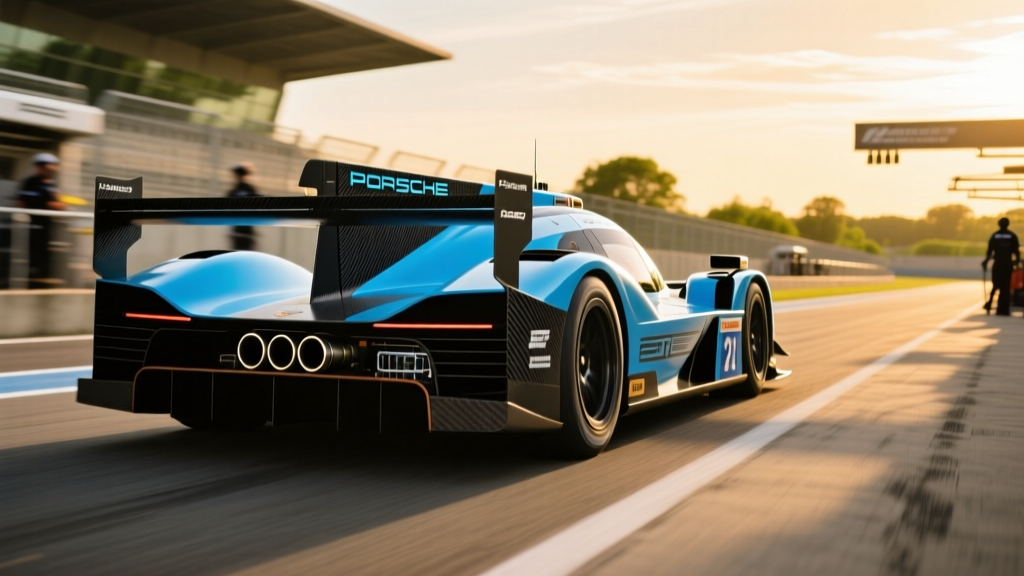
Search interest in the Porsche 919 Hybrid remains remarkably strong more than a decade after its debut — and for good reason. This isn't a road-going plug-in hybrid you can pick up at your local Porsche dealer. The 919 Hybrid is a Le Mans Prototype 1 (LMP1) race car that competed in the FIA World Endurance Championship from 2014 to 2017, capturing three consecutive overall victories at the 24 Hours of Le Mans (2015, 2016, 2017). What makes it relevant to EV and hybrid enthusiasts today is its powertrain architecture: a downsized, turbocharged internal combustion engine paired with a high-output energy recovery system that previewed the hybrid philosophy now filtering into production vehicles like the Panamera E-Hybrid and the 963 LMDh successor.
If you're researching the Porsche 919 Hybrid to understand its engineering, its place in hybrid history, or how its technology compares to the road-legal PHEVs and BEVs of 2026, this guide breaks down every spec that matters — and clarifies what this car is and isn't.
Powertrain: 900+ HP from a 2.0L V4 and Two Energy Recovery Systems
The 919 Hybrid's powertrain was radical even by LMP1 standards. Porsche chose a compact, fuel-efficient internal combustion engine and paired it with the most powerful hybrid energy recovery system permitted under the 2014–2017 WEC regulations.
| Component | Specification |
|---|---|
| Internal Combustion Engine | 2.0L turbocharged V4, direct injection, 90° bank angle |
| ICE Output | ~500 hp (368 kW) |
| Front-Axle E-Motor (MGU) | Motor-generator unit on front axle, kinetic energy recovery under braking |
| Exhaust ERS (MGU-H equivalent) | Turbine generator recovering exhaust-gas energy |
| Combined Hybrid Output | ~400 hp (294 kW) deployable per lap |
| Total System Output | ~900+ hp (662+ kW) combined ICE + electric |
| Energy Storage | Lithium-ion battery pack, liquid-cooled |
| Energy Class (WEC) | 8 megajoule (MJ) per lap of Le Mans (highest tier) |
| Drivetrain | Rear-wheel drive (ICE), front-wheel drive (E-motor) — effective AWD under hybrid deploy |
| Transmission | 7-speed sequential, paddle-shift |
The 8 MJ energy class was the critical strategic choice. WEC regulations allowed teams to select an energy-recovery tier (2 MJ, 4 MJ, 6 MJ, or 8 MJ) that dictated both how much hybrid energy could be deployed per lap and how much fuel the car could burn. Porsche committed to the 8 MJ class, which required a larger, heavier battery but delivered the most powerful electric boost — up to 400 hp of front-axle thrust recoverable under braking and deployable under acceleration. This gave the 919 an effective all-wheel-drive advantage exiting corners at circuits like Le Mans, Spa, and Bahrain.
The exhaust energy recovery system was unique among LMP1 competitors. While Toyota's TS050 and Audi's R18 used different ERS architectures, Porsche harvested waste energy from exhaust gases via a secondary turbine-generator, converting heat that would otherwise be lost into stored electrical energy. This dual-recovery approach (kinetic + thermal) mirrored the MGU-K and MGU-H systems in Formula 1 and foreshadowed the compound energy recovery strategies now appearing in production PHEVs.
HEV vs PHEV vs Race Hybrid — Where the 919 Fits
Readers searching for the Porsche 919 Hybrid often land in a gray area between race-car curiosity and road-car shopping. Here's how the 919's hybrid architecture maps to the categories you'll encounter in production vehicles:
Conventional Hybrid (HEV) — e.g., Toyota Prius, Honda CR-V Hybrid
A small battery (typically 1–2 kWh) charged exclusively by regenerative braking and the engine. No plug. Electric-only propulsion is limited to low-speed, short-distance movement. The engine is always the primary power source. Fuel economy is the main benefit.
Plug-In Hybrid (PHEV) — e.g., Porsche Panamera E-Hybrid, Toyota RAV4 Prime
A larger battery (typically 12–25 kWh) that can be charged via a plug (Level 1 or Level 2 AC). Provides meaningful electric-only range (20–50 miles EPA) before the engine engages. Eligible for federal §30D tax credits if battery capacity and sourcing requirements are met. Bridges the gap between EV and gas operation.
Race Hybrid (LMP1/LMDh) — Porsche 919 Hybrid, Porsche 963
A high-output energy recovery system optimized for lap-time performance, not fuel economy. The battery is sized to capture maximum kinetic and thermal energy under heavy braking and exhaust flow, then deploy that energy as acceleration boost. No plug-in charging during competition — energy is recovered on-track. The 919's system is closer in philosophy to a Formula 1 power unit than to any road-going hybrid.
The 919 is not a PHEV. It cannot be plugged in. It has no electric-only driving range in the consumer sense. Its hybrid system exists to extract performance from energy that would otherwise be wasted — the same thermodynamic principle that makes production hybrids more efficient, but applied at a 900+ hp, 200+ mph scale.
Le Mans Dominance: 2015–2017 Three-Peat and Technical Edge
The Porsche 919 Hybrid's competition record is one of the most dominant runs in endurance racing history:
- 2015 24 Hours of Le Mans: Overall victory (car #19, drivers Hülkenberg/Tandy/Bamber). Porsche's first overall Le Mans win since 1998.
- 2016 24 Hours of Le Mans: Overall victory (car #2, drivers Dumas/Jani/Lieb). Dramatic late-race recovery after Toyota's last-lap mechanical failure.
- 2017 24 Hours of Le Mans: Overall victory (car #2, drivers Bernhard/Bamber/Hartley). Three-peat completed against Toyota TS050 competition.
- WEC Manufacturers' Championship: Porsche won three consecutive titles (2015, 2016, 2017).
- Total WEC race wins: 18 overall victories across the 2014–2017 seasons.
The 919's advantage wasn't raw power alone — it was energy efficiency. The 8 MJ class forced Porsche to engineer a car that could deploy more electric energy per lap while consuming less fuel than competitors in lower energy classes. Over a 24-hour race, this translated to fewer pit stops for fuel, more consistent lap times as tires degraded (the front-axle E-motor provided torque-fill and traction assistance), and strategic flexibility in managing energy deployment across stints.
Porsche retired the 919 from LMP1 competition at the end of the 2017 season, pivoting to Formula E (with the 99X Electric) and, eventually, the LMDh category with the Porsche 963, which debuted in 2023 and carries forward the 919's hybrid DNA in a cost-capped, standardized-chassis formula.
How the 919's Technology Flowed Into Production Porsches
The engineering lessons from the 919 Hybrid didn't stay on the racetrack. Several core technologies directly influenced Porsche's road-going hybrid and electric lineup:
800-volt electrical architecture: The 919 operated on an 800V battery system — a voltage level that was radical in 2014 but is now the standard for performance EVs. The Porsche Taycan (2020–present) became the first production car with an 800V architecture, enabling DC fast charging at up to 270 kW and reducing charging times to 10–80% in approximately 22 minutes. The 919 validated 800V under the most extreme thermal and vibration conditions imaginable.
Energy recovery strategy: The 919's dual kinetic/thermal recovery informed the regenerative braking algorithms in the Taycan and the Panamera E-Hybrid. Porsche's production hybrids now blend friction braking and regenerative braking seamlessly — a software challenge the 919 program solved first at race pace.
Thermal management: Liquid-cooled battery packs operating at sustained high discharge rates taught Porsche critical lessons about thermal runaway prevention, coolant routing, and cell-level temperature monitoring — all directly applicable to the Taycan's battery pack and the upcoming electric Cayenne and 718 models.
Downsized turbocharged ICE: The 919's 2.0L V4 proved that a small-displacement, high-specific-output turbo engine could be reliable under 24-hour race conditions. This philosophy carries into Porsche's current 4.0L twin-turbo V8 used in the Panamera Turbo S E-Hybrid, where the ICE is sized for combined efficiency rather than peak output alone.
For Buyers: Porsche PHEVs You Can Actually Purchase in 2026
Since the 919 Hybrid isn't available to consumers, here's how Porsche's current production hybrid lineup compares for buyers interested in the brand's electrified offerings:
| Model | Type | Combined HP | Battery (kWh) | EPA Electric Range | EPA MPGe | Base MSRP |
|---|---|---|---|---|---|---|
| Panamera E-Hybrid | PHEV | 463 hp | 25.9 kWh | ~35 mi | ~50 MPGe | ~$107,000 |
| Panamera Turbo S E-Hybrid | PHEV | 717 hp | 25.9 kWh | ~32 mi | ~48 MPGe | ~$195,000 |
| Cayenne E-Hybrid | PHEV | 463 hp | 25.9 kWh | ~32 mi | ~46 MPGe | ~$95,000 |
| Taycan (BEV) | BEV | 402–942 hp | 79.2–105 kWh | 225–318 mi | 79–92 MPGe | ~$92,000 |
Source: fueleconomy.gov and Porsche USA specifications. Verify current-year figures at time of purchase.
None of these models qualify for the federal §30D new EV tax credit as of 2026 — Porsche's battery sourcing and critical-mineral supply chains have not met the IRS requirements for the full $7,500 credit, and the MSRP of most Porsche PHEVs exceeds the §30D cap ($55,000 for sedans, $80,000 for SUVs/vans/pickups). Always verify eligibility with a tax professional before purchase.
Frequently Asked Questions
Is the Porsche 919 Hybrid a production car I can buy?
No. The Porsche 919 Hybrid is a Le Mans Prototype 1 (LMP1) race car built exclusively for FIA World Endurance Championship competition from 2014–2017. Only a handful of chassis were constructed, all retained by Porsche or placed in museums. It has never been street-legal and is not available for private purchase.
How many MPG did the Porsche 919 Hybrid get?
The 919 doesn't have an EPA fuel-economy rating — it's a race car. Under WEC regulations in the 8 MJ class, fuel flow was limited to approximately 68 kg/hour at Le Mans. In practical terms, the car achieved roughly 5–6 miles per gallon of racing fuel under race conditions, which was remarkably efficient for a 900+ hp prototype lapping the 8.5-mile Circuit de la Sarthe at an average speed above 150 mph. The hybrid system's contribution meant the ICE didn't need to produce all the energy — recovered kinetic and exhaust energy supplemented roughly 30% of the total power deployed per lap.
Does the Porsche 919 Hybrid qualify for any tax credits?
No. Federal §30D clean vehicle credits apply only to new, road-legal plug-in electric vehicles or fuel-cell vehicles purchased for use on public roads. Race cars are categorically ineligible. For Porsche production PHEVs, check fueleconomy.gov for current credit eligibility, as sourcing requirements change annually.
What is the Porsche 963, and how does it relate to the 919?
The Porsche 963 is the 919's spiritual successor, competing in the LMDh (Le Mans Daytona hybrid) class since 2023. It uses a standardized chassis with a spec hybrid system (a Bosch motor-generator and Williams battery) producing approximately 50 kW (67 hp) of electric assist. It's less powerful and less technologically open than the 919, reflecting the cost-capped LMDh regulations, but it carries Porsche's hybrid racing lineage into current IMSA and WEC competition.
How did the 919 Hybrid influence the Porsche Taycan?
Directly. The 919's 800-volt electrical architecture was validated over thousands of race miles before Porsche adopted it for the Taycan's production battery pack. The 800V system enables thinner wiring (reducing weight), faster DC charging (up to 270 kW on the Taycan), and more efficient power electronics. The 919's energy-recovery software also informed the Taycan's regenerative braking strategy, which can recover up to 290 kW under deceleration — among the highest regen rates of any production EV.
Hybrid vs PHEV vs EV — which Porsche is right for me?
Choose a Porsche PHEV (Panamera E-Hybrid, Cayenne E-Hybrid) if: You want electric-only commuting for 30–35 miles, have access to Level 2 home charging, and need the range flexibility of a gas engine for longer trips. You accept that Porsche PHEVs currently miss the federal tax credit due to MSRP caps and sourcing rules.
Choose a Porsche BEV (Taycan) if: You have reliable home and workplace charging, want maximum performance per dollar, and are ready to go fully electric. The Taycan's 800V architecture delivers the fastest charging in the segment, and real-world range of 220–280 miles (depending on trim and driving style) covers most daily needs.
Wait for the electric Cayenne and 718 if: You prefer an SUV form factor or a mid-engine sports car with full electric drivetrains. Porsche has confirmed both are in development, with the electric Cayenne expected to arrive by 2026–2027.