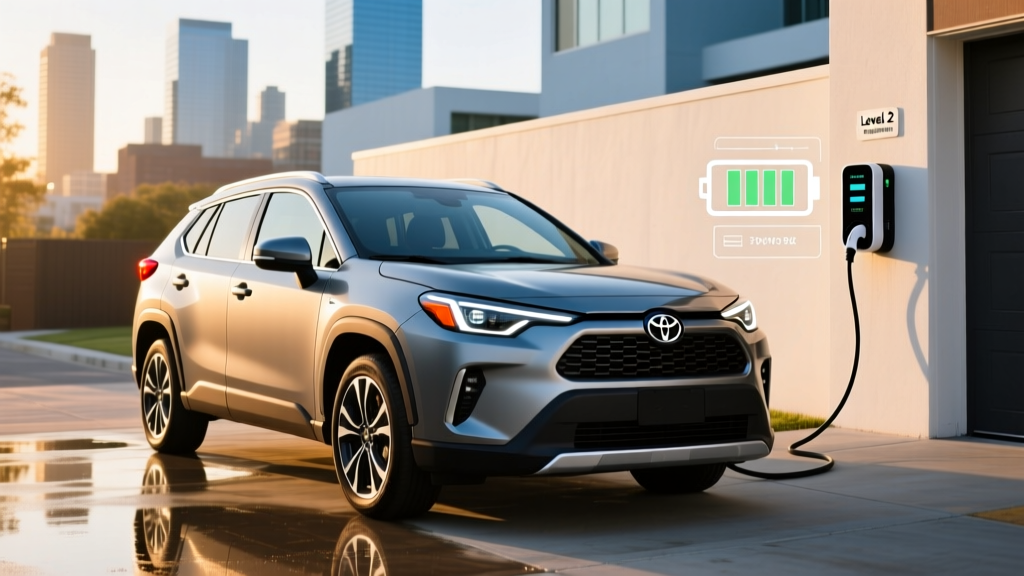
The subcompact hybrid SUV segment is crowded, but the 2026 Toyota Corolla Cross Hybrid XSE occupies a specific niche: it pairs the practicality of a crossover with the fuel-sipping efficiency of Toyota's fifth-generation hybrid system—without requiring a plug. For buyers navigating high gas prices and charging-desert realities, this conventional hybrid (HEV) offers a compelling middle ground between a full EV and a traditional gas engine.
This review focuses on the top-tier XSE trim, dissecting its real-world fuel economy, powertrain performance, and long-term reliability to determine if it's the right electrified choice for your driveway.
2026 Toyota Corolla Cross Hybrid XSE: Core Specifications
Before diving into the driving experience, let's look at the hard data defining the XSE trim for the 2026 model year.
| Feature | 2026 Corolla Cross Hybrid XSE |
|---|---|
| Powertrain | 2.0L 4-cyl + 3 electric motors (AWD) |
| Net Horsepower | 196 hp |
| 0-60 mph | ~7.5 seconds |
| Drivetrain | Electronic On-Demand AWD |
| EPA MPG (City/Hwy/Comb) | 46 / 43 / 46 |
| Estimated Base MSRP | ~$33,000 |
| Hybrid Battery Warranty | 10 years / 150,000 miles |
Fuel Economy: Real-World MPG vs. EPA Estimates
The 2026 Toyota Corolla Cross Hybrid is rated by the EPA at 46 MPG combined. However, conventional hybrids often behave differently than their EPA stickers suggest depending on driving conditions.
| Driving Scenario | Expected MPG |
|---|---|
| City (EPA) | 46 MPG |
| Highway (EPA) | 43 MPG |
| Real-World City (Stop/Go) | 48-52 MPG |
| Real-World Highway (75 mph) | 38-41 MPG |
Because the hybrid system relies heavily on regenerative braking and low-speed electric assist, city driving is where the Corolla Cross Hybrid shines, often exceeding its EPA rating. Conversely, sustained highway speeds reduce the electric motor's contribution, leading to slightly lower fuel economy than the sticker suggests.
HEV vs. PHEV: Why This is a Conventional Hybrid
It is critical to distinguish the Corolla Cross Hybrid as a conventional Hybrid Electric Vehicle (HEV). It does not have a plug, nor does it offer significant electric-only range. It generates electricity through regenerative braking and the gas engine.
HEV vs. PHEV Comparison
- Corolla Cross Hybrid (HEV): No plug required. 46 MPG combined. Battery is small (~1.3 kWh) and recharges while driving. Ideal for those without home charging access.
- Plug-in Hybrid (PHEV) Example: Requires plugging in. 20-40 miles electric-only range. Larger battery (10-18 kWh). Ideal for short commutes and home-charging owners.
Powertrain and Performance
The XSE trim uses Toyota's 2.0L Dynamic Force engine paired with three electric motors—two on the front axle and one on the rear to provide Electronic On-Demand AWD. The combined output of 196 hp makes it one of the more potent options in the subcompact hybrid segment.
While it's not a sports car, the instant torque from the electric motors provides responsive acceleration from a stop, a significant improvement over the non-hybrid 2.0L gas-only model. The XSE also includes paddle shifters and a sport-tuned suspension, offering slightly sharper handling than the lower trims.
Reliability and Battery Warranty
Toyota's hybrid reliability is well-documented. For the 2026 model year, the hybrid battery is covered under a 10-year/150,000-mile warranty. While replacement costs for hybrid batteries have historically been high, the industry has seen a decrease in costs and an increase in third-party repair options.
Battery Replacement Insight: A full hybrid battery replacement for a Toyota of this size typically ranges between $2,500 and $4,000 out of warranty. However, most modern Toyota hybrid batteries last well beyond 200,000 miles with minimal degradation.
Tax Credits and Ownership Costs
Because the Corolla Cross Hybrid is a conventional HEV and not a Plug-in Hybrid (PHEV) or Battery Electric Vehicle (BEV), it does not qualify for the federal §30D Clean Vehicle Credit of up to $7,500. That credit is reserved for vehicles with larger battery capacities and plug-in capabilities.
However, the savings are realized at the pump. With an annual mileage of 15,000 miles and gas at $3.50/gallon, the Corolla Cross Hybrid saves approximately $800-$1,000 annually compared to a non-hybrid competitor averaging 28 MPG.
Pros and Cons
Pros
- Standard AWD across all hybrid trims
- Excellent city fuel economy (46+ MPG)
- 196 hp provides confident merging
- Top-tier XSE tech and safety features
Cons
FAQ: 2026 Toyota Corolla Cross Hybrid XSE
Does the Corolla Cross Hybrid XSE need to be plugged in?
No. It is a self-charging hybrid that uses regenerative braking and the gas engine to maintain its battery.
Is the XSE trim worth the premium over the SE?
The XSE adds premium features like SofTex seats, a larger infotainment screen, and advanced safety tech, which many buyers find worth the ~$2,500 premium for long-term comfort.
How does it compare to a full EV like the Tesla Model Y?
The EV offers zero tailpipe emissions and lower per-mile fuel costs, but requires charging infrastructure. The Corolla Cross Hybrid is better for those who take frequent long road trips or lack reliable charging access.