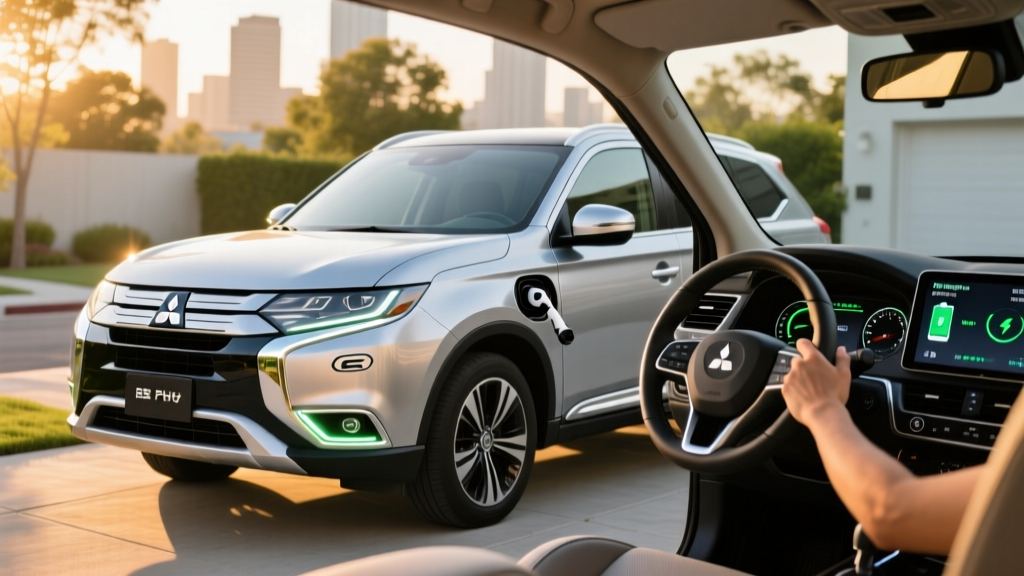
If you've been searching for a Mitsubishi hybrid SUV, the 2026 Mitsubishi Outlander PHEV is currently the brand's sole electrified offering in the U.S. market — and it happens to be one of the most practical plug-in hybrid crossovers available. With 38 miles of electric-only range, standard all-wheel drive, and three rows of seating, it occupies a unique niche: a family-sized SUV that can handle most daily commutes on battery power alone while eliminating range anxiety for longer trips.
This guide breaks down everything you need to know about the Outlander PHEV's powertrain, real-world efficiency, charging requirements, tax credit eligibility, and long-term reliability — so you can decide whether it's the right bridge between gas and full electric for your household.
HEV vs PHEV: Understanding Mitsubishi's Hybrid Lineup
Important distinction: Mitsubishi currently sells only a plug-in hybrid (PHEV) SUV in the United States — the Outlander PHEV. There is no conventional hybrid (HEV) version of any Mitsubishi SUV available stateside for 2026.
| Feature | Conventional Hybrid (HEV) | Plug-In Hybrid (PHEV) |
|---|---|---|
| Plug in to charge? | No — charges via regenerative braking and engine | Yes — plug in for full electric range; also self-charges |
| Electric-only driving | Brief, low-speed assist only | Full highway-capable EV mode (38 mi on Outlander PHEV) |
| Battery size | Small (~1-2 kWh) | Larger (20 kWh usable on Outlander PHEV) |
| Federal tax credit | No | Up to $7,500 (eligibility varies — see below) |
| Example | Toyota RAV4 Hybrid | Mitsubishi Outlander PHEV |
The Outlander PHEV operates in three modes: EV mode (battery only), Series Hybrid (engine generates electricity for the motors), and Parallel Hybrid (engine and motors drive wheels together at highway speeds). You never have to choose — the system manages transitions automatically, though you can force EV mode for silent, zero-tailpipe-emission neighborhood driving.
Fuel Economy and Electric Range: EPA Numbers vs Real World
| Metric | EPA Rating | Real-World Expectation |
|---|---|---|
| Combined MPGe (EV + Gas) | 64 MPGe | 55-70 MPGe depending on charging habits |
| Gas-only combined MPG | 26 MPG | 24-28 MPG (city-favorable due to regen) |
| City MPG (gas-only) | 26 MPG | 25-30 MPG (regen recovers energy in stop-and-go) |
| Highway MPG (gas-only) | 26 MPG | 23-25 MPG (aerodynamic drag, less regen benefit) |
| Electric-only range | 38 miles | 30-36 mi (highway); 34-40 mi (city/temperate) |
| Total combined range | ~420 miles | 380-440 mi depending on conditions |
Real-World Range Note: The EPA's 38-mile electric range assumes mixed driving at moderate temperatures. In our experience, expect roughly 30-34 miles of electric range at sustained highway speeds (70+ mph) or in cold weather (below 40°F), where battery efficiency drops 15-25%. City driving in mild weather can push past 36 miles thanks to regenerative braking. Once the battery depletes, the 2.4-liter engine takes over seamlessly at 26 MPG combined — competitive with midsize gas SUVs but below the Toyota RAV4 Hybrid's 39 MPG combined.
Powertrain Specs: What's Under the Hood
| Specification | Detail |
|---|---|
| Engine | 2.4L 4-cylinder Atkinson-cycle (126 hp) |
| Front electric motor | 85 kW (114 hp) |
| Rear electric motor | 100 kW (134 hp) |
| Combined system output | 248 hp / 332 lb-ft torque |
| Drivetrain | Standard S-AWC (twin-motor AWD, no mechanical driveshaft) |
| Battery capacity | 20.0 kWh usable (lithium-ion) |
| 0-60 mph | ~6.7 seconds |
| Towing capacity | 1,500 lbs |
| Seating | 7 passengers (3 rows) |
The Outlander PHEV's twin-motor AWD system — Mitsubishi calls it S-AWC (Super All-Wheel Control) — is one of its engineering highlights. There's no mechanical connection between the front and rear axles. Instead, the rear motor independently powers the rear wheels, enabling precise torque vectoring. This gives the Outlander PHEV genuinely capable traction in snow and rain, with a low center of gravity from the floor-mounted battery pack.
The 248 combined horsepower is competitive with rivals like the Toyota RAV4 Prime (302 hp) and Hyundai Tucson PHEV (261 hp), though the Outlander prioritizes smooth electric acceleration over sporty performance. The instant torque from the electric motors makes it feel quicker around town than the 0-60 time suggests.
Charging: Times, Connectors, and What You Need at Home
| Charging Level | Power (kW) | Connector | Time (0-100%) | Miles of EV Range Added per Hour |
|---|---|---|---|---|
| Level 1 (120V household) | ~1.4 kW | J1772 | ~14-16 hours | ~2-3 miles |
| Level 2 (240V home/public) | ~3.8 kW (onboard charger limited) | J1772 | ~5.5-6.5 hours | ~6-7 miles |
| DC Fast Charge | Up to ~22 kW (CHAdeMO) | CHAdeMO | ~38 min (0-80%) | ~50-60 miles |
Key charging reality: The Outlander PHEV's onboard AC charger is limited to roughly 3.8 kW, meaning even a 48-amp Level 2 home charger won't fill it faster than about 6 hours. That's fine for overnight charging — most PHEV owners plug in when they get home and wake up to a full battery every morning.
The Outlander PHEV is one of the few plug-in hybrids that supports DC fast charging, but it uses the CHAdeMO connector — not CCS or NACS. CHAdeMO infrastructure is declining in the U.S. as networks prioritize CCS and NACS, so don't rely on public DC fast charging for this vehicle. The practical charging strategy is a home Level 2 setup, which a licensed electrician can install on a 240V circuit.
A standard 120V outlet (Level 1) adds roughly 2-3 miles of range per hour. If your daily commute is under 20 miles round-trip, Level 1 alone might suffice — but Level 2 is strongly recommended for consistent full charges.
Pricing, Trims, and Tax Credit Eligibility
| Trim | MSRP (incl. destination) | Key Features |
|---|---|---|
| ES | ~$41,440 | S-AWC AWD, 8" touchscreen, heated front seats, adaptive cruise |
| SE | ~$44,440 | Leatherette, power liftgate, 360° camera, wireless CarPlay |
| SEL | ~$47,440 | Leather, panoramic sunroof, Bose audio, heated steering wheel |
| SEL Touring | ~$50,440 | Semi-aniline leather, ventilated front seats, head-up display |
Federal Tax Credit (§30D) — 2026 Rules: The Outlander PHEV has historically qualified for a partial federal tax credit (up to $3,750-$7,500 depending on battery sourcing compliance). However, eligibility under IRS §30D depends on critical-mineral and battery-component sourcing requirements that tighten annually, plus buyer income caps ($150K single / $300K joint) and MSRP caps ($80,000 for SUVs). As of early 2026, buyers should verify current eligibility on the IRS qualified vehicles list before purchasing. The credit can now be transferred to the dealer at point of sale, reducing your out-of-pocket cost at purchase — not just at tax filing. Consult a tax professional for your specific situation.
Reliability, Battery Warranty, and Long-Term Ownership
Mitsubishi Hybrid Battery Warranty:
- Hybrid/PHEV battery: 10 years / 100,000 miles (whichever comes first)
- Powertrain warranty: 10 years / 100,000 miles
- New vehicle warranty: 5 years / 60,000 miles
- Capacity retention threshold: Warranty covers defects and significant capacity loss (typically below 70% state of health)
Mitsubishi's 10-year/100,000-mile powertrain and PHEV battery warranty is among the best in the industry, matching Hyundai and Kia. The lithium-ion battery pack is liquid-cooled, which significantly slows degradation compared to passively cooled packs. Based on data from the previous-generation Outlander PHEV (sold globally since 2013), real-world battery degradation is typically 5-10% over 8-10 years of normal use — meaning you'll likely still see 30+ miles of electric range after a decade.
Battery replacement cost: If the battery does need replacement out of warranty, expect roughly $8,000-$12,000 including labor, based on current PHEV battery pricing for this capacity class. However, this is rare — the vast majority of PHEV batteries outlast the vehicle itself. Mitsubishi's generous warranty coverage means most owners will never face this expense.
Overall reliability ratings for the Outlander PHEV are solid. The current-generation model (introduced for 2023) shares a platform with the Nissan Rogue and has benefited from the Renault-Nissan-Mitsubishi Alliance's mature PHEV technology, which has been refined over more than a decade of global sales.
Outlander PHEV vs Rivals: How It Stacks Up
| Spec | Mitsubishi Outlander PHEV | Toyota RAV4 Prime | Hyundai Tucson PHEV |
|---|---|---|---|
| EV Range (EPA) | 38 mi | 42 mi | 33 mi |
| Combined MPGe | 64 MPGe | 94 MPGe | 80 MPGe |
| Gas-only MPG | 26 MPG | 38 MPG | 35 MPG |
| Combined HP | 248 hp | 302 hp | 261 hp |
| AWD | Standard | Standard | Standard |
| Third row | Yes (7 seats) | No (5 seats) | No (5 seats) |
| DC Fast Charge | Yes (CHAdeMO) | No | No |
| Starting MSRP | ~$41,440 | ~$44,500 | ~$39,440 |
| Battery warranty | 10 yr / 100K mi | 10 yr / 150K mi | 10 yr / 100K mi |
🏆 Best for families needing 3 rows: Mitsubishi Outlander PHEV — the only PHEV in this class with a third row.
🏆 Best efficiency & power: Toyota RAV4 Prime — 94 MPGe and 302 hp, but no third row and higher starting price.
🏆 Lowest entry price: Hyundai Tucson PHEV — undercuts rivals by ~$2,000 with strong warranty coverage.
Who Should Buy the Mitsubishi Outlander PHEV?
Choose the Outlander PHEV if:
- You need 3 rows of seating but want electric commuting capability
- Your daily round-trip commute is under 35 miles and you can charge at home
- You want AWD for snow/rain without a gas-only SUV's fuel cost
- You're not ready for a full EV due to apartment charging limitations or frequent road trips
- You value Mitsubishi's 10-year/100,000-mile warranty coverage
Look elsewhere if:
- You want maximum electric range (RAV4 Prime offers 42 mi; consider a full EV like the Kia EV9 for 270+ mi)
- You prioritize fuel efficiency above all — the RAV4 Hybrid (39 MPG, no plug needed) beats the Outlander in gas-only mode
- You tow heavy loads — the 1,500-lb rating is modest for a midsize SUV
- You need reliable DC fast charging on road trips — CHAdeMO infrastructure is shrinking
✅ Pros
- 38 miles electric-only covers most commutes
- Only 3-row PHEV SUV in its price class
- Standard twin-motor AWD with no mechanical driveshaft
- Industry-leading 10-year/100K-mile warranty
- Smooth, quiet EV-mode driving
- Competitive pricing starting ~$41,440
❌ Cons
- Gas-only MPG (26) trails RAV4 Hybrid/Prime significantly
- CHAdeMO DC fast charging — declining connector standard
- Third row is tight — best for children only
- Onboard charger limited to 3.8 kW (slow Level 2)
- MPGe below RAV4 Prime and Tucson PHEV
- Tax credit eligibility uncertain for 2026 — verify with IRS
Frequently Asked Questions
How many MPG does the Mitsubishi Outlander PHEV get?
The 2026 Outlander PHEV is EPA-rated at 64 MPGe when combining electric and gas driving, and 26 MPG combined when operating on gasoline alone after the battery is depleted. Real-world gas-only MPG tends to be 24-28 depending on driving conditions, with city driving slightly favored thanks to regenerative braking.
How far can the Outlander PHEV go on electric power only?
The EPA rates the Outlander PHEV at 38 miles of electric-only range. In real-world driving, expect 30-36 miles at highway speeds or in cold weather, and up to 40 miles in mild-weather city driving with frequent regenerative braking opportunities. The vehicle is fully highway-capable in EV mode (up to ~84 mph).
Do I have to plug in the Outlander PHEV?
No — the Outlander PHEV will operate as a conventional hybrid if you never plug it in, using its engine and regenerative braking to manage the battery. However, you'll miss out on the 38-mile electric range and the cost savings of home charging. To maximize value, plan to plug in nightly using a Level 2 home charger or a standard 120V outlet.
Is the Mitsubishi Outlander PHEV reliable?
Mitsubishi's PHEV system has been in global production since 2013, making it one of the most mature plug-in hybrid platforms available. The current-generation model benefits from this extensive development history. The 10-year/100,000-mile powertrain and battery warranty provides strong long-term protection. Battery degradation data from earlier generations shows 5-10% capacity loss over 8-10 years, which is well within acceptable norms.
Does the Outlander PHEV qualify for a federal tax credit?
It may, but eligibility depends on 2026 IRS §30D rules including battery sourcing requirements, buyer income limits ($150K single / $300K joint), and the $80,000 MSRP cap for SUVs. The credit amount can range from $0 to $7,500 depending on critical-mineral and battery-component compliance. Check the fueleconomy.gov tax credit lookup and IRS qualified vehicles list before purchasing. The credit can be applied at point of sale through the dealer.
Hybrid vs PHEV vs full EV — which should I choose?
Conventional hybrid (HEV): Best if you can't charge at home and want better MPG with zero behavior change. No plug, no range anxiety, but no electric-only driving. (Note: Mitsubishi doesn't currently sell a HEV in the U.S.)
Plug-in hybrid (PHEV): Best if you can charge at home, commute under ~35 miles daily, but also take road trips where you don't want to depend on charging infrastructure. The Outlander PHEV fits here.
Full EV (BEV): Best if you have reliable home charging, want zero tailpipe emissions, lower fuel and maintenance costs, and don't mind planning longer road trips around DC fast chargers. Consider vehicles like the Kia EV9 or Tesla Model Y if you're ready to go fully electric.
What does it cost to charge the Outlander PHEV at home?
Filling the 20 kWh battery from empty costs roughly $2.50-$4.00 depending on your local electricity rate ($0.13-$0.20/kWh national average). That works out to about $0.07-$0.11 per mile in EV mode — roughly one-third to one-quarter the per-mile cost of gasoline at current prices. Over a year of 12,000 miles with 70% electric driving, you could save $800-$1,200 in fuel costs versus a comparable gas-only SUV.
What is the battery replacement cost if it fails out of warranty?
Out-of-warranty PHEV battery replacement for the Outlander is estimated at $8,000-$12,000 including labor. However, PHEV battery failure before 150,000+ miles is uncommon, and Mitsubishi's 10-year/100,000-mile warranty covers the vast majority of ownership periods. The liquid-cooled thermal management system further extends battery life.