Quick Verdict: Is the F-150 PowerBoost Hybrid Reliable?
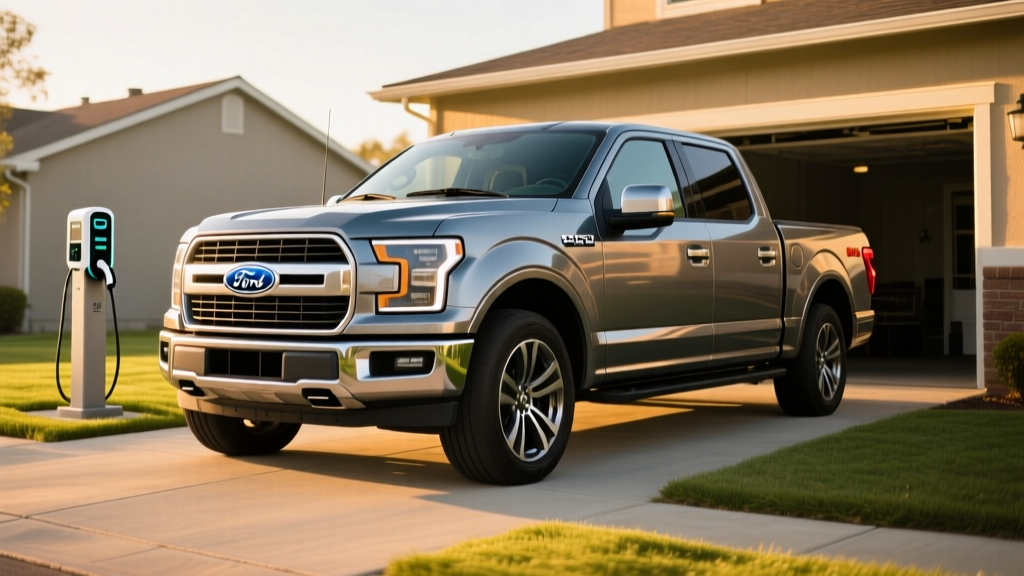
For buyers researching F-150 hybrid reliability, the short answer is reassuring: the 3.5L PowerBoost V6 hybrid powertrain has matured considerably since its 2021 debut. Early-model concerns around the hybrid battery cooling system and transmission shudder have been largely addressed through software updates and hardware revisions by the 2024–2026 model years. The PowerBoost remains one of the few full-size pickup hybrids on the market, offering a compelling blend of towing capability, onboard generator functionality, and modest fuel-economy gains over the conventional 3.5L EcoBoost.
This guide covers the current-generation F-150 PowerBoost hybrid (a conventional HEV, not a plug-in), its real-world efficiency, battery longevity, warranty coverage, and whether it makes financial sense versus the gas-only F-150 or a fully electric truck like the F-150 Lightning.
HEV vs. PHEV vs. EV: Where Does the F-150 PowerBoost Fit?
Before diving into reliability data, it's critical to understand what the F-150 PowerBoost actually is — and what it isn't.
| Powertrain Type | Example | Plugs In? | Electric-Only Range | How It Works |
|---|---|---|---|---|
| Conventional Hybrid (HEV) | F-150 PowerBoost | No — refuels with gas only | Very short (~1 mi at low speed) | Gas engine + electric motor; battery recharges via regenerative braking and engine |
| Plug-in Hybrid (PHEV) | Jeep Wrangler 4xe | Yes — Level 1 or Level 2 | 20–50 mi typical | Larger battery you can charge externally; runs on electricity first, then gas |
| Battery Electric (BEV) | F-150 Lightning | Yes — Level 1/2/DC fast | 230–320 mi (full battery) | No gas engine; 100% electric with regenerative braking |
The F-150 PowerBoost is a conventional hybrid. You never plug it in. The 1.5 kWh lithium-ion battery pack charges itself through regenerative braking and the gas engine. This makes it ideal for truck buyers who want hybrid efficiency without any charging infrastructure concerns — but it also means the electric motor's contribution is supplemental, not primary.
Powertrain Specs: What's Under the Hood
| Specification | F-150 PowerBoost (2025–2026 MY) |
|---|---|
| Engine | 3.5L twin-turbo V6 + 35 kW electric motor |
| Combined Horsepower | 430 hp |
| Combined Torque | 570 lb-ft |
| Transmission | 10-speed modular hybrid automatic |
| Hybrid Battery | 1.5 kWh lithium-ion (approx. 1.1 kWh usable) |
| Drivetrain | RWD or 4WD |
| Max Towing Capacity | 11,200 lbs (properly equipped) |
| Pro Power Onboard | Up to 7.2 kW generator output |
| 0–60 mph | ~5.8 seconds (4WD) |
The 35 kW electric motor is integrated into the transmission bell housing, providing torque fill at low RPMs and enabling brief electric-only movement at very low speeds. The real standout feature is Pro Power Onboard, which turns the PowerBoost's hybrid battery into a mobile generator — delivering up to 7.2 kW of 120V/240V power for job sites, tailgating, or emergency backup. No gas-only F-150 offers this level of onboard power without an aftermarket generator.
Fuel Economy: EPA Ratings vs. Real-World MPG
This is where F-150 hybrid reliability intersects with daily ownership satisfaction. Buyers expect measurable fuel savings to justify the hybrid premium.
| Configuration | EPA City | EPA Highway | EPA Combined |
|---|---|---|---|
| PowerBoost 4×2 | 25 mpg | 26 mpg | 25 mpg |
| PowerBoost 4×4 | 23 mpg | 24 mpg | 23 mpg |
| 3.5L EcoBoost Gas 4×4 (baseline) | 17 mpg | 22 mpg | 19 mpg |
Source: fueleconomy.gov — EPA estimates. Actual mileage will vary.
Real-World MPG: What Owners Actually See
Hybrid trucks behave differently than hybrid sedans. The F-150 PowerBoost's real-world fuel economy depends heavily on driving profile:
- City / stop-and-go: Many owners report exceeding the EPA city rating, seeing 24–27 mpg in suburban driving. Regenerative braking recaptures energy at every stop, and the electric motor handles low-speed launches.
- Highway cruising (70–80 mph): Expect 20–23 mpg. At sustained highway speed, the gas engine does nearly all the work — the hybrid system provides minimal benefit here.
- Towing / heavy payload: Fuel economy drops to 10–14 mpg when towing near max capacity, similar to the conventional EcoBoost. The hybrid system cannot meaningfully offset the energy demands of a 10,000-lb trailer.
- Cold weather (below 32°F): Expect a 2–4 mpg reduction as the engine runs more frequently to generate cabin heat and warm the battery.
For a driver who commutes 15 miles each way through suburban traffic and rarely tows, the PowerBoost can save roughly 100–150 gallons per year versus the 3.5L EcoBoost gas model — translating to $300–$500 in annual fuel savings at $3.30/gallon.
F-150 Hybrid Reliability: What the Data Shows
The PowerBoost's reliability story has evolved across model years. Here's what current and prospective buyers should know:
Early Model Years (2021–2022): Known Issues
The first-generation PowerBoost faced several documented complaints tracked by NHTSA and owner forums:
- Transmission shudder / hesitation: Some drivers reported jerky transitions between electric and gas power, particularly during light-throttle acceleration. Ford issued software recalibrations (TSBs) that improved shift logic.
- Hybrid battery cooling: A small number of early units experienced battery thermal management faults, triggering reduced-power limp modes. Ford extended warranty coverage on affected components.
- Pro Power Onboard glitches: Intermittent faults in the onboard generator system, typically resolved through module reprogramming.
Current Model Years (2024–2026): Improved Track Record
Ford's iterative updates have substantially improved the PowerBoost's reliability profile. The hybrid-specific components — battery pack, electric motor, and power electronics — have proven durable in fleet and consumer use. The 3.5L twin-turbo V6 engine itself is a proven design with years of service in the EcoBoost lineup.
Major reliability-rating organizations give the current F-150 hybrid average to above-average scores. While it doesn't match the bulletproof reputation of Toyota's hybrid systems (as found in the Tacoma Hybrid), the PowerBoost has no widespread systemic failure pattern as of the 2025–2026 model years.
Hybrid Battery Warranty & Replacement Cost
| Component | Warranty Coverage |
|---|---|
| Hybrid Battery (1.5 kWh pack) | 8 years / 100,000 miles (federal emissions mandate); 10 years / 150,000 miles in CARB states |
| Hybrid Electric Motor | 8 years / 100,000 miles |
| Hybrid Power Electronics | 8 years / 100,000 miles |
| Powertrain (engine + transmission) | 5 years / 60,000 miles |
Battery replacement cost (out of warranty): Estimated $3,000–$5,000 for the hybrid battery pack — significantly less than a full EV battery replacement. The small 1.5 kWh pack is modular, and individual cells or modules can sometimes be repaired rather than fully replaced.
Degradation reality: Because the PowerBoost's battery is small and the hybrid system keeps it within a narrow state-of-charge window (roughly 40–60%), degradation is minimal. Most owners will see negligible capacity loss over 150,000+ miles. This is a key advantage of conventional hybrids over PHEVs and BEVs, where larger batteries undergo deeper charge cycles.
Pricing and Tax Credit Eligibility
The PowerBoost hybrid is available across multiple F-150 trims. Pricing for the 2025–2026 model year:
| Trim Level | Approx. MSRP (4×4) | PowerBoost Availability |
|---|---|---|
| XLT | $52,000–$55,000 | Available as option package |
| Lariat | $58,000–$63,000 | Available as option package |
| King Ranch | $68,000–$73,000 | Standard or available |
| Platinum | $70,000–$76,000 | Standard or available |
Prices vary by configuration, options, and destination charges. Check Ford's official configurator for exact build pricing.
Does the F-150 PowerBoost Qualify for a Federal Tax Credit?
No. The F-150 PowerBoost is a conventional hybrid (HEV), not a plug-in vehicle. The federal §30D Clean Vehicle Credit — which offers up to $7,500 — applies only to battery electric vehicles (BEVs) and plug-in hybrids (PHEVs) that meet specific battery-sourcing, MSRP, and buyer-income requirements per IRS guidelines.
Conventional hybrids like the PowerBoost do not qualify for any federal purchase incentive. Some states or local utilities may offer minor rebates for hybrid vehicles, but these are uncommon and vary by jurisdiction. Check your state's energy office or utility provider for current programs.
For buyers specifically seeking a tax-credit-eligible Ford truck, the F-150 Lightning (all-electric) may qualify depending on your income, the vehicle's MSRP, and current battery-sourcing rules — consult a tax professional before relying on credit eligibility.
Who Should Choose the F-150 PowerBoost Hybrid?
✅ Choose the PowerBoost If…
- You want better city/suburban fuel economy without changing your fueling habits
- You need Pro Power Onboard for job-site tools, camping, or emergency backup
- You tow occasionally but spend most of your miles in stop-and-go or suburban driving
- You want a full-size truck with no range anxiety, no charging dependency, and proven V6 capability
- You plan to keep the truck 8–10 years and want hybrid battery warranty coverage through that period
❌ Skip the PowerBoost If…
- You primarily drive highway miles — the hybrid advantage is minimal at sustained speed
- You tow heavy trailers daily — fuel economy under load is similar to the gas EcoBoost
- You want to eliminate gas entirely — consider the F-150 Lightning or a PHEV truck (when available)
- You're seeking a federal tax credit — HEVs don't qualify for §30D
- Maximum reliability is your top priority — Toyota's hybrid systems still have a longer track record
Hybrid vs. Gas vs. EV Truck: Which Fits You?
- Choose the PowerBoost Hybrid if you drive 10,000–15,000 miles/year with a mixed city/highway commute, want onboard generator capability, and have no access to home charging.
- Choose the 3.5L EcoBoost Gas if you mostly drive highway miles, tow frequently, or want the lowest upfront purchase price.
- Choose the F-150 Lightning (EV) if you have reliable Level 2 home charging, drive under 300 miles/day, want the lowest per-mile fuel cost, and may qualify for the §30D tax credit.
Frequently Asked Questions
How many MPG does the F-150 hybrid get?
The 2025–2026 F-150 PowerBoost 4×4 is EPA-rated at 23 city / 24 highway / 23 combined mpg. The 4×2 model achieves 25/26/25 mpg. In real-world suburban driving, many owners report 24–27 mpg in city conditions, while highway cruising at 75+ mph typically yields 20–23 mpg. Towing drops fuel economy to 10–14 mpg.
Is the F-150 PowerBoost a plug-in hybrid?
No. The PowerBoost is a conventional hybrid (HEV). You never plug it in. The 1.5 kWh battery charges through regenerative braking and the gas engine. Ford does not currently offer a plug-in hybrid (PHEV) version of the F-150 in the U.S. market.
How long will the F-150 hybrid battery last?
The PowerBoost's 1.5 kWh lithium-ion battery is designed to last the life of the vehicle. Because the hybrid system operates within a narrow state-of-charge window (avoiding full charges and deep discharges), degradation is minimal. Ford warrants the hybrid battery for 8 years/100,000 miles (10 years/150,000 miles in CARB-emission states). Out-of-warranty replacement is estimated at $3,000–$5,000.
What are the most common F-150 hybrid problems?
Early model years (2021–2022) had reports of transmission shift shudder, hybrid battery thermal management faults, and Pro Power Onboard module glitches. Most were addressed through software TSBs and warranty repairs. The 2024–2026 models have shown improved reliability with no widespread systemic issues reported as of publication.
Does the F-150 hybrid qualify for any tax credit?
The F-150 PowerBoost does not qualify for the federal §30D Clean Vehicle Credit, which is limited to plug-in electric vehicles (BEVs and PHEVs). Some state or utility programs may offer small hybrid incentives — check your local jurisdiction. The all-electric F-150 Lightning may qualify for up to $7,500 depending on buyer income, vehicle MSRP, and battery-sourcing requirements.
Is the PowerBoost better for towing than the regular EcoBoost?
For peak towing capacity, both the PowerBoost and the 3.5L EcoBoost gas engine can reach up to approximately 11,200–12,700 lbs depending on configuration. The PowerBoost's electric motor provides excellent low-end torque for initial trailer acceleration, but fuel economy under heavy tow is comparable to the gas model (10–14 mpg). The hybrid's advantage is in daily driving efficiency, not towing performance.
How does F-150 hybrid reliability compare to Toyota's truck hybrids?
Toyota's hybrid systems (found in the Tacoma Hybrid and Tundra Hybrid) have a longer track record and generally higher reliability ratings from consumer organizations. However, Ford's PowerBoost has improved significantly since its 2021 launch, and the 3.5L V6 engine architecture is well-proven. For a full-size American truck with strong dealer support and the unique Pro Power Onboard feature, the PowerBoost is a competitive hybrid option — but buyers who prioritize maximum long-term reliability above all else may prefer Toyota's hybrid pedigree.