Introduction: The Hybrid-First Honda Accord
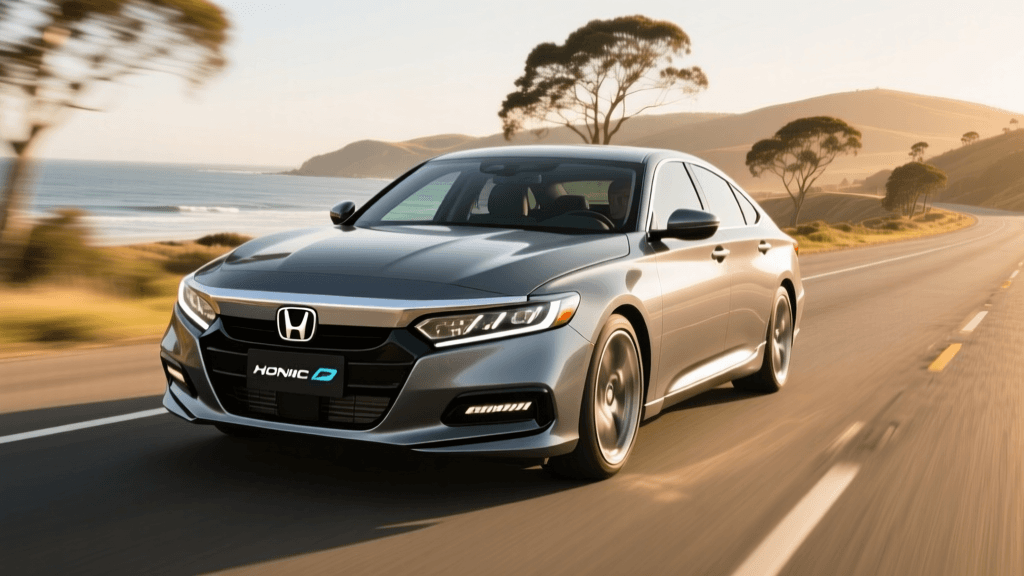
When Honda redesigned the Accord for its 11th generation, it made a bold and financially significant move: reserving the hybrid powertrain exclusively for the upper trim levels. While the entry-level LX and EX trims receive a 1.5-liter turbocharged engine, the popular Sport, EX-L, Sport-L, and Touring trims are powered by Honda’s latest two-motor hybrid system. For buyers weighing the upfront premium against long-term savings, the Honda Accord Hybrid presents a fascinating case study in automotive economics. Whether you are navigating stop-and-go city traffic or embarking on a cross-country road trip, understanding the real-world cost and value breakdown of this midsize sedan is essential before signing on the dotted line.
The Powertrain: Efficiency Meets Refinement
At the heart of the Accord Hybrid is a 2.0-liter Atkinson-cycle four-cylinder engine paired with two electric motors. This setup generates a combined 204 horsepower and a robust 247 lb-ft of torque. Unlike traditional continuously variable transmissions (CVTs) that rely on belts and pulleys, Honda’s e-CVT uses the electric motors to do the heavy lifting, with the gas engine primarily acting as a generator at lower speeds. The result is a driving experience that mimics the smooth, linear acceleration of a fully electric vehicle, completely eliminating the 'rubber-band' effect common in older hybrids. This mechanical sophistication not only improves daily drivability but also plays a massive role in the vehicle's overall cost-efficiency.
Daily Commuting: Real-World Fuel Economy and Costs
Where the Accord Hybrid truly shines is in the urban commute. According to the U.S. Department of Energy's Fuel Economy Guide, the Accord Hybrid (specifically the Sport and Touring trims with larger 19-inch wheels) achieves an EPA-estimated 46 MPG in the city and 41 MPG on the highway. If you opt for the EX-L Hybrid with 17-inch wheels, those numbers jump to an astonishing 51 MPG city and 44 MPG highway.
Let us break down the math for a typical commuter driving 15,000 miles annually (10,000 city / 5,000 highway) with gas averaging $3.50 per gallon:
- Accord Hybrid (Sport-L, 46/41 MPG): Consumes roughly 339 gallons per year, costing about $1,186 annually.
- Accord Gas (Sport 1.5T, 29/37 MPG): Consumes roughly 480 gallons per year, costing about $1,680 annually.
For the daily commuter, the hybrid saves approximately $494 per year in fuel alone. Furthermore, the regenerative braking system—adjustable via steering-wheel-mounted paddle shifters—significantly reduces wear and tear on the physical brake pads, pushing your first brake job well past the 70,000-mile mark and saving you hundreds in maintenance.
Road Trip Value: Highway Efficiency and Comfort
While hybrids are famous for city efficiency, road trips introduce sustained high-speed driving where the electric motor's advantage typically diminishes. However, the Accord Hybrid remains remarkably efficient on the open highway. The aerodynamic profile and the engine's ability to lock into a direct-drive clutch at cruising speeds ensure that you are not sacrificing fuel economy at 75 MPH.
Beyond the pump, the road trip value proposition is heavily tied to comfort and cargo. The Accord Hybrid boasts 16.7 cubic feet of trunk space. Crucially, unlike some competitors (and previous generations), the hybrid battery is packaged beneath the rear seats rather than intruding into the trunk. This means the rear seats fold completely flat, allowing you to haul long items like skis, camping gear, or furniture with ease. The cabin is also exceptionally quiet; Honda has utilized acoustic glass and active noise cancellation on higher trims to keep highway wind and tire noise at bay, reducing driver fatigue on 500-mile drives.
Total Cost of Ownership (TCO) Breakdown
To truly evaluate the Accord Hybrid's value, we must look beyond the sticker price and calculate the Total Cost of Ownership (TCO) over a standard five-year/75,000-mile period. Below is a comparative breakdown between the Accord Hybrid, its gasoline counterpart, and its chief rival, the Toyota Camry Hybrid.
| Metric (5-Year / 75k Miles) | Honda Accord Hybrid (Sport-L) | Honda Accord Gas (Sport 1.5T) | Toyota Camry Hybrid (SE) |
|---|---|---|---|
| Starting MSRP | $34,990 | $30,510 | $32,970 |
| Estimated Fuel Cost | $5,930 | $8,400 | $6,150 |
| Maintenance & Repairs | $3,100 | $3,600 | $3,200 |
| Insurance (Avg) | $7,800 | $7,500 | $7,650 |
| Estimated Depreciation | $14,500 | $15,800 | $14,200 |
| Total 5-Year TCO | $66,320 | $65,810 | $64,170 |
Note: Estimates based on regional averages, 15,000 miles/year, and $3.50/gallon fuel prices. Data cross-referenced with Kelley Blue Book's 5-Year Cost to Own metrics.
As the table illustrates, the Accord Hybrid carries a higher initial MSRP and slightly higher insurance premiums. However, it easily makes up ground in fuel savings, reduced maintenance (fewer moving parts in the hybrid drivetrain, less brake wear), and significantly stronger resale value. The gap between the Gas Accord and the Hybrid Accord's TCO is razor-thin, meaning you are essentially getting a faster, smoother, and more refined vehicle for nearly the same long-term cost.
Safety, Reliability, and Resale Value
A major factor in the Accord Hybrid's strong residual value is its safety profile. The 11th-generation Accord comes standard with the Honda Sensing suite, which includes adaptive cruise control with low-speed follow, lane-keeping assist, and traffic jam assist. These features are not just convenient for commuting; they actively prevent accidents. The Accord has consistently earned top marks from the Insurance Institute for Highway Safety (IIHS), securing the prestigious TOP SAFETY PICK+ award. High safety ratings directly correlate with lower long-term depreciation and better insurance rates over the life of the vehicle.
Regarding reliability, Honda covers the hybrid battery and related components with an 8-year/100,000-mile warranty (extended to 10 years/150,000 miles in states that follow CARB emissions regulations). Because this is an evolved version of Honda's two-motor system that has been used in the CR-V and Accord for years, the risk of catastrophic early-life battery failure is exceptionally low.
Final Verdict: Is the Accord Hybrid Worth the Premium?
If you are a high-mileage commuter who frequently sits in stop-and-go traffic, the Honda Accord Hybrid is an absolute no-brainer. The fuel savings alone will eventually eclipse the price premium, but the immediate benefits of silent low-speed crawling, instant electric torque, and reduced brake wear make the daily grind vastly more enjoyable.
For the road trip warrior, the Accord Hybrid proves that you do not need to sacrifice highway comfort or cargo space to achieve 40+ MPG. While the Toyota Camry Hybrid might edge it out slightly in sheer TCO efficiency, the Accord offers a more premium interior, superior driving dynamics, and a more intuitive infotainment experience (especially on Touring trims with Google built-in). Ultimately, the Honda Accord Hybrid isn't just a smart financial decision; it is the best all-around midsize sedan on the market today.