Quick Verdict: The Mazda CX-70 PHEV in One Paragraph
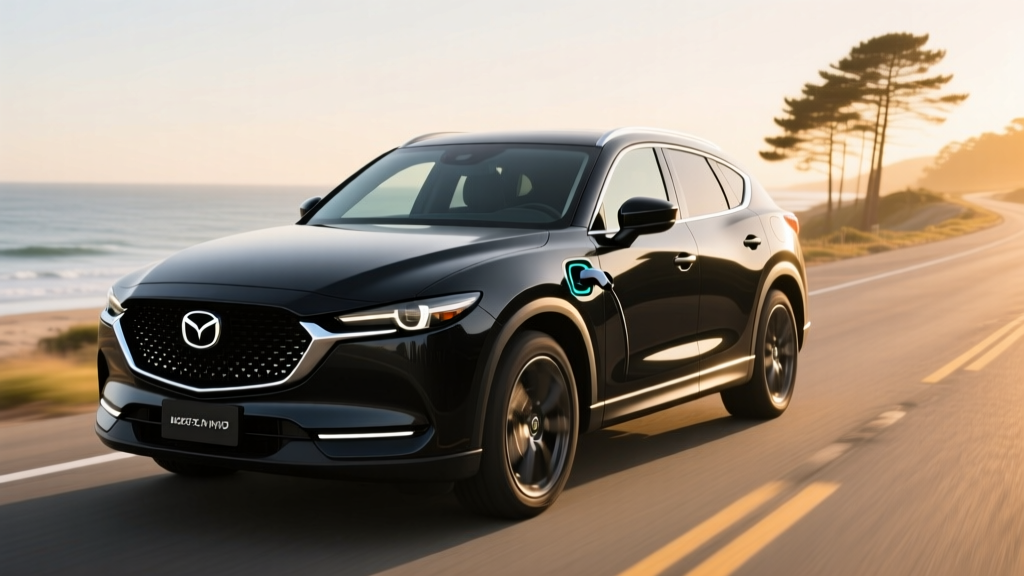
The 2026 Mazda CX-70 PHEV is a plug-in hybrid midsize SUV built for buyers who want meaningful electric-only commuting without surrendering the inline-six refinement and rear-biased all-wheel-drive dynamics Mazda is known for. With an EPA-rated 26 miles of electric range, 56 MPGe combined when the battery is charged, and 327 combined horsepower, it slots between a conventional hybrid and a full EV in both capability and compromise. If your daily round-trip commute is under 25 miles and you have access to home or workplace Level 2 charging, the CX-70 PHEV can operate as an EV on most weekdays while retaining a 490-mile total range for road trips. If you cannot charge regularly, you're carrying 400+ pounds of battery you rarely use — and a conventional hybrid or gas CX-70 may serve you better.
Mazda CX-70 PHEV: Core Specifications at a Glance
| Attribute | Value |
|---|---|
| Powertrain | 2.5L inline-4 + permanent-magnet electric motor + 8-speed automatic |
| Combined Output | 327 HP / 382 lb-ft torque |
| Drivetrain | i-Activ AWD (standard) |
| Battery (PHEV) | 17.8 kWh gross lithium-ion (estimated ~14.2 kWh usable) |
| EPA Electric-Only Range | 26 miles |
| EPA MPGe (battery + gas) | 56 MPGe combined |
| EPA MPG (gas-only, charge-depleted) | 25 combined (23 city / 28 highway) |
| Total Combined Range | ~490 miles (EV + gas tank) |
| Level 2 AC Charging (max) | ~3.3 kW onboard charger |
| Level 2 Charge Time (0–100%) | ~5 hours |
| DC Fast Charging | Not available |
| 0–60 mph | ~6.3 seconds (est.) |
| Towing Capacity | 3,500 lbs (when properly equipped) |
| Battery Warranty | 8 years / 100,000 miles |
| Base MSRP (Preferred trim) | $55,970 (incl. destination) |
Source: EPA / fueleconomy.gov and Mazda USA. Verify trim pricing with your dealer as MSRP is subject to change.
HEV vs PHEV: Understanding What the CX-70 Actually Is
Before we dig into real-world efficiency, it's critical to understand what you're buying — because Mazda's naming and marketing can blur the lines for first-time electrified-vehicle shoppers.
Conventional Hybrid (HEV)
- How it works: A small battery (typically 1–2 kWh) is charged by the engine and regenerative braking. No plug required.
- Electric-only driving: Minimal — usually under 1 mile at low speeds.
- Best for: Drivers who want better MPG without changing habits or installing a charger.
- CX-70 availability: The CX-70 also offers a mild-hybrid inline-six (CX-70 I-6 Turbo) that recovers braking energy but provides negligible electric-only propulsion.
Plug-In Hybrid (PHEV) — The CX-70 PHEV
- How it works: A larger 17.8 kWh battery powers a dedicated electric motor for 26 EPA-rated miles before the 2.5L gas engine engages seamlessly.
- Charging required: Plug into a 120V outlet (Level 1, ~14 hours to full) or a 240V Level 2 home charger (~5 hours) to realize the efficiency gains.
- Best for: Commuters with home/work charging and a sub-26-mile round trip who also take longer road trips.
Key distinction: The CX-70 PHEV requires plugging in to unlock its efficiency advantage. If you never charge it, you're driving a heavier, more expensive CX-70 that gets 25 MPG combined — worse than some conventional hybrids. This is not a flaw; it's the fundamental PHEV trade-off.
How Many MPG Does the Mazda CX-70 PHEV Get?
The answer depends entirely on your charging habits. Here's the EPA breakdown:
| Mode | City | Highway | Combined |
|---|---|---|---|
| Charge-Sustaining (gas only, battery depleted) | 23 MPG | 28 MPG | 25 MPG |
| Charge-Depleting (full battery, EV + gas blend) | 56 MPGe combined | ||
| EPA Electric-Only Range | 26 miles | ||
Real-World MPG vs. EPA Sticker
In mixed suburban and highway driving with daily Level 2 charging, owners who stay within the 26-mile electric window report effective "MPG" figures well above the EPA rating — because they're burning little to no gasoline on weekdays. Over a 5-day workweek with a 20-mile round-trip commute, you might use less than a gallon of gas total.
However, on a 300-mile highway road trip with a depleted battery, expect the gas-only figure to hover around 24–26 MPG combined, consistent with the EPA's charge-sustaining estimate. Cold weather (below 40°F) can reduce electric-only range by 15–25%, dropping it to roughly 20–22 miles in winter, due to cabin heating demands and reduced battery efficiency.
City driving advantage: Like most hybrids and PHEVs, the CX-70 PHEV benefits from regenerative braking in stop-and-go traffic, which recharges the battery and reduces engine load. Highway driving at sustained 70+ mph is where the 2.5L four-cylinder works hardest, and fuel economy reflects that.
Electric-Only Range, Charging, and Daily Usability
The 26-mile EPA electric range is competitive with rivals like the Toyota RAV4 Prime (42 miles) on the low end and the Hyundai Tucson PHEV (33 miles) in the middle. It's enough for short commutes and errands but falls short for anyone with a 30+ mile one-way commute.
Charging the CX-70 PHEV
| Level | Power | Time (0–100%) | Notes |
|---|---|---|---|
| Level 1 (120V household) | ~1.4 kW | ~14 hours | Overnight from near-empty; impractical for daily full recharge |
| Level 2 (240V home/public) | ~3.3 kW | ~5 hours | Recommended; fully recharges overnight or during a workday |
| DC Fast Charge | N/A | N/A | Not supported — no CCS or NACS DC port |
The CX-70 PHEV uses a J1772 connector for AC charging (standard for all non-Tesla PHEVs in North America). It does not support DC fast charging, which is typical for PHEVs with sub-20 kWh batteries — the battery is simply too small to benefit from high-speed DC infrastructure. A 3.3 kW onboard charger means you won't see rapid top-ups at public Level 2 stations, but for home overnight charging, it's perfectly adequate.
Battery Warranty & Longevity
Mazda covers the CX-70 PHEV's high-voltage battery for 8 years or 100,000 miles (whichever comes first), with a capacity retention threshold typically set at 60–70% of original capacity, in compliance with CARB-emissions-state requirements. In states that follow California's stricter rules (including NY, MA, WA, OR, and others), the warranty may extend to 10 years / 150,000 miles. Confirm your state's coverage with your dealer.
Battery replacement cost: As of 2026, a full PHEV battery pack replacement outside warranty is estimated at $6,000–$9,000 including labor, though this figure may decline as the supply chain matures. Real-world degradation data for the CX-70 PHEV specifically is still limited given its 2025 launch, but comparable PHEV batteries (Toyota, Hyundai) typically lose 10–15% capacity over 8–10 years under normal use.
Powertrain and Performance: 327 HP from a Four-Cylinder PHEV
The CX-70 PHEV pairs a 2.5-liter naturally aspirated inline-four producing roughly 189 HP with a permanent-magnet electric motor integrated into the transmission, adding approximately 173 HP. Combined system output is 327 HP and 382 lb-ft of torque, routed through an 8-speed automatic to Mazda's i-Activ all-wheel-drive system.
This is notably different from the CX-70's other powertrain option — the 3.3L turbocharged inline-six mild-hybrid (280–340 HP depending on tune). The PHEV trades the inline-six's silky smoothness and higher towing capacity (up to 3,500 lbs for both, though the I-6 is more robust under sustained load) for the electric motor's instant low-end torque and short-distance zero-emission capability.
0–60 mph: Approximately 6.3 seconds, making it the quickest CX-70 variant off the line thanks to electric torque fill at low RPM. Highway passing power is adequate but less effortless than the turbo I-6, especially above 50 mph where the four-cylinder must work harder.
Pricing, Trims, and Federal Tax Credit Eligibility
The 2026 Mazda CX-70 PHEV is offered in three trims:
- Preferred: ~$55,970 MSRP (incl. destination)
- Premium: ~$59,970 MSRP
- Premium Plus: ~$63,470 MSRP
Does the CX-70 PHEV Qualify for the Federal Tax Credit?
Under IRS §30D Clean Vehicle Credit rules effective for 2026, the CX-70 PHEV's eligibility depends on several factors that change frequently:
- MSRP cap: SUVs must have an MSRP at or below $80,000 — all CX-70 PHEV trims qualify.
- Buyer income cap: Modified AGI must not exceed $150,000 (single), $225,000 (head of household), or $300,000 (married filing jointly).
- Battery sourcing: A percentage of critical minerals and battery components must be sourced from the U.S. or free-trade-agreement partners. This requirement tightens annually, and eligibility can change mid-year.
- Point-of-sale transfer: If eligible, you can transfer the credit (up to $7,500) to the dealer at purchase, reducing your out-of-pocket cost immediately rather than waiting for a tax refund.
- North American final assembly: The CX-70 is assembled in Hofu, Japan — which may disqualify it from the new-vehicle §30D credit under current rules. Verify with the IRS qualifying vehicle list before purchasing.
Critical caveat: Because the CX-70 is manufactured in Japan, it may not meet the North American final assembly requirement for the new-vehicle §30D credit. This is a significant disadvantage versus U.S.-assembled PHEVs like the Toyota RAV4 Prime or Jeep Wrangler 4xe. Always confirm current eligibility on fueleconomy.gov and consult a tax professional before basing your purchase decision on the credit.
Reliability, Ownership Costs, and Long-Term Outlook
Mazda's reliability reputation has strengthened considerably over the past decade, with the brand frequently ranking in the top third of Consumer Reports' annual reliability surveys. The 2.5L inline-four is a proven, naturally aspirated engine with a long production history, and the PHEV system adds complexity primarily in the battery pack, power electronics, and motor — all covered under the 8-year/100,000-mile warranty.
5-Year Ownership Cost Considerations
| Category | Estimated Cost |
|---|---|
| Fuel (assuming 70% electric driving, $3.50/gal gas, $0.14/kWh electricity) | $3,800–$4,500 |
| Maintenance (oil changes, tire rotations, brake service — reduced due to regen) | $2,500–$3,200 |
| Insurance (national avg. for midsize PHEV SUV) | $9,000–$11,500 |
| Depreciation (estimated 45–50% over 5 years) | $25,000–$30,000 |
| Total Estimated 5-Year Cost | $40,300–$49,200 |
Compared to the gas-only CX-70 I-6 Turbo (25 MPG combined, ~$5,500 in fuel over 5 years at 12,000 miles/year), the PHEV saves roughly $1,000–$1,700 in fuel costs — but only if you charge regularly. The PHEV's higher purchase price ($10,000+ over the base gas model) means the break-even point on fuel savings alone takes many years, making the PHEV a lifestyle and emissions choice as much as a financial one.
Who Should Buy the CX-70 PHEV — and Who Shouldn't
Pros
- Premium interior and driving dynamics rare in the PHEV segment
- 327 HP with instant electric torque for confident merging
- 26-mile EV range covers many daily commutes
- AWD standard; 3,500-lb towing capacity
- No range anxiety — gas engine covers long trips seamlessly
Cons
- Electric range (26 mi) trails RAV4 Prime (42 mi) and Tucson PHEV (33 mi)
- No DC fast charging capability
- May not qualify for $7,500 federal tax credit (Japan assembly)
- 25 MPG gas-only is unremarkable for a PHEV when battery is depleted
- Higher starting price than many rivals
Choose the Mazda CX-70 PHEV If:
- Your round-trip commute is under 25 miles and you can charge at home nightly
- You want Mazda's premium interior and driving feel with partial electrification
- You take regular road trips where a full EV's charging logistics are a concern
- You value AWD and moderate towing without stepping to a truck-based SUV
Look Elsewhere If:
- Your commute exceeds 30 miles one-way — consider the RAV4 Prime (42 mi EV) or a full EV like the Hyundai Ioniq 5 (303 mi range)
- You cannot charge at home or work — a conventional hybrid (Toyota Highlander Hybrid, 35 MPG) will serve you better
- The federal tax credit is essential to your budget — verify CX-70 PHEV assembly-origin eligibility first
- You prioritize maximum electric range over driving dynamics — the Toyota RAV4 Prime or Chrysler Pacifica PHEV offer more EV miles
Hybrid vs PHEV vs Full EV: Which Is Right for You?
The CX-70 PHEV exists in a middle ground that isn't right for everyone. Here's a quick decision matrix:
| Factor | Conventional Hybrid (HEV) | Plug-In Hybrid (PHEV) | Full EV (BEV) |
|---|---|---|---|
| Plug-in required? | No | Yes (for full benefit) | Yes |
| Electric-only range | < 1 mile | 20–45 miles typical | 200–400+ miles |
| Home charger needed? | No | Strongly recommended | Essential |
| Road-trip convenience | Gas stations only | Gas + electric | DC fast charging required |
| Maintenance | Standard (slightly reduced) | Engine + EV systems | Minimal (no oil, fewer fluids) |
| Federal tax credit | Generally no | Up to $7,500 (varies) | Up to $7,500 (varies) |
| Best for | No-plug MPG improvement | Short EV commute + long trips | Full electrification, home charging |
Frequently Asked Questions
How many MPG does the Mazda CX-70 PHEV get?
When the battery is depleted and the vehicle runs on gasoline alone, the EPA rates it at 25 MPG combined (23 city / 28 highway). When you start with a full charge and use the 26-mile electric range, the combined efficiency is rated at 56 MPGe. Your real-world number depends heavily on how often you charge and the length of your trips.
How far can the CX-70 PHEV go on electric only?
The EPA rates it at 26 miles of electric-only range. In real-world conditions — particularly cold weather below 40°F or sustained highway speeds above 65 mph — expect 20–22 miles. In mild weather with city driving and regenerative braking, you may see the full 26 miles or slightly more.
Does the Mazda CX-70 PHEV qualify for the federal tax credit?
Possibly, but it's uncertain. The §30D Clean Vehicle Credit requires North American final assembly, and the CX-70 is assembled in Japan. This may disqualify it. Additionally, battery-sourcing requirements tighten annually. Always check the current qualifying vehicle list on fueleconomy.gov and consult a tax professional before relying on the credit.
Is the CX-70 PHEV reliable? What does battery replacement cost?
Mazda ranks well in long-term reliability surveys, and the 2.5L four-cylinder is a proven engine. The high-voltage battery is warrantied for 8 years / 100,000 miles (longer in CARB states). Out-of-warranty battery replacement is estimated at $6,000–$9,000, though this may decrease over time. Real-world PHEV battery degradation from comparable manufacturers shows 10–15% capacity loss over 8–10 years.
Can the CX-70 PHEV DC fast charge?
No. The CX-70 PHEV only supports AC charging via a J1772 connector at up to 3.3 kW (Level 2). A full charge takes approximately 5 hours on a 240V Level 2 charger or about 14 hours on a standard 120V outlet. This is typical for PHEVs with smaller battery packs.
Should I get the CX-70 PHEV or the gas CX-70 I-6 Turbo?
Choose the PHEV if you can charge at home and your commute fits within 26 miles — you'll drive on electricity most weekdays and save on fuel. Choose the I-6 Turbo if you can't charge regularly, want a smoother six-cylinder engine, tow frequently, or want a lower purchase price. The I-6 Turbo starts roughly $10,000 less and avoids the weight penalty of carrying a depleted battery.
How does the CX-70 PHEV compare to the RAV4 Prime?
The Toyota RAV4 Prime offers 42 miles of electric range (vs. 26), a lower starting price (~$44,000 vs. ~$56,000), and U.S. assembly (more likely to qualify for the federal credit). The CX-70 PHEV counters with a more premium interior, more horsepower (327 vs. 302), and a more engaging driving experience. If electric range and value are your priorities, the RAV4 Prime wins. If premium feel and performance matter more, the CX-70 PHEV makes its case.
Editorial note: Specifications and pricing reflect the 2026 model year as of publication. Tax credit eligibility, MSRP, and battery-sourcing rules are subject to change. Always verify with IRS.gov, fueleconomy.gov, and your local Mazda dealer before purchasing.