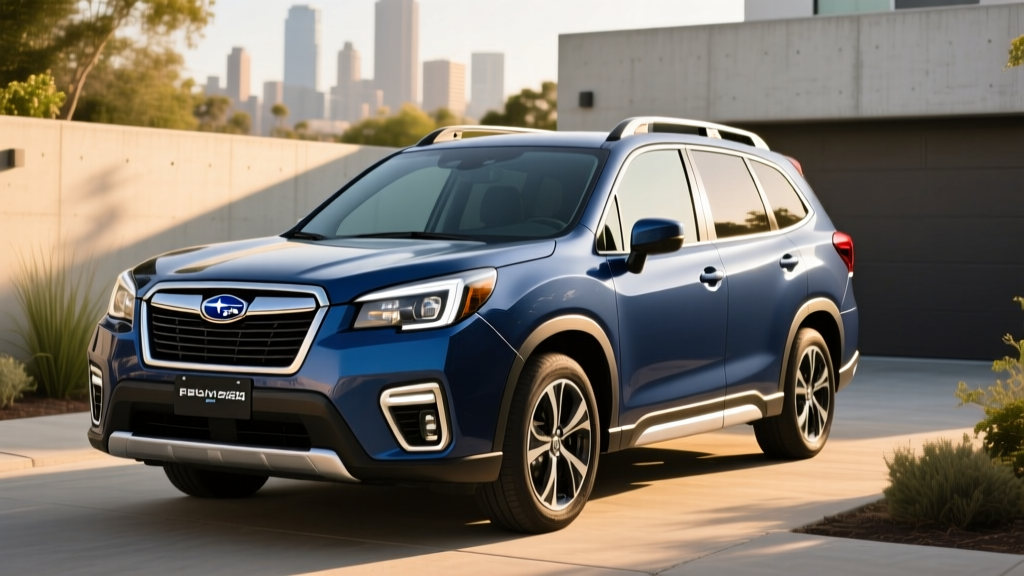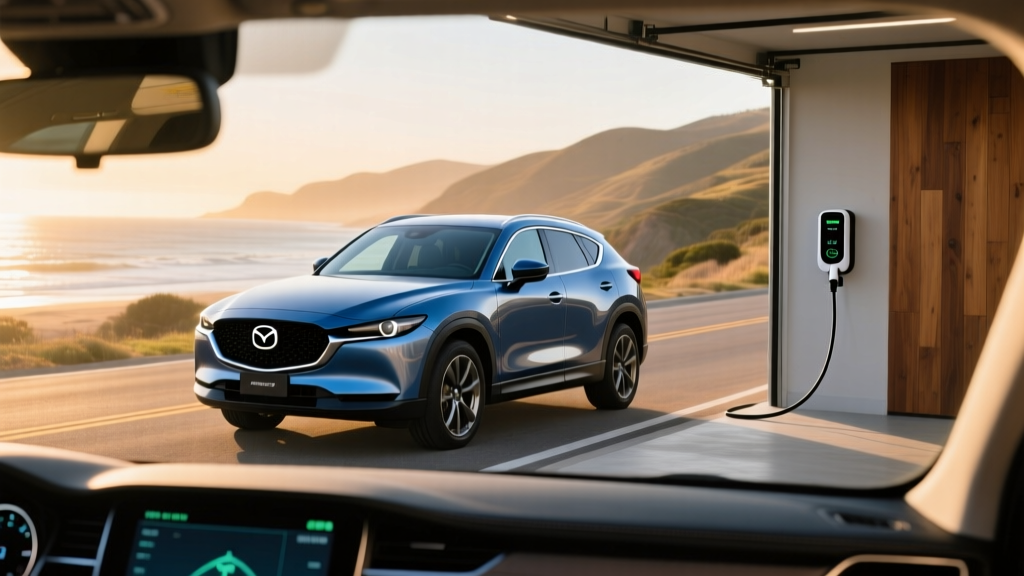
The Mazda CX-50 Hybrid pairs the brand's premium compact SUV with Toyota's proven hybrid powertrain, targeting buyers who want better fuel economy without plugging in. For 2026, the CX-50 Hybrid continues as a conventional hybrid electric vehicle (HEV)—not a plug-in—meaning it charges its battery through regenerative braking and the gasoline engine alone. No cord, no outlet, no range anxiety.
But does the real-world fuel economy justify the hybrid premium over the turbocharged gas model? And how does it stack up against plug-in alternatives like the Toyota RAV4 Prime or a full battery-electric vehicle? This guide breaks down every spec that matters.
HEV vs PHEV: What the CX-50 Hybrid Actually Is
Before diving into numbers, it's critical to understand what you're buying. The CX-50 Hybrid is a conventional hybrid (HEV). It cannot plug into a wall or charging station. Its small battery (roughly 1.6 kWh) stores energy recaptured from braking and excess engine output, then deploys it to assist acceleration and enable brief electric-only motoring at low speeds.
| Feature | HEV (CX-50 Hybrid) | PHEV | BEV |
|---|---|---|---|
| Plugs in? | No | Yes (Level 1/2) | Yes (Level 1/2/DC) |
| Electric-only range | ~1 mi (low speed) | 25–42 mi typical | 250–330 mi |
| Fuel/energy | Gasoline only | Gas + electricity | Electricity only |
| Federal tax credit | None (§30D is BEV/PHEV only) | Up to $7,500 (if eligible) | Up to $7,500 (if eligible) |
| Home charging needed? | No | Recommended | Essential |
If you were hoping for a plug-in CX-50 with 30+ miles of electric commuting, Mazda has not announced a PHEV variant of the CX-50 as of early 2026. The CX-90 PHEV exists in Mazda's lineup, but the CX-50 remains HEV-only for electrification.
Fuel Economy: EPA Ratings and Real-World MPG
The headline number for the 2026 CX-50 Hybrid is 38 MPG combined per the EPA. Here's the full breakdown:
| Metric | Value |
|---|---|
| City MPG | 39 MPG |
| Highway MPG | 37 MPG |
| Combined MPG | 38 MPG |
| Fuel tank | 14.8 gallons |
| Total range (est.) | ~560 miles |
Source: fueleconomy.gov
Real-World MPG: What to Actually Expect
Toyota's hybrid system excels in stop-and-go city driving, where regenerative braking constantly replenishes the battery and the engine shuts off at stops. Many owners of this powertrain (shared with the RAV4 Hybrid) report exceeding the EPA city estimate by 1–3 MPG in warm-weather urban commuting.
Highway driving tells a different story. At sustained 75+ MPH speeds, the hybrid advantage diminishes. The aerodynamic penalty of the CX-50's boxy, rugged styling and standard all-wheel drive (AWD) pushes real-world highway fuel economy closer to 33–35 MPG. Cold weather (below 40°F) further reduces efficiency by 5–10%, as the engine runs longer to heat the cabin and the battery's charge/discharge efficiency drops.
Compared to the non-hybrid CX-50 Turbo (rated at roughly 25 MPG combined), the hybrid saves about 13 MPG combined—roughly 180 fewer gallons per year at 12,000 miles, or about $540–$650 annually at $3.50/gallon.
Powertrain: Toyota Hybrid Muscle in a Mazda Chassis
The CX-50 Hybrid uses Toyota's fourth-generation hybrid system, a carryover from the RAV4 Hybrid. Here's the spec sheet:
| Spec | Value |
|---|---|
| Engine | 2.5L 4-cylinder Atkinson-cycle |
| Engine output | 176 hp / 163 lb-ft |
| Front electric motor | 118 hp / 149 lb-ft |
| Rear electric motor (AWD-i) | 54 hp / 89 lb-ft |
| Net combined horsepower | 219 hp |
| Transmission | eCVT (planetary gearset) |
| Drivetrain | Electronic AWD (AWD-i) standard |
| Hybrid battery | ~1.6 kWh, nickel-metal hydride (NiMH) |
| 0–60 MPH (est.) | ~6.9 seconds |
The 219 net horsepower is competitive with the CX-50 Turbo's 256 hp on premium fuel, but the hybrid delivers its torque instantly from the electric motors, making it feel responsive in city driving despite the lower peak number. The eCVT is a planetary gearset—not a belt-driven CVT—so there's no rubber-band sensation. Acceleration is linear and predictable.
The rear AWD-i motor provides electronic all-wheel drive without a mechanical driveshaft. It engages the rear axle during acceleration, slippery conditions, and cornering for stability. This system is lighter and more efficient than a traditional mechanical AWD setup, contributing to the strong highway MPG.
Pricing, Trims, and Tax Credit Eligibility
The 2026 CX-50 Hybrid is available across multiple trims. Pricing starts in the mid-$30,000 range and climbs to the mid-$40,000s for fully loaded models:
| Trim | Est. MSRP |
|---|---|
| Select Hybrid | ~$35,500 |
| Preferred Hybrid | ~$37,800 |
| Premium Hybrid | ~$40,500 |
| Premium Plus Hybrid | ~$43,500 |
Pricing is approximate based on Mazda's published MSRP; destination charges additional. Verify current pricing at mazdausa.com.
Does the CX-50 Hybrid Qualify for a Federal Tax Credit?
No. The IRS §30D Clean Vehicle Credit applies only to plug-in electric vehicles (BEVs and PHEVs) with battery capacities of at least 7 kWh. The CX-50 Hybrid's ~1.6 kWh NiMH battery does not meet this threshold. There is no federal tax credit for conventional hybrids.
- Vehicle must be a BEV or PHEV with ≥7 kWh battery
- MSRP cap: $55,000 (SUVs/pickups) or $25,000 (sedans)
- Buyer income cap: $150K single / $300K joint (modified AGI)
- Battery critical minerals and component sourcing requirements apply
- Point-of-sale transfer available (dealer reduces price at purchase)
Source: IRS §30D guidance. Rules are current for 2026 and subject to legislative change. Consult a tax professional for your situation.
Some states offer their own incentives for hybrids, though most state rebates have shifted toward PHEVs and BEVs. Check your state energy office or AFDC state incentive database for current local programs.
Battery Longevity, Warranty, and Replacement Cost
Hybrid battery anxiety is the top concern we hear from buyers. The CX-50 Hybrid uses a nickel-metal hydride (NiMH) pack—mature, well-understood chemistry that Toyota has refined over 25+ years in the Prius and RAV4 Hybrid.
- Hybrid battery: 10 years / 150,000 miles (whichever comes first) in most states; 10 years / 150,000 miles in California and states adopting CARB standards
- Hybrid system components: 8 years / 100,000 miles
- Powertrain (engine, transmission): 5 years / 60,000 miles
NiMH batteries degrade more gracefully than early lithium-ion packs. Real-world data from the RAV4 Hybrid (same powertrain) shows most packs retain 85–90% capacity at 150,000 miles. Complete failure before 200,000 miles is uncommon.
What Does a Hybrid Battery Replacement Cost?
If your hybrid battery does fail outside warranty, replacement costs for the Toyota-sourced hybrid system typically range from $2,500 to $4,000 for a new OEM pack, plus labor (~$500–$800). Refurbished packs are available for $1,500–$2,500. For context, a conventional automatic transmission replacement on a gas vehicle often costs $3,500–$5,000—so the hybrid battery is not an unreasonable long-term maintenance item.
The CX-50 Hybrid's eCVT planetary gearset has no belts, clutches, or bands to wear out. It's among the most reliable transmission designs in the industry, further reducing long-term drivetrain risk.
Who Should Choose the CX-50 Hybrid vs an EV or PHEV?
The CX-50 Hybrid occupies a specific niche. Here's a decision framework to determine if it's the right electrified vehicle for your situation:
- You can't charge at home (apartment, street parking, no garage outlet)
- You want 35–40 MPG without changing your fueling habits at all
- You drive 10,000–15,000 miles/year and want to cut fuel costs ~$500–$700/year vs the gas CX-50
- You want AWD for snow/rain without the efficiency penalty of a turbo AWD gas SUV
- You plan to keep the vehicle 8–12 years (letting the hybrid system pay for itself)
Choose a PHEV (e.g., RAV4 Prime, Tucson PHEV) if:
- You can install a Level 2 charger at home
- Your daily commute is under 35 miles (covers most errands on electricity alone)
- You want the $3,750–$7,500 federal tax credit (check current §30D eligibility)
- You want to reduce gasoline use by 60–80% without full EV commitment
Choose a full BEV (e.g., Tesla Model Y, Hyundai Ioniq 5) if:
- You have reliable home Level 2 charging
- You drive under 250 miles/day and road-trip 2–3 times per year or less
- You want the lowest per-mile energy cost ($0.04–$0.06/mi on home electricity vs $0.15–$0.18/mi on gas for the hybrid)
- You want the full $7,500 federal tax credit (eligibility permitting)
- You want near-zero routine maintenance (no oil changes, no transmission fluid)
Pros and Cons at a Glance
- 38 MPG combined — class-leading for a compact AWD SUV
- No charging infrastructure required
- 219 hp provides confident passing power
- Toyota hybrid reliability track record (25+ years)
- 10-year / 150,000-mile hybrid battery warranty
- Standard AWD without major MPG penalty
- ~560-mile total range (fewer fill-ups)
- No federal tax credit (HEV not eligible under §30D)
- No plug-in / electric-only commuting option
- Highway MPG drops to ~33–35 real-world at 75+ MPH
- Hybrid premium of ~$2,000–$3,000 over gas CX-50 takes years to recoup
- NiMH battery (not lithium-ion) — heavier, lower energy density
- eCVT drone under hard acceleration (common to all Toyota hybrids)
- Cargo space slightly reduced vs gas model (battery placement)
Frequently Asked Questions
How many MPG does the CX-50 Hybrid get?
The EPA rates the 2026 CX-50 Hybrid at 39 city / 37 highway / 38 combined MPG. Real-world results vary: expect 36–40 MPG in city and suburban driving, 33–35 MPG on the highway at 70–80 MPH, and 30–33 MPG in cold winter conditions.
Can the CX-50 Hybrid drive on electric power only?
Only for very short distances (under 1 mile) at low speeds, such as creeping through a parking lot or in stop-and-go traffic. It is not a plug-in hybrid and has no meaningful electric-only range for commuting. The engine engages as soon as you need moderate acceleration or sustained speed.
Is the CX-50 Hybrid reliable? What about battery replacement?
Yes. The CX-50 Hybrid uses Toyota's hybrid system, which has an extensive reliability record spanning the Prius, Camry Hybrid, and RAV4 Hybrid over 25+ years. The hybrid battery is warrantied for 10 years / 150,000 miles. Out-of-warranty replacement costs $2,500–$4,000, comparable to a conventional transmission replacement.
Does the CX-50 Hybrid qualify for any tax credit?
No federal tax credit is available. The IRS §30D Clean Vehicle Credit requires a plug-in vehicle with at least 7 kWh of battery capacity. The CX-50 Hybrid's ~1.6 kWh pack does not qualify. Some states may offer minor hybrid incentives—check your state's energy office.
How does the CX-50 Hybrid compare to the RAV4 Hybrid?
They share the same 2.5L hybrid powertrain (219 hp, eCVT, AWD-i). The RAV4 Hybrid is rated at 41 MPG combined vs the CX-50's 38 MPG, owing to the RAV4's slightly lower weight and more aerodynamic profile. The CX-50 trades a few MPG for a more premium interior, a longer wheelbase, and Mazda's driving dynamics tuning. If MPG is your top priority, the RAV4 wins; if interior quality and styling matter more, the CX-50 Hybrid is the stronger pick.
Is the CX-50 Hybrid worth it over the gas CX-50 Turbo?
Financially, the hybrid premium (~$2,000–$3,000 depending on trim) pays back in roughly 4–6 years at 12,000 miles/year and $3.50/gallon. If you keep your vehicles 7+ years, the hybrid is the better financial choice—and you get smoother, quieter low-speed driving plus standard AWD without the turbo's 25 MPG combined penalty. If you prioritize maximum acceleration (the Turbo hits 0–60 in ~6.3 seconds on premium), the gas model has a slight edge.