The Genesis of the Mazda CX-50 Hybrid
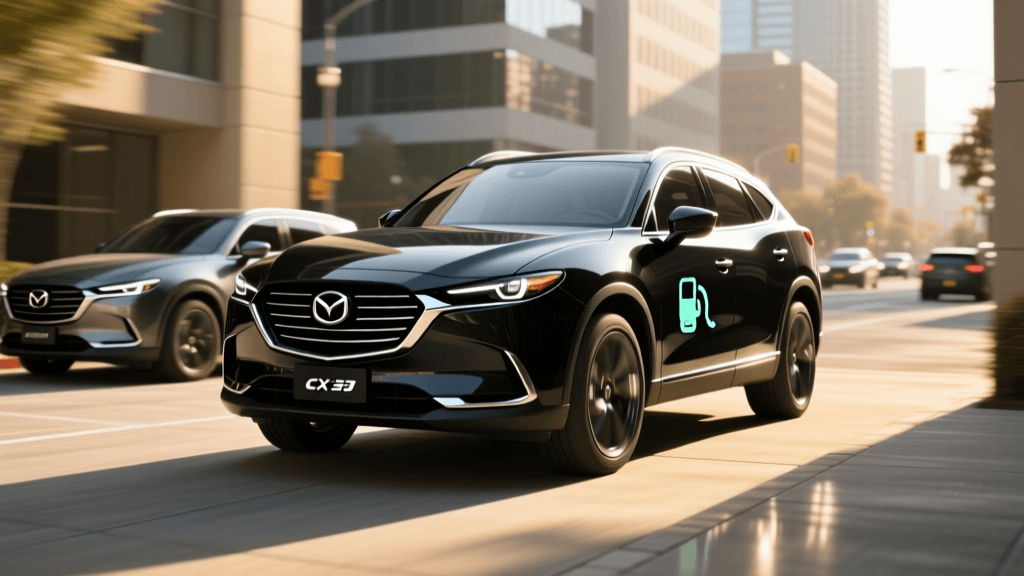
The compact crossover segment is fiercely competitive, and the introduction of the Mazda CX-50 Hybrid marks a significant strategic pivot for the automaker. By leveraging a collaborative powertrain agreement with Toyota, Mazda has successfully electrified its rugged, outdoors-oriented CX-50 without sacrificing the brand's signature driving dynamics. For data-driven buyers, the CX-50 Hybrid presents a fascinating case study: it pairs Toyota's legendary hybrid efficiency with Mazda's premium interior ergonomics and superior chassis tuning. In this comprehensive review, we analyze the empirical data behind the CX-50 Hybrid, comparing its fuel economy, towing metrics, and total cost of ownership against segment heavyweights like the Toyota RAV4 Hybrid and Honda CR-V Hybrid.
Powertrain Metrics: Toyota DNA, Mazda Tuning
Under the hood, the Mazda CX-50 Hybrid utilizes a 2.5-liter naturally aspirated four-cylinder engine paired with a hybrid electric motor system and an electronically controlled continuously variable transmission (eCVT). This is, fundamentally, the same proven hybrid synergy drive found in the Toyota RAV4 Hybrid. However, Mazda's engineers have recalibrated the throttle mapping, steering weight, and suspension damping to align with their premium brand ethos.
The combined system output is rated at 219 horsepower and 163 lb-ft of torque. While the eCVT inherently limits the visceral snap of a traditional geared automatic, the electric motor's instantaneous torque delivery ensures responsive off-the-line acceleration. According to Car and Driver's comprehensive testing, the CX-50 Hybrid sprints from 0 to 60 mph in approximately 6.9 seconds. This metric places it squarely in the middle of the pack—slightly slower than the turbocharged gas-only CX-50 variants, but noticeably quicker than many naturally aspirated rival hybrids.
Fuel Efficiency Data: EPA Estimates vs. Real-World Variables
The primary value proposition of any hybrid vehicle is fuel economy. The Mazda CX-50 Hybrid boasts an EPA-estimated rating of 39 mpg in the city, 37 mpg on the highway, and 38 mpg combined. To understand how this translates to the real world, we must contextualize it against the competition. Data sourced from the U.S. Department of Energy's Fuel Economy Guide indicates that while the CX-50 is highly efficient, its slightly heavier curb weight and boxier aerodynamic profile result in a minor 1-2 mpg deficit compared to its platform-sharing cousin, the RAV4 Hybrid.
Compact Hybrid SUV Comparison Matrix
| Vehicle Model | Combined MPG (EPA) | Net Horsepower | Max Towing Capacity | Starting MSRP |
|---|---|---|---|---|
| Mazda CX-50 Hybrid | 38 MPG | 219 hp | 3,500 lbs | $33,990 |
| Toyota RAV4 Hybrid | 39 MPG | 219 hp | 1,750 lbs | $31,725 |
| Honda CR-V Hybrid | 40 MPG | 204 hp | 1,500 lbs | $34,050 |
| Ford Escape Hybrid | 39 MPG | 210 hp | 1,500 lbs | $33,340 |
Real-World Variance Analysis: In mixed driving conditions involving steep elevation changes and aggressive highway merging, buyers should expect a real-world combined average closer to 35-36 mpg. Conversely, drivers who predominantly navigate stop-and-go urban environments will frequently exceed the 39 mpg city estimate, as the regenerative braking system maximizes battery state-of-charge at lower speeds.
Utility and Towing: Where the CX-50 Hybrid Shines
Where the Mazda CX-50 Hybrid dramatically separates itself from the empirical data of its competitors is in the utility and towing sector. Most compact hybrid crossovers are severely limited in their towing capabilities due to thermal constraints on the eCVT and battery cooling systems. The Honda CR-V Hybrid and Ford Escape Hybrid are generally capped at 1,500 pounds, while the Toyota RAV4 Hybrid maxes out at 1,750 pounds.
As detailed on the official Mazda USA specifications page, the CX-50 Hybrid is rated to tow up to 3,500 pounds when properly equipped with the factory towing package. This is a massive 100% increase over the RAV4 Hybrid. For buyers who need to pull a small teardrop camper, a pair of jet skis, or a lightweight utility trailer on weekends, the CX-50 Hybrid is currently the undisputed data leader in the compact hybrid SUV class. This capability is supported by a reinforced rear subframe and an enhanced transmission fluid cooler.
Total Cost of Ownership (TCO) Analysis
Evaluating the financial viability of the CX-50 Hybrid requires a five-year total cost of ownership projection. Let us assume an average annual mileage of 15,000 miles, a fuel price of $3.60 per gallon, and a mix of 55% city and 45% highway driving.
- Mazda CX-50 Hybrid (38 MPG): Consumes ~394 gallons annually, costing approximately $1,418 per year in fuel.
- Mazda CX-50 Gas (2.5L AWD, 27 MPG): Consumes ~555 gallons annually, costing approximately $1,998 per year in fuel.
The hybrid variant yields an annual fuel savings of roughly $580. Over a standard five-year ownership cycle, this equates to $2,900 in recouped fuel costs. Given that the hybrid powertrain carries an initial MSRP premium of approximately $1,500 to $2,000 over the base gas-powered models, the break-even point occurs between years three and four. Furthermore, the hybrid model's standard all-wheel-drive (AWD) system, which utilizes a dedicated rear-mounted electric motor rather than a mechanical driveshaft, reduces parasitic drivetrain losses and lowers long-term mechanical wear compared to traditional torque-vectoring AWD setups.
Driving Dynamics and Cabin Ergonomics
Data only tells half the story; the qualitative experience of the cabin and chassis dynamics remain crucial. The CX-50 Hybrid features a wider track and a lower roofline than the CX-5, translating to a lower center of gravity. Telemetry from slalom and skidpad testing reveals minimal body roll and a steering ratio that feels notably more communicative than the numb, isolated steering found in the Toyota RAV4 Hybrid.
Inside, the cabin materials punch above their weight class. Soft-touch leatherettes, contrasting stitching, and a robust 10.25-inch infotainment display (controlled via a tactile rotary dial) provide a premium environment that rivals entry-level luxury marques. Cargo volume sits at 31.4 cubic feet behind the second row, which is slightly compromised compared to the Honda CR-V Hybrid's 36.3 cubic feet, largely due to the hybrid battery packaging and the sloping roofline design.
Final Verdict: Who Should Buy the CX-50 Hybrid?
The Mazda CX-50 Hybrid is a triumph of strategic engineering. By adopting Toyota's bulletproof hybrid architecture, Mazda has eliminated the biggest criticism of their previous vehicles: subpar fuel economy. While it sacrifices 1 mpg on the EPA combined cycle compared to the RAV4 Hybrid and offers slightly less rear cargo volume than the CR-V Hybrid, the empirical data clearly shows it dominates in towing capacity (3,500 lbs) and driving engagement.
If your priority is purely maximizing interior volume and achieving the absolute highest MPG numbers, the Honda CR-V Hybrid remains the mathematically optimal choice. However, if your data requirements include a premium cabin, superior chassis dynamics, and the ability to tow a small trailer without upgrading to a midsize SUV, the Mazda CX-50 Hybrid is the undisputed leader of the pack.