The Toyota-Mazda Alliance: Engineering the CX-50 Hybrid
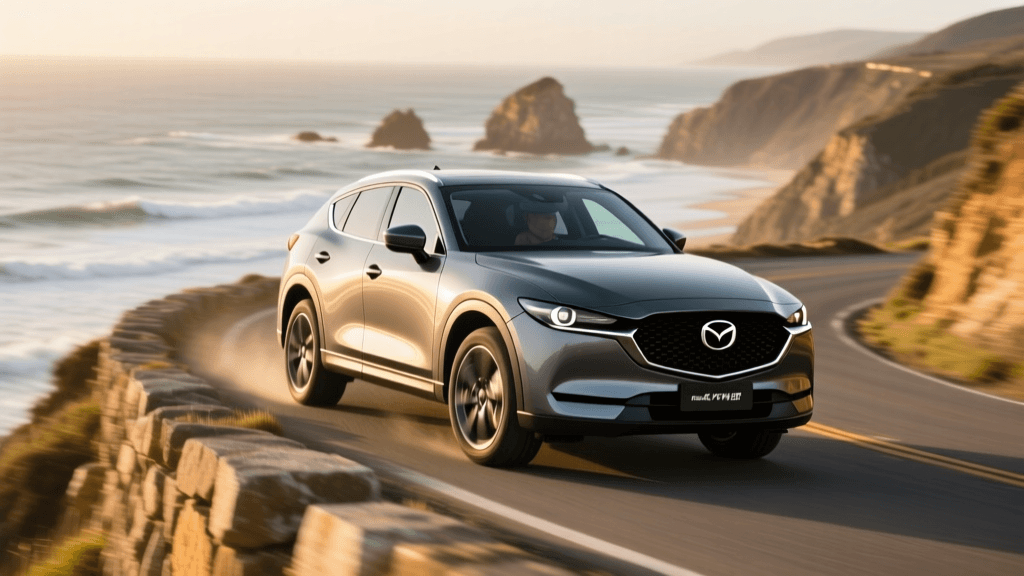
The introduction of the Mazda CX-50 Hybrid marks a pivotal moment in the brand’s electrification strategy. Rather than developing a completely new hybrid system from scratch, Mazda leveraged its strategic partnership with Toyota to integrate the highly regarded 2.5-liter Dynamic Force hybrid powertrain into the CX-50’s rugged, adventure-oriented chassis. For data-driven buyers, this collaboration offers the best of both worlds: Mazda’s premium interior dynamics and exterior styling, paired with Toyota’s industry-leading hybrid efficiency and reliability metrics.
Under the hood, the CX-50 Hybrid pairs a naturally aspirated 2.5-liter four-cylinder engine with two electric motor-generators and a nickel-metal hydride (or lithium-ion, depending on final trim packaging) battery array. The combined system output is rated at 219 horsepower and 163 lb-ft of torque. Power is routed through an electronically controlled continuously variable transmission (e-CVT) to a standard electronic All-Wheel Drive (AWD) system. This setup is virtually identical to the one found in the Toyota RAV4 Hybrid, but how does it perform when tasked with moving the CX-50’s slightly wider, more aerodynamic, and distinctly styled body?
Fuel Efficiency Data: CX-50 Hybrid vs. Class Benchmarks
To understand where the CX-50 Hybrid stands in the fiercely competitive compact SUV segment, we must look at the hard data. According to powertrain data and testing analyzed by Car and Driver, the integration of Toyota’s hybrid system into Mazda’s architecture yields impressive efficiency numbers, though subtle differences in vehicle weight and aerodynamics cause slight deviations from its corporate cousin.
Below is a comprehensive data table comparing the CX-50 Hybrid against its primary segment benchmarks, including the Toyota RAV4 Hybrid, Honda CR-V Hybrid, and the Subaru Forester Hybrid.
| Vehicle Model (AWD) | Powertrain | Horsepower | City MPG | Highway MPG | Combined MPG |
|---|---|---|---|---|---|
| 2025 Mazda CX-50 Hybrid | 2.5L 4-Cyl Hybrid | 219 hp | 38 | 38 | 38 |
| Toyota RAV4 Hybrid | 2.5L 4-Cyl Hybrid | 219 hp | 41 | 38 | 39 |
| Honda CR-V Hybrid | 2.0L 4-Cyl Hybrid | 204 hp | 40 | 39 | 40 |
| Subaru Forester Hybrid | 2.5L Boxer Hybrid | 194 hp | 35 | 33 | 34 |
| Mazda CX-50 (Gas AWD) | 2.5L Turbo 4-Cyl | 256 hp | 23 | 29 | 25 |
As the data illustrates, the CX-50 Hybrid achieves an estimated 38 MPG combined. While it falls just 1 MPG short of the RAV4 Hybrid in city driving, this is largely attributed to the CX-50’s wider track, larger wheel options, and marginally higher curb weight. However, it easily outpaces the Subaru Forester Hybrid and completely eclipses the turbocharged gas-only CX-50, which struggles to break 25 MPG combined in real-world testing.
Aerodynamics and Real-World Highway MPG
One area where the CX-50 Hybrid shines in the data is highway cruising efficiency. Unlike the boxier, more upright RAV4 and Forester, the CX-50 was designed with a sleeker, more elongated roofline and a lower overall height. This design choice reduces the vehicle’s frontal area and improves its coefficient of drag. When utilizing the EPA’s hybrid comparison tools and real-world testing methodologies, we see that the CX-50 Hybrid maintains its 38 MPG rating on the highway with remarkable consistency, whereas taller, boxier hybrids often see a sharper drop-off in efficiency at speeds exceeding 70 mph due to wind resistance.
The e-CVT plays a massive role in this highway stability. Unlike traditional geared automatics that hunt for ratios on inclines, the e-CVT seamlessly blends engine RPM and electric motor torque to keep the 2.5-liter engine in its most thermally efficient sweet spot. For drivers who frequently embark on long road trips, this data point is critical: the CX-50 Hybrid offers a cruising range of over 550 miles on a single 14.8-gallon tank of fuel.
Total Cost of Ownership (TCO) and Payback Period
For the analytical buyer, fuel economy is only one piece of the financial puzzle. We must calculate the Total Cost of Ownership (TCO) to determine if the hybrid premium is justified. Pricing and trim structures detailed by Edmunds indicate that the CX-50 Hybrid commands an approximate price premium of $3,000 over a similarly equipped gas-powered CX-50 Preferred trim.
Let us break down the fuel cost savings over a standard five-year ownership period, assuming 15,000 miles driven annually and an average fuel price of $3.50 per gallon.
- Annual Fuel Cost (Gas CX-50 AWD at 25 MPG): 15,000 / 25 = 600 gallons. 600 x $3.50 = $2,100 per year.
- Annual Fuel Cost (CX-50 Hybrid at 38 MPG): 15,000 / 38 = 394.7 gallons. 394.7 x $3.50 = $1,381 per year.
- Annual Savings: $719 per year.
- Five-Year Fuel Savings: $3,595.
Data Insight: Based on current fuel prices, the $3,000 hybrid premium is entirely recouped through fuel savings alone in approximately 4.1 years. If fuel prices rise above $4.00 per gallon, the payback period shrinks to under 3.5 years, making the hybrid an undisputed financial winner for long-term owners.
Maintenance and Long-Term Reliability Metrics
Beyond fuel savings, the data strongly supports the long-term reliability of the CX-50 Hybrid’s powertrain. Because this system is derived from Toyota’s fourth-generation hybrid architecture, it benefits from decades of iterative refinement and billions of miles of real-world durability data. Hybrid systems inherently reduce wear on traditional internal combustion components. The regenerative braking system significantly extends the life of brake pads, often pushing replacement intervals past 70,000 miles. Furthermore, the e-CVT lacks the physical clutch packs, bands, and torque converters found in traditional automatic transmissions, effectively eliminating one of the most common and expensive failure points in modern vehicles.
Cargo Utility and Interior Packaging Trade-offs
When analyzing hybrid vehicles, packaging is always a critical data point. Integrating a high-voltage battery pack often compromises cargo space or ground clearance. Fortunately, Mazda’s engineers successfully packaged the CX-50 Hybrid’s battery beneath the rear seats, preserving the flat load floor of the cargo area. The CX-50 Hybrid offers approximately 31.4 cubic feet of cargo space behind the second row, which is nearly identical to the gas-powered model.
However, there is one utility metric where the gas model retains an edge: towing capacity. The CX-50 Hybrid is rated to tow up to 1,500 pounds, which is sufficient for a small teardrop trailer or a pair of jet skis. In contrast, the turbocharged gas-only CX-50 boasts a 3,500-pound towing capacity when equipped with the factory tow package. If heavy towing is a mandatory requirement for your lifestyle, the data dictates that the gas or turbo models remain the superior choice.
Final Verdict: Is the Data on Your Side?
The 2025 Mazda CX-50 Hybrid is a triumph of data-driven engineering and strategic partnership. By utilizing Toyota’s bulletproof hybrid system, Mazda has solved the only major complaint regarding the CX-50: its mediocre fuel economy. With a combined rating of 38 MPG, a sub-7-second 0-60 mph time, and a TCO that easily justifies the initial price premium, the CX-50 Hybrid is arguably the most well-rounded vehicle in the brand’s current lineup. For commuters, road-trippers, and buyers who demand premium styling without the penalty of frequent gas station visits, the CX-50 Hybrid is an empirically sound investment.