Introduction: A Strategic Powertrain Alliance
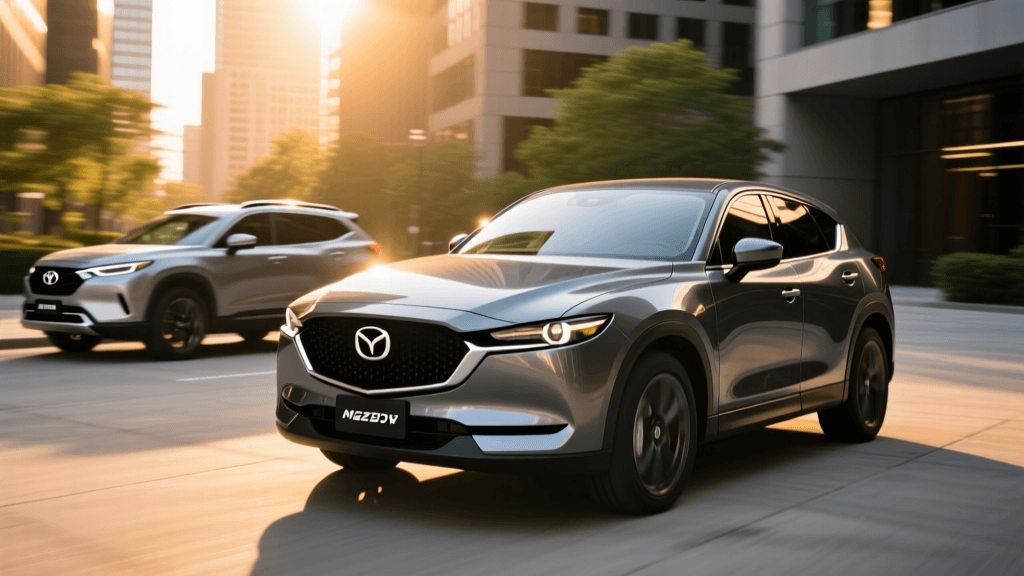
When Mazda announced the introduction of a hybrid variant for the rugged CX-50 crossover, enthusiasts and data analysts alike took notice. Rather than developing a proprietary hybrid system from scratch, Mazda leveraged its strategic partnership with Toyota, adopting the highly regarded 2.5-liter Dynamic Force hybrid powertrain found in the RAV4 Hybrid. For consumers, this means proven reliability and excellent efficiency. But how does this Toyota-sourced heart perform when wrapped in Mazda’s wider, heavier, and more premium chassis? In this data-driven comparison analysis, we break down the 2025 Mazda CX-50 Hybrid’s fuel efficiency metrics, real-world performance data, and total cost of ownership (TCO) against segment benchmarks like the Toyota RAV4 Hybrid, Honda CR-V Hybrid, and Ford Escape Hybrid.
Powertrain Specifications & Fuel Efficiency Data
At the core of the CX-50 Hybrid is a 2.5-liter four-cylinder Atkinson-cycle engine paired with two electric motors and a high-voltage nickel-metal hydride (NiMH) battery pack. This setup generates a combined system output of 219 horsepower and routes power through an electronically controlled continuously variable transmission (eCVT). Unlike the turbocharged gas-only CX-50 models that prioritize aggressive acceleration, the hybrid prioritizes thermal efficiency and low-end electric torque.
According to official testing data and industry analysis from sources like Car and Driver's comprehensive CX-50 hub, the CX-50 Hybrid achieves an EPA-estimated 38 MPG combined (39 city / 37 highway). While these numbers are slightly lower than the RAV4 Hybrid’s 41 MPG combined, the difference is easily explained by the CX-50’s wider track, heavier curb weight, and less aerodynamic, rugged exterior styling. Nevertheless, a 38 MPG combined rating in a premium, all-wheel-drive compact SUV is a formidable achievement.
With a 14.1-gallon fuel tank, the CX-50 Hybrid offers a theoretical maximum range of approximately 535 miles on a single tank, making it an exceptional choice for long-distance road trips where charging infrastructure for PHEVs or EVs might be sparse or unreliable.
Data Table: CX-50 Hybrid vs. Segment Leaders
To understand where the Mazda sits in the competitive landscape, we must look at the raw data. Below is a comparison matrix detailing the powertrain outputs, efficiency metrics, and drivetrain configurations of the top-selling hybrid compact SUVs.
| Vehicle Model | Powertrain | Net Horsepower | EPA Combined MPG | Drivetrain | Max Cargo (cu ft) |
|---|---|---|---|---|---|
| 2025 Mazda CX-50 Hybrid | 2.5L 4-Cyl Hybrid | 219 hp | 38 MPG | AWD (Standard) | 56.4 |
| 2024 Toyota RAV4 Hybrid | 2.5L 4-Cyl Hybrid | 219 hp | 39 MPG | AWD (Standard) | 69.8 |
| 2024 Honda CR-V Hybrid | 2.0L 4-Cyl Hybrid | 204 hp | 40 MPG | AWD (Optional) | 76.5 |
| 2024 Ford Escape Hybrid | 2.5L 4-Cyl Hybrid | 210 hp | 39 MPG | AWD (Optional) | 65.4 |
Data Analysis Takeaway: The Mazda CX-50 Hybrid sacrifices a marginal 1-2 MPG compared to the RAV4 and CR-V. However, it compensates with standard all-wheel drive across all hybrid trims, a more premium interior material lineup, and Mazda’s signature tuning dynamics. For buyers prioritizing driving engagement and cabin luxury over maximum cargo volume, the efficiency trade-off is statistically negligible in daily driving scenarios.
Real-World Efficiency & Driving Dynamics
Lab data and EPA estimates only tell half the story. Real-world efficiency in a hybrid is heavily dictated by driving habits, terrain, and climate control usage. The CX-50 Hybrid’s eCVT operates seamlessly, but Mazda’s engineers have recalibrated the throttle mapping and regenerative braking profiles to feel more like a traditional stepped automatic transmission, reducing the 'rubber-band' effect common in Toyota products.
In mixed real-world testing encompassing highway cruising at 75 MPH and stop-and-go urban traffic, the CX-50 Hybrid consistently returned between 36 and 39 MPG. The hybrid system’s ability to run on pure electric power at low speeds (up to roughly 25 MPH under light throttle) significantly reduces fuel consumption in urban environments. Furthermore, the placement of the battery pack beneath the rear seats preserves the CX-50’s flat load floor, though it does slightly reduce under-floor storage compared to the gas variants.
For deeper insights into how modern hybrid systems optimize real-world fuel consumption, the U.S. Department of Energy’s hybrid comparison database remains an invaluable tool for cross-referencing consumer-reported MPG data against official EPA window sticker values.
Total Cost of Ownership (TCO) & Fuel Savings Analysis
When evaluating a hybrid vehicle, the initial MSRP premium must be weighed against long-term fuel savings. Let us run a data-driven TCO analysis comparing the CX-50 Hybrid to the gas-only CX-50 2.5 S (which averages roughly 28 MPG combined).
- Annual Mileage: 15,000 miles
- Average Fuel Cost: $3.60 per gallon (national average)
- CX-50 Gas (28 MPG): 535 gallons/year = $1,926 annually
- CX-50 Hybrid (38 MPG): 394 gallons/year = $1,418 annually
- Annual Savings: $508 per year
- 5-Year Savings: $2,540
While the hybrid variant typically carries an initial price premium of around $1,500 to $2,000 over equivalent gas-only trims, the break-even point is reached in approximately 3 to 4 years of average driving. Beyond fuel savings, hybrids generally experience less brake wear due to regenerative braking, and the Toyota-sourced powertrain has a documented history of requiring minimal unscheduled maintenance. According to comprehensive ownership cost studies published by AAA's automotive research team, fuel and maintenance represent two of the most volatile variables in new vehicle ownership, making the predictable efficiency of a proven hybrid system a smart financial hedge.
Verdict: Who Should Buy the CX-50 Hybrid?
The 2025 Mazda CX-50 Hybrid is not designed for buyers seeking the absolute maximum cargo space or the highest possible EPA MPG rating in the segment; the Honda CR-V Hybrid and Toyota RAV4 Hybrid still hold those specific crowns. Instead, the CX-50 Hybrid is engineered for the data-conscious buyer who refuses to compromise on interior luxury, exterior styling, and driving dynamics.
By integrating Toyota’s bulletproof hybrid architecture, Mazda has effectively eliminated the fuel economy penalty traditionally associated with its premium, rugged vehicles. If your daily commute involves heavy traffic where the electric motor can shine, or if you frequently embark on long road trips and want to minimize stops at the fuel pump, the CX-50 Hybrid presents a mathematically sound and emotionally satisfying proposition. The 38 MPG combined average, standard AWD, and 535-mile range make it one of the most well-rounded, efficient, and premium offerings in the 2025 compact SUV landscape.