The Baseline: EPA Estimates vs. Real-World Testing
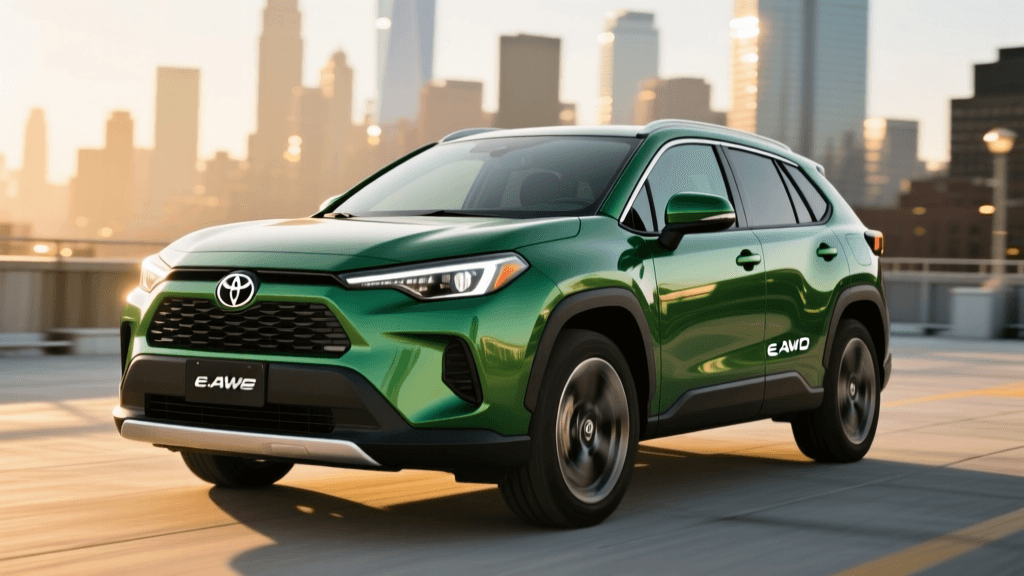
The Toyota RAV4 Prime is widely celebrated as one of the most capable and efficient plug-in hybrid electric vehicles (PHEVs) on the market. Combining a potent 302-horsepower powertrain with a substantial lithium-ion battery pack, it offers an impressive blend of electric commuting capability and gas-powered road trip freedom. However, as with any electrified vehicle, the official Environmental Protection Agency (EPA) estimates only tell part of the story. Real-world electric range and fuel economy can fluctuate wildly based on driving habits, weather conditions, terrain, and how you manage the vehicle's various driving modes.
According to the U.S. Department of Energy's Fuel Economy Guide, PHEV efficiency is highly dependent on the ratio of electric miles driven versus gasoline miles driven. To truly understand what your RAV4 Prime can achieve, we must look at real-world testing data and, more importantly, learn how to manipulate the vehicle's settings to extract every last mile from its battery and gas tank.
| Metric | EPA Estimate | Real-World Average | Optimization Tip |
|---|---|---|---|
| Electric Range | 42 miles | 35 - 46 miles | Precondition cabin while plugged in |
| Combined MPGe | 94 MPGe | 85 - 105 MPGe | Maximize B-mode regenerative braking |
| Gas-Only MPG | 38 MPG | 32 - 41 MPG | Engage HV mode for highway cruising |
Step-by-Step: How to Maximize Your EV Range
Achieving or even exceeding the EPA-estimated 42 miles of pure electric range requires a strategic approach to how you prepare and drive the vehicle. The RAV4 Prime's 18.1 kWh battery pack (with roughly 14.5 kWh usable) is sensitive to thermal conditions and auxiliary power draw.
Step 1: Master the Climate Controls and Preconditioning
The single biggest drain on your battery, aside from highway speeds, is the climate control system. Heating the cabin in winter or blasting the AC in summer can reduce your electric range by 20% to 30%. To combat this, you must use the preconditioning feature. By scheduling your departure time via the Toyota app or the vehicle's infotainment system while the car is still plugged into your home charger, the RAV4 Prime will use grid electricity to warm or cool the cabin and condition the battery to its optimal operating temperature. This ensures that when you unplug and drive away, 100% of your battery's energy is dedicated to propulsion rather than climate management.
Step 2: Optimize Regenerative Braking with B-Mode
When driving in city environments or stop-and-go traffic, shift the gear selector from 'D' (Drive) into 'B' (Brake) mode. This increases the aggressiveness of the regenerative braking system, capturing more kinetic energy and feeding it back into the battery. While it won't provide true one-pedal driving like a fully electric vehicle, B-mode significantly reduces wear on the friction brakes and can add 3 to 5 extra miles of range during a typical suburban commute. Remember to switch back to 'D' on the open highway, as coasting is more efficient than regenerative braking at sustained high speeds.
Step 3: Leverage Eco Mode and Throttle Discipline
Engaging Eco Mode alters the throttle mapping, making the accelerator pedal less sensitive. This prevents inadvertent heavy acceleration, which triggers the gasoline engine to turn on prematurely. In the RAV4 Prime, keeping the gas engine off is the golden rule of maximizing EV range. By applying smooth, progressive pressure to the accelerator, you can keep the vehicle in EV Auto mode up to speeds of 84 mph, though efficiency peaks between 35 and 55 mph.
How to Manage Battery and Gas on Road Trips
The true genius of the RAV4 Prime lies in its seamless transition between electric and hybrid power. When you exceed the 42-mile electric range, the vehicle operates as a standard hybrid. As detailed on the official Toyota RAV4 Prime specifications page, the hybrid system is designed to deliver an estimated 38 MPG combined when running on gasoline. However, you can manually optimize this for long road trips.
Strategic Use of HV (Hybrid Vehicle) Mode
If you are embarking on a long trip that includes both highway driving and city exploration at your destination, do not drain your battery on the highway. Electric motors are less efficient at sustained speeds over 65 mph, while the 2.5-liter Atkinson-cycle engine excels at highway cruising. Press the 'HV/EV Auto' button to force the vehicle into Hybrid mode while on the interstate. This preserves your battery's state of charge. Once you exit the highway and enter city limits or a national park where quiet, emission-free driving is preferred, switch back to EV mode to use your saved battery capacity.
Utilizing Predictive Efficient Drive
Ensure that Predictive Efficient Drive is enabled in your infotainment settings. When you use the built-in navigation system to plot a route, the vehicle's computer analyzes the topography and traffic data. It will automatically manage the battery's state of charge, saving electric power for uphill climbs or slow-moving urban areas, and using the gas engine for downhill or high-speed sections. This hands-off approach often yields better real-world fuel economy than manual mode switching.
Home Charging Setup for Daily Efficiency
To make the RAV4 Prime's electric range viable for daily use, a proper home charging setup is non-negotiable. The Alternative Fuels Data Center emphasizes that Level 2 charging is critical for PHEV owners to ensure the battery is fully replenished between daily commutes.
- Level 1 Charging (120V): Using the included mobile charging cord plugged into a standard household outlet delivers about 1.4 kW of power. This will take roughly 12 hours to fully charge the RAV4 Prime. This is only viable if you drive less than 15 miles a day and can leave the car plugged in for extended periods.
- Level 2 Charging (240V): Installing a 240V home charging station (like a ChargePoint Home Flex or Emporia Vue) is highly recommended. For 2023 and newer models (and XSE trims of older models), the 6.6 kW onboard charger allows for a full charge in about 2.5 hours. This means you can easily top off the battery during the day if you work from home, effectively doubling your daily electric range.
Always set your charging schedule to coincide with off-peak utility hours to minimize electricity costs, further improving the total cost of ownership and the 'fuel' economy of your electric miles.
How to Accurately Track Your Real-World MPG
Relying solely on the dashboard Multi-Information Display (MID) can sometimes lead to inaccurate assumptions about your fuel economy. The trip computer can be overly optimistic, especially after short trips where the engine didn't fully warm up. To get a true measure of your real-world fuel economy, use the 'brim-to-brim' manual calculation method.
- Drive the vehicle until the battery is fully depleted and the gas engine has engaged.
- Fill the gas tank completely until the pump clicks off. Record the exact gallons pumped.
- Reset your Trip A odometer to zero.
- Drive normally through your typical mix of EV and HV commuting until the tank is roughly half empty.
- Return to the same gas station and fill the tank again until the pump clicks off.
- Divide the miles driven on Trip A by the exact gallons required to refill the tank. This yields your true, real-world gasoline MPG.
By combining this manual tracking with the Toyota app's energy history, you can fine-tune your driving habits, identify which routes yield the best regenerative braking returns, and ultimately master the art of driving the RAV4 Prime for maximum efficiency.