Introduction: The Intersection of Budget and Advanced Hybrid Tech
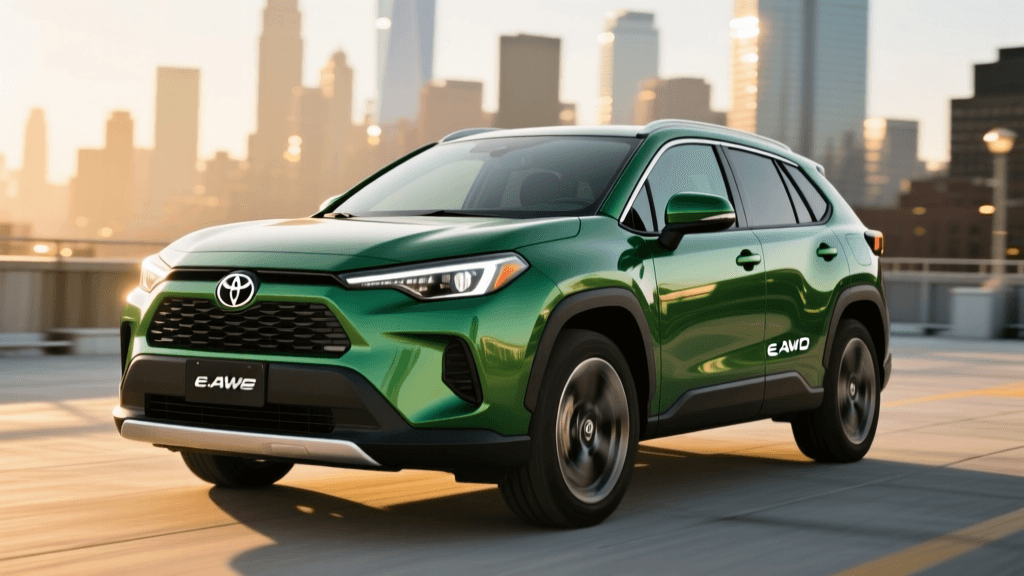
When budget-conscious buyers enter the subcompact SUV market, they typically face a compromise: choose affordability and sacrifice advanced powertrain technology, or pay a steep premium for electrification. The Toyota Corolla Cross Hybrid shatters this paradigm. By leveraging the fifth generation of the Toyota Hybrid System (THS), this vehicle offers a masterclass in packaging, thermal efficiency, and electronic all-wheel-drive integration without breaking the bank. In this technology deep dive, we dissect the engineering marvels beneath the Corolla Cross Hybrid's unassuming exterior to understand why it remains the undisputed value champion for tech-savvy, budget-minded drivers.
Under the Hood: 5th Generation Toyota Hybrid System (THS)
At the heart of the Corolla Cross Hybrid is the M20A-FXS powertrain, a 2.0-liter Dynamic Force inline-four engine paired with a highly sophisticated e-CVT transaxle. Unlike traditional internal combustion engines, this Atkinson-cycle powerplant prioritizes thermal efficiency over raw peak horsepower. By keeping the intake valve open slightly longer during the compression stroke, the engine effectively reduces pumping losses, achieving a remarkable thermal efficiency rating of approximately 40%.
However, the true magic lies in the transaxle and the Power Control Unit (PCU). The fifth-generation THS utilizes a parallel-axis gear arrangement for its two motor-generators (MG1 and MG2). Previous generations relied on a planetary gearset, which was robust but bulky. The new parallel-axis design significantly reduces the transaxle's physical footprint and weight, allowing it to fit seamlessly into the compact engine bay of the Corolla Cross platform (TNGA-C).
Furthermore, the PCU—which acts as the brain of the hybrid system, managing the flow of high-voltage electricity between the battery and the motors—has been redesigned. It now sits directly atop the transaxle, utilizing lower-loss power semiconductors and an optimized cooling pathway. This integration reduces parasitic electrical losses, directly translating to the vehicle's stellar EPA-estimated 42 MPG combined fuel economy. For a deeper look into how modern hybrid architectures manage power distribution, the U.S. Department of Energy's hybrid technology overview provides excellent foundational context on these efficiency gains.
Electronic On-Demand AWD (eAWD): Torque Without the Driveshaft
One of the most compelling technological features for buyers in snowy or rugged climates is the Electronic On-Demand All-Wheel Drive (eAWD) system. Traditional AWD systems rely on a heavy mechanical driveshaft, a center differential, and a rear differential, all of which add weight, sap fuel economy, and intrude on cabin space.
The Corolla Cross Hybrid eliminates the mechanical connection entirely. Instead, a dedicated 40-horsepower electric motor (MG3) is mounted directly on the rear axle. This independent rear motor is governed by predictive software that monitors steering angle, throttle position, and front-wheel slip in milliseconds. When traction is compromised, the system instantly routes up to 50% of the available torque to the rear wheels. Because the electric motor provides instant zero-RPM torque, the eAWD system reacts faster than any mechanical clutch-pack-based AWD system, providing exceptional stability during launch and cornering without the fuel economy penalty of a spinning driveshaft.
Battery Chemistry, Packaging, and Thermal Management
Budget-friendly hybrids must carefully balance battery costs with performance. The Corolla Cross Hybrid utilizes a high-output Nickel-Metal Hydride (NiMH) battery pack. While the broader industry has chased Lithium-Ion for its energy density, Toyota's advanced bipolar NiMH design offers a superior balance of cost-effectiveness, extreme temperature resilience, and long-term lifecycle durability—crucial factors for buyers planning to keep their vehicles well past the 100,000-mile mark.
Packaging is equally critical in a subcompact SUV. The battery array is strategically mounted beneath the rear passenger seats. This placement achieves two vital engineering goals: it lowers the vehicle's center of gravity, reducing body roll during cornering, and it preserves the rear cargo area, ensuring the hybrid variant suffers no practical utility loss compared to its gas-only sibling.
Market Comparison: Corolla Cross Hybrid vs. Segment Rivals
To truly understand the value proposition, we must look at the data. Below is a technical and financial comparison of the Corolla Cross Hybrid against its closest market alternatives for the budget-conscious buyer.
| Feature | Toyota Corolla Cross Hybrid | Kia Niro Hybrid (AWD N/A) | Subaru Crosstrek Hybrid (PHEV) |
|---|---|---|---|
| Powertrain | 2.0L 4-Cyl + 3 Electric Motors | 1.6L 4-Cyl + 1 Electric Motor | 2.0L Boxer + 2 Electric Motors |
| Combined Net HP | 196 hp | 139 hp | 148 hp |
| Drivetrain | eAWD (Standard) | FWD Only | Symmetrical AWD |
| EPA Combined MPG | 42 MPG | 53 MPG (FWD) | 90 MPGe / 35 MPG (Gas) |
| Starting MSRP (Approx) | $28,000 | $26,900 | $36,500+ |
| Cargo Space (Behind Rear) | 25.5 cu. ft. | 22.8 cu. ft. | 20.8 cu. ft. |
While the Kia Niro boasts slightly higher fuel economy, it lacks the availability of all-wheel drive and the rugged utility of a traditional SUV stance. The Subaru Crosstrek Hybrid offers excellent AWD but carries a massive price premium due to its Plug-in Hybrid (PHEV) architecture. The Edmunds Corolla Cross Hybrid hub frequently highlights this exact sweet spot: standard AWD, competitive cargo space, and a sub-$30,000 entry price make it the undisputed tech-value leader.
Total Cost of Ownership (TCO) and Budget Realities
For the budget-conscious buyer, the initial MSRP is only half the equation. The Corolla Cross Hybrid's technology directly impacts long-term ownership costs. The regenerative braking system handles the majority of low-speed deceleration, significantly extending the lifespan of the physical brake pads. It is common for Toyota hybrid owners to exceed 70,000 miles on their original factory brake pads.
Furthermore, the THS eliminates several traditional maintenance items. There is no alternator, no starter motor, and no traditional accessory drive belt to replace. The e-CVT transaxle contains no friction bands or clutches that wear out over time, requiring only periodic fluid inspections. When calculating a 5-year TCO, the fuel savings (averaging roughly $600 to $800 annually over the gas model, depending on local fuel prices) quickly offset the initial hybrid premium, resulting in a net-positive financial outcome by year three of ownership.
Active Safety Tech: Toyota Safety Sense 3.0
Technology in the Corolla Cross Hybrid extends beyond the powertrain to the driver-assistance suite. The vehicle comes standard with Toyota Safety Sense (TSS) 3.0. This system relies on a highly integrated network featuring a monocular camera with a wider field of vision and a millimeter-wave radar with an extended detection range.
- Pre-Collision System with Pedestrian Detection: Utilizes the radar and camera to identify vehicles, pedestrians, and cyclists, applying automatic emergency braking if a collision is imminent.
- Lane Tracing Assist (LTA): Works in tandem with Dynamic Radar Cruise Control to provide gentle steering inputs, keeping the vehicle centered in its lane even through mild curves.
- Proactive Driving Assist (PDA): A newer addition to TSS 3.0, PDA provides gentle braking or steering support to maintain distance from a preceding vehicle or a pedestrian in adjacent lanes, functioning even when cruise control is disengaged.
This democratization of advanced safety tech ensures that budget buyers do not have to opt for top-tier luxury trims to receive life-saving collision avoidance systems. Official safety ratings and testing methodologies from organizations like the Insurance Institute for Highway Safety (IIHS) consistently reward vehicles equipped with robust, standard automated emergency braking and lane-keeping systems, further validating the Corolla Cross Hybrid's value proposition.
Final Verdict: The Pinnacle of Pragmatic Engineering
The Toyota Corolla Cross Hybrid is a triumph of pragmatic, budget-conscious engineering. It does not rely on massive battery packs or overly complex plug-in charging routines to deliver value. Instead, it perfects the traditional hybrid formula through miniaturization, intelligent software, and the elimination of mechanical inefficiencies. For buyers seeking the utility of an SUV, the security of electronic all-wheel drive, and the financial predictability of a 40+ MPG powertrain, the Corolla Cross Hybrid stands alone as the smartest technological investment in the subcompact segment.