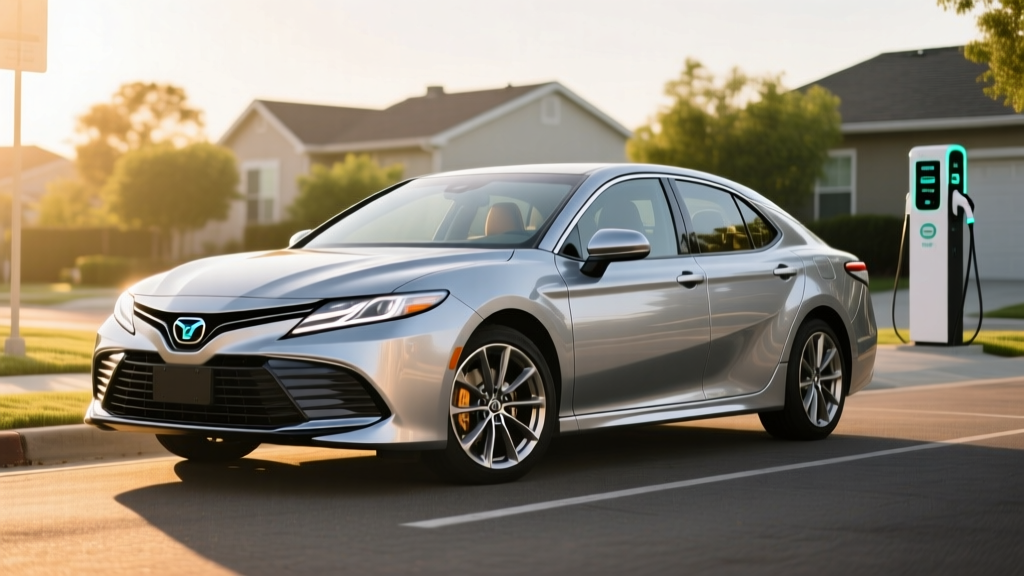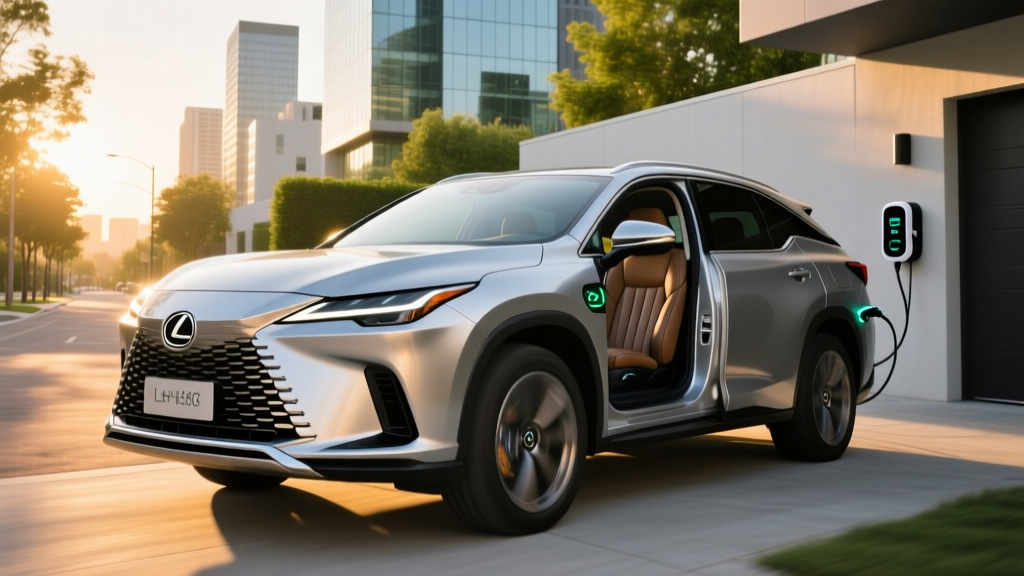
The Lexus TX 500h hybrid occupies a specific niche: a three-row luxury SUV that trades the plug-in complexity of the TX 550h+ for the simplicity of a conventional hybrid powertrain. For buyers who want meaningful fuel savings without changing their refueling habits, the 500h is the TX lineup's sweet spot. Here's exactly what the numbers look like for the 2026 model year.
Quick Verdict: Who the TX 500h Is For
The Lexus TX 500h is a conventional hybrid (HEV), not a plug-in. That distinction matters. You never plug it in — the 1.4 kWh nickel-metal hydride battery charges through regenerative braking and the gasoline engine. The trade-off is simplicity: no home charger needed, no electric-only range to manage, just fill up at any gas station and drive. If you want electric-only commuting capability, you'll need to look at the TX 550h+ PHEV or a full battery-electric alternative.
HEV vs. PHEV — Which TX Do You Need?
- TX 500h (HEV): No plug. 27 MPG combined. Lower starting price. Best for drivers without reliable home charging access.
- TX 550h+ (PHEV): Requires plug. ~33 miles electric-only range. Higher starting price. Best for drivers with Level 2 home charging who commute under 30 miles daily.
Powertrain: How the TX 500h Hybrid System Works
The TX 500h pairs a turbocharged 2.4-liter inline-four engine with a hybrid electric system featuring front and rear electric motors for standard all-wheel drive. The combined system output is 367 horsepower and 406 lb-ft of torque, routed through a six-speed automatic transmission — not the CVT found in many Toyota/Lexus hybrids, which gives the 500h a more traditional, responsive driving feel.
| Specification | 2026 Lexus TX 500h |
|---|---|
| Engine | 2.4L turbocharged I-4 |
| Combined Horsepower | 367 HP |
| Combined Torque | 406 lb-ft |
| Transmission | 6-speed automatic |
| Drivetrain | AWD (DIRECT4) |
| Hybrid Battery | ~1.4 kWh NiMH (self-charging) |
| 0-60 mph | ~5.9 seconds |
| Towing Capacity | 5,000 lbs |
| EPA Fuel Economy | 27 city / 27 highway / 27 combined MPG |
| Fuel Tank | 17.8 gallons |
| Total Range | ~480 miles |
The DIRECT4 all-wheel-drive system uses the rear electric motor to distribute torque between the front and rear axles continuously. Unlike mechanical AWD systems with a driveshaft, this setup responds in milliseconds, which aids traction in rain and light snow without the efficiency penalty of a traditional system.
Fuel Economy: EPA Numbers and Real-World MPG
The EPA rates the TX 500h at 27 MPG across city, highway, and combined driving. That's a strong figure for a 4,900-pound three-row SUV, but the real-world picture has nuance.
| Driving Scenario | Expected MPG |
|---|---|
| EPA Combined | 27 MPG |
| City / Stop-and-Go (Real-World) | 27–29 MPG |
| Highway (70-75 mph) | 24–26 MPG |
| Cold Weather (below 35°F) | 22–25 MPG |
| Loaded / Towing | 18–21 MPG |
Hybrids typically excel in city driving where regenerative braking recaptures energy at every stop. The TX 500h follows this pattern — expect to match or slightly beat the EPA city number in urban traffic. Highway driving is where the turbo four and aerodynamic drag work against efficiency; sustained 70+ mph speeds will drop you to the mid-20s.
Cold weather affects hybrids less dramatically than EVs (no massive range loss from battery chemistry), but you'll still see a 10-15% dip from the engine running richer, increased cabin heating load, and reduced regenerative braking efficiency until the battery warms up.
Real-World Context: A comparable non-hybrid three-row SUV like the Mazda CX-90 turbo achieves around 25 MPG combined. The TX 500h's hybrid system delivers roughly a 2-3 MPG improvement over similar gas-only competitors, which translates to about 50-75 fewer gallons per year at 12,000 miles — saving roughly $175-$260 annually at $3.50/gallon.
Pricing, Trims, and Tax Credit Eligibility
The 2026 Lexus TX 500h starts at approximately $65,750 for the Premium trim, rising to around $72,000 for the F SPORT Handling variant. Destination charges add roughly $1,350.
| Trim Level | MSRP (approx.) |
|---|---|
| TX 500h Premium | $65,750 |
| TX 500h Luxury | $69,500 |
| TX 500h F SPORT Handling | $72,000 |
Federal tax credit status: The TX 500h does not qualify for the federal §30D clean vehicle credit. That credit applies only to plug-in electric vehicles (BEVs and PHEVs) with sufficient battery capacity. Conventional hybrids like the TX 500h are excluded under current IRS rules.
Some states offer separate incentives for hybrid purchases, though these are increasingly rare as state programs shift toward full electrification. Check your state's energy or environmental agency website for current programs. There is no federal incentive for conventional HEVs as of 2026.
Battery Warranty, Reliability, and Replacement Cost
Lexus Hybrid Battery Warranty:
- Hybrid battery: 10 years / 150,000 miles (whichever comes first)
- Hybrid system components: 8 years / 100,000 miles
- Basic vehicle warranty: 4 years / 50,000 miles
- Powertrain warranty: 6 years / 70,000 miles
Lexus and Toyota have the longest track record in hybrid technology, dating back to the 1997 Prius. The TX 500h's small NiMH hybrid battery is far less stressed than the large lithium-ion packs in EVs — it's never deeply discharged or charged to full, which dramatically extends cycle life. Real-world data from Toyota/Lexus hybrids shows these batteries routinely lasting 150,000-200,000+ miles before significant degradation.
If replacement is needed out of warranty, a Lexus hybrid battery for the TX 500h is estimated at $3,000-$5,000 including labor — substantially less than the $10,000-$20,000+ replacement cost for a full EV traction battery. Third-party refurbishers often offer replacements for $2,000-$3,000.
Lexus consistently ranks at or near the top of J.D. Power's Vehicle Dependability Study, and the hybrid powertrain is one of the most proven systems in the automotive industry. The turbocharged 2.4L engine is newer technology, but early reliability indicators have been positive.
TX 500h vs. TX 550h+ vs. Full EV: Decision Framework
Choose the TX 500h Hybrid if:
- You don't have access to home Level 2 charging (apartment, street parking)
- You want a three-row luxury SUV under $70K without plug-in complexity
- You take frequent long road trips and don't want to plan around charging stops
- You want proven hybrid reliability with minimal behavioral change from a gas car
Choose the TX 550h+ PHEV if:
- You have Level 2 home charging and a daily commute under 33 miles
- You want to drive on electricity most weekdays but need gas flexibility for trips
- You're willing to pay ~$10,000 more upfront for potential fuel savings and federal tax credit eligibility
Choose a full EV (e.g., Rivian R1S, Tesla Model X) if:
- You have reliable home charging and want zero tailpipe emissions
- You want maximum fuel cost savings (electricity at $0.13/kWh vs. $3.50/gal gasoline)
- You qualify for the full $7,500 federal tax credit and your state offers additional EV incentives
Pros and Cons at a Glance
Pros
- 367 HP with responsive turbo hybrid powertrain
- 27 MPG combined is strong for a 4,900-lb three-row SUV
- No plug required — zero lifestyle change from gas ownership
- DIRECT4 AWD with fast-reacting rear electric motor
- Lexus reliability reputation and 10-year hybrid battery warranty
- Quiet, well-isolated cabin with three usable rows
Cons
- No federal tax credit eligibility (conventional hybrid)
- Starting price above $65K — premium over non-luxury three-row hybrids
- Highway MPG drops to mid-20s at sustained speed
- Small hybrid battery means no electric-only driving mode of meaningful distance
- Turbo four-cylinder lacks the smoothness of the TX 350's inline-six or V6 competitors
- Cargo space slightly reduced vs. non-hybrid TX 350 due to hybrid components
Frequently Asked Questions
How many MPG does the Lexus TX 500h hybrid get?
The EPA rates the 2026 TX 500h at 27 MPG city, 27 highway, and 27 combined. In real-world driving, expect 27-29 MPG in city conditions and 24-26 MPG on the highway. Cold weather and towing will reduce these figures.
Does the Lexus TX 500h need to be plugged in?
No. The TX 500h is a conventional hybrid (HEV), not a plug-in. Its small hybrid battery charges automatically through regenerative braking and the gasoline engine. You simply fill it with gasoline like any other car. If you want plug-in capability, look at the TX 550h+ PHEV.
How far can the TX 500h drive on electric power alone?
Effectively zero miles at meaningful speed. The TX 500h's ~1.4 kWh battery can propel the SUV at very low speeds (under 25 mph) for less than a mile in EV mode, typically in parking lots or stop-and-go traffic. It is not designed for electric-only commuting. For that, the TX 550h+ PHEV offers approximately 33 miles of electric-only range.
Is the TX 500h hybrid reliable?
Yes. Lexus and Toyota have built millions of hybrids since 1997, and the technology is among the most proven in the industry. The hybrid battery carries a 10-year/150,000-mile warranty, and real-world data shows these batteries commonly lasting well beyond 150,000 miles. Lexus consistently ranks at the top of long-term dependability surveys.
What does it cost to replace the TX 500h hybrid battery?
Estimated at $3,000-$5,000 through a Lexus dealer including labor, or $2,000-$3,000 through third-party refurbishers. This is significantly less than EV battery replacements. Given the 10-year/150,000-mile warranty and the proven longevity of Toyota/Lexus hybrid batteries, most owners will never face this cost.
Does the Lexus TX 500h qualify for any tax credit?
No federal tax credit applies to the TX 500h. The IRS §30D Clean Vehicle Credit is limited to plug-in vehicles (BEVs and PHEVs). Conventional hybrids are excluded. Some states may offer minor hybrid incentives, but these vary by jurisdiction and are increasingly uncommon. Consult a tax professional for your specific situation.
How does the TX 500h compare to the TX 350 gas model?
The TX 350 (turbocharged 2.4L I-4, 275 HP) gets approximately 21-23 MPG combined. The TX 500h adds 92 HP, standard AWD via the rear electric motor, and roughly 4-5 MPG improvement — at a price premium of approximately $8,000-$10,000. At 12,000 miles per year, the fuel savings alone won't close that gap, so the 500h's value proposition rests on the extra power, AWD, and hybrid smoothness rather than pure economics.
Sources: EPA Fuel Economy, Lexus USA, IRS Clean Vehicle Credits. Pricing and specifications are based on 2026 model-year data available at time of publication and are subject to change. Always verify current figures with your local Lexus dealer and the IRS for tax credit eligibility.