The Case for the AWD Camry Hybrid in 2026
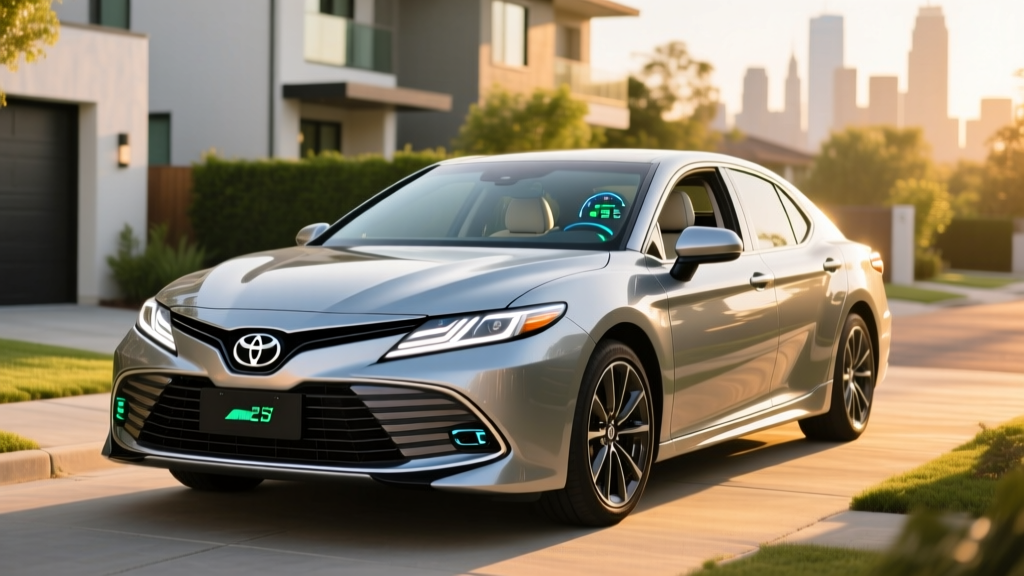
If you want all-weather traction without the plug-in hassle or range math of a full EV, the Toyota Camry Hybrid AWD occupies a rare sweet spot. For the 2026 model year, Toyota continues its all-hybrid Camry lineup — every trim pairs a 2.5-liter four-cylinder with electric motors, and the AWD option adds a dedicated rear electric motor for on-demand all-wheel drive. The result is a midsize sedan that returns over 50 MPG combined, starts under $30,000, and requires zero charging infrastructure.
This guide covers everything a data-driven buyer needs: exact EPA MPG figures, real-world fuel economy expectations, the HEV vs. PHEV distinction, powertrain specs, battery longevity, pricing across trims, and whether the Camry Hybrid AWD makes sense against plug-in alternatives or a full battery-electric vehicle.
| Spec | Value |
|---|---|
| Powertrain | 2.5L 4-cyl + 2 electric motors (front) + 1 rear electric motor (AWD) |
| Combined Horsepower | 232 hp (net system) |
| EPA MPG (LE AWD) | 51 city / 49 highway / 50 combined |
| EPA MPG (SE/XLE/XSE AWD) | 48 city / 46 highway / 47 combined |
| Fuel Tank | 13.2 gallons |
| Total Range (LE AWD) | ~660 miles |
| 0–60 mph | ~7.1 seconds |
| Drivetrain | Electronic AWD (rear motor on-demand) |
| Hybrid Battery | ~1.1 kWh (sealed NiMH-style pack, self-charging HEV) |
| Starting MSRP (LE AWD) | $29,995 |
| Battery Warranty | 10 years / 150,000 miles |
| Plug Required? | No — conventional hybrid (HEV), never plugs in |
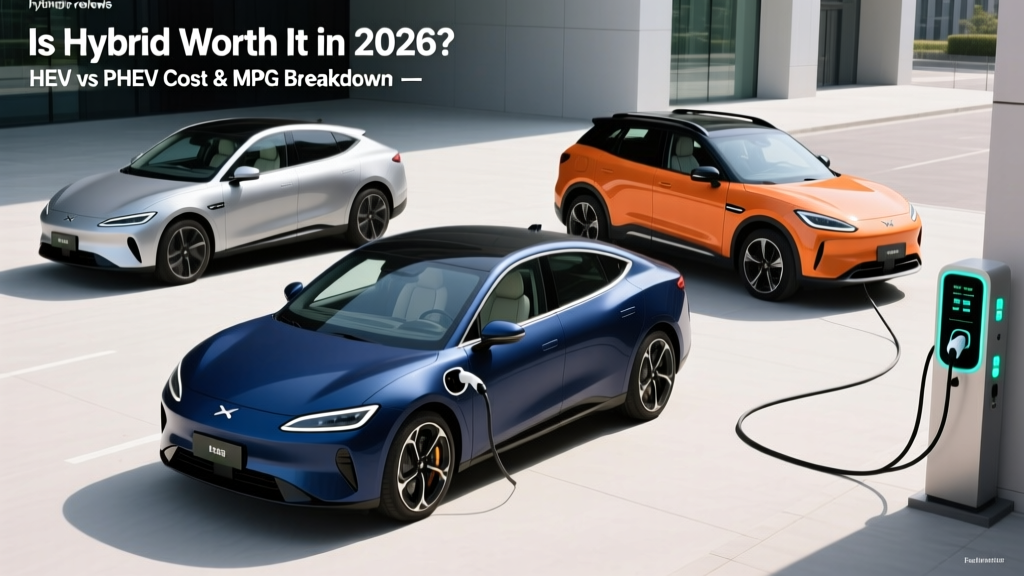
HEV vs. PHEV: The Camry Is a Conventional Hybrid
Before we go further, a critical distinction that trips up many shoppers:
| Feature | Camry Hybrid (HEV) | Plug-In Hybrid (e.g., RAV4 Prime) | Full EV (e.g., Tesla Model 3) |
|---|---|---|---|
| Plugs in? | No | Yes | Yes |
| Electric-only range | ~1 mile at low speed | 25–42 miles typical | 250–360+ miles |
| Gas engine? | Yes | Yes | No |
| Home charging needed? | No | Recommended (Level 2) | Essential |
| Federal tax credit (§30D)? | No | Up to $7,500 if eligible | Up to $7,500 if eligible |
| Best for | No home charging, high-mileage commuters | Short EV commute + road-trip flexibility | Home charging access, low running costs |
The Camry Hybrid is a self-charging hybrid (HEV). It recovers energy through regenerative braking and the gasoline engine — you never plug it in. If you want electric-only driving, you'd need to look at a PHEV like the Toyota RAV4 Prime (42 miles electric-only) or a full BEV. Toyota does not currently offer a Camry plug-in hybrid in the U.S. market.
EPA MPG and Real-World Fuel Economy
| Trim | City MPG | Highway MPG | Combined MPG |
|---|---|---|---|
| LE AWD | 51 | 49 | 50 |
| SE AWD | 48 | 46 | 47 |
| XLE AWD | 48 | 46 | 47 |
| XSE AWD | 48 | 46 | 47 |
The LE trim's lighter weight and lower-resistance tires give it a 3 MPG combined advantage over sport/luxury trims. According to fueleconomy.gov, the LE AWD's 51/49/50 rating is among the best of any AWD sedan sold in the U.S.
Real-World MPG: What to Actually Expect
Hybrids behave differently than gas cars in real-world driving:
- City driving: Expect to match or exceed EPA city numbers. The hybrid system thrives in stop-and-go traffic, where regenerative braking recharges the battery frequently. Many owners report 52–55 MPG in urban commutes.
- Highway driving: Expect 44–48 MPG on the highway at 70–75 mph. The gas engine does most of the work at sustained speeds, so the hybrid advantage narrows.
- Cold weather: MPG drops 5–10% in winter (below 40°F). The engine runs more often to heat the cabin and warm the catalytic converter. Expect 44–47 MPG combined in northern winters on the LE.
- Mixed real-world average: Most AWD Camry Hybrid owners land between 46–52 MPG combined depending on driving style, climate, and trim.
At 50 MPG combined and $3.20/gallon regular unleaded, you're looking at roughly $0.064 per mile in fuel cost — about half what a 25 MPG gas-only midsize sedan costs to fuel.
Powertrain: How the AWD System Works
The 2026 Camry Hybrid AWD uses Toyota's fifth-generation hybrid system:
- Front axle: A 2.5-liter Dynamic Force four-cylinder engine (184 hp, 163 lb-ft) paired with two motor-generators (MG1 for starting/charging, MG2 for propulsion at 134 hp).
- Rear axle: An independent 40 kW (54 hp) electric motor that engages on-demand — during acceleration from a stop, when front-wheel slip is detected, or during low-traction conditions.
- Net system output: 232 hp combined.
- Transmission: eCVT (planetary gearset, not a belt-driven CVT — no rubber-band feeling).
The rear motor is compact and doesn't require a mechanical driveshaft running the length of the car. It activates seamlessly — most drivers won't notice the transition between FWD and AWD modes. The system prioritizes front-wheel drive for efficiency and engages the rear motor only when needed, which is why the AWD penalty is only about 1–2 MPG compared to FWD Camry Hybrid trims.
The 0–60 mph time of roughly 7.1 seconds is adequate for merging and passing, though it's not a sport sedan. The electric motors provide instant torque off the line, making it feel quicker than the number suggests around town.
Pricing, Trims, and Tax Credit Eligibility
| Trim | MSRP (incl. destination) | Key Features |
|---|---|---|
| LE AWD | $29,995 | 8" touchscreen, wireless CarPlay/Android Auto, TSS 3.0, 16" alloy wheels |
| SE AWD | $31,995 | Sport-tuned suspension, 18" wheels, paddle shifters, blacked-out accents |
| XLE AWD | $34,495 | Leather-trimmed seats, 12.3" display, ambient lighting, heated front seats |
| XSE AWD | $35,995 | Sport-luxury blend, 19" wheels, panoramic glass roof option, dual exhaust tips |
Federal Tax Credit: Not Eligible
Because the Camry Hybrid is a conventional HEV (not a plug-in vehicle), it does not qualify for the IRS §30D Clean Vehicle Credit, which requires a minimum 7 kWh battery and plug-in capability. The §30D credit of up to $7,500 is reserved for BEVs and PHEVs that meet battery-sourcing, MSRP cap ($55,000 for sedans), and buyer income limits (see IRS.gov §30D guidelines).
Some states offer their own incentives for hybrids, though these are increasingly rare as programs shift toward plug-in vehicles. Check your state's energy office for current rebates.
The value proposition here is straightforward: low MSRP, no charging equipment to install, and fuel savings that compound over time. Compared to a gas-only Camry (if one were still offered), the hybrid's ~$1,500–$2,000 price premium pays back in fuel savings within 2–3 years at average mileage.
Battery Longevity, Warranty, and Replacement Cost
Toyota Hybrid Battery Warranty
- Coverage: 10 years or 150,000 miles (whichever comes first)
- What's covered: Hybrid battery pack and all hybrid-system components (inverter, motor-generators, control electronics)
- Transferable: Yes — warranty follows the vehicle to subsequent owners
- Capacity threshold: Toyota covers defects and significant capacity loss that impairs hybrid system function
How Long Do Toyota Hybrid Batteries Last?
Toyota's hybrid battery packs have an exceptional track record. The Prius, which uses similar technology, regularly sees original batteries lasting 150,000–200,000+ miles. The Camry Hybrid's pack is smaller (~1.1 kWh usable) and operates in a narrow state-of-charge window (roughly 40–80%), which minimizes stress on the cells.
Key longevity factors:
- Shallow cycling: The hybrid system never fully charges or fully depletes the battery, dramatically extending cycle life.
- Thermal management: The pack is air-cooled and located under the rear seat, away from extreme underbody temperatures.
- Proven chemistry: Toyota has used nickel-metal hydride (NiMH) in its hybrids for over two decades with well-understood degradation characteristics.
Replacement Cost If Needed
If the hybrid battery fails out of warranty, replacement costs typically range from $2,000 to $4,000 depending on whether you use a new OEM pack, a refurbished unit, or an aftermarket option. Independent hybrid specialists often offer refurbished packs for $1,500–$2,500 installed. Given the 10-year/150,000-mile warranty and historical longevity data, most owners will never face this expense.
Who Should Choose the AWD Camry Hybrid?
Pros
- 50 MPG combined (LE AWD) — best-in-class for an AWD sedan
- No charging required — works with any lifestyle or housing situation
- AWD adds confidence in rain, snow, and ice
- Sub-$30K starting price for the LE AWD
- 10-year/150K-mile hybrid battery warranty
- Toyota reliability reputation and high resale value
- 660-mile total range means fewer fill-ups
- Toyota Safety Sense 3.0 standard (pre-collision, lane-keeping, adaptive cruise)
Cons
- No electric-only driving beyond very low-speed creep
- No federal tax credit eligibility
- AWD trims lose 1–3 MPG vs. FWD equivalents
- Rear battery pack slightly reduces trunk pass-through space
- eCVT drone under hard acceleration (common to all Toyota hybrids)
- Not available as a PHEV for electric commute capability
Decision Framework: Is the AWD Camry Hybrid Right for You?
Choose the Camry Hybrid AWD if:
- You live in an apartment or lack access to home/work charging
- You drive 15,000+ miles per year and want to minimize fuel costs
- You need AWD for snow or rain but don't want an SUV
- You want proven reliability with minimal ownership complexity
- Your budget is under $36,000 and you want low cost-per-mile
Choose a PHEV (e.g., RAV4 Prime) instead if:
- You have Level 2 charging at home and a commute under 40 miles
- You want electric-only daily driving with gas backup for road trips
- You qualify for the §30D credit and want to offset the higher purchase price
Choose a full EV (e.g., Tesla Model 3, Hyundai Ioniq 6) instead if:
- You have reliable home charging and want zero tailpipe emissions
- You want the lowest per-mile energy cost (~$0.04/mile on home electricity)
- You want instant torque, one-pedal driving, and minimal maintenance
- Your daily driving is under 250 miles and you're comfortable with public DC fast charging for road trips
Ownership Economics: 5-Year Cost Snapshot
| Category | Estimated Cost |
|---|---|
| Purchase price (LE AWD) | $29,995 |
| Fuel (75,000 mi ÷ 50 MPG × $3.20/gal) | $4,800 |
| Insurance (avg. national) | $7,500 |
| Maintenance (oil changes, tires, brakes) | $2,200 |
| Estimated depreciation | $10,500 |
| Total 5-year cost | ~$54,995 |
| Cost per mile (all-in) | ~$0.73 |
For comparison, a typical 25 MPG gas-only AWD sedan at the same price point would cost roughly $9,600 in fuel over the same period — nearly $5,000 more. The Camry Hybrid AWD's fuel savings essentially pay for its maintenance over five years.
Frequently Asked Questions
How many MPG does the AWD Camry Hybrid get?
The 2026 Camry Hybrid LE AWD achieves an EPA-rated 51 city / 49 highway / 50 combined MPG. The SE, XLE, and XSE AWD trims are rated at 48/46/47 MPG. In real-world city driving, many owners report matching or slightly exceeding the EPA city figure thanks to aggressive regenerative braking.
Does the Camry Hybrid need to be plugged in?
No. The Camry Hybrid is a conventional hybrid (HEV). It charges its own small battery through regenerative braking and the gasoline engine. There is no plug, no charging cable, and no charging station dependency.
Is the AWD Camry Hybrid reliable?
Toyota's hybrid powertrain is one of the most proven in the industry, with over 20 years of continuous refinement since the original Prius. The hybrid battery carries a 10-year/150,000-mile warranty. According to IIHS, the Camry continues to earn top safety ratings, and Toyota's hybrid components have demonstrated exceptional longevity in fleet and consumer use.
What does a Camry Hybrid battery replacement cost?
Out of warranty, a replacement hybrid battery pack typically costs $2,000–$4,000 for a new OEM unit, or $1,500–$2,500 for a refurbished pack installed by a specialist. Given the 10-year/150K-mile warranty and Toyota's track record of batteries lasting 200,000+ miles, most owners will never need a replacement.
Does the Camry Hybrid qualify for any tax credit?
No. The federal §30D Clean Vehicle Credit requires plug-in capability and a minimum 7 kWh battery pack. The Camry Hybrid is a self-charging HEV with a ~1.1 kWh pack and no plug, so it does not qualify. Some states may offer minor incentives — check your state energy office for details.
How does the AWD system affect fuel economy?
The AWD system adds a rear electric motor that engages only when needed (acceleration, slippery conditions). The efficiency penalty is small — roughly 1–3 MPG combined compared to FWD Camry Hybrid trims — because the rear motor is disengaged during steady-state cruising.
Camry Hybrid AWD vs. RAV4 Hybrid AWD — which is more efficient?
The Camry Hybrid AWD LE (50 MPG combined) beats the RAV4 Hybrid AWD (~39–41 MPG combined) because the sedan is lighter and more aerodynamic. If you don't need SUV cargo space and ground clearance, the Camry Hybrid AWD is significantly more fuel-efficient.
Is Toyota offering a Camry plug-in hybrid?
As of the 2026 model year, Toyota does not offer a Camry PHEV in the United States. If you want a Toyota plug-in hybrid, the RAV4 Prime (42 miles electric-only) and Prius Prime (44 miles electric-only) are the current options.
Sources: fueleconomy.gov (EPA ratings), Toyota.com (manufacturer specifications), IRS.gov (§30D credit eligibility). Prices and specifications reflect 2026 model year data available at time of publication and are subject to change.