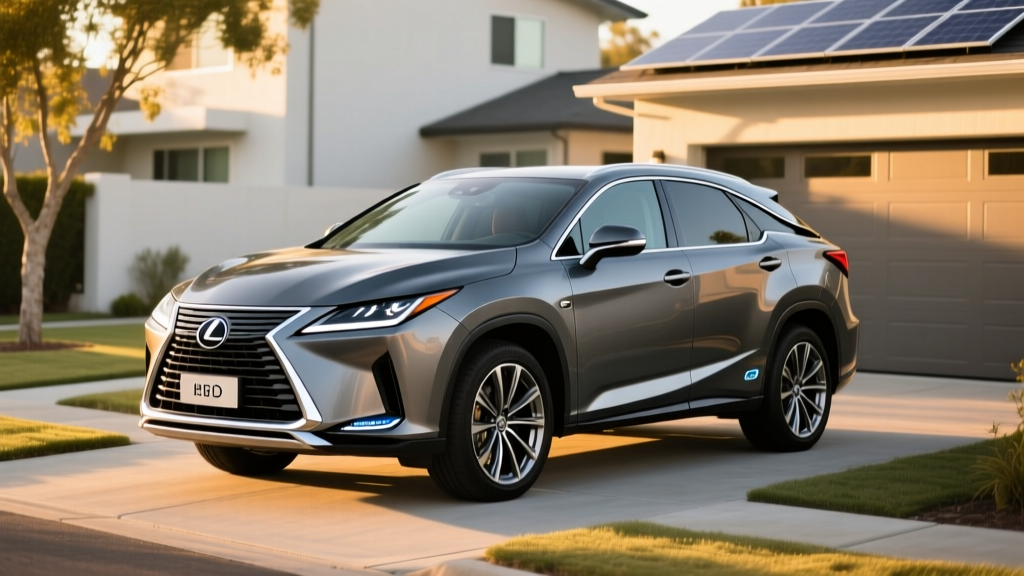
Quick Verdict: The RX 450h Remains the Luxury Hybrid Benchmark
If you've been searching for a Lexus RX 450h hybrid and wondering whether it still earns its reputation as the gold standard of luxury hybrid SUVs, the short answer is yes — but with important caveats about what kind of "hybrid" you actually want. The conventional RX 450h (HEV) delivers a proven 36 MPG combined with zero plug-in hassle, while the plug-in RX 450h+ (PHEV) trades some efficiency for 37 miles of electric-only range. This guide breaks down both powertrains with exact numbers so you can decide which fits your driving life.
The Lexus RX has been the best-selling luxury SUV in America for years, and the hybrid variants account for a significant share of those sales. For 2026, Lexus continues to refine the formula rather than reinvent it — which, for reliability-focused buyers, is exactly the right move.
HEV vs PHEV: Which Lexus RX Hybrid Are We Talking About?
Before diving into MPG figures and pricing, it's critical to understand the distinction between the two hybrid RX models. Confusing them is the single most common mistake buyers make.
| Feature | RX 450h (HEV) | RX 450h+ (PHEV) |
|---|---|---|
| Powertrain type | Conventional hybrid — no plug | Plug-in hybrid — charges from outlet |
| Battery size | ~1.1 kWh (nickel-metal hydride) | 18.1 kWh (lithium-ion) |
| Electric-only range | None (EV assist only) | 37 miles (EPA) |
| Combined horsepower | 366 hp | 302 hp |
| 0-60 mph | 7.4 seconds | 6.5 seconds |
| EPA combined MPG/MPGe | 36 MPG | 35 MPG (gas) / 83 MPGe (electric) |
| Plug-in charging required? | No | Optional — runs as HEV if unplugged |
| DC fast charging | N/A | No — AC Level 2 only |
| Starting MSRP (2026) | ~$53,250 | ~$63,000 |
The key difference: The RX 450h is a self-charging hybrid. It recovers energy through regenerative braking and the gasoline engine — you never plug it in. The RX 450h+ has a much larger battery that you can plug in for short electric-only commutes, but if you never plug it in, it simply operates as a conventional (though slightly less efficient) hybrid. Neither requires plugging in to function.
Fuel Economy: EPA Numbers and Real-World MPG
How many MPG does the Lexus RX 450h hybrid get? Here's the official EPA data from fueleconomy.gov broken down by driving condition:
| Model | City MPG | Highway MPG | Combined MPG |
|---|---|---|---|
| RX 450h (AWD) | 37 | 34 | 36 |
| RX 450h+ (AWD, gas-only) | 33 | 37 | 35 |
| RX 350 (gas AWD, baseline) | 21 | 28 | 24 |
Real-world MPG reality check: Toyota's hybrid system excels in city driving where regenerative braking recaptures energy at every stoplight. Owners consistently report exceeding the EPA city figure of 37 MPG in stop-and-go traffic — 38-40 MPG is common. Highway driving is where hybrids lose their advantage: sustained 75-80 mph cruising yields closer to 31-33 MPG in real-world testing. If your commute is 80% highway, expect combined real-world figures around 33-34 MPG. In cold weather (below 30°F), expect a 2-4 MPG drop as the engine runs more frequently to provide cabin heat.
For the RX 450h+ PHEV, the 37-mile electric-only range covers most daily commutes. Once the battery depletes, it reverts to hybrid mode at roughly 35 MPG combined — about 1 MPG less than the dedicated HEV due to the heavier lithium-ion battery pack.
Powertrain Deep Dive: What's Under the Hood
The RX 450h pairs a 2.4-liter turbocharged four-cylinder engine with a hybrid electric system and standard all-wheel drive (eAWD). The combined system output is 366 horsepower and 406 lb-ft of torque — making it the most powerful RX hybrid option and noticeably quicker than the outgoing V6-based system.
The RX 450h+ uses a different setup: a 2.5-liter naturally aspirated four-cylinder with two electric motors and a larger 18.1 kWh lithium-ion battery pack. Despite the lower combined output of 302 hp, the instant electric torque delivery gives it a quicker 0-60 time of 6.5 seconds versus 7.4 seconds for the HEV.
| Specification | RX 450h (HEV) | RX 450h+ (PHEV) |
|---|---|---|
| Engine | 2.4L turbo I4 + hybrid | 2.5L I4 + hybrid |
| Combined HP | 366 | 302 |
| Combined torque | 406 lb-ft | 313 lb-ft |
| 0-60 mph | 7.4 sec | 6.5 sec |
| Drivetrain | eAWD | eAWD |
| Transmission | 6-speed automatic | eCVT |
| Cargo volume | 29.6 cu ft (rear up) | 29.6 cu ft (rear up) |
| Towing capacity | 3,500 lbs | 3,500 lbs |
| Curb weight | ~4,600 lbs | ~4,900 lbs |
Neither hybrid variant sacrifices cargo space compared to the gas-only RX 350. The battery packaging is beneath the rear seat and cargo floor, preserving the full 29.6 cubic feet behind the second row and approximately 46 cubic feet with seats folded.
RX 450h+ PHEV: Electric-Only Range and Charging Details
For buyers considering the plug-in variant, here are the critical charging and range specifics:
- Battery capacity: 18.1 kWh lithium-ion
- EPA electric-only range: 37 miles
- Total combined range: ~430 miles (37 electric + ~393 gas)
- Level 1 charging (120V): ~10 hours from empty to full
- Level 2 charging (240V, 6.6 kW onboard charger): ~2.5 hours from empty to full
- DC fast charging: Not available — the RX 450h+ uses a J1772 connector for AC charging only
The 2.5-hour Level 2 charge time means overnight home charging easily tops up the battery every night. If you have a 20-30 mile round-trip commute, you could drive months without visiting a gas station — provided you plug in nightly. Without home charging access, the PHEV advantage diminishes significantly, and the conventional RX 450h becomes the smarter buy.
Pricing, Trims, and Tax Credit Eligibility
Here's where the financial picture gets nuanced. The 2026 Lexus RX hybrid lineup pricing breaks down as follows:
| Model / Trim | MSRP (approx.) |
|---|---|
| RX 450h Premium | $53,250 |
| RX 450h Premium+ | $56,500 |
| RX 450h Luxury | $59,800 |
| RX 450h+ Premium | $63,000 |
| RX 450h+ Luxury | $67,500 |
Federal tax credit status: Under current IRS §30D rules, the conventional RX 450h (HEV) does not qualify for any federal tax credit — the clean vehicle credit applies only to plug-in electric vehicles and fuel cell vehicles. The RX 450h+ PHEV may qualify for up to $3,750 (the critical minerals portion), but eligibility depends on several factors:
- MSRP cap: SUVs must be under $80,000 — all RX 450h+ trims qualify
- Buyer income cap: Modified AGI must not exceed $150,000 (single) / $300,000 (joint)
- Battery sourcing: Critical minerals and battery component requirements phase in stricter thresholds annually — check the latest DOE/IRS eligibility list before purchasing, as Toyota/Lexus sourcing compliance changes by model year
- Point-of-sale transfer: Eligible buyers can apply the credit as an immediate dealer discount rather than waiting for tax filing
State-level incentives vary significantly. California, Colorado, New York, and several other states offer additional rebates for PHEVs — check your state's energy office for current programs. The conventional HEV rarely qualifies for state incentives either.
Reliability, Battery Warranty, and Replacement Costs
Is the Lexus RX 450h hybrid reliable? This is where the RX hybrid earns its strongest recommendation. Toyota's hybrid synergy drive system has over 25 years of real-world validation — the Prius proved the architecture, and the RX has used variants of it since 2006.
Battery & Hybrid System Warranty
- Hybrid battery warranty: 10 years / 150,000 miles (whichever comes first)
- Hybrid system components: 8 years / 100,000 miles
- Limited vehicle warranty: 4 years / 50,000 miles
- Powertrain warranty: 6 years / 70,000 miles
Battery replacement cost: If the hybrid battery fails outside warranty, replacement for the RX 450h (HEV) typically runs $3,000–$5,000 including labor at a Lexus dealer. The larger lithium-ion pack in the RX 450h+ is more expensive — expect $6,000–$9,000. However, wholesale hybrid battery failures remain rare. Data from long-term ownership surveys shows most Toyota/Lexus hybrid batteries retain 80%+ capacity well past 150,000 miles. Independent shops also offer refurbished battery replacements for $1,500–$2,500 if needed out of warranty.
The conventional HEV's smaller nickel-metal hydride battery is arguably the most proven hybrid battery chemistry on the market — it's the same basic technology that's been running in Prius taxis past 300,000 miles. The PHEV's lithium-ion pack carries slightly more long-term uncertainty, though Toyota's thermal management system is conservative by design, which historically correlates with better longevity.
Hybrid vs PHEV vs Full EV: Which RX Is Right for You?
Choose the RX 450h (HEV) if:
- You don't have reliable home or workplace charging access
- You want maximum MPG without ever thinking about plugging in
- Your budget tops out around $55,000–$60,000
- You prioritize proven, simple technology over electric-only driving
- You drive more than 40 miles daily and don't want to manage charge schedules
Choose the RX 450h+ (PHEV) if:
- You have Level 2 home charging and a commute under 35 miles round-trip
- You want electric-only daily driving with gas-engine flexibility for road trips
- You can benefit from the federal or state PHEV tax credit
- You're willing to pay a ~$10,000 premium for plug-in capability
- You want the quickest acceleration in the RX lineup (6.5 sec 0-60)
Choose a full BEV (like the Lexus RZ 450e or Tesla Model Y) if:
- You have reliable home charging and want zero gasoline expenses
- Your daily driving stays under 200 miles with occasional longer trips
- You want the maximum federal tax credit ($7,500 where eligible)
- You're ready to plan around DC fast-charging stops on road trips
Real-World Ownership: What Owners Report
Beyond the spec sheet, the RX 450h ownership experience has consistent themes across forums and long-term reviews:
Fuel costs: At 36 MPG combined and $3.50/gallon regular unleaded, the RX 450h costs roughly $0.10 per mile in fuel. Compare that to the gas-only RX 350 at 24 MPG ($0.15/mile) — the hybrid saves approximately $750 per year at 15,000 miles annually. Over a typical 8-year ownership period, that's $6,000 in fuel savings, largely offsetting the hybrid's higher purchase price.
Maintenance: Hybrid-specific maintenance is minimal. The regenerative braking system extends brake pad life significantly — many owners report original brake pads lasting 80,000+ miles. There's no alternator or starter motor to replace. Oil changes remain on the standard 10,000-mile interval. Lexus includes complimentary maintenance for the first 2 years / 25,000 miles.
Insurance: Expect insurance premiums 5-10% higher than the gas RX 350 due to the higher replacement cost of hybrid components. Shop quotes from multiple carriers — some insurers offer hybrid/EV discounts.
Pros
- 36 MPG combined without any plug-in requirement
- Industry-leading hybrid reliability track record
- 10-year / 150,000-mile hybrid battery warranty
- Strong resale value — RX hybrids hold value better than most luxury SUVs
- 366 hp with smooth, linear acceleration
- No range anxiety — 580+ mile total range on one tank
Cons
- Highway MPG drops to low 30s at sustained 75+ mph
- No federal tax credit for the HEV variant
- Infotainment learning curve with Lexus Interface system
- Premium pricing — $53K+ starting point
- Rear visibility slightly compromised by battery packaging
- PHEV variant adds weight without proportional efficiency gain if you don't plug in
Frequently Asked Questions
How many MPG does the Lexus RX 450h hybrid get in real driving?
The EPA rates it at 37 city / 34 highway / 36 combined. In real-world mixed driving, most owners see 34-38 MPG. City-heavy commutes often exceed the EPA city figure thanks to regenerative braking, while sustained highway driving at 75+ mph typically yields 31-33 MPG.
Does the Lexus RX 450h need to be plugged in?
No. The RX 450h is a conventional hybrid (HEV) that charges its small battery through regenerative braking and the gasoline engine. You never plug it in. Only the RX 450h+ (PHEV) has a plug, and even that model runs perfectly fine as a hybrid if you never connect it.
How far can the RX 450h+ go on electric only?
The EPA rates the RX 450h+ at 37 miles of electric-only range. In mild weather at moderate speeds, some drivers extract 40+ miles. In cold weather or at highway speeds, expect 28-32 miles before the gas engine engages.
Is the Lexus RX 450h hybrid reliable long-term?
Yes — Toyota/Lexus hybrid systems are among the most proven electrified powertrains in existence. The hybrid battery carries a 10-year / 150,000-mile warranty, and widespread owner data shows batteries frequently lasting well beyond 200,000 miles with minimal degradation. The hybrid system actually reduces wear on the engine, brakes, and transmission compared to gas-only vehicles.
What does it cost to replace the hybrid battery?
Out of warranty, dealer replacement for the RX 450h HEV battery runs $3,000–$5,000. The RX 450h+ PHEV battery costs $6,000–$9,000. Independent shops offer refurbished replacements for $1,500–$2,500. However, catastrophic hybrid battery failure is uncommon — most retain strong capacity well past the warranty period.
Does the Lexus RX hybrid qualify for any tax credit?
The conventional RX 450h (HEV) does not qualify for any federal clean vehicle tax credit. The RX 450h+ (PHEV) may qualify for up to $3,750 under IRS §30D, depending on battery sourcing compliance, buyer income limits ($150K single / $300K joint), and the vehicle's MSRP (all trims fall under the $80K SUV cap). Always verify current eligibility on fueleconomy.gov before purchasing.
Hybrid vs PHEV vs EV — which RX makes the most sense?
If you can't charge at home, the RX 450h HEV is the clear winner — zero behavior change required for excellent efficiency. If you have home charging and a short commute, the RX 450h+ PHEV lets you drive electrically most days while keeping gas flexibility. If you're ready to go fully electric and can manage charging logistics, consider the Lexus RZ 450e or a competitor like the BMW iX instead — but understand that road trips require DC fast-charging planning.