Quick Verdict: The RX Hybrid at a Glance
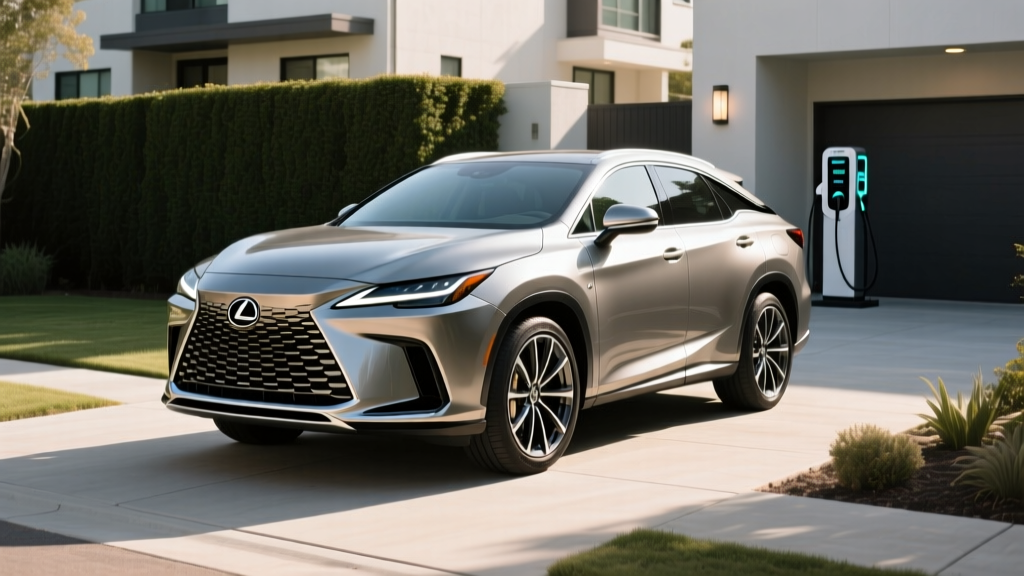
The 2026 Lexus RX Hybrid lineup splits into two distinct powertrains: the efficiency-focused RX 350h (a conventional hybrid, or HEV) and the performance-oriented RX 500h F Sport Performance (also an HEV). Neither requires plugging in — both generate electricity through regenerative braking and the gasoline engine. For buyers specifically seeking a plug-in hybrid (PHEV) with electric-only commuting capability, Lexus does not currently offer a plug-in RX variant in the U.S. market as of the 2026 model year, making the RX 350h the volume play for fuel-conscious luxury SUV shoppers.
| Spec | RX 350h | RX 500h F Sport Performance |
|---|---|---|
| Powertrain Type | Conventional Hybrid (HEV) | Conventional Hybrid (HEV) |
| Engine | 2.5L 4-cyl + 2 electric motors | 2.4L turbo 4-cyl + electric motor |
| Combined Horsepower | 246 hp | 366 hp |
| Drivetrain | AWD (eAxle rear) | AWD (DIRECT4) |
| EPA City / Hwy / Combined MPG | 37 / 34 / 36 | 27 / 28 / 27 |
| 0–60 mph | 7.4 sec | 5.9 sec |
| Hybrid Battery | ~1.6 kWh NiMH (sealed) | ~1.6 kWh NiMH (sealed) |
| Plug-In Required? | No | No |
| Base MSRP | $52,700 | $62,350 |
| Federal §30D Tax Credit | Not eligible | Not eligible |
| Hybrid Battery Warranty | 10 yr / 150,000 mi | 10 yr / 150,000 mi |
HEV vs. PHEV: What the RX Hybrid Is (and Isn't)
Shoppers searching for an "RX hybrid" often conflate two very different technologies. Here's the distinction that matters:
- Conventional Hybrid (HEV) — The RX 350h and RX 500h are self-charging hybrids. A small battery (roughly 1.6 kWh) captures energy from braking and the engine. You never plug in. The electric motor assists the gasoline engine, reducing fuel consumption by 25–40% compared to a non-hybrid equivalent.
- Plug-In Hybrid (PHEV) — A PHEV carries a larger battery (typically 15–20 kWh), can be plugged into a wall outlet or Level 2 charger, and delivers 25–40 miles of pure electric driving before the gasoline engine takes over. Examples in this segment include the BMW X5 xDrive50e and the Volvo XC60 Recharge.
The RX is not available as a PHEV in the U.S. Lexus offers the smaller NX 450h+ as a plug-in hybrid (37 miles electric-only range), but for the midsize RX, you're choosing between the two HEV variants above or the non-hybrid RX 350 (turbo 4-cylinder, ~26 MPG combined).
Fuel Economy: EPA Numbers and Real-World MPG
The RX 350h is the efficiency star of the lineup. According to fueleconomy.gov, the EPA rates it at:
| Model | City MPG | Highway MPG | Combined MPG |
|---|---|---|---|
| RX 350h AWD (HEV) | 37 | 34 | 36 |
| RX 500h F Sport (HEV) | 27 | 28 | 27 |
| RX 350 AWD (Gas only — baseline) | 21 | 28 | 24 |
Real-world expectations: Toyota/Lexus hybrids historically exceed their EPA city rating in stop-and-go driving, where the electric motor does the most work. Owners commonly report 38–40 MPG city in the RX 350h during warm-weather commuting. Highway fuel economy, however, tends to fall slightly short of the EPA sticker — expect 31–33 MPG at sustained 75 mph speeds, particularly with roof cargo or in headwinds. Cold weather (below 30°F) reduces city MPG by roughly 10–15% as the engine runs more frequently to provide cabin heat.
The RX 500h's 27 MPG combined is respectable for a 366-hp luxury SUV but trails the RX 350h by a wide margin. If performance isn't a priority, the 350h delivers a 33% fuel-cost advantage.
Powertrain Deep Dive: How the Hybrid System Works
The RX 350h pairs a naturally aspirated 2.5-liter inline-four with two motor-generators and an electronically controlled CVT (eCVT). Total system output is 246 horsepower. The rear axle is driven by a separate electric motor (eAxle), providing AWD without a mechanical driveshaft. This system is essentially identical to the proven powertrain in the Toyota Highlander Hybrid — one of the most reliable hybrid setups on the road.
The RX 500h uses a more complex system: a turbocharged 2.4-liter four-cylinder paired with Lexus's DIRECT4 all-wheel-drive system, which uses front and rear electric motors to continuously vary torque distribution. The result is 366 hp and sharper handling dynamics, but at a significant fuel-economy penalty.
Neither powertrain requires external charging. The hybrid battery replenishes through:
- Regenerative braking — capturing kinetic energy during deceleration
- Engine-driven generation — the gasoline engine charges the battery when needed
- Coasting regeneration — light drag recovery when lifting off the accelerator
Battery Warranty, Lifespan, and Replacement Cost
Lexus Hybrid Battery Warranty: 10 years or 150,000 miles (whichever comes first), transferable to subsequent owners. This covers defects and capacity loss below a functional threshold.
The RX Hybrid uses a nickel-metal hydride (NiMH) battery pack, not the larger lithium-ion packs found in PHEVs or BEVs. NiMH chemistry is less energy-dense but extremely durable — it's the same technology Toyota has used since the original Prius in 1997.
Real-world longevity data: Lexus/Toyota hybrid batteries routinely last 150,000–200,000+ miles before requiring replacement. Failure before 100,000 miles is uncommon. When replacement is needed outside warranty, expect:
- Dealership replacement: $3,000–$4,500 (OEM pack + labor)
- Independent hybrid specialist: $2,000–$3,000 (reconditioned or aftermarket pack)
- Individual cell module replacement: $500–$1,200 (if only specific modules have degraded)
For context, this cost is comparable to a timing-belt service or transmission rebuild on a conventional vehicle — it's a known, manageable expense that most owners never face during typical ownership periods.
Pricing, Trims, and Tax Credit Eligibility
The 2026 RX Hybrid lineup pricing (destination included):
- RX 350h Premium: ~$52,700
- RX 350h Premium+: ~$55,400
- RX 350h Luxury: ~$59,900
- RX 500h F Sport Performance: ~$62,350
- RX 500h F Sport Handling: ~$65,500
Federal tax credit: Neither the RX 350h nor the RX 500h qualifies for the IRS §30D Clean Vehicle Credit. That credit applies exclusively to plug-in electric vehicles (BEVs and PHEVs) meeting battery-sourcing, MSRP, and buyer income requirements. Conventional hybrids have not qualified for federal purchase incentives since 2010.
State incentives: A handful of states offer modest rebates or HOV-lane access for conventional hybrids, but these vary by jurisdiction and change frequently. Check your state's energy or DMV website for current programs.
Total cost of ownership advantage: Despite no federal credit, the RX 350h saves approximately $600–$900 annually in fuel costs compared to the gas-only RX 350 (assuming 12,000 miles/year and $3.50/gallon premium fuel). Over a 7-year ownership cycle, that's $4,200–$6,300 in fuel savings — effectively offsetting the hybrid premium.
Reliability and Ownership Experience
Lexus consistently ranks at or near the top of J.D. Power's Vehicle Dependability Study, and the RX has been one of the brand's most reliable nameplates for two decades. The hybrid system adds mechanical simplicity in some ways — the eCVT has no traditional gears, bands, or clutch packs to wear out, and regenerative braking reduces wear on the friction brake pads (many owners report original brake pads at 80,000+ miles).
Maintenance costs mirror the non-hybrid RX: standard oil changes (the 2.5L uses 0W-16 synthetic), cabin air filters, and tire rotations. The hybrid system itself requires no scheduled maintenance — there's no hybrid-battery coolant flush interval or motor service requirement in the normal maintenance schedule.
Pros
- 36 MPG combined (350h) — best in midsize luxury SUV class
- 10-year/150,000-mile hybrid battery warranty
- Proven, low-risk NiMH hybrid system
- Strong resale value — RX holds ~55% at 5 years
- Quiet, refined cabin with Lexus Safety System+ 3.0 standard
- No plug-in infrastructure needed
Cons
- No PHEV option — no electric-only commute capability
- No federal tax credit eligibility
- RX 350h acceleration (7.4s 0–60) is adequate, not quick
- RX 500h fuel economy is mediocre for a hybrid (27 MPG)
- Infotainment learning curve for first-time Lexus owners
- Premium fuel recommended for both powertrains
RX Hybrid vs. PHEV vs. Full EV: Which Is Right for You?
Choose the RX 350h (HEV) if:
- You lack access to home or workplace charging (apartment, street parking)
- You want maximum fuel efficiency without changing your refueling habits
- You drive 12,000–18,000 miles/year and want predictable, low fuel costs
- You plan to keep the vehicle 8–12 years (proven long-term reliability)
Look at a PHEV (BMW X5 xDrive50e, Volvo XC60 Recharge) if:
- You can install a Level 2 home charger and your commute is under 35 miles
- You want to drive on electricity most weekdays but need gas flexibility for road trips
- You want to qualify for the federal §30D tax credit (up to $7,500, subject to eligibility)
Consider a full BEV (Tesla Model X, BMW iX, Rivian R1S) if:
- You have reliable home Level 2 charging
- Your daily driving is under 250 miles and you're comfortable with DC fast-charging on road trips
- You want to eliminate gasoline entirely and minimize moving parts
Frequently Asked Questions
How many MPG does the Lexus RX Hybrid get?
The RX 350h achieves an EPA-rated 37 city / 34 highway / 36 combined MPG. Real-world city driving often yields 38–40 MPG in warm weather, while sustained highway driving at 75+ mph may return 31–33 MPG. The RX 500h F Sport is rated at 27 MPG combined.
Does the Lexus RX Hybrid need to be plugged in?
No. Both the RX 350h and RX 500h are conventional hybrids (HEVs). They recharge their small battery packs through regenerative braking and the gasoline engine. You simply fill up at a gas station as you would with any other vehicle.
Is there a plug-in hybrid (PHEV) version of the Lexus RX?
Not in the U.S. market as of the 2026 model year. Lexus offers the smaller NX 450h+ as a PHEV (37 miles electric-only). If a plug-in midsize Lexus SUV is a priority, watch for future announcements — but currently, competitors like the BMW X5 xDrive50e and Volvo XC60 Recharge fill that niche.
How long does the Lexus RX Hybrid battery last?
Toyota/Lexus NiMH hybrid batteries commonly last 150,000–200,000+ miles. The battery is covered by a 10-year/150,000-mile warranty. Replacement costs $2,000–$4,500 depending on source (aftermarket vs. OEM), though most original owners never need one.
Does the RX Hybrid qualify for a tax credit?
No. The federal §30D Clean Vehicle Credit applies only to plug-in vehicles (BEVs and PHEVs) that meet battery-sourcing, MSRP caps, and buyer income requirements. Conventional hybrids like the RX 350h and RX 500h are not eligible. Some states may offer minor incentives — check your local programs.
Is the RX 350h or RX 500h better for fuel savings?
The RX 350h wins decisively: 36 MPG combined vs. 27 MPG for the 500h. Over 15,000 miles/year at $3.50/gallon premium, the 350h costs roughly $1,458 in annual fuel vs. $1,944 for the 500h — a $486/year advantage. The 500h exists for buyers who prioritize the 366-hp turbo powertrain and sport-tuned suspension over efficiency.