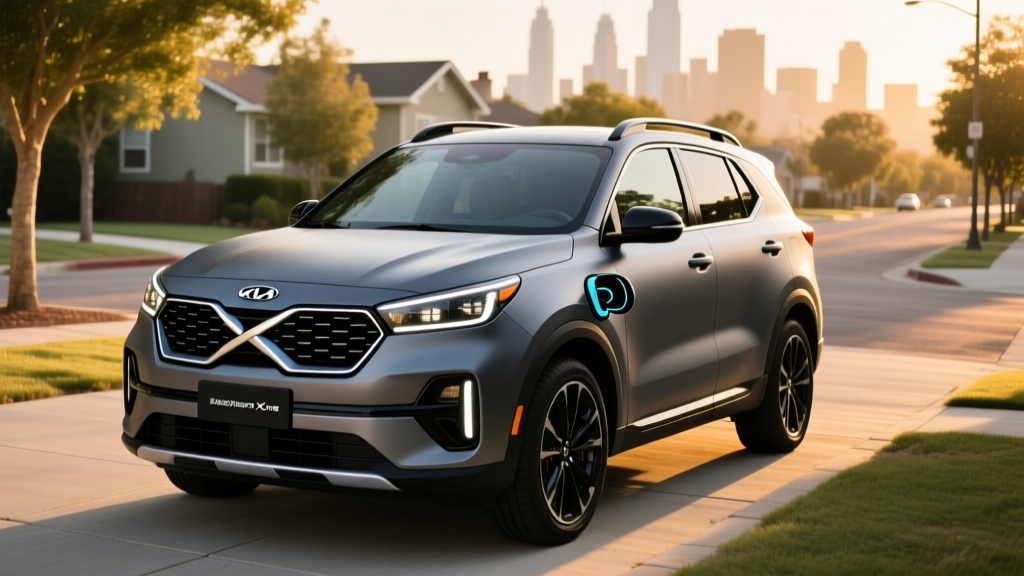
Quick Verdict: The Sportage PHEV X-Line Hits the Electrified Sweet Spot
The 2025 Kia Sportage Plug-In Hybrid X-Line occupies a narrow but valuable lane: it delivers 34 miles of electric-only commuting, standard all-wheel drive, and a genuinely usable cargo area — all before the gas engine ever fires. For buyers who want EV-style daily driving without range anxiety on road trips, this PHEV is one of the most practical compact SUVs available. The X-Line trim adds rugged cladding and 8.3 inches of ground clearance without sacrificing efficiency, starting at $40,490 before destination.
But PHEVs live or die by how owners actually use them. If you can charge at home every night, the Sportage PHEV transforms into a near-EV commuter that sips fuel on weekend trips. If you never plug in, you're carrying 300+ pounds of battery and motor dead weight, and a conventional Sportage Hybrid would serve you better for thousands less. This guide breaks down the exact numbers you need to decide.
EPA Fuel Economy & Real-World MPG
The EPA rates the 2025 Sportage PHEV at 84 MPGe combined when operating on electricity, and 35 MPG combined once the battery depletes and the gas engine takes over. Here is the full breakdown:
| Metric | Value |
|---|---|
| Combined MPGe (charge-sustaining + electric) | 84 MPGe |
| Combined MPG (gas-only, battery depleted) | 35 MPG |
| City MPG (gas-only) | 36 MPG |
| Highway MPG (gas-only) | 35 MPG |
| Electric-only range | 34 miles |
| Total combined range (EV + gas) | ~430 miles |
| Fuel tank capacity | 11.1 gallons |
HEV vs. PHEV: Which Sportage Is Right for You?
Kia sells the Sportage in three powertrain flavors, and the distinction matters enormously for your wallet and daily routine:
| Feature | Sportage Gas (ICE) | Sportage Hybrid (HEV) | Sportage PHEV |
|---|---|---|---|
| Needs to plug in? | No | No | Yes (for EV range) |
| Electric-only range | 0 miles | ~1 mile (low-speed) | 34 miles |
| Combined MPG/MPGe | 25-28 MPG | 38-43 MPG | 84 MPGe / 35 MPG gas |
| Combined horsepower | 187 hp | 227 hp | 261 hp |
| Starting MSRP (AWD) | ~$30,090 | ~$33,590 | $40,490 |
| Federal tax credit | None | None | Up to $7,500 (§30D) |
| Best for | Budget buyers, low miles | No home charging, high mileage | Home charging + short commutes |
The conventional HEV generates its own electricity through regenerative braking and the engine — you never plug it in. It's ideal if you lack home or workplace charging. The PHEV has a much larger battery and a charge port, giving you real electric-only driving for typical commutes. If your round-trip commute is under 34 miles and you charge nightly, you may go months between fill-ups.
Powertrain & Performance Specs
| Spec | Value |
|---|---|
| Engine | 1.6L turbocharged 4-cylinder |
| Electric motor | 66.9 kW permanent-magnet synchronous |
| Combined system output | 261 hp / 258 lb-ft torque |
| Transmission | 6-speed automatic |
| Drivetrain | AWD (standard on PHEV) |
| 0-60 mph | ~7.4 seconds |
| Battery capacity (gross / usable) | 13.7 kWh / ~11.5 kWh |
| Battery chemistry | NMC (nickel manganese cobalt) |
| Towing capacity | 2,000 lbs |
| Ground clearance (X-Line) | 8.3 inches |
| Cargo volume (behind rear seats) | 34.5 cu ft |
| Cargo volume (rear seats folded) | 65.1 cu ft |
The 261-hp combined output makes the Sportage PHEV the quickest variant in the lineup. Electric torque fill at low speeds gives it responsive around-town acceleration, and the turbo four provides adequate highway merging power. The 6-speed automatic is a conventional torque-converter unit — not a CVT — which means predictable, linear power delivery without the drone some hybrids exhibit.
Battery, Charging & Electric Range
The Sportage PHEV's 13.7 kWh battery pack (approximately 11.5 kWh usable) sits beneath the cabin floor, preserving cargo space. Here's what charging looks like in practice:
| Charging Level | Power (kW) | 0-100% Time | Where |
|---|---|---|---|
| Level 1 (120V household) | ~1.4 kW | ~9-10 hours | Standard outlet |
| Level 2 (240V home/public) | ~7.2 kW | ~2 hours | Home wallbox, public Level 2 |
| DC Fast Charge | Not supported | N/A | N/A |
Maximizing your electric range: Use the vehicle's "EV Priority" drive mode for city errands to stay on electric power as long as possible. Engage the highest regenerative braking setting (Level 3) via the paddle shifters for one-pedal-style deceleration that recovers more energy. Precondition the cabin while plugged in using the Kia Connect app to preserve battery for driving rather than heating or cooling.
Pricing, Trims & Federal Tax Credit
The 2025 Sportage PHEV is available in two trims:
| Trim | MSRP (incl. destination) | After Potential §30D Credit |
|---|---|---|
| X-Line | $40,490 | As low as ~$32,990 |
| X-Line Prestige | $44,590 | As low as ~$37,090 |
Federal §30D tax credit eligibility: The Sportage PHEV may qualify for up to $7,500 under the IRS clean vehicle credit, but eligibility depends on several factors that change periodically:
- MSRP cap: SUVs must be under $80,000 — both Sportage PHEV trims qualify.
- Buyer income cap: Modified AGI must not exceed $150,000 (single), $225,000 (head of household), or $300,000 (joint).
- Battery sourcing: The credit is split into two $3,750 halves — one for critical-minerals sourcing, one for battery-component manufacturing. Sourcing requirements tighten annually; verify current eligibility on fueleconomy.gov before purchasing.
- Point-of-sale transfer: As of 2024, buyers can transfer the credit to the dealer at purchase, reducing the purchase price directly rather than waiting for a tax refund.
Reliability, Battery Warranty & Long-Term Costs
Battery replacement cost: Outside of warranty, a full PHEV battery pack replacement typically runs $4,000-$7,000 including labor, based on current parts pricing for the 13.7 kWh pack. However, NMC batteries in PHEVs with active thermal management (as equipped here) historically retain 85-90%+ capacity after 100,000 miles under normal use. The smaller battery in a PHEV cycles more frequently than a BEV battery, but Kia's generous warranty provides a long safety net.
General reliability: The Sportage PHEV's powertrain shares architecture with the Hyundai Tucson PHEV and Santa Fe PHEV, which have been on the road since 2022 with no widespread battery or hybrid-system failures reported. The 1.6L turbo engine is a carryover design with a strong track record. Consult NHTSA and owner forums for the latest service bulletins.
Who Should Buy the Sportage PHEV X-Line?
✓ Pros
- 34-mile EV range covers most commutes gas-free
- 261 hp makes it the quickest Sportage
- Standard AWD with 8.3" ground clearance
- 10-yr/100k battery warranty
- Potential $7,500 federal tax credit
- 34.5 cu ft cargo room (no battery intrusion)
- Conventional 6-speed auto (no CVT drone)
✗ Cons
- $40,490 starting price — $7K+ over Sportage HEV
- No DC fast charging
- 35 MPG gas-only is unremarkable for a hybrid
- EV range drops to ~25 mi in cold weather
- Tax credit eligibility depends on sourcing rules
- Only 11.1-gal fuel tank limits total range to ~430 mi
- X-Line Prestige pushes past $44K
Decision Framework: Is This the Right Electrified Vehicle for You?
Choose the Sportage PHEV X-Line if: You have home Level 2 charging, your daily round-trip is under 35 miles, you want AWD and cargo versatility, and you take 2-4 road trips per year where EV charging infrastructure feels uncertain.
Choose the Sportage Hybrid (HEV) instead if: You cannot charge at home, you drive mostly highway miles (where PHEV EV range is irrelevant), or you want to keep the purchase price under $35K.
Choose a full BEV (like the EV6 or Ioniq 5) instead if: Your daily driving exceeds 34 miles and you want zero gas use, you have reliable home and workplace charging, and you're ready to rely on DC fast charging for road trips.
Frequently Asked Questions
How many MPG does the 2025 Sportage PHEV get?
The EPA rates it at 84 MPGe combined when using both electric and gas power, and 35 MPG combined (36 city / 35 highway) when running on gasoline alone after the battery depletes. Real-world owners who charge regularly often see effective averages well above 40 MPG because most daily driving stays within the 34-mile electric range.
How far can the Sportage PHEV go on electric only?
The EPA-estimated electric-only range is 34 miles. In real-world conditions, expect 28-32 miles in moderate temperatures with mixed driving, and as low as 25 miles in freezing weather with cabin heat running. Highway-only driving at 70+ mph will also reduce EV range to approximately 26-28 miles.
Does the 2025 Sportage PHEV qualify for a tax credit?
It may qualify for up to $7,500 under the federal §30D clean vehicle credit, subject to buyer income limits ($150K single / $300K joint), MSRP caps (under $80K for SUVs — both trims qualify), and battery-sourcing requirements that tighten annually. The credit can be transferred to the dealer at point of sale. Always verify current eligibility on fueleconomy.gov and consult a tax professional.
Is the Sportage PHEV reliable, and what does a battery replacement cost?
The Sportage PHEV's powertrain is shared with proven Hyundai/Kia PHEV models in production since 2022, with no widespread failure patterns. Kia backs the high-voltage battery for 10 years / 100,000 miles with a ~70% capacity retention threshold. Out-of-warranty battery replacement is estimated at $4,000-$7,000, though most PHEV batteries retain 85-90%+ capacity at 100K miles.
Do I need to plug in the Sportage PHEV?
You don't have to — the vehicle will operate as a conventional hybrid on gasoline alone. But you'll lose the entire 34-mile EV range benefit and the 84 MPGe rating. If you never plan to plug in, the Sportage Hybrid (HEV) at ~$33,590 is a better value, offering 38-43 MPG without the added cost and weight of the larger battery pack.
How long does it take to charge?
On a 240V Level 2 charger (home wallbox or public station), the Sportage PHEV charges from empty to full in approximately 2 hours at its 7.2 kW onboard charger rate. On a standard 120V household outlet (Level 1), a full charge takes 9-10 hours — still practical for overnight replenishment.